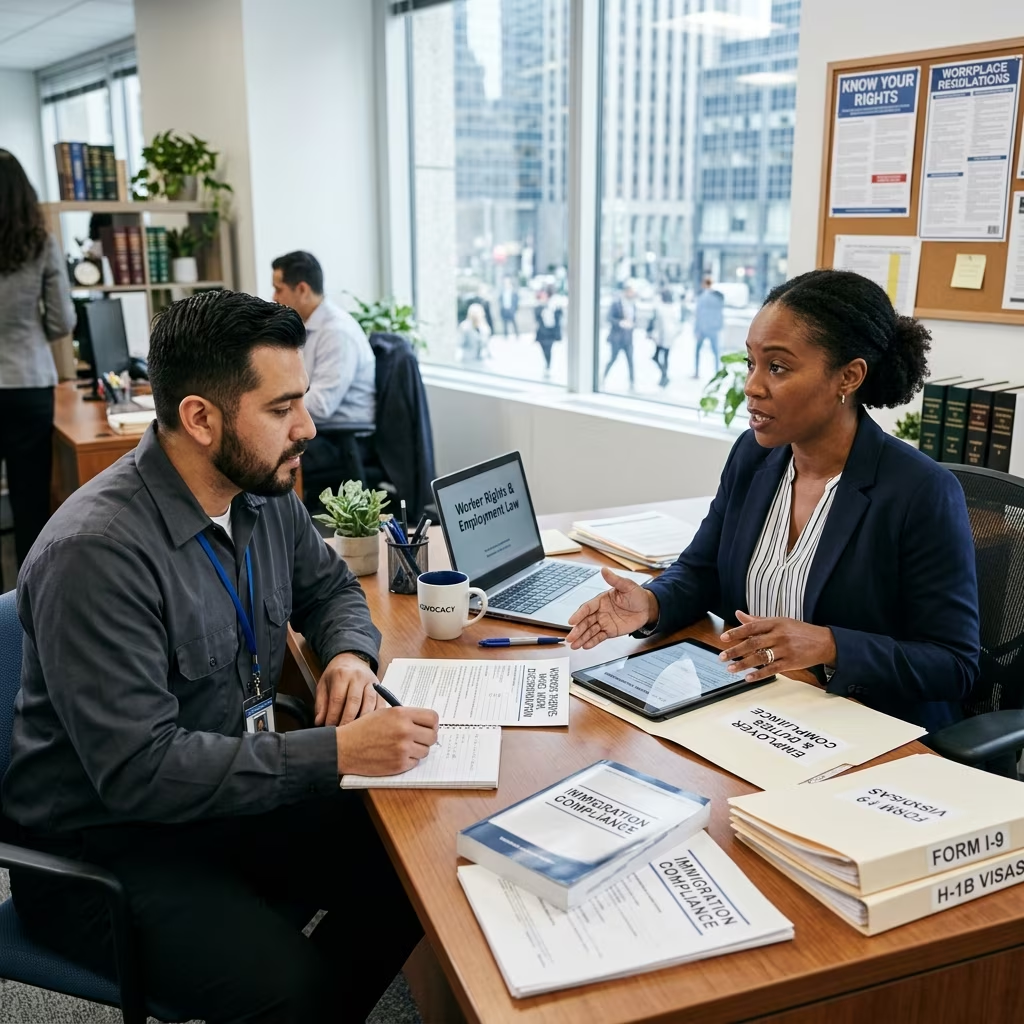
Immigration status and employment rights often intersect in confusing ways. Many workers worry that their ability to keep a job, collect wages, or speak up about unfair treatment depends on their immigration category. At the same time, employers face strict rules about verifying work authorization without crossing the line into unlawful discrimination. This guide explains the core principles that govern immigration and employment in the United States, focusing on worker protections, employer obligations, and common issues that arise in hiring, verification, and workplace enforcement.
Key Principles: Immigration Status and Basic Worker Rights
U.S. labor and employment laws protect most workers regardless of where they were born or what immigration documents they hold. In general, federal labor laws apply to employees whether they are U.S. citizens, lawful permanent residents, refugees, or workers without current immigration status.
- Core workplace protections such as minimum wage, overtime rules, and the right to a safe workplace apply to covered employees regardless of immigration status.
- Anti-retaliation protections usually apply even if a worker lacks work authorization, meaning an employer generally cannot punish someone for asserting certain rights simply because of their status.
- Union and collective activity rights under the National Labor Relations Act cover employees without regard to immigration status.
- Anti-discrimination protections restrict how employers can consider citizenship or national origin in hiring, firing, and recruitment.
However, immigration law also regulates who may legally work in the United States and requires employers to verify employment authorization after hiring. Understanding how these systems interact is essential for both workers and businesses.
Who Can Work: Work Authorization Categories
Federal immigration law recognizes several categories of noncitizens who may legally work in the United States, either automatically or with a specific document. U.S. citizens and nationals always have the right to work; many noncitizens must show proof of authorization.
Common Categories with Automatic Work Authorization
- U.S. citizens and U.S. nationals are always authorized to work.
- Lawful permanent residents (green card holders) are authorized to work indefinitely.
- Refugees and asylees are generally authorized to work incident to their status and may also receive specific work authorization documents.
Categories Requiring Employment Authorization Documents
Many other noncitizens must obtain an Employment Authorization Document (EAD), commonly called a work permit, before working.
- Individuals with certain temporary statuses (for example, some student and humanitarian categories) may work only if they receive an EAD from U.S. Citizenship and Immigration Services (USCIS).
- Workers with pending applications for certain immigration benefits may be eligible for employment authorization while their case is decided.
Even when someone lacks current authorization to work, they may still have rights under labor, anti-discrimination, and collective bargaining laws, and they may be able to seek assistance from government agencies if an employer violates those rights.
Hiring Rules: What Employers May Ask and Consider
During the hiring process, employers must walk a careful line. They are required to hire only people who are authorized to work, but they are also prohibited from discriminating based on citizenship or national origin in most situations.
Information Employers Can Request
Employers may ask whether an applicant is legally authorized to work in the United States and whether the applicant will need sponsorship in the future. However, they may not single out certain groups of applicants for extra scrutiny because of their national origin or perceived immigration status.
- Employers can ask: “Are you currently authorized to work in the United States?”
- Employers can ask: “Will you now or in the future require employment visa sponsorship?”
- Employers may not ask detailed questions about immigration history or country of origin if those questions are used to exclude or deter applicants based on protected traits.
Prohibited Discrimination in Hiring
Federal law generally bars employers with a minimum number of employees from discriminating in hiring and recruitment based on citizenship or immigration status, as well as national origin.
- Employers covered by federal rules cannot prefer U.S. citizens over equally qualified noncitizens who are authorized to work, except in limited circumstances defined by law or government contracts.
- Refusing to consider applicants because of a foreign-sounding name, accent, or birthplace may violate national origin protections.
- Employers cannot impose different hiring standards or extra verification steps on certain groups because of their national origin or citizenship status.
Form I-9 and E-Verify: How Employment Eligibility is Checked
Federal law requires most employers to verify the identity and work authorization of every new employee hired in the United States using Form I-9, Employment Eligibility Verification. Some employers also use E-Verify, an electronic system that compares I-9 information to government records.
Worker Rights in the I-9 Process
USCIS and the Department of Justice emphasize that employers must verify eligibility in a non-discriminatory way.
- Employers must give workers access to the full Form I-9 instructions and the list of acceptable documents.
- Workers may choose which documents to present from the official list; employers cannot demand specific documents such as a U.S. passport or green card.
- If documents reasonably appear to be genuine and relate to the employee, the employer must accept them.
- Employers may not ask for extra documents or different documents based on national origin, race, or citizenship status.
Common I-9 and E-Verify Problems
Problems often arise when employers misunderstand the rules or attempt to re-verify some workers but not others. Unfair documentary practices during I-9 or E-Verify can constitute unlawful discrimination.
| Issue | Why It Is Problematic |
|---|---|
| Demanding a DHS-issued document from noncitizens only | Targets workers based on citizenship or national origin, which is prohibited. |
| Refusing documents that reasonably appear genuine | Undermines worker choice and can become discriminatory if applied unevenly. |
| Re-verifying only noncitizen employees without cause | May be seen as unfair documentary practice or citizenship status discrimination. |
Anti-Discrimination Protections Related to Immigration and Citizenship
Several federal agencies enforce rules that protect workers from discrimination linked to citizenship status and national origin. These protections apply at different stages of employment, from recruitment to termination.
Citizenship and Immigration Status Discrimination
The Department of Labor explains that employers with at least a certain number of employees generally may not discriminate against workers because of their citizenship or immigration status in hiring, firing, or recruitment.
- Protected individuals include U.S. citizens, U.S. nationals, refugees, asylees, and certain lawful permanent residents.
- Employers may not treat these workers less favorably than others in decisions about hiring or termination.
- Employers cannot retaliate against workers who raise concerns about citizenship or immigration status discrimination.
National Origin Discrimination
Federal civil rights laws prohibit discrimination in employment based on national origin and related characteristics.
- Workers cannot be denied jobs, promotions, or equal pay because of birthplace, ancestry, culture, or linguistic traits associated with a particular group.
- Policies that target employees with specific accents or foreign-sounding names may violate these protections unless the employer can show a legitimate, non-discriminatory reason.
- Workers may contact the Equal Employment Opportunity Commission (EEOC) if they believe they experienced discrimination based on national origin or other protected categories.
Retaliation and Workplace Enforcement Concerns
Workers sometimes fear that complaining about unsafe conditions, unpaid wages, or discrimination will lead an employer to contact immigration authorities. Federal agencies have taken steps to protect workers from retaliation linked to immigration enforcement.
- Workers have the right to file charges with labor and civil rights agencies even if they are undocumented.
- The National Labor Relations Board (NLRB) protects collective activity, such as organizing or acting together to improve working conditions, regardless of immigration status.
- Labor agencies can sometimes support requests for immigration relief or deferred action when workers assist with enforcement actions, although these programs have specific criteria.
Unscrupulous employers may misuse immigration status to intimidate workers and discourage them from asserting their rights. Advocacy organizations emphasize that strong enforcement and clear protections help prevent such exploitation.
Employer Responsibilities During Immigration Enforcement Actions
Worksites occasionally encounter visits or audits from immigration enforcement agencies. Employers have responsibilities to comply with lawful requests but also maintain safe conditions and avoid discriminatory actions.
- Safe workplace duty: Employers must keep the workplace reasonably safe and free from harassment or unnecessary disruption during enforcement visits.
- Documentation requirements: Agencies generally need proper legal documentation, such as a judicial warrant, to enter non-public areas or seize certain business records.
- Privacy and entry control: Business owners can often restrict entry to non-public spaces unless presented with valid legal authority.
- Non-discrimination: Employers should avoid singling out workers of particular national origins or immigration backgrounds when responding to enforcement actions.
Planning ahead with protocols, training, and communication strategies can help employers respond lawfully and respectfully to any enforcement activity while protecting the rights of their workforce.
Practical Tips for Immigrant Workers
Immigrant workers can take several steps to protect themselves in the workplace and better understand their rights under labor and immigration law.
- Keep copies of any immigration documents or work authorization cards in a safe place outside of work.
- Learn which labor and civil rights agencies accept complaints from all workers, regardless of immigration status.
- Document incidents of discrimination or retaliation with dates, names, and descriptions.
- Seek legal advice or community-based support before signing complex employment or settlement agreements.
- Ask questions about workplace safety rules and wage calculation methods to ensure you are receiving the protections guaranteed by law.
Practical Tips for Employers
Employers can reduce legal risk and foster a fair workplace by aligning their practices with both immigration and employment laws.
- Train hiring staff on proper Form I-9 procedures and anti-discrimination rules.
- Use standardized hiring questions that focus on work authorization rather than detailed immigration history.
- Avoid re-verifying documents or imposing extra requirements on certain groups of employees without a legitimate reason.
- Develop written protocols for handling any immigration enforcement visits, including how to check warrants and maintain safety.
- Consult knowledgeable legal counsel when designing policies that touch on immigration status, language requirements, or nationality-related issues.
FAQs: Immigration and Employment
Do labor laws protect workers who lack legal immigration status?
Many core labor and employment protections, such as minimum wage, some safety rules, and collective activity rights, apply to workers regardless of immigration status. However, immigration law still restricts who is legally authorized to work, and unauthorized employment can carry separate immigration consequences.
Can an employer ask for a specific document, like a green card, during hiring?
No. Workers may choose which acceptable documents to present for Form I-9, and employers generally cannot demand a specific document from that list. Requiring particular documents from certain workers can be unlawful discrimination.
Is it legal to prefer U.S. citizens over other authorized workers?
In most cases, employers covered by federal rules may not discriminate based on citizenship or immigration status when choosing among authorized workers. Limited exceptions exist, such as when required by law, regulation, or certain government contracts.
What can workers do if they face discrimination based on nationality or citizenship?
Workers can contact the Immigrant and Employee Rights Section of the Department of Justice for issues related to citizenship and immigration status discrimination, or the EEOC for national origin and other civil rights violations. These agencies accept charges and may provide guidance or enforcement.
Does using E-Verify change worker rights?
E-Verify does not limit worker rights; it is a tool employers use in addition to Form I-9. Employers must still follow anti-discrimination rules and avoid unfair documentary practices when using E-Verify, just as with any other verification method.
References
- Immigrants’ Employment Rights — Texas Law Help. 2023-08-01. https://texaslawhelp.org/article/immigrants-employment-rights
- Citizenship and immigration status (Employment Rights) — U.S. Department of Labor. 2023-11-15. https://dol.gov/policy-regulations/pay-benefits/employment-rights/nondiscrimination/citizenship-and-immigration-status
- Employee Rights — U.S. Citizenship and Immigration Services (USCIS). 2024-04-10. https://uscis.gov/i-9-central/employee-rights-and-resources/employee-rights
- Navigating Immigration Enforcement: Employer Rights and Workplace Protection — The Resurrection Project. 2022-06-20. https://www.trpimmigrantjustice.org/news/navigating-immigration-enforcement-employer-rights-and-workplace-protectionnbsp
- Immigrant Worker Rights — National Labor Relations Board. 2024-02-01. https://www.nlrb.gov/guidance/key-reference-materials/immigrant-worker-rights
- Immigrant and Employee Rights Section — U.S. Department of Justice, Civil Rights Division. 2023-09-12. https://www.justice.gov/crt/immigrant-and-employee-rights-section
- Workers’ Rights — National Immigration Law Center. 2023-05-05. https://www.nilc.org/work/workers-rights/