
Estate Planning After Divorce: A Checklist For 2025, What To Do
A practical, post-divorce guide to revising your will, trusts, powers of attorney, and beneficiary designations so your estate plan truly matches your new life.
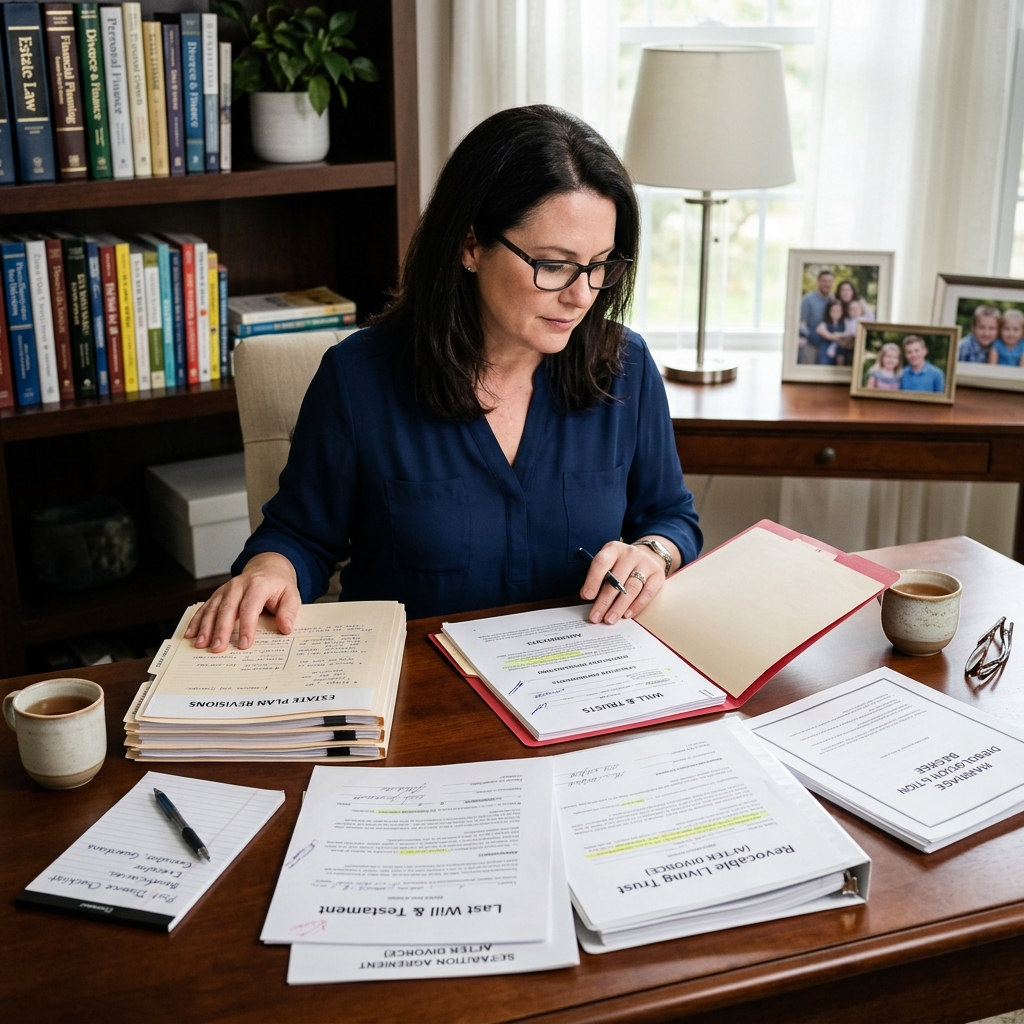
Divorce reshapes nearly every part of your life, including how your assets will be managed and distributed if you die or become incapacitated. A divorce decree changes your marital status, but it does not automatically rewrite your estate planning documents, your account beneficiaries, or your decision-making appointments. If you do not revise these documents, your former spouse may still have legal authority or receive property in ways you no longer intend.
This guide explains why updating your estate plan after divorce is critical, which documents deserve immediate attention, and how to approach changes thoughtfully so your plan reflects your new goals and protects your children and other loved ones.
Why Divorce Makes Estate Planning Urgent
When a marriage ends, you typically divide property, adjust support obligations, and create separate financial lives. Yet many people leave their wills, trusts, and beneficiary designations untouched for years. That gap can create serious legal and financial problems.
- Old documents remain in force until you formally revoke or replace them. A finalized divorce does not automatically cancel a will, trust, or power of attorney in many situations.
- Automatic revocation laws are limited and inconsistent. Some states treat an ex‑spouse as having predeceased you for certain provisions in wills or revocable trusts, but those rules often apply only to the former spouse, not to their relatives or other provisions.
- Non‑probate assets follow beneficiary forms. Retirement accounts, life insurance policies, and payable‑on‑death accounts typically pay out to whoever is listed on the beneficiary designation, even if divorce has occurred.
- Decision‑making authority may still rest with your ex. If you named your spouse as attorney‑in‑fact, healthcare agent, or trustee, those appointments may continue to be legally effective until changed.
Because of these factors, many professional organizations and legal guides recommend reviewing and updating your estate plan as soon as your divorce is finalized. Acting promptly reduces the chance that outdated documents will conflict with your new intentions.
Key Estate Planning Documents to Review After Divorce
A comprehensive review should consider both your “core” estate planning documents and the beneficiary designations and titles attached to specific assets. The following table summarizes which items typically require attention and why.
| Document / Asset | Post‑Divorce Risk | Primary Action |
|---|---|---|
| Last Will and Testament | Ex‑spouse may still be beneficiary or executor if not revoked in your jurisdiction. | Create a new will or fully revise; reassign beneficiaries and executors. |
| Revocable Living Trust | Former spouse may remain as trustee or beneficiary; provisions may rely on joint property. | Amend or replace trust; update trustees and distribution terms. |
| Financial Power of Attorney | Ex may retain control over your finances if you become incapacitated. | Revoke and sign new power of attorney naming a trusted individual. |
| Healthcare Proxy / Advance Directive | Former spouse may still make medical decisions during incapacity. | Appoint a new healthcare agent and confirm treatment preferences. |
| Retirement Accounts & Life Insurance | Beneficiary designation may continue to favor an ex‑spouse despite divorce. | Update beneficiaries directly with each financial institution. |
| Transfer‑On‑Death / Payable‑On‑Death Accounts | Old beneficiary forms can override your will and trust. | Revise TOD/POD forms to name new beneficiaries. |
Rebuilding Your Will Around Your New Life
Your will is often the foundation of your estate plan. After divorce, you are likely to have new priorities regarding who should receive your property and who should manage your estate. Legal guides emphasize that creating a new will after divorce is usually the safest way to ensure your assets are distributed as you now intend.
Core changes many people make
- Reassign your executor. If your former spouse was named as the personal representative (executor), you will likely want a new person—such as a sibling, adult child, or trusted friend—to take on this role.
- Update your beneficiaries. You may remove your ex‑spouse, add children, or include other family members and charities whose importance has increased in your life.
- Adjust specific bequests. Gifts tied to marital property may no longer make sense once assets are divided in the divorce.
- Coordinate with your divorce decree. If your divorce agreement requires certain provisions—such as maintaining life insurance for the benefit of minor children—your new will should reflect those obligations.
In some jurisdictions, statutes may automatically treat your ex‑spouse as having predeceased you for purposes of will provisions, but those laws usually do not affect bequests to stepchildren, former in‑laws, or broader distribution patterns. Drafting a new will avoids ambiguities and reduces the likelihood of litigation among heirs.
Reviewing and Revising Trusts Created During Marriage
Many couples use revocable living trusts to manage assets, avoid probate, and provide continuity if one partner dies or becomes incapacitated. Divorce can make the terms of these trusts outdated or unworkable. Professional guidance frequently advises reviewing all trusts after divorce to ensure they align with your new property ownership and goals.
Revocable living trusts
Because revocable trusts can usually be changed by the grantor, revising them post‑divorce is often straightforward:
- Update trustee appointments. Remove a former spouse as trustee or successor trustee if you no longer want them managing trust assets.
- Revise beneficiaries and distribution schemes. Adapt the trust to reflect your updated family structure, including children, new partners, or blended families.
- Rewrite provisions tied to joint property. If certain assets were awarded to your ex‑spouse in the divorce, the trust should no longer reference them.
Irrevocable trusts
Irrevocable trusts are more complex because their terms cannot easily be changed. Adjustments may require court involvement or specific legal mechanisms.
- Review whether your ex‑spouse is named as trustee or beneficiary, and consult a qualified attorney about options for modification if appropriate.
- Consider creating new trusts to protect children or other heirs if existing structures cannot be altered.
Changing Who Can Act on Your Behalf
Estate planning is not only about who receives property; it is also about who can make decisions if you are unable to act for yourself. After divorce, leaving a former spouse in control of your finances or medical care can conflict with your current wishes.
Financial power of attorney
A durable financial power of attorney authorizes another person to manage your money, sign documents, and handle legal matters if you are incapacitated. Many married people name their spouse for this role. After divorce:
- Formally revoke the old document. This typically involves signing a written revocation and notifying relevant institutions.
- Execute a new power of attorney. Choose someone you trust to manage your affairs—often a relative or professional fiduciary.
- Clarify the scope of authority. Limit or expand powers to match your comfort level and financial complexity.
Healthcare proxy and advance directive
A healthcare proxy (or medical power of attorney) names a person to make medical decisions if you cannot speak for yourself. An advance directive sets out your treatment preferences. If your ex‑spouse currently holds this authority, consider the following:
- Designate a new healthcare agent who understands and respects your values.
- Review life‑support, pain management, and organ donation preferences in light of your changed circumstances.
- Provide copies of your updated directive to your agent and healthcare providers.
Updating Beneficiary Designations on Financial Accounts
One of the most frequently overlooked steps after divorce is revising the beneficiary forms associated with insurance and retirement assets. Many legal sources emphasize that beneficiary designations often override the instructions in your will and trust.
Assets commonly affected
- Employer retirement plans such as 401(k) and 403(b) accounts
- Individual Retirement Accounts (IRAs)
- Life insurance policies, both employer‑provided and individually owned
- Brokerage and bank accounts with transfer‑on‑death (TOD) or payable‑on‑death (POD) designations
Some states provide statutory protections that revoke ex‑spouse beneficiary status for certain non‑probate assets. However, federal law and plan rules can limit those protections, especially for employer‑sponsored retirement plans. The safest approach is to contact each institution directly after your divorce is final and submit updated beneficiary forms.
Practical steps
- Request a list of all accounts with designated beneficiaries.
- Confirm whether your divorce decree requires maintaining any particular beneficiary, for example for child support or maintenance obligations.
- Complete new designation forms that reflect your current wishes and family structure.
- Retain copies of all confirmations for your records.
Protecting Children and Future Family Members
Divorce often changes parenting arrangements and can lead to blended families, new relationships, and complex dynamics. Adjusting your estate plan thoughtfully helps protect children and reduce the likelihood of disputes between an ex‑spouse and future partner.
Planning for minor children
- Guardianship nominations. Your will can nominate guardians for minor children in case both legal parents die. Revisiting these provisions after divorce ensures your choices are up to date and realistic.
- Use of trusts for inheritance. Establishing a trust for children can prevent a large inheritance from passing outright to a minor and can provide structure for education, healthcare, and support.
- Selection of trustees. Consider whether you want your ex‑spouse involved in managing assets for your children or whether another trusted adult should serve as trustee.
Blended families and future spouses
If you later remarry or form a long‑term partnership, your estate plan should balance the needs of a new partner with protections for children from your prior marriage. Legal guidance often recommends reviewing your plan holistically so that wills, trusts, and beneficiary designations all work together rather than in conflict.
Timing and Working With Professionals
Many practitioners advise revising your estate plan promptly after a divorce is finalized to minimize the period during which outdated documents could cause problems. In some states, protections do not apply during legal separation, which means a spouse can retain full rights under an existing estate plan until the divorce decree is entered.
When to start
- Begin gathering your existing estate planning documents as soon as you know a divorce is likely.
- Plan to execute new or revised documents shortly after your divorce is final, once property division and support obligations are clear.
Professional assistance
Estate planning after divorce often involves coordinating state law, your divorce order, tax implications, and long‑term family goals. Consulting a qualified estate planning attorney can help you:
- Confirm how your state treats ex‑spouses under wills, trusts, and beneficiary designations.
- Ensure new documents are consistent with the property division and support terms in your divorce decree.
- Structure trusts and guardianship provisions to reduce future conflicts between an ex‑spouse and new partner.
Post‑Divorce Estate Planning Checklist
Use this high‑level checklist as a starting point for your own planning conversations. Adjust items based on your circumstances and the advice of your legal and financial professionals.
- Obtain copies of your current will, trusts, powers of attorney, and healthcare directives.
- List all accounts with designated beneficiaries (retirement, insurance, TOD/POD accounts).
- Meet with a qualified estate planning attorney to review how divorce and local law affect your existing plan.
- Draft and execute a new will, and revise or create trusts as needed.
- Sign new powers of attorney and healthcare directives naming updated decision‑makers.
- Submit updated beneficiary forms to each financial institution and insurer.
- Review guardianship and trustee choices for minor children and blended families.
- Store new documents in a secure location and inform key people of their roles.
Frequently Asked Questions
Does my divorce automatically remove my ex‑spouse from my will?
In some jurisdictions, divorce may automatically revoke provisions in a will that benefit a former spouse or name them as executor, treating them as if they predeceased you. However, these rules are not universal, may not apply to all documents, and usually do not affect bequests to stepchildren or former in‑laws. Because of this variability, many legal sources recommend creating a new will after divorce to clearly state your updated intentions.
Do I need to update my beneficiary designations if state law protects me?
Even if your state provides automatic revocation of ex‑spouse beneficiary status for some non‑probate assets, federal law and plan rules can override that protection, particularly for employer‑sponsored retirement plans. The most reliable approach is to contact each institution directly and sign new beneficiary forms so there is no doubt about who should receive those assets.
Can I intentionally keep my ex‑spouse as a beneficiary or decision‑maker?
Yes. If your relationship remains amicable and you want your former spouse to continue in a particular role, you generally may do so, but you should make that choice explicit in new documents executed after the divorce. Relying on old documents may create uncertainty about whether you intended to maintain those appointments.
How soon after divorce should I revise my estate plan?
Many legal guides encourage revising key documents as soon as your divorce is final, rather than waiting until a future event. Acting promptly limits the timeframe in which outdated provisions could produce unintended results and ensures that any obligations in your divorce decree are properly integrated into your estate plan.
Is professional advice necessary if I only have a simple will?
Even simple estates can be affected by complex rules regarding ex‑spouses, beneficiary designations, and children from different relationships. Consulting an attorney or qualified legal resource can help you understand how local law interacts with your divorce and ensure your new documents are valid and enforceable.
References
- Estate Planning Legal Issues After Divorce — Justia. 2024-01-01. https://www.justia.com/family/divorce/after-divorce/estate-planning-after-divorce/
- Navigating Estate Planning After a Divorce — DocR Law. 2023-06-15. https://www.docrlaw.com/articles/navigating-estate-planning-after-a-divorce
- Estate Planning After Divorce: Protecting Your Assets in Colorado — Meurer Law Offices. 2023-09-10. https://meurerlawoffices.com/estate-planning-after-divorce-protecting-your-assets-in-colorado/
- Estate Plan After a Divorce — Poydasheff & Sowers, LLC. 2025-01-20. https://www.poydasheffsowers.com/blog/2025/january/estate-plan-after-a-divorce/
- Divorce and Estate Planning — American College of Trust and Estate Counsel (ACTEC). 2022-03-01. https://www.actec.org/resource-center/video/divorce-and-estate-planning/
Similar Articles








Read full bio of Sneha Tete


