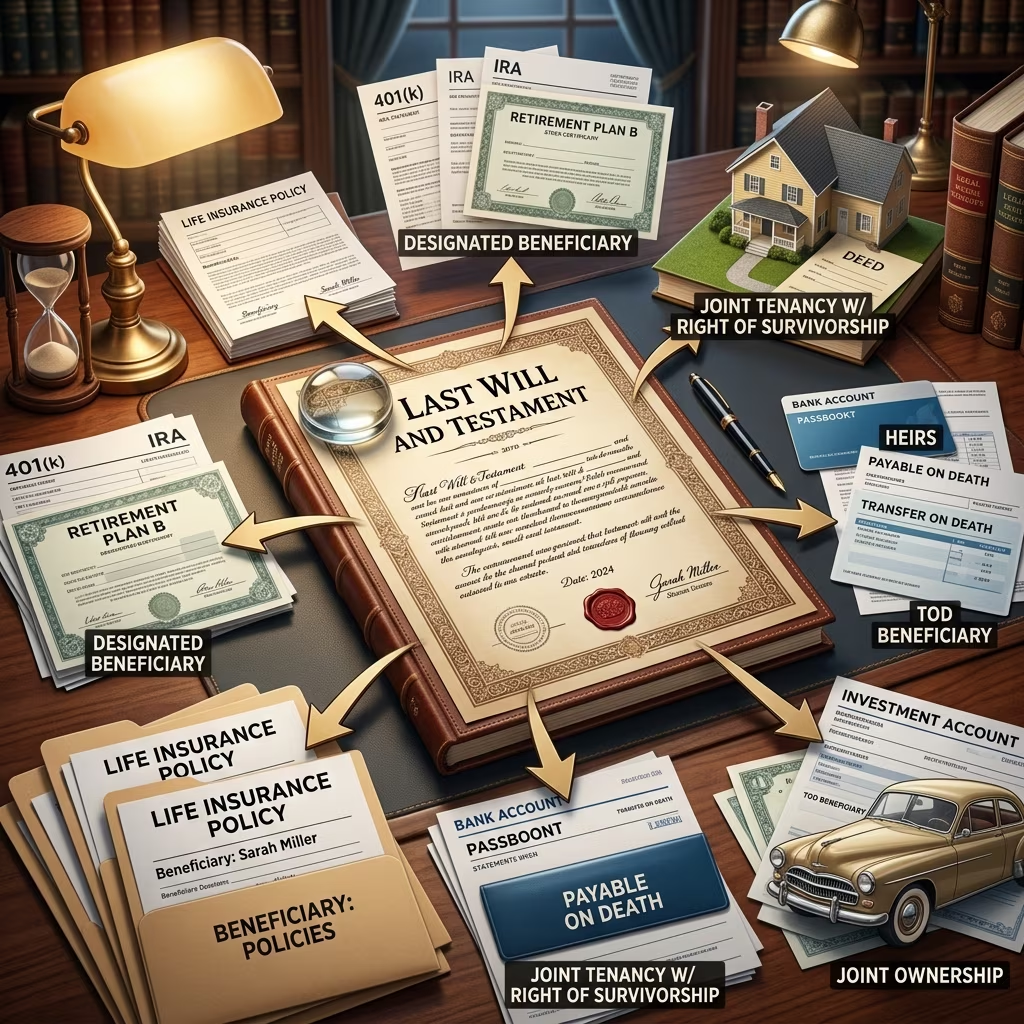
Many people assume that once they sign a will, they have complete control over exactly what happens to every asset they own. In reality, a significant portion of what you own may be distributed according to rules that operate entirely outside your will. Understanding which assets your will can actually control, and which ones follow separate legal paths, is essential for building a reliable and conflict‑free estate plan.
This guide explains the difference between probate and non‑probate property, highlights the major categories of assets that bypass your will, and offers practical steps to coordinate your beneficiary designations, joint ownership arrangements, and trusts with your overall planning goals.
Probate vs. Non‑Probate Property: The Core Distinction
At death, assets are generally sorted into two broad categories: probate assets and non‑probate assets. Your will primarily governs probate assets. Non‑probate assets follow contractual or titling rules and usually pass automatically to the named recipient.
What Are Probate Assets?
Probate assets are items that:
- Are owned solely in your name at death.
- Do not have a valid beneficiary designation, pay‑on‑death (POD) or transfer‑on‑death (TOD) designation, or survivorship feature.
- Are not titled in a trust or similar entity.
Typical probate assets include:
- Sole‑owner bank accounts without POD beneficiaries.
- Real estate titled only in your name.
- Vehicles registered to you alone.
- Personal property such as furniture, jewelry, artwork, and collectibles.
- Investment accounts without TOD designations.
These assets are overseen by a court in the probate process and distributed according to your will. If there is no will, state intestacy law determines who receives them.
What Are Non‑Probate Assets?
Non‑probate assets are governed by contracts, deeds, or titling arrangements that specify who receives the property when the owner dies. They typically bypass both probate and your will.
Common non‑probate arrangements include:
- Beneficiary designations on retirement accounts and life insurance.
- POD and TOD instructions on bank and investment accounts.
- Joint ownership with rights of survivorship.
- Assets held in a revocable or irrevocable trust.
For these assets, the institution holding the account (or the title document) relies on the designation or ownership form, not on your will, to determine who receives the property.
Major Asset Types Your Will Usually Cannot Control
Below are key categories of property that often ignore your will. If you mention these assets in your will but their underlying contracts or deeds say something different, the contract or deed almost always wins.
Retirement Accounts
Retirement accounts such as IRAs, 401(k)s, and similar plans require you to designate a beneficiary when the account is opened. At death, the provider pays the account balance directly to the named beneficiary.
Important features include:
- The beneficiary form, not your will, controls who receives the funds.
- Federal law, including the Employee Retirement Income Security Act of 1974 (ERISA), can override state rules for certain employer‑sponsored plans.
- Tax implications for beneficiaries depend on the type of account and current income tax rules.
If your will leaves “my retirement accounts” to one person but your beneficiary form names someone else, the named beneficiary will receive the account.
Life Insurance Proceeds
Life insurance policies are designed to pay a lump sum or stream of payments to the beneficiaries you list on the policy. The insurance company is bound by that designation and does not follow the terms of your will.
Key points:
- Policy beneficiaries receive proceeds directly from the insurer.
- The will only matters if the policy names your estate or a trust as the beneficiary.
- Changing the recipient requires updating the policy forms with the insurer.
Annuities and Similar Contract‑Based Products
Many annuities and other income‑producing insurance products include beneficiary designations for amounts payable at death. Those contract terms determine who receives remaining value, not your will.
POD Bank Accounts
Payable‑on‑death (POD) designations allow you to name individuals who can claim a bank account after you die. Upon receipt of a death certificate and any required forms, the bank transfers the funds to the POD beneficiaries.
Characteristics include:
- POD instructions supersede conflicting directions in your will.
- Multiple POD beneficiaries can be named, often with shares or percentages.
- POD accounts remain fully under your control during life.
TOD Investment Accounts
Transfer‑on‑death (TOD) designations serve a similar function for brokerage accounts, stocks, or bonds. The designated beneficiaries become the owners of the securities when you die.
Features:
- No probate court involvement is needed for the transfer.
- Your will cannot override a properly executed TOD instruction.
Jointly Owned Property with Survivorship Rights
Many assets—particularly homes and bank accounts—are held in joint tenancy with rights of survivorship. When one owner dies, the asset automatically passes to the surviving co‑owner.
Key consequences:
- The surviving joint owner becomes full owner regardless of what the will says.
- Probate is not needed for the survivorship transfer.
- Using joint ownership as a planning tool requires careful thought about creditor exposure, tax issues, and family dynamics.
Property Held in Trust
Assets you place into a living trust are titled in the name of the trust, not in your individual name. At death, the trustee distributes those assets according to the trust agreement, not your will.
Important distinctions:
- Trust property is usually non‑probate and bypasses the court process.
- Changes to beneficiaries require amending the trust, not the will.
- A will is still useful to handle any assets not properly transferred to the trust (often via a “pour‑over” clause).
How Conflicts Are Resolved: Which Document Wins?
Because many people do not realize that beneficiary designations and titles operate outside a will, it is common for there to be inconsistencies—for example, a will leaving “all my accounts” to one person while an older beneficiary form names someone else. In most situations, the asset’s governing document controls.
| Asset Type | Primary Governing Instrument | Does the Will Control? |
|---|---|---|
| Sole‑owner bank account, no POD | Will or intestacy law | Yes, if there is a valid will. |
| Bank account with POD designation | POD beneficiary form | No, POD overrides conflicting will terms. |
| IRA or 401(k) with named beneficiary | Plan beneficiary designation (plus ERISA for some plans) | No, plan documents control. |
| Life insurance policy | Policy beneficiary designation | No, unless the estate is the beneficiary. |
| Home titled in joint tenancy with survivorship | Deed and survivorship rules | No, surviving owner takes automatically. |
| Assets properly titled in a living trust | Trust agreement | No, trust terms control distribution. |
What Happens to Assets Not Mentioned in Your Will at All?
Even among probate assets, you might simply forget to list something by name—such as a newly opened account or personal property you acquired later. Most well‑drafted wills contain a residuary clause to catch these items.
Without a residuary clause, or when someone dies without a will, unaddressed probate assets are distributed under state intestacy laws, which provide a default order of inheritance based on family relationships.
In contrast, non‑probate assets with valid beneficiary designations or clear survivorship rules will generally still pass according to those mechanisms even if the will never mentions them.
Special Considerations: Divorce, Law Changes, and Mistakes
Estate plans are not static. Life events and legal changes can alter how both probate and non‑probate assets are handled.
Impact of Divorce on Non‑Probate Assets
Several states provide that naming a spouse as a beneficiary of certain non‑probate assets may be revoked automatically upon divorce, although details vary. For example, Texas law often neutralizes an ex‑spouse’s designation on non‑probate accounts unless the beneficiary designation was added after the divorce was finalized.
However, federal law governing ERISA‑covered retirement plans can override such state‑level rules. For those accounts, the plan administrator generally must pay the benefits to the beneficiary listed on file, even if a divorce has occurred.
Outdated or Missing Beneficiary Designations
If no beneficiary is named, if the named beneficiary has died, or if a form is completed incorrectly, the contract or account’s default provisions apply. Frequently this means the asset is paid into your estate and becomes subject to probate and the terms of your will or state intestacy law.
Contradictory Instructions Between Documents
When there is a direct conflict:
- Beneficiary forms normally override contrary directions in a will for the same asset.
- Joint ownership and survivorship features override attempts in a will to give the same property to someone else.
- Trust provisions control trust‑titled property despite different dispositions in the will.
Coordinating Your Will with Other Planning Tools
Because so many valuable assets fall outside your will, effective estate planning means coordinating everything—wills, trusts, deeds, account titles, and beneficiary forms—so they all point toward the same overall intentions.
Practical Steps to Align Your Plan
- Inventory all assets including retirement accounts, bank accounts, investments, real estate, life insurance, business interests, and digital assets.
- Identify which are probate vs. non‑probate by examining titles, beneficiary forms, and trust documents.
- Review beneficiary designations regularly, especially after marriage, divorce, births, deaths, or major life changes.
- Coordinate beneficiary choices with your will to avoid giving the same asset to different people in different documents.
- Consider using a revocable trust if you want centralized control over how major assets pass outside probate.
- Add a residuary clause to your will to catch unlisted probate assets and reduce the risk of partial intestacy.
- Consult legal and tax professionals to navigate complex rules, particularly for retirement accounts and business interests.
Frequently Asked Questions
Does my will ever control my retirement account?
Your will controls a retirement account only if the account’s terms cause it to be paid into your estate—for example, when no valid beneficiary is designated and the plan’s default rule directs the balance to the estate. Otherwise, the beneficiary designation you filed with the provider determines who receives the funds.
Can I override a beneficiary designation just by changing my will?
No. Changing your will typically has no effect on existing beneficiary designations for retirement accounts, life insurance, POD/TOD accounts, or annuities. To alter who receives those assets, you must update the relevant forms with the institution holding the asset.
Is everything in a trust automatically outside of probate?
Generally, properly titled trust assets are non‑probate and are distributed according to the trust agreement. However, assets never transferred into the trust—such as accounts or real estate still in your personal name—may still go through probate and be controlled by your will.
What if I forget to mention certain property in my will?
If your will includes a residuary clause, forgotten or later‑acquired probate property typically falls into that residual category and is distributed to the residuary beneficiaries. Without such a clause, unmentioned probate property may pass under state intestacy laws. Non‑probate assets will still follow their beneficiary designations or ownership rules.
Why is it risky to rely only on joint ownership?
Joint ownership with survivorship can help assets bypass probate but may cause unintended consequences: co‑owners can access and potentially spend or encumber property during your life; creditors of a co‑owner may reach the asset; and your ultimate distribution goals may be frustrated if the surviving joint owner does not share your intentions.
References
- Probate Law: Nonprobate Property — Texas State Law Library. 2024-01-05. https://guides.sll.texas.gov/probate/nonprobate-property
- Understanding Which Assets are Subject to Probate — Plunkett Cooney. 2023-08-15. https://www.plunkettcooney.com/tax-law-estate-plans-probate-business-succession/understanding-assets-subject-to-probate
- Assets Passing Outside Your Will — ARAG Legal. 2022-06-10. https://www.araglegal.com/member/learning-center/topics/planning-your-legacy/assets-not-covered-in-a-will
- What Types of Assets Can Be Included in a Will in Texas? — David A. Munson, P.C. 2023-03-20. https://www.davidamunsonpc.com/what-types-of-assets-can-be-included-in-a-will-in-texas
- Assets to Include in Your Estate Planning — Sarah S. Shepard, Attorney at Law. 2022-11-02. https://www.sarahsshepard.com/blog/assets-to-include-in-ep
- Assets Passing Outside Your Will and Probate — MacDonald, Illig, Jones & Britton LLP. 2021-09-01. https://www.macdonaldillig.com/resources/frequently-asked-questions/faq-item/what-assets-are-not-distributed-in-accordance-with-a-will