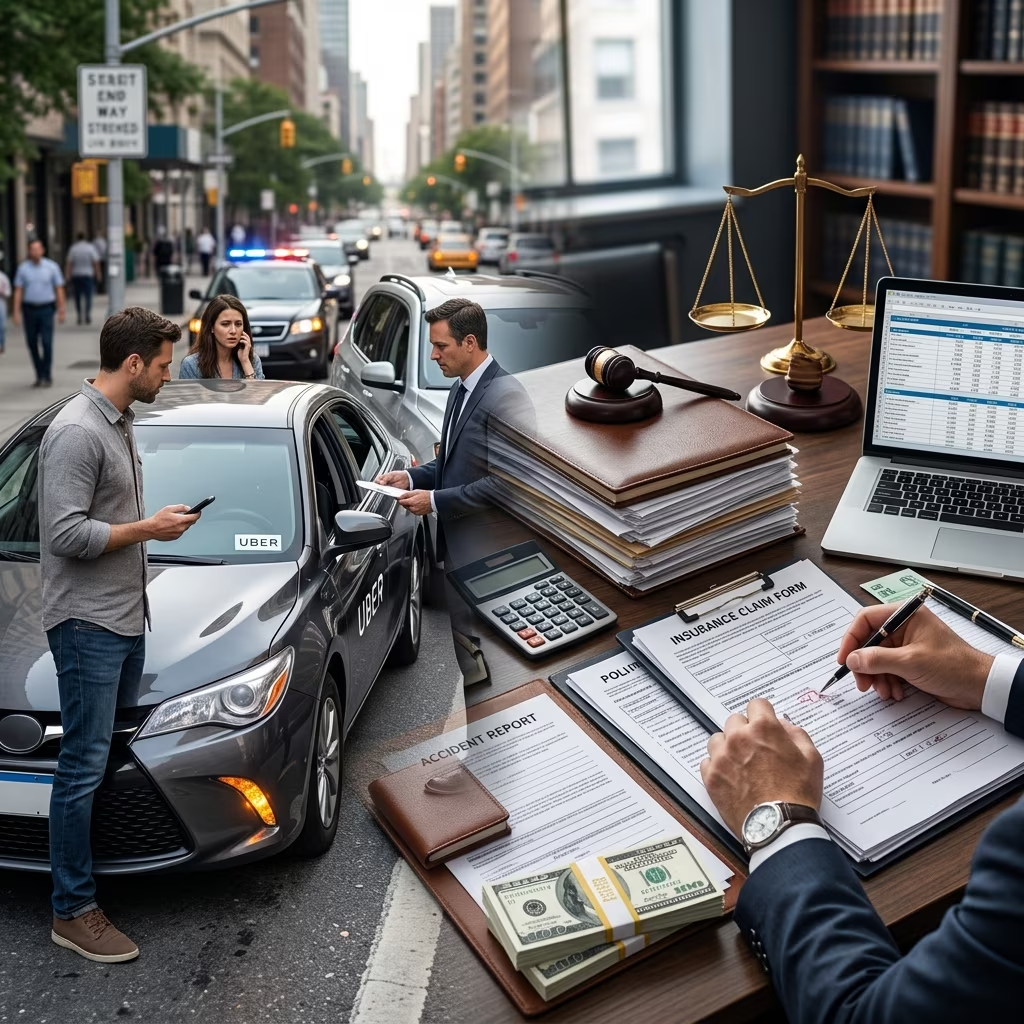
Rideshare services like Uber have reshaped transportation, but they have also created complex questions when accidents occur and injured people seek compensation. This guide explains how Uber’s insurance coverage operates, how settlements are typically calculated, and what practical steps passengers, drivers, and other road users can take to protect their rights after a crash.
Why Uber Accident Claims Are Different from Regular Car Crashes
Uber accidents involve a mix of personal auto policies, commercial rideshare coverage, and state-specific rules, making them more complicated than many standard car collisions. In a typical crash, liability usually centers on one driver’s personal policy; in an Uber case, several overlapping policies and ride-status rules can determine who pays and how much.
- Multiple potential insurers: The Uber driver’s personal insurer, Uber’s commercial insurer, and the at-fault third party may all play a role.
- App status matters: Whether the driver’s app was off, on but waiting, or in the middle of an active trip directly affects available coverage.
- Special statutory rules: Many states have enacted minimum coverage requirements specifically for transportation network companies (TNCs) like Uber.
Understanding these differences is crucial because settlement negotiations will hinge on which insurance policy applies and what its limits are.
How Uber’s Insurance Coverage Works Across Ride Phases
Uber’s insurance coverage is structured around distinct phases of a driver’s work. Each phase can trigger different levels of protection for passengers, other drivers, pedestrians, and the Uber driver.
Key Coverage Phases
| Driver Status | What the Driver Is Doing | Primary Insurance Source | Typical Coverage Limits* |
|---|---|---|---|
| Offline | App off, using vehicle for personal reasons | Driver’s personal auto policy | State minimums (varies by jurisdiction) |
| Online & Waiting | App on, waiting for a ride request | Uber contingent liability (secondary) | Often around $50,000 per person, $100,000 per accident, $25,000 property damage in some states. |
| En Route / With Passenger | Accepted a trip or transporting a passenger | Uber commercial auto policy | Up to $1,000,000 in third-party liability; often includes uninsured/underinsured motorist coverage. |
*Limits can vary by state and policy; always confirm current terms on Uber’s official insurance page.
During an active trip or delivery, Uber typically provides up to $1,000,000 in third-party liability coverage for bodily injury and property damage, along with uninsured/underinsured motorist protection in many jurisdictions. This higher limit is often the source of larger settlements when severe injuries occur.
Who Can Bring an Uber Accident Settlement Claim?
An Uber-related crash can affect several different groups, all of whom may have valid claims depending on the circumstances:
- Uber passengers: Injured while riding in an Uber, whether or not their driver was at fault.
- Other drivers: Motorists struck by an Uber vehicle or hit by another driver while an Uber is involved.
- Pedestrians and cyclists: Road users injured by an Uber driver in any phase of operation.
- Uber drivers: Drivers themselves can make claims if injured on the job, sometimes under Uber’s policies and sometimes through other coverage.
In all of these scenarios, liability and available coverage revolve around who caused the crash and the driver’s status in the app at the time.
Typical Settlement Ranges in Uber Accident Cases
There is no universal “standard” payout for Uber accidents, but legal and insurance analyses provide broad ranges for different levels of injury severity. These figures are not guarantees; they illustrate common patterns.
Settlement Ranges by Injury Severity
- Minor injuries: Soft-tissue strains, mild whiplash, minor bruising or cuts. Settlements commonly fall in the range of $10,000 to $50,000, depending on medical bills and pain and suffering.
- Moderate injuries: Fractures, concussions, injuries that require ongoing care or extended time off work. These claims often range from about $50,000 to $150,000+.
- Severe injuries: Traumatic brain injuries, spinal cord damage, permanent disability, or long-term care needs. Settlements can reach $200,000 to well over $1,000,000, especially when future medical treatment and substantial lost earnings are involved.
Some analyses of recent Uber passenger settlements show average payouts around $20,000–$30,000 for many injured riders, with possible minimums in the low thousands for minor harm and six-figure amounts for serious injuries. These averages conceal a wide range and should be used only as rough context, not as a prediction for any individual case.
Key Factors That Influence Uber Settlement Amounts
Even with similar injuries, two Uber cases can produce very different settlement outcomes. Insurance adjusters and courts examine numerous factors when valuing claims.
Main Drivers of Settlement Value
- Severity and type of injuries: More serious and permanent injuries generally lead to larger settlements because of higher medical costs, long-term disability, and greater non-economic damages.
- Medical expenses and treatment: Emergency care, surgeries, rehabilitation, and ongoing therapies all increase the economic component of a claim.
- Lost wages and diminished earning capacity: Time away from work and any long-term impact on earnings are central to settlement negotiations.
- Pain and suffering: Physical pain, emotional distress, anxiety, PTSD, and reduced enjoyment of life are typically compensated as non-economic damages.
- Liability clarity: Claims with strong evidence of fault—such as clear traffic violations or supporting witness testimony—often settle more favorably and faster.
- Available insurance limits: If only a personal policy with low limits applies, recovery may be constrained; if the $1,000,000 Uber commercial policy is triggered, higher settlements become possible.
- State laws: Comparative negligence rules, damage caps, and specific TNC statutes influence both liability and maximum recoverable amounts.
In practice, the negotiation process involves weighing all these factors along with documentation, expert opinions, and any prospect of a lawsuit if settlement talks stall.
Step-by-Step: What to Do After an Uber Accident
Your actions immediately after an Uber accident can significantly affect the strength and value of your eventual claim. The following steps help preserve evidence and protect your legal interests.
Immediate Safety and Documentation
- Seek medical care right away: Even if injuries seem minor, prompt evaluation creates a record linking your condition to the crash and can uncover hidden issues.
- Call law enforcement: A police report often becomes a key document in establishing fault and summarizing what happened at the scene.
- Collect evidence: Take photos of vehicle damage, roadway conditions, injuries, and any visible hazards. Document Uber trip details such as the driver’s name, license plate, and app screenshots showing ride status.
- Gather contact information: Obtain names, phone numbers, and email addresses for drivers, passengers, and witnesses.
Notifying Insurers and Uber
- Report the crash in the Uber app: Uber expects incidents to be reported through its platform, which can initiate review and potential insurance involvement.
- Notify your own auto insurer: Many policies require prompt notice after an accident, even if another party appears to be at fault.
- Be cautious with recorded statements: Insurance adjusters may request detailed interviews early; legal practitioners often advise consulting counsel before giving any recorded statement.
Once initial reports are filed, Uber’s insurer or the at-fault party’s carrier typically opens a claim file, reviews the evidence, and begins the evaluation process.
How the Uber Settlement Negotiation Process Typically Works
Settlement is the resolution of a claim through agreed compensation rather than a trial. While each case is unique, many Uber claims follow a similar path.
Common Stages of an Uber Settlement
- Claims investigation: Insurers review police reports, medical records, witness statements, and trip data to assess fault and damages.
- Valuation of damages: Economic losses (medical bills, lost income, property damage) and non-economic losses (pain and suffering) are estimated, often using internal formulas and past settlement benchmarks.
- Initial settlement offer: The insurer may present a first offer that is lower than the likely final value. Many injured people negotiate for a higher amount, sometimes through legal representation.
- Negotiations and counteroffers: Evidence-based arguments, doctor reports, and future care estimates are used to push for a fair figure.
- Resolution or litigation: If the parties reach agreement, the injured person signs a release in exchange for payment. If not, the case may proceed to mediation, arbitration, or a court lawsuit.
Because Uber policies often involve higher limits, insurers may scrutinize these claims closely, especially in severe injury cases. Accurate documentation and clear medical support are essential.
Common Challenges in Uber Insurance and Settlement Claims
Uber accident claims can encounter obstacles that delay or reduce compensation. Knowing these potential issues can help claimants prepare and respond effectively.
Frequent Issues Claimants Face
- Disputes over app status: Insurers may argue that the driver was offline or between trips, limiting the applicability of the higher commercial coverage.
- Comparative fault arguments: In states with comparative negligence, insurers may contend that the injured person shares responsibility for the crash, reducing the payout proportionally.
- Low initial offers: Some claimants receive offers that do not reflect the full extent of their injuries or losses, especially when future treatment or long-term effects are uncertain.
- Complex multi-party liability: When multiple vehicles are involved, allocating fault among drivers can be time-consuming and contentious.
- Policy limit constraints: If serious injuries exceed available limits under personal or contingent policies, recovery may be capped unless the Uber commercial policy applies.
Awareness of these challenges allows injured passengers and drivers to document carefully, seek timely advice, and manage expectations about the length and complexity of the process.
FAQs About Uber Insurance and Accident Settlements
Does Uber always provide $1,000,000 in coverage after an accident?
No. The $1,000,000 commercial liability coverage generally applies only when the driver is en route to pick up a passenger or actively transporting one as part of an Uber trip. If the driver is offline or merely waiting with the app on, lower or different coverage may apply.
Can I file a claim if another driver caused the accident while I was an Uber passenger?
Yes. If a third-party driver is at fault, you can typically pursue a claim against that driver’s insurer. In many cases, Uber’s coverage may also come into play, particularly through uninsured or underinsured motorist protection if the at-fault driver lacks adequate insurance.
What if the Uber driver’s personal insurer denies coverage because they were driving for hire?
Many personal auto policies exclude commercial use, which is why contingent and commercial rideshare coverage exists. If personal coverage does not apply, Uber’s contingent liability or commercial policy may step in depending on the driver’s status and local regulations.
Are average Uber settlement figures a reliable predictor for my case?
Average figures—such as tens of thousands of dollars for many injury claims—provide general context but are not reliable predictors for individual cases. Your settlement will depend on specific facts like injury severity, evidence, liability, and applicable policy limits.
Do state laws affect Uber insurance and settlements?
Yes. Many states have enacted statutes specifying minimum insurance requirements for rideshare operations and setting standards for when coverage applies. State rules on negligence, damage caps, and limitations periods also affect settlement outcomes.
Using Official and Reliable Information When Evaluating Claims
Because rideshare insurance is governed by a mix of company policies, state legislation, and regulatory oversight, accurate and up-to-date information is essential. Official resources such as state transportation codes, attorney general announcements, and Uber’s own insurance documentation offer authoritative guidance on coverage terms and legal rights.
For example, some states specify exact minimum coverage levels for drivers who are logged into a rideshare app but have no passengers, and separate requirements for when a driver is transporting riders. Uber’s public insurance information outlines the structure of its coverage program and may note changes or limitations over time. Regulatory settlements and enforcement actions, like those announced by state attorneys general, can also shape benefits and protections for drivers and, indirectly, for passengers.
Anyone involved in an Uber accident should consult these types of sources alongside professional legal advice to understand the current framework that applies to their situation.
References
- Insurance for Rideshare and Delivery Drivers — Uber Technologies Inc. 2024-03-01. https://www.uber.com/us/en/drive/insurance/
- Uber Passenger Accident Settlement Amounts in 2026 — Wettermark Keith. 2026-01-10. https://wkfirm.com/uber-passenger-accident-settlement-amounts-for-2026/
- Navigating Uber Personal Injury Settlements: 2026 Guide — Novian & Associates. 2026-02-05. https://www.novianlaw.com/uber-personal-injury-settlements/
- Uber Accident Settlement Amounts — Miller & Zois. 2025-07-15. https://www.millerandzois.com/car-accidents/uber-accident-claims/
- What Is the Average Uber Accident Settlement? — Brown & Crouppen. 2025-06-20. https://www.brownandcrouppen.com/blog/average-uber-accident-settlement/
- Lyft and Uber Settlement — Office of the New York State Attorney General. 2023-11-02. https://ag.ny.gov/lyft-uber-settlement