
Understanding the Lay Opinion Rule in Criminal Trials
A practical guide to when and how non‑experts may offer opinions in court, and the limits the law places on lay witness testimony.
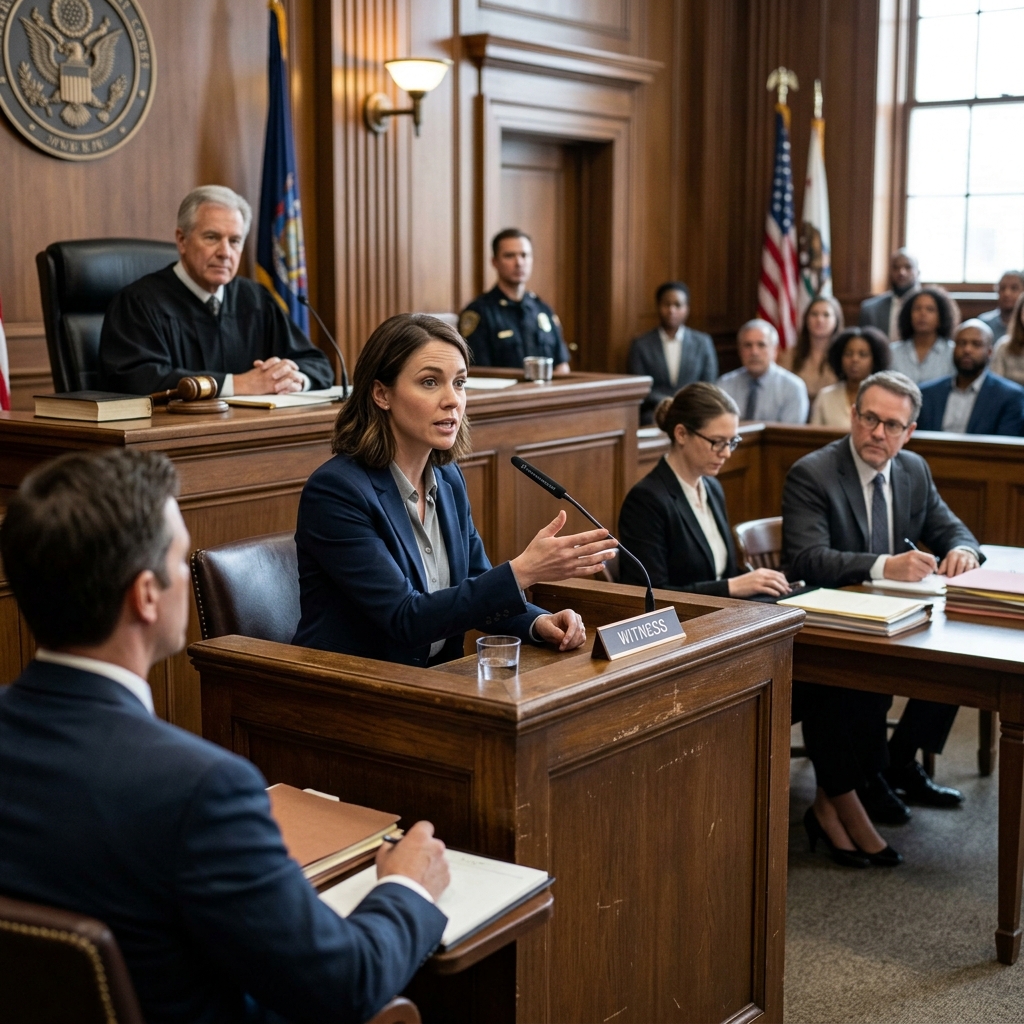
The lay opinion rule governs when a witness who is not an expert may testify in the form of opinions rather than purely describing facts in a criminal case. At its core, the rule allows helpful, perception-based opinions while blocking speculation, technical analysis, or legal conclusions.
What Is a Lay Opinion Witness?
A lay witness is an ordinary person testifying about facts they personally observed, rather than providing specialized or scientific analysis. Their testimony typically focuses on:
- What they saw, such as behavior, appearance, or events.
- What they heard, including statements, sounds, or tone of voice.
- What they did during or after an incident.
Under the lay opinion rule, this same witness may sometimes express a conclusion or impression drawn from those observations—for example, that someone appeared angry, nervous, or intoxicated—if certain legal conditions are met.
The Legal Foundation: Federal Rule of Evidence 701
In U.S. federal courts, the lay opinion rule is defined by Federal Rule of Evidence 701. Many state evidence codes mirror this rule or adopt similar standards. Rule 701 limits lay opinion testimony to opinions that meet three key requirements:
- Perception-based: The opinion must be rationally based on the witness’s own perception.
- Helpful: It must help the jury clearly understand the witness’s testimony or decide a fact in issue.
- Non-technical: It cannot be based on scientific, technical, or other specialized knowledge that would require expert qualification under Rule 702.
These conditions ensure that lay opinions remain grounded in everyday experience rather than expert-level analysis.
Breaking Down the Three Core Requirements
1. Rationally Based on the Witness’s Perception
The first requirement is that the opinion be tied directly to what the witness personally perceived—through sight, hearing, or other senses. In practice, this means:
- The witness must have firsthand knowledge of the situation.
- The opinion must logically follow from that firsthand experience.
For example, a witness who interacted with a driver may offer an opinion about the driver’s sobriety based on slurred speech, odor of alcohol, and unsteady gait, because those are observations within common experience.
2. Helpful to Understanding or Fact-Finding
Second, the opinion must be helpful to the jury or judge in making sense of the testimony or deciding a relevant fact. Courts often find opinions helpful when:
- A simple description of isolated details would not fully capture the witness’s overall impression.
- Jurors would struggle to reconstruct the situation without the witness’s summary conclusion.
For instance, saying someone looked “terrified” can help the jury understand the witness’s experience better than listing every muscle movement or facial expression. The opinion turns a complex observation into a usable piece of evidence.
3. Not Based on Specialized Knowledge
The third requirement draws a sharp line between lay opinions and expert opinions. If the witness’s opinion relies on scientific, technical, or specialized knowledge, it must be treated as expert testimony and evaluated under Rule 702 instead.
Practically, this means a lay witness may:
- Offer opinions that fall within everyday human experience (e.g., emotions, demeanor, apparent age).
- Not offer conclusions that require training, such as complex medical diagnoses or cell-site location analysis.
Courts have explicitly held that certain topics—such as precise cellphone location based on network data—require expert knowledge and cannot be offered as lay opinions.
Lay Opinion vs. Expert Opinion: Key Differences
The distinction between lay and expert opinions affects both admissibility and pretrial disclosure obligations. The following table highlights major differences:
| Feature | Lay Opinion (Rule 701) | Expert Opinion (Rule 702) |
|---|---|---|
| Source of knowledge | Personal observation and everyday experience. | Specialized, scientific, or technical expertise. |
| Admissibility rule | Governed by Rule 701 and personal perception. | Governed by Rule 702 and reliability standards. |
| Typical topics | Emotions, apparent intoxication, physical condition, identity from familiarity. | Forensic analysis, medical opinions, engineering, complex data interpretation. |
| Pretrial disclosure | Generally less extensive, because the witness is not designated as expert. | Formal expert reports and disclosures usually required. |
| Purpose | Translate observations into a concise impression for jurors. | Help jurors understand matters outside common experience. |
Common Types of Admissible Lay Opinions
Court decisions and evidence guides identify several categories of lay opinions that are frequently allowed when Rule 701’s requirements are satisfied.
- Emotional state: A witness may say that someone appeared scared, angry, or upset, based on observable behavior.
- Demeanor and behavior: Testimony about whether a person seemed nervous, relaxed, or agitated is generally permissible.
- Apparent intoxication: There is broad acceptance of lay opinions about whether someone seemed intoxicated, if grounded in perceptible signs.
- Physical condition: Opinions about whether someone looked tired, injured, or ill can be admitted when based on ordinary observation.
- Identity from familiarity: Witnesses familiar with a person may identify them in photographs or videos, offering lay opinions about identity that assist the jury.
These opinions are admissible when they help jurors understand the situation in a way that raw descriptive details alone might not.
Important Limits on Lay Opinion Testimony
While Rule 701 permits certain opinions, courts impose notable limits to protect the integrity of the fact-finding process.
- No opinion on guilt or innocence: Neither lay nor expert witnesses may state an opinion that the defendant is guilty; that decision belongs to the jury.
- No credibility judgments: Witnesses are generally barred from saying another person was “lying” or “telling the truth”; they may describe behavior but not pronounce a credibility verdict.
- No speculation about intent: Courts reject lay opinions about what someone intended or planned based solely on observed actions.
- No technical or scientific analysis: Testimony that requires specialized knowledge—such as detailed phone location analysis or advanced forensic interpretation—must be offered by qualified experts, not lay witnesses.
These limits prevent witnesses from encroaching on the jury’s role or offering opinions that exceed their competence.
How Courts Decide If a Lay Opinion Is Admissible
Judges act as gatekeepers, deciding whether to admit lay opinion testimony by applying Rule 701 to the facts of each case. In doing so, they often consider:
- Personal knowledge: Did the witness directly observe the relevant events?
- Logical connection: Does the opinion reasonably follow from those observations?
- Helpfulness: Will the opinion clarify testimony or assist the jury in deciding a specific factual question?
- Risk of prejudice or confusion: Could the opinion mislead the jury, unduly influence their decision, or be mistaken for expert analysis?
- Overlap with expert topics: Does the opinion touch on areas reserved for experts, such as complex scientific interpretation?
Because these decisions are case-specific, lawyers often argue vigorously over whether particular opinions should be treated as lay or expert testimony.
Strategic Considerations in Criminal Defense
For defense counsel, understanding the lay opinion rule is crucial both for presenting their own witnesses and for challenging prosecution evidence.
Using Lay Opinions to Support the Defense
Defense lawyers may rely on lay opinions to humanize their client and highlight alternative interpretations of events. Effective uses include:
- Calling witnesses who can describe the defendant’s emotional state in a way that contradicts claims of intent.
- Presenting lay observations of sobriety or normal behavior when intoxication or impairment is alleged.
- Using familiar witnesses to identify the defendant in recordings and explain context that might otherwise be unclear.
Challenging Improper Lay Opinions
Defense counsel also need to recognize and object to opinions that stray beyond Rule 701. Common challenges include:
- Arguing that the opinion is not truly based on the witness’s perception but on speculation or assumptions.
- Showing that the opinion requires specialized knowledge and therefore should be subject to Rule 702 expert standards.
- Contending that the opinion is not helpful, but simply repeats or dramatizes existing facts.
- Objecting to opinions about guilt, truthfulness, or intent as impermissible intrusions into the jury’s function.
FAQs About the Lay Opinion Rule
Can a lay witness say someone was drunk?
Yes, courts widely accept lay opinions about apparent intoxication when grounded in observable signs like speech, smell, and coordination, and when based on personal perception. Such opinions must still meet Rule 701’s requirements and avoid technical blood alcohol analysis, which belongs to experts.
Is a police officer always an expert witness?
No. A police officer can testify either as a lay witness or an expert, depending on the nature of the opinion. When an officer offers impressions based on everyday observations—such as demeanor or apparent intoxication—courts often treat this as lay opinion. When the officer applies training to interpret technical evidence (like accident reconstruction), that testimony may require expert qualification under Rule 702.
Can a lay witness interpret phone records or location data?
Generally, no. Detailed analysis of cell-site or location data is considered specialized knowledge and therefore falls under expert testimony rules, not lay opinion. Courts have specifically excluded lay testimony about intra-cell site location because it requires technical understanding beyond common experience.
May a lay witness say the defendant is guilty or innocent?
No. Witnesses—whether lay or expert—cannot express opinions on the ultimate legal question of guilt or innocence. That determination is reserved for the jury or judge. Allowing such opinions would be considered unhelpful under Rule 701 and unduly prejudicial.
Can a lay witness testify about what someone intended to do?
Courts regularly reject lay opinions about another person’s future plans or intentions, even if based on observed conduct. A witness may describe behavior and statements, but drawing a conclusion about inner intent crosses into speculation and exceeds the limits of Rule 701.
Practical Tips for Lawyers Working With Lay Witnesses
To make effective and admissible use of lay opinions, lawyers should:
- Prepare witnesses to focus on what they actually observed, then explain any impressions that naturally arise from those observations.
- Avoid technical topics with lay witnesses and reserve specialized analysis for properly qualified experts.
- Frame questions to highlight perception and helpfulness, such as “Based on what you saw and heard, how did the person appear?”
- Object promptly when opposing witnesses offer opinions about truthfulness, guilt, or intent that exceed lay limits.
Thoughtful use of the lay opinion rule can strengthen a case while respecting evidentiary boundaries.
References
- The Lay Opinion Rule — FindLaw. 2023-05-10. https://www.findlaw.com/criminal/criminal-procedure/the-lay-opinion-rule.html
- Rule 701: Opinion Testimony by Lay Witnesses — Touro Law Review. 1998-01-01. https://digitalcommons.tourolaw.edu/cgi/viewcontent.cgi?article=3093&context=lawreview
- 706.1 – Lay Opinion (Rule 701) — North Carolina Prosecution Manual, UNC School of Government. 2020-01-01. https://ncpro.sog.unc.edu/manual/706-1
- Opinion Testimony: Lay, Expert, or Something Else? — University of Colorado Law Faculty Articles. 2010-01-01. https://scholar.law.colorado.edu/cgi/viewcontent.cgi?article=1281&context=faculty-articles
- Rule 701. Opinion Testimony by Lay Witnesses — Legal Information Institute, Cornell Law School. 2023-01-01. https://www.law.cornell.edu/rules/fre/rule_701
- Section 701. Opinion testimony by lay witnesses — Massachusetts Guide to Evidence. 2024-01-01. https://www.mass.gov/guide-to-evidence/section-701-opinion-testimony-by-lay-witnesses
- Lay Witness vs. Expert Witness: What’s the Difference? — Expert Institute. 2022-06-15. https://www.expertinstitute.com/resources/insights/the-differences-between-expert-witness-and-lay-witness-testimony/
Similar Articles








Read full bio of Sneha Tete




