
Understanding Residential Security Deposit Limits
Learn how much landlords can legally collect as a security deposit, how deposits must be handled, and what tenants should expect when a lease ends.
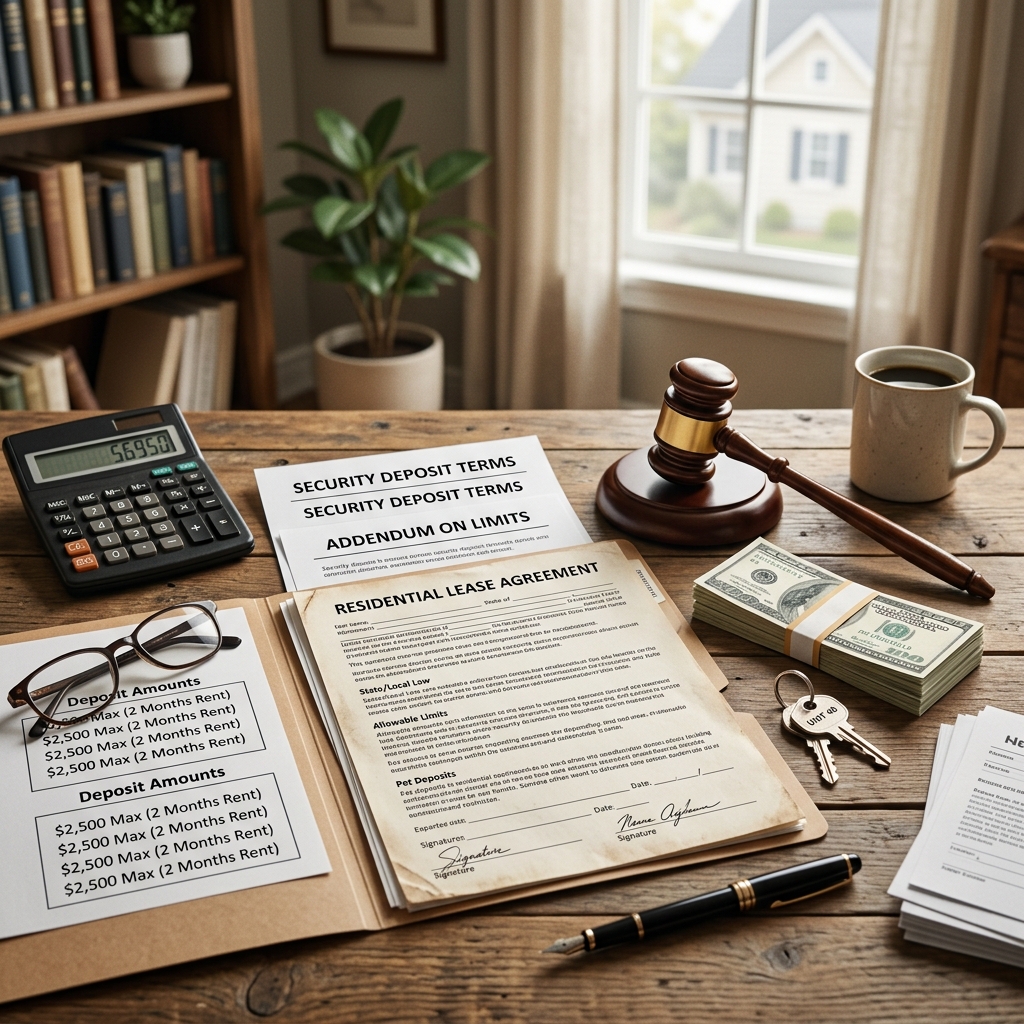
Security deposits are a standard part of residential leasing, but the amount a landlord can charge is not unlimited. Most jurisdictions set specific caps on security deposits, regulate how those funds must be held, and require clear rules on when and how the deposit must be returned. This guide explains the typical legal framework, highlights examples from several states, and outlines practical steps for both landlords and tenants.
What Is a Security Deposit and Why It Matters
A security deposit is money paid by a tenant to a landlord at the start of a lease to secure performance of the tenant’s obligations, such as paying rent and avoiding damage beyond normal wear and tear. Unlike prepaid rent, the deposit is usually refundable at the end of the tenancy if certain conditions are met.
- Primary purpose: Protect the landlord against unpaid rent and excessive damage.
- Typical timing: Collected before move-in or upon signing the lease.
- Refundable nature: Most state laws treat deposits as refundable, even if labeled otherwise.
- Separate from fees: Application fees or pet fees may be non-refundable, but deposits are generally regulated differently.
Because deposits can be substantial, many states strictly regulate maximum amounts, holding requirements, and return deadlines to prevent abuse and provide clarity.
Common Legal Limits on Security Deposit Amounts
The central question for many landlords and tenants is how much can legally be collected as a security deposit. While details differ by jurisdiction, several common patterns appear across U.S. states.
Typical Caps by Rent Amount or Lease Term
Many states cap security deposits at a multiple of monthly rent, often one or two months. Some adjust the cap based on how long the tenant has lived in the unit or special conditions.
| Example State | General Maximum Deposit | Notable Features |
|---|---|---|
| Missouri | No more than two months’ rent as a security deposit. | Applies broadly to residential tenancies; non-refundable deposits are not recognized. |
| Pennsylvania | Up to two months’ rent during the first year; then one month’s rent for later years. | After two years, deposits over a threshold must be kept in an interest-bearing account. |
| Maryland | For newer leases, generally capped at one month’s rent, with narrow exceptions. | Charging more than the legal maximum can trigger statutory penalties. |
| Texas | No statewide numeric cap, but strict rules govern use and return of deposits. | Landlords may offer alternatives such as monthly fees instead of a lump-sum deposit. |
| California | State law sets specific caps based on whether the unit is furnished (not detailed here). | Very detailed rules on deductions, itemized statements, and timelines. |
Landlords should always confirm the exact limits in their state before setting deposit amounts, as exceeding the cap can lead to financial penalties or court claims.
Factors That Influence Legal Deposit Limits
In many jurisdictions, the allowed deposit amount can vary depending on:
- Length of tenancy: Some states, like Pennsylvania, reduce the permitted deposit after the first year, recognizing that risk generally lowers as the tenancy continues.
- Rental price: A few states adjust rules for higher-rent units, though specifics vary.
- Special risk conditions: Laws may allow higher deposits if there are unusual risk factors (for example, particular hazards or non-standard use), typically with conditions.
- Regulatory changes: Recent legislative reforms, as seen in Maryland, can reduce permissible deposits for future leases, so landlords must track updates.
Because these factors differ widely, landlords often rely on state law guides or legal counsel to ensure compliance, and tenants should review local statutes before signing a lease.
How Security Deposits Must Be Held
Once collected, security deposits are generally treated as the tenant’s money held in trust, not as unrestricted funds for the landlord. Many states set rules on where and how deposits are stored.
Separate Accounts and Interest Requirements
Several jurisdictions require landlords to maintain security deposits in dedicated accounts, often at insured financial institutions, and sometimes to pay interest to tenants.
- Dedicated accounts: Landlords may be required to keep deposits in a federally insured bank or similar institution rather than mixing them with operating funds.
- Interest-bearing accounts: In some states, if the deposit exceeds a certain amount or the tenancy lasts beyond a threshold, the landlord must place the deposit in an interest-bearing account and share earned interest with the tenant, minus a small administrative fee.
- Written disclosures: Certain laws require landlords to give tenants written notice of where the deposit is held and the amount deposited.
Failure to follow these holding requirements can expose landlords to claims for return of the deposit, statutory damages, or attorney’s fees, depending on the jurisdiction.
Permissible and Impermissible Uses of Security Deposits
Security deposits are not a general budget for property upgrades. Most laws strictly limit what landlords may deduct when the tenancy ends.
Typical Allowed Uses
Across states, common allowed uses of security deposit funds include:
- Unpaid rent: Covering rent that the tenant still owes at move-out, including certain charges permitted by the lease.
- Damage beyond normal wear and tear: Repairing tenant-caused damage that goes beyond ordinary aging or use of the property.
- Excessive cleaning: In some states, cleaning to restore the unit to its initial level of cleanliness at move-in may be deducted.
- Costs related to early termination: When allowed, certain re-rental costs related to a tenant’s breach may be covered, provided the landlord makes reasonable efforts to mitigate losses.
Normal Wear and Tear vs. Damage
Most statutes prohibit landlords from charging tenants for normal wear and tear, distinguishing it from actual damage. For example, Texas law explicitly bars using deposits to cover normal wear and tear and defines that concept in the property code.
In general:
- Normal wear and tear might include minor carpet wear, slight paint fading, or small nail holes.
- Damage might include broken fixtures, large wall holes, deep stains, or unauthorized alterations that require repair.
Understanding this distinction is critical for both landlords preparing itemized statements and tenants deciding whether to dispute deductions.
Non-Refundable Deposits and Fees
Some landlords label charges as “non-refundable deposits” to suggest the tenant will never see the money again. However, certain states, such as Missouri, do not legally recognize this label; funds collected as a deposit must be treated as refundable under the law.
- Legitimate non-refundable fees (like application or cleaning fees) are typically distinct from security deposits and may be governed by different rules.
- Mislabeling a deposit as non-refundable can violate statutory protections and lead to legal challenges.
Deadlines and Procedures for Returning Security Deposits
Virtually every jurisdiction sets a deadline for returning security deposits or providing a statement of deductions after the tenant moves out.
Common Return Deadlines
While timelines vary, many states require landlords to act within a few weeks to a month.
- Missouri: Landlords must return the deposit within 30 days of the end of the tenancy, including any itemized list of deductions.
- Texas: The deposit must be refunded on or before the 30th day after the tenant surrenders the premises, subject to certain conditions such as providing a forwarding address.
- California: Landlords have 21 days to return the deposit in full or provide an itemized statement with deductions.
- Pennsylvania: Law requires return or a written list of damages within 30 days after lease termination when the tenant has given a new address.
Missing these deadlines can expose landlords to penalties, double or treble damages, or limits on claiming deductions in disputes.
Itemized Statements and Documentation
Most states require landlords to explain deductions clearly, often in a written, itemized statement.
- Itemized list of deductions: Landlords must list each deduction, the reason, and the amount.
- Supporting documentation: In California, if total deductions exceed a specified amount, landlords must provide copies of invoices or receipts, or documentation of work done and hourly rates.
- Forwarding address rules: Some laws, like those in Texas and Pennsylvania, require tenants to give a new address before certain obligations to provide statements or refunds are triggered.
Maintaining detailed records of move-in condition, repairs, and communications significantly reduces the risk of disputes for both sides.
Consequences for Violating Security Deposit Laws
When landlords ignore legal requirements—such as charging more than the allowable maximum or failing to return deposits on time—tenants often have statutory remedies.
Financial Penalties and Damages
Several states provide enhanced damages if landlords wrongfully withhold deposits or exceed legal limits.
- Maryland: Tenants may recover multiple times the excess amount charged above the legal maximum, plus attorney’s fees, in some circumstances.
- Texas: Tenants can sue to recover three times the portion of the deposit wrongfully withheld, in addition to other relief.
- California: Courts may award up to two times the amount of the security deposit as damages if the landlord retains the deposit in bad faith.
- Pennsylvania: Tenants can bring claims in local courts; failure to provide the required list of damages can limit the landlord’s ability to claim deductions.
These enhanced damages are designed to encourage compliance and discourage landlords from withholding deposits improperly.
Court Options for Tenants
Tenants who believe their deposit was mishandled typically have access to small claims or other courts.
- Small claims court often provides a simplified, lower-cost venue for resolving deposit disputes.
- Tenants must generally file within a set period after the tenancy ends; for example, some jurisdictions specify a two-year limit for deposit-related claims.
- Documentation—photos, move-in checklists, letters, and receipts—can be crucial to proving a claim or defense.
Best Practices for Landlords
Landlords who follow clear, consistent procedures for security deposits reduce legal risk and foster better tenant relationships.
- Confirm legal limits: Verify the maximum deposit allowed in the state before advertising units or signing leases.
- Use written lease terms: Clearly state the amount of the security deposit, where it will be held, and the conditions for refund.
- Conduct move-in and move-out inspections: Document conditions with checklists and photos to justify any deductions later.
- Maintain separate accounts: Where required, hold deposits in designated accounts and comply with any interest or disclosure rules.
- Provide timely itemized statements: Return deposits or issue detailed deduction lists within the statutory deadline.
- Avoid “non-refundable deposit” labels: Use accurate terminology and follow legal requirements for any non-refundable fees.
Best Practices for Tenants
Tenants can protect their interests by understanding local laws and keeping comprehensive records.
- Research local rules: Review state landlord-tenant guidance before signing a lease to understand deposit maximums and return timelines.
- Inspect at move-in: Note and photograph existing wear or damage, and request that these be acknowledged in writing.
- Maintain the unit: Aim to leave the property in similar condition to move-in, allowing for normal wear and tear.
- Provide forwarding address: Where required, give the landlord a written forwarding address so they can return the deposit or send the itemized statement.
- Request clarification: If deductions seem unclear or excessive, ask for detailed documentation and attempt informal resolution before going to court.
Frequently Asked Questions About Security Deposits
Can a landlord charge more than two months’ rent as a security deposit?
In many states, collecting more than two months’ rent as a security deposit is prohibited. For example, Missouri law explicitly bars landlords from demanding or receiving a deposit above two months’ rent. Other states may set lower or different caps, so the answer depends on local law.
Is a “non-refundable” security deposit legal?
It depends on the jurisdiction and how the charge is classified. Some states, like Missouri, treat any funds collected as a security deposit as refundable, regardless of how they are labeled. Non-refundable fees may be permitted if they are not treated as security deposits and comply with applicable law.
How soon should I receive my security deposit back after moving out?
Return deadlines vary, but 21 to 30 days is common. California requires action within 21 days, while states such as Texas, Missouri, and Pennsylvania often set a 30-day deadline. Check your state’s specific rule.
What if my landlord does not send an itemized list of deductions?
Failure to provide a required itemized list can limit the landlord’s ability to keep parts of the deposit and may entitle the tenant to sue for the full amount and, in some states, additional damages. Tenants should review local law and consider small claims court if informal efforts fail.
Can my landlord keep my deposit for normal wear and tear?
No, most laws prohibit landlords from using deposits to cover ordinary wear and tear. Texas law, for example, explicitly forbids deducting for normal wear and tear from a security deposit. Only damage beyond normal aging or excessive use is typically deductible.
What happens if my landlord charges more than the legal maximum deposit?
Tenants may be able to recover the excess and, in some jurisdictions, multiple times that amount as statutory damages, plus possible attorney’s fees. Documentation of what was charged and when the lease was signed is important when challenging overcharges.
References
- Revised Statutes of Missouri, Section 535.300 — Missouri Revisor of Statutes. 2023-01-01. https://revisor.mo.gov/main/OneSection.aspx?section=535.300
- Security Deposits — The Maryland People’s Law Library. 2024-10-01. https://www.peoples-law.org/security-deposits
- Security Deposits — PALawHELP.org. 2023-05-01. https://www.palawhelp.org/resource/security-deposits-4
- Security Deposits – Landlord/Tenant Law — Texas State Law Library. 2023-08-01. https://guides.sll.texas.gov/landlord-tenant-law/security-deposits
- Guide to Security Deposits in California — California Courts Self-Help Guide. 2023-04-01. https://selfhelp.courts.ca.gov/guide-security-deposits-california
- The Complete State-By-State Guide to Security Deposit Laws — Landlord Studio Blog. 2023-06-01. https://www.landlordstudio.com/blog/security-deposit-laws-by-state
- Security Deposit Limits and Deadlines in Your State — Nolo. 2023-07-01. https://www.nolo.com/landlord-tenant/security-deposit-limits-deadlines-your-state.html
Similar Articles








Read full bio of Sneha Tete


