Small claims court is designed to resolve ordinary money disputes faster, with less formality, and at a lower cost than a traditional lawsuit. It is often used for unpaid debts, damaged property, failed contracts, and similar conflicts where one side says the other owes money. In most states, the process is simplified so people can represent themselves, although the exact rules and dollar limits vary by jurisdiction.
Even though the process is simplified, it still follows a legal structure. You must start the case correctly, notify the other side, bring organized proof, and follow the court’s instructions on deadlines and evidence. Knowing the basic steps can help you avoid mistakes that delay your case or weaken your position.
What Small Claims Court Is Designed to Do
Small claims courts were created to handle minor civil disputes in a quicker and less expensive way than higher courts. These courts usually focus on money disputes rather than complicated claims that require extensive pretrial procedures.
In many places, the court is limited to cases involving a specific dollar amount, and the limit can differ depending on whether the claimant is an individual, a business, or a public agency. The common theme is simplicity: the court aims to provide a practical forum for everyday disputes without requiring the parties to hire lawyers or go through full-scale civil litigation.
| Common features | What they usually mean |
|---|---|
| Lower filing limits | The dispute must fall within the court’s money cap. |
| Limited procedure | The case moves through a simpler process than a regular lawsuit. |
| Self-representation | People usually appear on their own rather than through a lawyer. |
| Fast resolution | Hearings are often scheduled sooner than in standard civil court. |
Typical Cases That Belong in Small Claims Court
Small claims court is generally a good fit when the dispute is about money and the amount is within the court’s limit. That often includes unpaid invoices, security deposit disputes, repair bills, property damage, or money owed under a contract.
Some courts allow claims involving government agencies, businesses, or individuals, while others have special rules depending on who is being sued. In some states, the claim must be for money only; requests for the return of property or performance of a service may belong in another court.
If your dispute is complex, involves multiple legal theories, or requires broad discovery, small claims may not be the best forum. The point of the system is speed and accessibility, not long investigations or complicated motions.
Before You File: Check the Basics First
Before starting a case, confirm that the amount you want to recover fits the small claims limit in your state. Also check whether there is a filing deadline, because many claims must be filed within a specific limitation period that depends on the type of dispute.
It is also important to identify the correct defendant. If you sue the wrong person or business name, service can fail and the case may be delayed or dismissed. When a business is involved, it is usually worth checking the exact legal name rather than relying on a storefront name or brand name.
- Confirm the court’s dollar limit for your type of case.
- Check the deadline for filing the claim.
- Use the correct legal name of the person or business you are suing.
- Decide whether your claim is truly about money rather than property or services.
- Gather your documents before filing so you know what you can prove.
How the Case Usually Starts
The case begins when the plaintiff files the required complaint or claim form with the court clerk. Different states use different names for the first document, but the purpose is the same: it tells the court who is suing, who is being sued, how much is being requested, and why the money is owed.
After filing, the plaintiff pays the filing fee unless a fee waiver applies. The court then issues the case paperwork and provides instructions for notifying the defendant. Filing alone does not start the clock on the other side’s obligation to respond; notice must also be properly delivered.
Some courts allow filing in the county where the defendant lives, works, or does business, or where the transaction or injury occurred. Filing in the correct venue matters because filing in the wrong location can create avoidable complications.
Notifying the Other Side Properly
Service of process is the step that tells the defendant a lawsuit has been filed. Courts generally require proof that the other side received the claim papers in the manner the rules allow.
The exact service method depends on the jurisdiction. It may involve a sheriff, a professional process server, or another adult who is not part of the case. Once the papers are delivered, the person who served them usually completes a proof of service form and files it with the court.
Without proper service, the judge may not be able to hear the case. Even a strong claim can stall if the notice step is handled incorrectly.
Preparing Evidence That the Judge Can Use
Small claims cases are won or lost on evidence. The more clearly you can show what happened, the easier it is for the judge to understand your claim. Typical evidence includes contracts, invoices, receipts, photos, text messages, letters, repair estimates, canceled checks, and any written communication tied to the dispute.
Organizing your documents matters as much as collecting them. Many courts encourage parties to arrange materials chronologically or by topic so they can present the story in a clear order. If witnesses have direct knowledge of the facts, they may also be helpful, as long as their testimony is relevant and concise.
- Bring the original documents if the court allows it.
- Make copies for the judge and the other side.
- Sort the evidence so you can find it quickly during the hearing.
- Choose only the materials that actually support your claim.
- Be ready to explain why each item matters.
What Happens at the Hearing
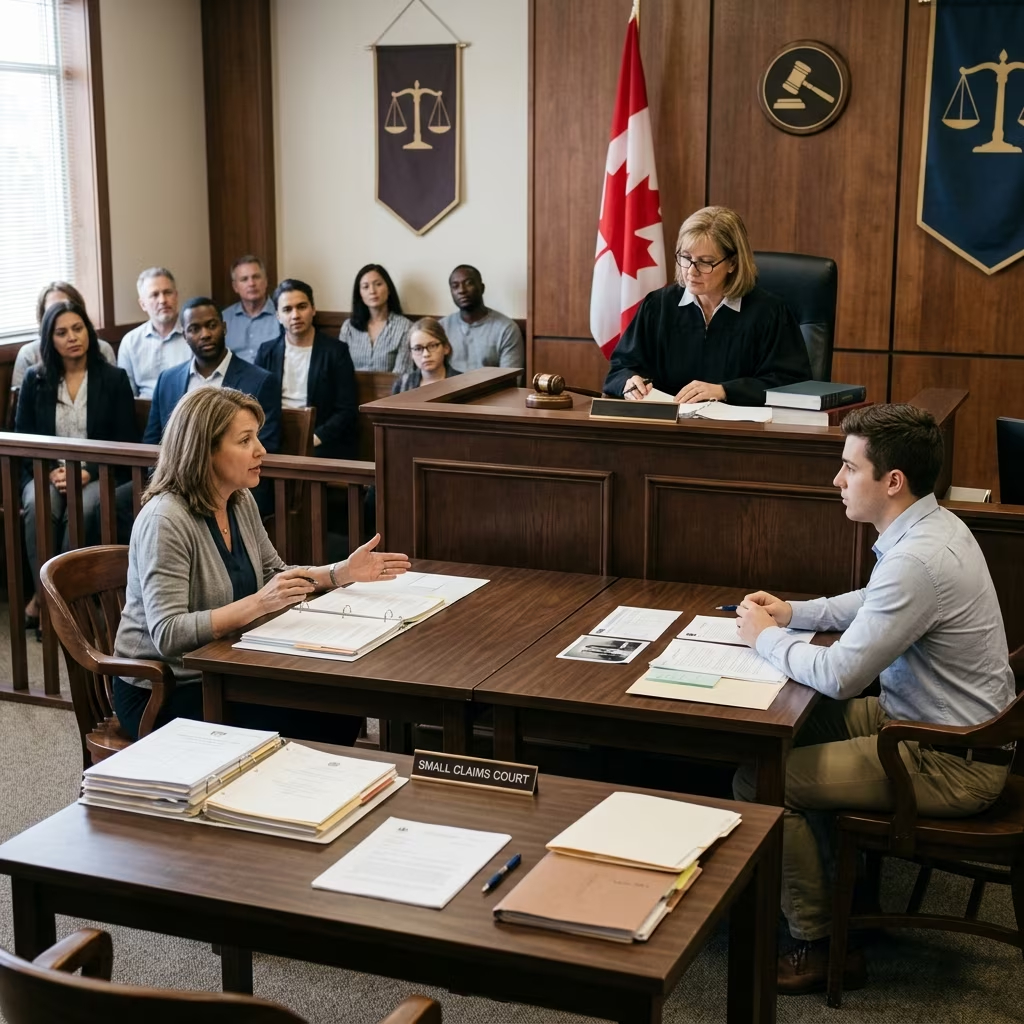
At the hearing, the judge gives both sides a chance to explain their version of events and present evidence. The process is usually informal compared with a full civil trial, but the judge still expects the parties to be prepared, respectful, and organized.
In some courts, there may be an opportunity for mediation or settlement discussion before the judge hears the case. If the case does not settle, the judge will typically listen to the parties, review the documents, and ask questions as needed. Small claims hearings are often brief, so clarity and preparation are important.
If you are the plaintiff, you explain why you believe money is owed and present proof. If you are the defendant, you explain why you disagree, whether the amount is wrong, or whether the claim should be denied entirely. The judge then decides based on the law and the evidence presented in court.
How Judges Make Decisions
Small claims judges usually focus on the documents, the testimony, and the basic fairness of the dispute. Because the court is meant to be efficient, judges often rely on clear, concrete proof rather than lengthy argument.
In some courts, the ruling is given immediately after the hearing. In others, the judge takes the matter under submission and sends the decision later. The judgment may award money to the plaintiff, dismiss the claim, or, in some cases, allow the defendant to recover on a counterclaim if one was properly filed.
What Happens After Judgment
Winning a small claims case does not always mean payment arrives automatically. If the defendant does not pay voluntarily, the winning party may need to use collection tools allowed by the court system.
These enforcement tools vary by state and may include wage garnishment, bank levies, liens, or other post-judgment procedures. The available options depend on local law and on the type of defendant involved. If you owe the judgment, the court may also explain how and when you must pay.
Appeal rights also vary. In some states, only the defendant may appeal; in others, both sides may have appeal rights under specific conditions. The rules after judgment are just as important as the hearing itself, because they determine whether the judgment becomes real money or remains a paper win.
How to Be Better Prepared Than the Other Side
The strongest small claims presentation is usually simple, factual, and well documented. Instead of trying to tell every part of the story, focus on the facts that prove the amount owed and why the other side is responsible.
People who do well in small claims court usually do three things well: they bring the right papers, they explain the timeline clearly, and they answer the judge’s questions directly. They also arrive early, follow courtroom rules, and keep their presentation short enough to fit the pace of the hearing.
| Helpful habit | Why it matters |
|---|---|
| Arrive early | It gives you time to check in and avoid missing your case. |
| Bring copies | The judge and other party can review the same documents. |
| Stay focused | Short, direct explanations are easier for the judge to follow. |
| Respect deadlines | Late filings or late evidence can weaken your case. |
Common Mistakes That Can Hurt a Case
One of the most common mistakes is suing the wrong person or entity. Another is failing to serve the papers correctly, which can prevent the court from moving forward. A third is arriving at the hearing with too little evidence or without copies for the other side.
People also lose time by filing in the wrong court, missing the deadline to file, or assuming that verbal explanations alone will be enough. Small claims court is simpler than other courts, but it still requires careful preparation.
When Small Claims Court Makes Sense
Small claims court makes sense when you have a limited money dispute, enough proof to support your position, and a desire for a faster process. It is especially useful when the amount at issue is not large enough to justify the expense of a full lawsuit.
It may be less useful if the case involves many witnesses, complicated legal issues, or a request for relief beyond a money judgment. In those situations, another court or a different dispute-resolution method may be more appropriate.
Frequently Asked Questions
Can I bring a lawyer to small claims court?
Many small claims courts limit or prohibit attorney representation at the hearing, although some allow lawyers to advise clients before the case. The exact rule depends on the state and the court.
Do I need proof before I file?
You do not need to prove the case before filing, but you should have enough evidence to support your claim and explain the amount you are requesting.
Can I sue a business in small claims court?
Yes, many courts allow claims against businesses, but the dollar limit and filing rules may differ from cases against individuals.
What if the other side does not show up?
If the defendant was properly served and still does not appear, the judge may be able to proceed without them, though the exact result depends on local rules and the facts of the case.
How long does a small claims case take?
Timing varies by court, but small claims cases are usually scheduled faster than ordinary civil lawsuits.
References
- How to Sue in Small Claims Court — Los Angeles County Department of Consumer and Business Affairs. 2026-07-10. https://dcba.lacounty.gov/portfolio/how-to-sue-in-small-claims-court/
- Small Claims — Maryland People’s Law Library. 2026-07-10. https://www.peoples-law.org/small-claims
- Small Claims Court — AlabamaLegalHelp.org. 2026-07-10. https://www.alabamalegalhelp.org/resource/small-claims-court
- Small Claims Court — UC Berkeley Risk Services. 2026-07-10. https://riskservices.berkeley.edu/resources/small-claims-court
- Small claims in California — California Courts Self Help Guide. 2026-07-10. https://selfhelp.courts.ca.gov/small-claims-california
- The small claims process — California Courts Self Help Guide. 2026-07-10. https://selfhelp.courts.ca.gov/small-claims
- Understanding small claims court — National Center for State Courts. 2026-07-10. https://www.ncsc.org/resources-courts/understanding-small-claims-court