
Understanding Farm Worker Wages in British Columbia
A practical guide to how wages work for farm workers in BC, including minimum pay rules, deductions, records, and steps to take if you’re underpaid.
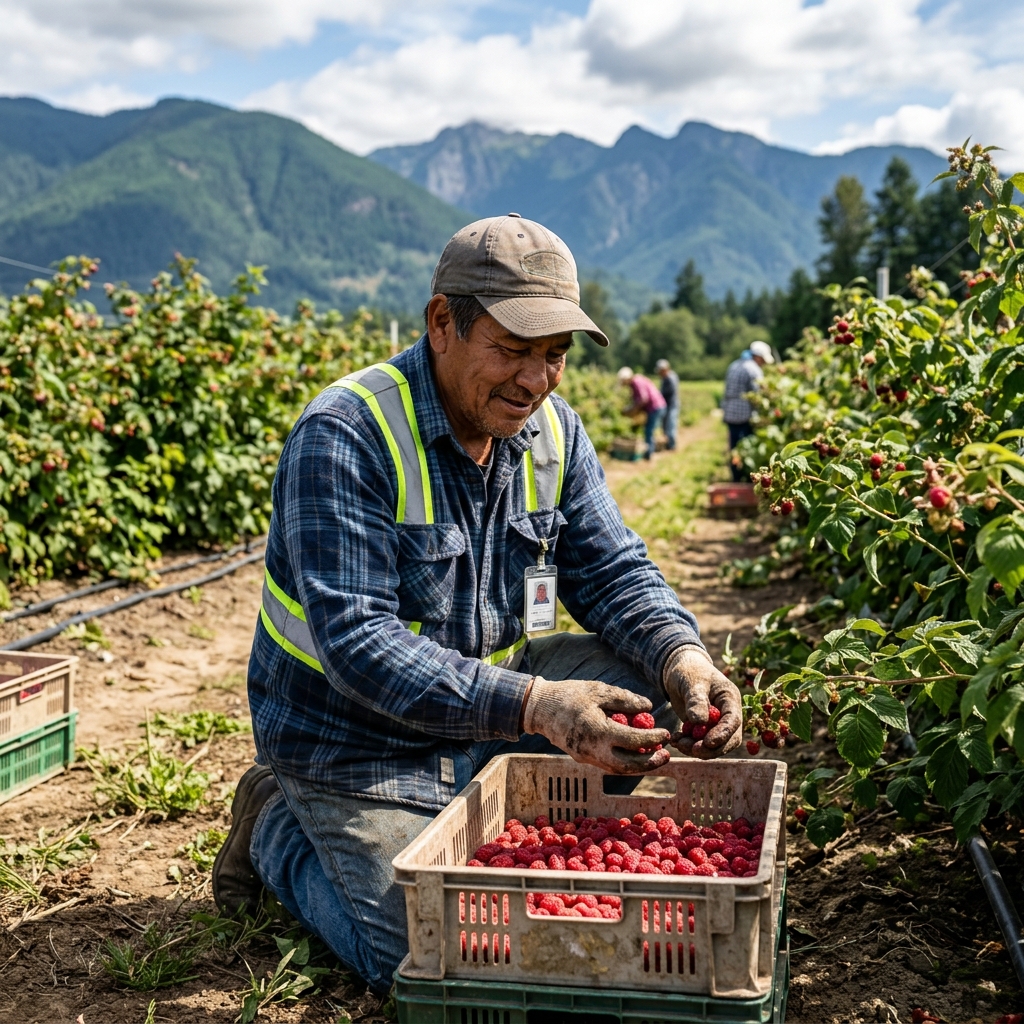
Farm work is physically demanding and essential to British Columbia’s food supply. Yet many farm workers are unsure how their wages are calculated, what minimum standards apply, and what they can do if they are not paid correctly. This guide explains, in plain language, how wage rules work for farm workers in BC, including minimum pay, piece‑rate systems, records, deductions and complaint options.
Although examples may focus on BC, some numbers and rules are set federally for temporary foreign workers and seasonal agricultural workers across Canada. Where this guide mentions specific rates, they may change over time, so workers and employers should always check the most recent official information.
1. Who Counts as a Farm Worker?
“Farm worker” covers a wide range of jobs, and wage rules can differ depending on the kind of work being done. In Canada, wage data and regulations often refer to general farm workers, which can include both crop and livestock operations.
1.1 Typical roles on farms
Common farm worker roles include:
- Planting, weeding, pruning and harvesting crops
- Operating farm machinery, such as tractors or harvesters
- Sorting, packing and loading produce
- Feeding and caring for livestock
- Cleaning barns, greenhouses and equipment
Some workers are hired directly by local farmers. Others come through federal programs such as the Seasonal Agricultural Worker Program (SAWP) or Temporary Foreign Worker (TFW) agricultural streams, often for specific crop seasons.
1.2 Why classification matters
How your job is classified can affect:
- Which minimum wage applies
- Whether piece‑rate pay rules apply
- What overtime, holiday pay and other protections you have
For example, an equipment operator may be paid differently than a hand harvester, and livestock workers may be treated differently from those in fruit and vegetable fields.
2. Minimum Wage and Basic Pay Standards
Every worker in Canada is protected by minimum wage rules, but the details can differ by province and, in some cases, by type of agricultural work. BC sets a general minimum wage, and the federal government sets minimum wage levels for certain foreign agricultural workers by commodity and province.
2.1 Provincial minimum wage
Each province has a basic hourly minimum wage. For illustration, Ontario’s minimum wage was increased to $17.20 per hour in October 2024. In BC, the general minimum wage is set by provincial law and is adjusted periodically; farm workers performing most types of work must receive at least this hourly rate unless specific piece‑rate rules apply.
Minimum wage means that for each hour you work, your employer must pay you no less than the legal minimum, even if you are:
- Paid in cash
- Working part‑time or seasonally
- Paid by the piece or per container, but your piece‑rate earnings fall below the hourly minimum
2.2 Federal wage floors for foreign agricultural workers
For workers in federally regulated agricultural programs, the government publishes wage tables by province and by commodity (for example, fruit, vegetables, grain, livestock). These tables specify the minimum hourly wage that employers must offer to foreign workers in those programs.
For instance, as of mid‑2026, the federal wage table lists minimum hourly wages for general agricultural labourers in BC at rates that are slightly above the provincial minimum wage. Employers hiring SAWP or TFW workers must pay at least the higher of:
- The provincial minimum wage, or
- The federal agricultural wage rate for that type of job
This dual protection means many migrant farm workers receive pay above the provincial minimum.
2.3 Typical wage ranges
Across Canada, wage surveys show general farm workers (particularly those working with livestock) usually earn between $15.00 and $28.00 per hour, with a national median around $20.00 per hour. Job postings and salary surveys often show average wages for farm workers in a similar range.
Actual pay can depend on:
- Region (wages are often higher in provinces with higher living costs)
- Experience and skill level
- Type of farm (for example, greenhouse vs. outdoor field crops vs. livestock)
- Seasonal demand for labour
3. Piece‑Rate Pay and Productivity‑Based Wages
Many farm workers in BC are paid on a piece‑rate basis. Instead of an hourly wage, a worker earns a set amount for each unit they complete—for example, per pound of fruit, per bin, or per plant.
3.1 How piece‑rate systems work
Under a typical piece‑rate system, the employer sets a rate (for example, a dollar amount per kilogram picked). Your total earnings for a day are calculated by multiplying the rate by the quantity you harvested or processed.
Piece‑rate arrangements aim to reward productivity: workers who pick faster or more accurately can earn more than they would at a flat hourly rate. However, if rates are set too low or work conditions make high productivity impossible, piece‑rate pay can reduce earnings below minimum wage.
3.2 Relationship to minimum wage
Even when workers are paid by the piece, minimum wage rules still apply. Over the total hours worked, piece‑rate earnings must work out to at least the applicable minimum hourly rate. If they do not, the employer must top up wages so that the average hourly pay meets or exceeds the minimum.
For migrant farm workers under certain federal contracts, employers may also be required to guarantee a minimum number of hours over the season (often equivalent to an average of around 40 hours per week) and pay for those hours even if work was not consistently available.
3.3 Pros and cons for workers
| Potential advantages | Potential disadvantages |
|---|---|
| High performers can earn more than hourly wage workers. | Income can be unstable, especially in bad weather or poor crop conditions. |
| Pay directly reflects effort and output. | Piece rates may not be adjusted when work is slower or more difficult. |
| Workers have an incentive to improve speed and technique. | Workers may feel pressure to work too fast, risking injuries or quality issues. |
| Some workers prefer the opportunity to earn more during peak harvest. | Language barriers or lack of transparency can make it hard to verify earnings against minimum wage. |
4. Deductions, Benefits and Housing
Many farm workers receive not only wages but also housing and travel support, especially if they are migrant workers in SAWP or TFW agricultural programs. These benefits affect the overall value of their compensation package, but they also raise important questions about deductions.
4.1 Housing support
Under federal program rules, SAWP workers generally receive fully subsidized housing, meaning they do not pay rent while they are in Canada. Agricultural workers in other TFW streams often pay only a small weekly rent, with a maximum of about $30 per week in many arrangements.
If the cash value of housing and other benefits were converted to hourly pay, they would add several dollars to a worker’s effective hourly compensation. However, from a legal standpoint, employers still must meet minimum wage requirements with cash pay; housing benefits cannot be used to reduce wages below the legal minimum.
4.2 Travel and other benefits
Migrant farm workers often receive travel benefits such as:
- Partial payment of flights to Canada (for example, SAWP employers often pay half of the airfare)
- Full payment of flights for some TFW agricultural streams
- Transfer from airports to farm accommodation
Other benefits may include:
- Furnished housing (beds, cooking facilities, basic furniture)
- Utilities such as electricity and water
- Internet access and television
Program rules require that housing be inspected and kept to certain standards by local and federal authorities and, sometimes, by officials from workers’ home countries.
4.3 Lawful and unlawful deductions
Employers may deduct some amounts from your pay, but only in specific circumstances. Common lawful deductions include:
- Income tax, Employment Insurance and pension contributions
- Union dues or other agreed‑upon fees
- Contractually permitted amounts such as modest rent, if clearly explained and authorized by program rules
Unlawful deductions might include:
- Charging more than the allowed maximum for rent under a federal program
- Taking money for equipment or protective gear that workers are entitled to receive
- Charging penalties when workers are sick or cannot reach unrealistic production quotas
Workers should review their pay statements carefully and ask for clarification when deductions are unclear or seem excessive.
5. Pay Records and How to Check Your Wages
Understanding your earnings starts with careful record‑keeping. Both employers and workers have roles in tracking hours and wages.
5.1 Employer’s obligations
Employers are generally required to keep accurate records of:
- Hours worked each day and each week
- Rates of pay (hourly, piece‑rate or both)
- Gross earnings
- Deductions and net pay
Workers should receive regular pay statements (pay stubs) showing this information in language they can reasonably understand.
5.2 How workers can verify proper pay
To check whether you are being paid properly:
- Collect all of your pay stubs from the season.
- Write down the total hours shown for each pay period.
- Add up the hours for the entire season.
- Add up your total pay received for the season.
- Divide total pay by total hours to find your average hourly rate.
Your average hourly rate should be at least the minimum wage that applies to your job and province, or the federal agricultural rate if that is higher. For some migrant workers, you may also need to check whether your contract guaranteed a minimum number of hours per week over the season and, if so, whether you were paid for at least that many hours.
6. If You Are Not Paid Properly
Farm work can involve language barriers, power imbalances and fear of losing future employment. Nonetheless, wage protection laws apply, and there are steps workers can take if they believe they are underpaid.
6.1 Common wage problems
Typical issues include:
- Being paid less than the provincial minimum wage
- Piece‑rate earnings that fall below minimum when averaged over total hours
- Unpaid overtime or long days without proper compensation
- Missing pay for certain days or hours worked
- Unexplained deductions that significantly reduce pay
6.2 Practical steps for workers
If you suspect a problem, consider the following steps:
- Gather documents: Collect pay stubs, any written contracts, and personal notes about hours worked, tasks performed and conversations with supervisors.
- Calculate your average pay: Use the method described above to calculate your average hourly wage for the season and compare it to the applicable minimum wage or federal rate.
- Ask questions: Raise the issue with your employer or supervisor in writing, if possible, and ask for a clear explanation of wage calculations and deductions.
- Seek advice: Contact a legal clinic, workers’ organization, or community support group familiar with farm worker rights. Many groups provide confidential advice and can help you understand your options.
- Consider filing a complaint: In BC, you can often file a complaint with the provincial employment standards branch. Migrant workers in federal programs may also have federal complaint channels.
Support organizations sometimes offer hotlines or messaging services where migrant workers can safely ask questions and get help understanding whether they were paid properly.
7. Special Considerations for Migrant Farm Workers
Migrant farm workers face unique challenges and protections. Their wages are influenced by both provincial employment laws and the rules of the federal programs that bring them to Canada.
7.1 Wage guarantees in federal programs
Under SAWP and certain TFW agricultural programs:
- Workers must be paid at least the provincial minimum wage or the federal agricultural rate, whichever is higher.
- Employers must respect contractual obligations regarding minimum hours and seasonal pay guarantees.
- Housing and travel support must meet program standards and cannot be used to justify paying below the legal cash wage minimum.
7.2 Balancing wages and expenses
Migrant workers often send money home and manage expenses such as food, clothing, communication and personal necessities while in Canada. Because housing and major travel costs are subsidized, a larger portion of wages is available for these other expenses, but workers still need to be sure their earnings are calculated correctly and fairly.
7.3 Knowing your rights
For migrant farm workers in BC:
- You have the right to receive at least the minimum wage applicable to your work.
- You are entitled to clear information about your pay and deductions.
- You can seek help from legal services, consular offices, unions or worker support organizations without retaliation.
8. Quick Reference: Wage Concepts for Farm Workers
- Minimum wage: The legal minimum amount per hour your employer must pay you.
- Piece‑rate pay: A system where you are paid per unit of work (such as per bin or per kilogram picked).
- Average hourly rate: Your total seasonal earnings divided by total hours worked; this must be at least the relevant minimum wage.
- Deductions: Amounts subtracted from your pay; only certain deductions are lawful.
- Guaranteed hours: Contractual promise that you will be paid for a minimum number of hours over the season, even if work is not always available.
9. Frequently Asked Questions (FAQs)
9.1 Do farm workers in BC always get minimum wage?
Farm workers in BC are generally entitled to at least the provincial minimum wage. For migrant workers in federal agricultural programs, employers must pay at least the higher of the provincial minimum wage or the federal agricultural wage rate for the specific job.
9.2 Can my employer pay me only by the piece without checking minimum wage?
Employers can pay by the piece, but they must ensure that your total pay divided by total hours worked is at least equal to the minimum wage that applies to your job. If piece‑rate pay falls short, your employer must increase your pay so that your average hourly earnings meet the minimum.
9.3 Are migrant farm workers paid less than local workers?
Migrant farm workers in SAWP and TFW programs are guaranteed at least the minimum wage and often slightly more, because federal rules require employers to pay the higher of the provincial minimum wage or a federally calculated agricultural wage rate based on inflation.
9.4 Do housing and travel benefits reduce my wage rights?
No. Housing and travel benefits are important parts of your compensation package but do not replace wage protections. Employers still must pay at least the legal minimum wage in cash, and they cannot use housing or other benefits to justify paying less than the minimum.
9.5 What should I do if my pay stub is confusing?
Ask your employer or supervisor to explain how your pay is calculated and which deductions are taken. Keep copies of your pay stubs, and if you still have concerns, seek advice from a legal clinic, worker advocacy group or government employment standards office. They can help you interpret the records and determine whether your employer has followed the law.
References
- Wages by agricultural commodity — Government of Canada, Employment and Social Development Canada. 2026-06-01. https://www.canada.ca/en/employment-social-development/services/foreign-workers/agricultural/agricultural-wages.html
- Farm worker salary in Canada — Indeed Career Insights. 2026-02-22. https://ca.indeed.com/career/farm-worker/salaries
- General Farm Worker – Livestock in Canada: Wages — Government of Canada, Job Bank. 2025-11-19. https://www.jobbank.gc.ca/marketreport/wages-occupation/9297/ca
- Minimum Wage Increases but Agricultural Workers are Still Excluded — National Farmers Union–Ontario. 2024-10-31. https://nfuontario.ca/news/media-release-minimum-wage-increases-but-agricultural-workers-are-still-excluded/
- Migrant farmworkers: Are you getting paid properly? — Migrant Workers Alliance for Change. 2024-10-01. https://migrantworkersalliance.org/fw-wages2024/
- What do migrant farm workers’ wages and expenses look like? — More than a Migrant Worker. 2023-06-01. https://www.morethanamigrantworker.ca/what-do-migrant-farm-workers-wages-and-expenses-look-like/
Similar Articles








Read full bio of Sneha Tete




