
Understanding Excessive Force and Police Brutality
A practical legal guide to excessive force, police brutality, constitutional rights, and options for accountability in the United States.
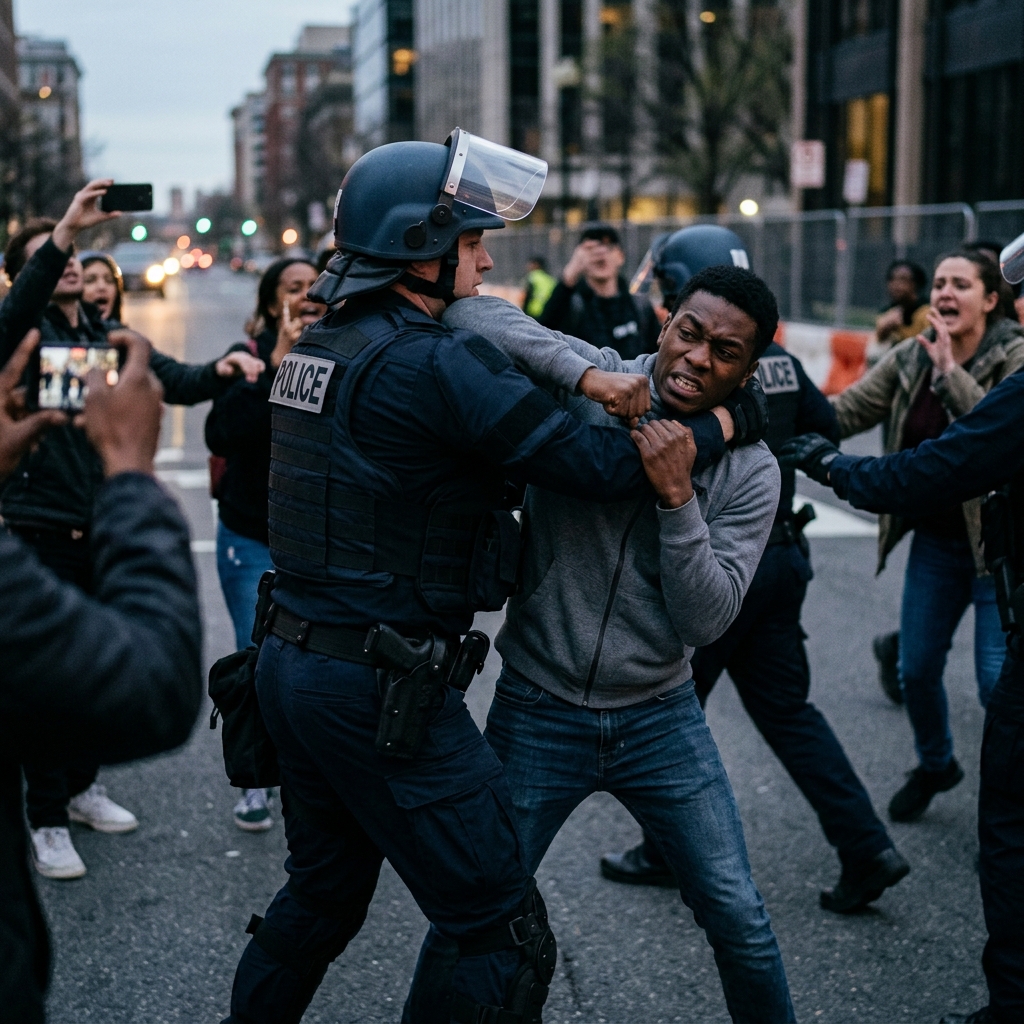
When law enforcement officers misuse their authority and apply more force than the situation reasonably calls for, the result can be excessive force or police brutality. These actions are more than just unfair – they can violate the U.S. Constitution and give rise to serious civil and criminal consequences.[10] This guide explains how the law approaches these issues, what rights individuals have, and which legal tools exist to seek accountability.
Foundations: Use of Force and Your Constitutional Rights
In the United States, several constitutional provisions govern how police may use force, depending on the context of the encounter.[10]
- Fourth Amendment: Protects against unreasonable searches and seizures, including excessive force during arrests, stops, and other confrontations with police.[10]
- Fourteenth Amendment: Covers due process rights for people who are detained but not yet convicted, including pretrial detainees.
- Eighth Amendment: Prohibits cruel and unusual punishment, which governs force used against convicted prisoners.
Although the text of these amendments does not use the phrase “excessive force,” the U.S. Supreme Court and federal courts have interpreted them to protect the right to be free from objectively unreasonable or punitive force by government officials.[10]
What Counts as Excessive Force?
Legally, excessive force is not defined by how upsetting an incident feels, but by whether the officer used more force than a reasonable officer would have used in the same situation. The standard is sometimes described as objective reasonableness under the Fourth Amendment.[10]
Objective Reasonableness: The Core Legal Test
Under Supreme Court case law, the question is whether the officer’s actions were objectively reasonable from the viewpoint of a trained officer on the scene, without the benefit of hindsight.[10] Courts generally consider several factors:
- Severity of the suspected crime: More serious crimes may justify greater levels of force.
- Immediate threat: Whether the person posed an immediate threat to officers or others.
- Resistance or flight: Whether the person was resisting, attempting to flee, or already complying.
- Context of the encounter: Including crowd dynamics, visibility, perceived presence of weapons, and other situational pressures.
Force can be considered excessive when the type or amount of force substantially exceeds what is needed to control the situation, make an arrest, or protect public safety.
Common Examples of Potential Excessive Force
While every case is fact-specific, patterns that frequently raise excessive force concerns include:
- Using physical strikes, Tasers, batons, or chokeholds on someone who is already restrained or clearly complying.
- Continuing to apply force after a person has been handcuffed or has stopped resisting.
- Using deadly force in situations where the person does not pose an imminent threat of serious harm.
- Deploying chemical agents or less-lethal munitions against peaceful demonstrators.
- Employing aggressive tactics during mental health crises where de-escalation alternatives were available.
Police Brutality vs. Excessive Force: Related but Distinct Concepts
Police brutality is a broad term used in public debate to describe a range of abusive behaviors by law enforcement. Excessive force is a more specific legal concept.
| Term | Scope | Examples |
|---|---|---|
| Police Brutality | Broad category of abusive or oppressive conduct by police, which may be physical, verbal, or psychological. | Unnecessary beatings, threats, intimidation, degrading treatment, discriminatory targeting. |
| Excessive Force | Specific instance where physical force used exceeds what is reasonably necessary given the circumstances. | Beating a compliant suspect, continued Taser use after surrender, unjustified deadly force during an arrest. |
In practice, excessive force is often one form of police brutality, but not every act of brutality will revolve solely around physical force. Harassment, threats, and other abusive behavior can still be wrongful or illegal, even when they do not fit the technical definition of excessive force.
Civil Remedies: Section 1983 and Related Claims
People who experience excessive force by state or local officers may be able to bring a civil lawsuit to seek compensation and systemic changes. One of the primary legal tools is 42 U.S.C. § 1983, commonly called a Section 1983 claim.
What Is a Section 1983 Claim?
Section 1983 is a federal civil rights statute that allows individuals to sue government officials who, while acting under color of law, violate their constitutional or federal statutory rights. In excessive force cases, the alleged violation is usually of the Fourth Amendment right to be free from unreasonable seizures.[10]
To succeed in a typical excessive force claim under § 1983, a plaintiff generally must show:
- Action under color of law: The officer was performing official duties or using governmental authority when the incident occurred.
- Constitutional violation: The force used was objectively unreasonable under the Fourth Amendment (or the Eighth/Fourteenth Amendment in detention or prison contexts).
- Actual harm: The incident caused physical, emotional, economic, or other compensable injuries.
Successful plaintiffs may recover damages such as medical costs, lost wages, pain and suffering, and emotional distress. In some cases, courts can also award punitive damages and attorney’s fees.
Criminal Liability: 18 U.S.C. § 242
Separate from civil lawsuits, federal prosecutors can bring criminal charges against law enforcement officers who willfully violate constitutional rights under 18 U.S.C. § 242
- The officer deprived the victim of a right protected by the Constitution or federal law.
- The officer acted willfully, meaning they knew their conduct was unlawful and chose to proceed anyway.
- The officer was acting under color of law.
In excessive force situations, the focus is on whether the force went beyond what was reasonably necessary to arrest, control, or manage the person, or whether it was used for punishment or retaliation.
How Courts Evaluate Force in Different Settings
The legal analysis can vary based on the status of the person subjected to force, even though the concept of reasonableness remains central.
- Street encounters and arrests: Governed primarily by the Fourth Amendment. The question is whether the seizure and force were reasonable.[10]
- Pretrial detention: Often analyzed under the Fourteenth Amendment, focusing on whether force is excessive relative to legitimate governmental interests.
- Prison settings: The Eighth Amendment applies. Force used purely to punish or inflict pain, rather than maintain order or safety, may be unconstitutional.
Despite these differences, a recurring theme is that officers are not permitted to use more force than necessary to achieve a lawful objective, and they may not use force for retaliatory or punitive purposes.
Evidence and Documentation in Excessive Force Cases
Whether a person is seeking internal discipline, civil damages, or criminal charges, evidence plays a critical role in proving excessive force.
Types of Helpful Evidence
- Medical records: Documentation of injuries, treatment, and long-term impacts is crucial. Prompt examination and accurate notes can help connect injuries to the incident.
- Video and audio recordings: Body camera footage, dash cams, surveillance videos, and bystander recordings can show how much force was used and whether the person was resisting.
- Witness statements: Observers can describe what they saw, including whether the person complied with police commands or appeared subdued.
- Police reports and internal records: Incident reports, use-of-force forms, and disciplinary histories may reveal inconsistencies or patterns.
- Personal notes: Detailed accounts written soon after the event can help victims and lawyers reconstruct the timeline and preserve memories.
Official data on use of force also exists. For example, Congress directed the U.S. Department of Justice to collect and publish annual information on excessive force incidents, and earlier national surveys documented thousands of citizen complaints per year. Such statistics can support broader policy reforms, even if they are not directly used in individual lawsuits.
Prevention and Reform: Policy Tools to Reduce Excessive Force
Beyond case-by-case accountability, many jurisdictions are pursuing structural reforms aimed at reducing excessive use of force and improving public trust in law enforcement.
Common Reform Strategies
- De-escalation training and requirements: Encouraging officers to slow down encounters, use communication, and avoid unnecessary escalation.
- Use-of-force continuums: Clear guidelines that match levels of force to specific types of resistance, helping officers make proportionate decisions.
- Restrictions on high-risk tactics: Policies limiting chokeholds, strangleholds, shooting at moving vehicles, and no-knock warrants.
- Duty to intervene: Rules requiring officers to step in when a colleague is using unlawful or excessive force.
- Mandatory reporting: Requiring officers and agencies to document and review use-of-force incidents.
- Body-worn cameras: Increasing transparency and providing objective evidence of encounters.
- Bias and cultural training: Efforts to address implicit bias and improve interactions with diverse communities.
Research continues to evaluate which combinations of these measures most effectively reduce excessive force while maintaining public safety.
FAQs: Excessive Force and Police Brutality
How do I know if the force used against me was excessive?
There is no universal checklist, but indicators may include severe injuries that are hard to reconcile with your behavior, force used after you were clearly complying, or use of weapons when verbal commands could have sufficed. An attorney familiar with civil rights law can analyze your specific situation under the objective reasonableness standard.
Can I sue the police department or just the individual officer?
Section 1983 claims are often filed against individual officers, but sometimes also against municipalities or departments if a policy or custom contributed to the violation. These institutional claims can be more complex and typically require showing that official practices or lack of training played a direct role in the excessive force.
Is every act of police brutality a constitutional violation?
Not every incident commonly described as “brutality” will meet the legal threshold for a constitutional violation, but many do. The key questions are whether the officer acted under color of law and whether the conduct violated a particular constitutional provision, such as the Fourth, Eighth, or Fourteenth Amendment.
What should I do immediately after an excessive force incident?
Seeking medical care, preserving evidence (including photos and videos), identifying witnesses, and keeping your own written account are important steps. It is also wise to avoid discussing details publicly before speaking with a lawyer, as public statements can be scrutinized in later proceedings.
Can federal prosecutors get involved, or is this only a local issue?
Excessive force cases may involve multiple layers of accountability. Local authorities might investigate under state law, while the U.S. Department of Justice can pursue federal criminal charges under 18 U.S.C. § 242 if there is willful deprivation of constitutional rights. Civil suits under § 1983 are separate and can proceed regardless of criminal prosecution.
References
- Law Enforcement Misconduct — U.S. Department of Justice, Civil Rights Division. 2023-05-01. https://www.justice.gov/crt/law-enforcement-misconduct
- Excessive Force and the Fourth Amendment: Supreme Court Jurisprudence — Congressional Research Service. 2019-10-07. https://www.congress.gov/crs-product/LSB11336
- Excessive Force by Police & Related Legal Claims — Justia. 2022-08-15. https://www.justia.com/civil-rights/government-violations-of-civil-rights/excessive-force-by-police/
- Excessive Force Lawyer — Nisar Law Group, P.C. 2023-03-10. https://www.nisarlaw.com/civil-rights-law/excessive-force/
- Use of Force — Bureau of Justice Statistics, U.S. Department of Justice. 2022-06-30. https://bjs.ojp.gov/topics/law-enforcement/use-of-force
- Evidence on Measures to Reduce Excessive Use of Force by the Police — University of Michigan Poverty Solutions. 2023-01-01. https://sites.fordschool.umich.edu/poverty2021/files/2023/01/final-Policing-pb.pdf
- Police Use of Force: Overview — EBSCO Research Starters. 2020-09-01. https://www.ebsco.com/research-starters/law/police-use-force-overview
Similar Articles








Read full bio of medha deb




