
Understanding Driver Licensing and Vehicle Records
Learn how driver’s licenses, vehicle records, and public DMV information work together to keep roads safe and drivers accountable across the United States.
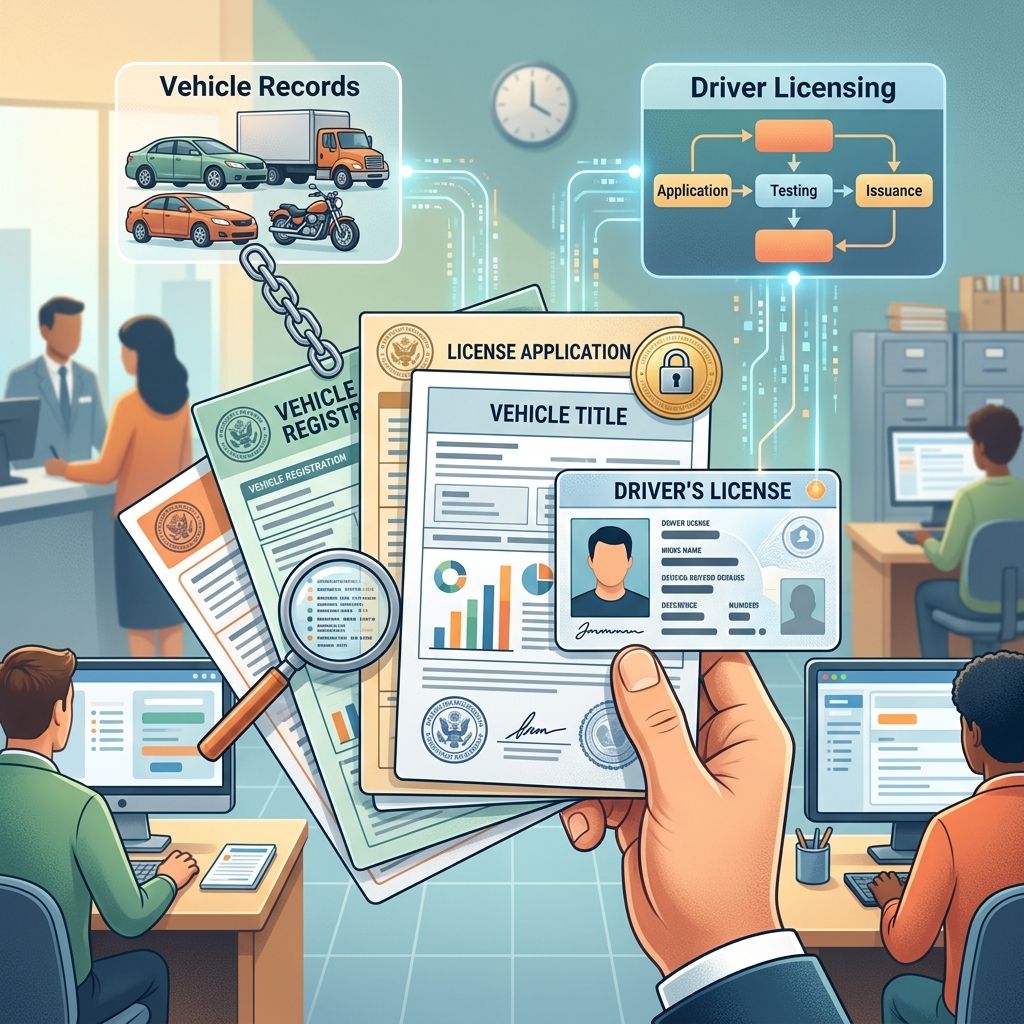
Driver licensing and vehicle records form the backbone of road safety and traffic regulation in the United States. They determine who may legally drive, how vehicles are identified, and what information is maintained about drivers and vehicles. This guide explains how those systems work, what information is kept, how it may be used or shared, and what rights and responsibilities drivers have.
Why Driver and Vehicle Records Matter
Every state maintains a system that links drivers to vehicles and traffic violations. These records allow authorities to:
- Verify legal driving status, including whether a license is valid, suspended, or revoked.
- Track ownership of vehicles through titles and registrations, so each vehicle is linked to an identifiable owner.
- Promote road safety by keeping track of crashes, serious violations, and high-risk drivers.
- Support law enforcement investigations, such as hit-and-run cases or fraud involving vehicle titles.
These systems are typically managed by state departments of motor vehicles or similar agencies and are structured as official government records.
Core Elements of Driver Licensing
Most states follow similar principles when issuing and managing driver’s licenses, even though details vary. Licensing involves proving identity, demonstrating driving knowledge and skill, and meeting health and age requirements.
Basic License Types
State licensing systems distinguish between multiple categories of drivers to reflect different risks and responsibilities:
- Standard driver’s license: Allows operation of typical passenger vehicles on public roads.
- Commercial driver’s license (CDL): Required for operating large trucks, buses, and certain specialized vehicles. CDLs include additional rules and testing, often governed by federal standards.
- Graduated or provisional licenses: Issued to younger drivers with restrictions such as limits on nighttime driving or passengers.
- Identification-only cards: Government-issued ID that does not grant driving privileges.
The Licensing Process
While each state sets its own rules, most licensing processes include common steps.
| Stage | Typical Requirements |
|---|---|
| Eligibility | Minimum age, lawful presence in the U.S., and residency in the state. |
| Identity & documentation | Proof of identity, Social Security number (or equivalent), and state residency documents. |
| Knowledge testing | Written test covering traffic rules, road signs, and safe driving practices. |
| Vision screening | Basic eyesight test to ensure a driver can safely see road conditions and signage. |
| Road test | Practical exam where applicants demonstrate vehicle control and rule compliance. |
| Issuance & renewal | License issuance, followed by periodic renewals often including fee payment and updated photos. |
Maintaining Driving Privileges
Licenses are not permanent rights; they are conditional privileges. States may suspend or revoke a license for reasons such as:
- Driving under the influence of alcohol or drugs.
- Serious traffic offenses, including reckless driving or leaving the scene of a crash.
- Repeated violations causing too many points on a driving record.
- Failure to pay certain fines or child support, depending on state law.
Once privileges are removed, reinstatement usually requires meeting specific conditions, such as completing education programs, paying fees, or showing proof of insurance.
Vehicle Records: Titles, Registration, and Plates
Vehicle records ensure that every car on the road is uniquely identified and linked to an owner. Each state’s motor vehicle agency manages these records, which typically include title, registration, and license plate information.
Title: Evidence of Ownership
The title is the document that proves who owns a vehicle. Title records normally include:
- The registered owner’s name and address.
- The vehicle identification number (VIN).
- Vehicle details such as make, model, year, and sometimes weight.
- Any liens, such as a lender’s interest when the vehicle is financed.
When a vehicle is sold, gifted, or otherwise transferred, the title must be updated to reflect the new owner. Many states require both buyer and seller to execute the transfer to reduce fraud and ensure continuity of records.
Registration and License Plates
Registration connects a vehicle to its owner for the purposes of taxation, insurance, and law enforcement. It is separate from title but relies on the same core data.
- Registration certificates show that required fees and taxes are paid and that the vehicle may legally operate on public roads.
- License plates provide a visible identifier that law enforcement and others can use to look up registration records.
- Renewal cycles ensure that records are kept up to date and that vehicles meet inspection or emissions standards where required.
States may also provide specialized plates, including personalized plates, plates for commercial vehicles, and plates marking disability access or certain types of organizations.
What Information Is Stored About Drivers and Vehicles?
State driver and vehicle databases contain detailed information that is essential for administration and enforcement. Typical data categories include identity, vehicle attributes, and history of use.
Driver Record Data
Driver records often include:
- Personal details such as name, date of birth, and address.
- License number, type, and status (valid, suspended, revoked, expired).
- Dates of issuance and renewal.
- Traffic convictions and points assessed.
- Crash involvement records and certain administrative actions.
Some states maintain separate records for commercial drivers, reflecting federal requirements and additional safety responsibilities.
Vehicle Record Data
Vehicle records typically include:
- Vehicle identification number (VIN) and plate number.
- Owner or registrant name and address.
- Vehicle make, model, year, body type, and weight.
- Odometer readings and brandings such as salvage or rebuilt titles.
- Title history, including prior owners and liens.
This information supports taxation, safety recalls, theft investigations, and consumer protection, such as identifying vehicles that have been heavily damaged but resold.
Public Access and Privacy Protections
Driver and vehicle records exist in tension between public safety and privacy. Public access is valuable for law enforcement, consumer protection, and transparency, but unrestricted access can expose personal information. Federal and state laws attempt to balance these interests.
How Public Access Works
Most states allow some level of public access to vehicle records, often subject to restrictions.
- Vehicle registration information, such as plate and VIN, may be used by law enforcement and certain authorized entities, including insurers or towing companies.
- Some states permit limited public access to title histories to allow buyers to verify ownership or damage status before purchase.
- Bulk data or sensitive personal details are usually restricted and require specific authority or purpose.
Privacy Considerations
Multiple legal frameworks limit how personal information from driver and vehicle records may be used or disclosed. Privacy provisions generally aim to prevent misuse, such as harassment, stalking, or identity theft.
Key protections often include:
- Restrictions on sharing home addresses and personal identifiers with the general public.
- Rules limiting disclosure of records to specific purposes, such as insurance underwriting, official investigations, or court proceedings.
- Security requirements for entities that receive bulk or electronic data from motor vehicle agencies.
Drivers still have obligations to keep contact information accurate so agencies can deliver notices about license status, recalls, or legal obligations.
Using DMV Services Effectively
State motor vehicle agencies provide in-person and online services to help drivers manage licenses and vehicle records. Understanding how these services work can save time and reduce the risk of missing important deadlines.
Common DMV Services
Across states, core services typically include:
- Applying for, renewing, or replacing driver’s licenses and identification cards.
- Registering vehicles, renewing registrations, and replacing plates.
- Obtaining title copies, transferring ownership, and resolving lien or branding issues.
- Requesting official driver and vehicle record abstracts.
- Scheduling road tests and submitting medical or vision information as needed.
Online Versus In-Person Options
Many services can now be completed online, reducing the need for visits to physical offices. Depending on the state, online portals may allow drivers to:
- Renew licenses or registrations.
- Update addresses and contact information.
- Request copies of records or pay certain fees.
However, initial identity verification, certain specialized transactions, or road testing still usually require in-person appointments or visits.
Legal and Practical Implications for Drivers
Driver and vehicle records are more than administrative entries; they have real-world legal and financial consequences. Understanding these implications helps drivers reduce risk and avoid unexpected penalties.
Impact on Insurance
Insurers rely on driver histories and vehicle details to set premiums. Traffic convictions, crash involvement, and certain license actions can lead to higher insurance costs or restricted coverage options. Inaccurate or outdated records can also cause delays or disputes in claims.
Employment and Commercial Driving
For professional drivers, record quality is crucial. Employers may review driver abstracts when hiring, and serious violations can limit access to certain jobs. Commercial drivers often face stricter standards and more frequent monitoring.
Personal Liability and Record Accuracy
Because vehicle records link ownership and registration to specific individuals, inaccuracies can create liability problems. For example:
- Failing to update ownership after selling a vehicle may leave the former owner connected to future crashes or violations.
- Incorrect address information can lead to missed court or agency notices, resulting in license suspensions or fines.
Regularly checking records and promptly correcting errors reduces these risks.
Practical Tips for Managing Your Driver and Vehicle Records
Drivers can take simple steps to keep records accurate and use DMV systems effectively:
- Maintain accurate contact information with state motor vehicle agencies so you receive renewal notices and legal correspondence.
- Track renewal dates for licenses and registrations and use online options where available to avoid lapses.
- Review your driving record periodically to verify that violations are listed correctly and that completed programs or court orders appear as expected.
- Keep purchase and sale documents for vehicles, including bills of sale and title transfer confirmations, to document ownership changes.
- Ask questions early when you receive notices of possible suspensions, fines, or record changes to avoid more serious consequences.
FAQs: Driver’s Licenses and Vehicle Records
Can I see my own driver record?
Yes. Most states allow drivers to request an official copy of their record online or through a motor vehicle office. Fees may apply, and some states offer different levels of detail depending on the purpose.
Is my home address visible to the general public?
Typically, sensitive personal information such as home addresses is not freely available to the general public and may be disclosed only for approved purposes, such as law enforcement, insurance, or court proceedings, subject to legal restrictions.
What happens if I don’t renew my registration on time?
Driving with an expired registration can lead to tickets, fines, or other penalties. In some states, long delays may require additional steps, such as reinstatement fees or re-verification of ownership.
Do I need a Real ID-compliant license?
Federal rules require Real ID-compliant identification for certain federal purposes, such as boarding domestic flights or entering some federal facilities. States issue Real ID licenses or identification cards once applicants provide additional documentation of identity and residency.
How can I correct an error in my vehicle title or registration?
You should contact your state motor vehicle agency, provide proof of the correct information, and follow its procedures for corrections. This may involve submitting forms, showing purchase documents, or providing identification.
References
- State motor vehicle services — USAGov. 2024-01-10. https://www.usa.gov/state-motor-vehicle-services
- Vehicles — Virginia Department of Motor Vehicles. 2023-08-15. https://www.dmv.virginia.gov/vehicles
- Motor Vehicle Titling & Registration — Missouri Department of Revenue. 2023-05-01. https://dor.mo.gov/motor-vehicle/
- Drivers and Motor Vehicles — Maryland.gov. 2023-09-20. https://www.maryland.gov/services/driving-and-transportation/drivers-and-motor-vehicles
- Welcome | Nebraska Department of Motor Vehicles — Nebraska DMV. 2023-04-12. https://dmv.nebraska.gov/
- Online Driver and Vehicle Services — Commonwealth of Pennsylvania. 2023-11-02. https://www.pa.gov/agencies/dmv/online-services-dvs
- Driver License — New York State Department of Motor Vehicles. 2024-02-05. https://dmv.ny.gov/driver-license
Similar Articles








Read full bio of medha deb


