
Understanding Cat Safety Laws and Pet Liability
Explore how U.S. laws treat domestic cats, feral cats and exotic big cats, and what legal remedies exist when a cat causes injury.
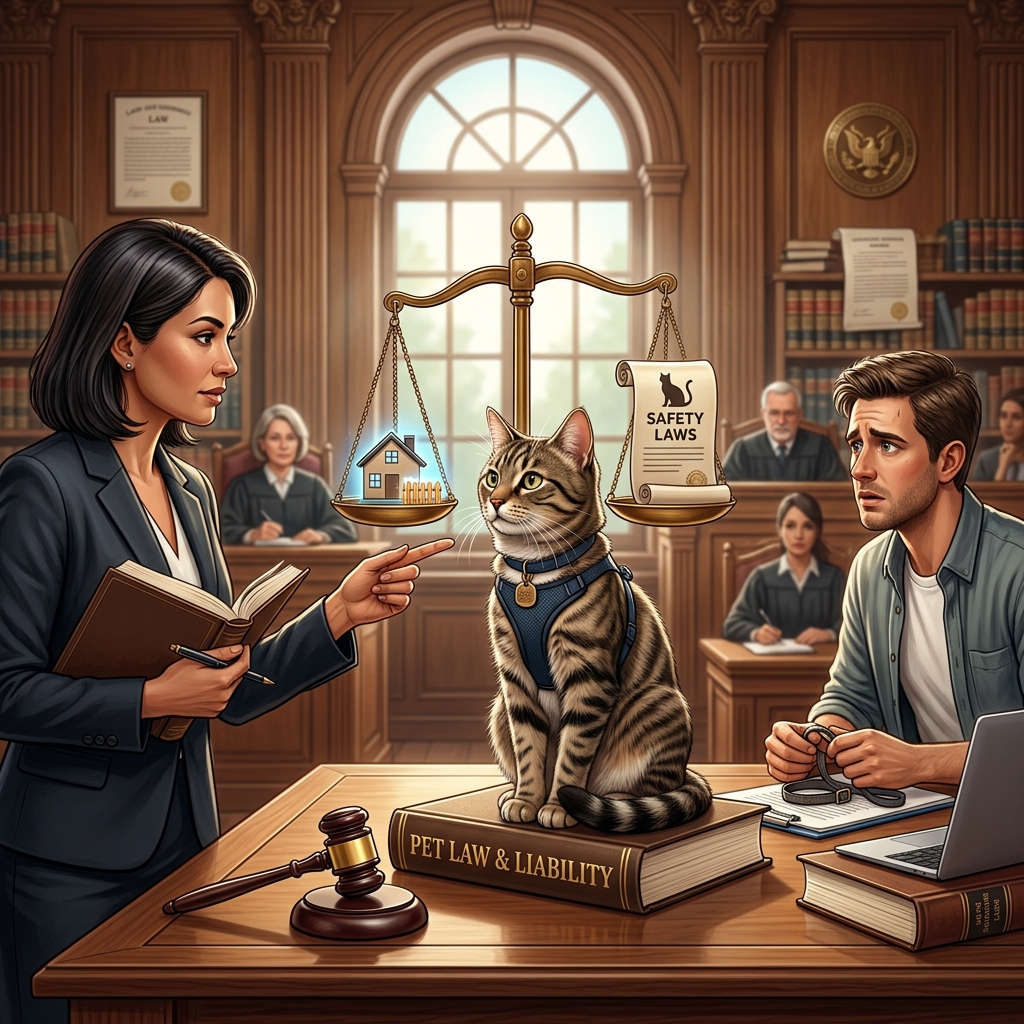
Cats are among the most common companion animals, but the legal framework that governs them is more complex than many owners realize. While dogs often receive attention in “dangerous animal” statutes, cats occupy a patchwork of rules that vary dramatically by state and municipality. This article explains how the law treats domestic house cats, feral and community cats, and exotic big cats, and what happens when a cat injures someone or causes damage.
Why Cat Laws Are Different From Dog Laws
In the United States, most states have created detailed rules for dogs, including licensing, rabies vaccination, leash requirements, and dangerous dog classifications. Laws specific to cats are far fewer and often narrower in scope. Instead of a uniform approach, lawmakers tend to focus on three primary concerns:
- Animal cruelty and neglect, including abandonment and failure to provide basic care.
- Public health, particularly rabies vaccination and disease control.
- Overpopulation and nuisance issues, especially in relation to feral or free-roaming cats.
As a result, there are few statutes that label cats as “dangerous” in the same way that some laws do for dogs. Instead, liability usually arises from general negligence, animal-control ordinances, or broader dangerous-animal provisions that may apply to cats on a case-by-case basis.
Levels of Law: Federal, State, and Local Rules
Understanding cat regulation starts with recognizing which level of government is responsible for which issues:
| Level of government | Typical focus for cat-related laws |
|---|---|
| Federal | Exotic and endangered big cats, interstate transport, public safety in commercial settings. |
| State | Anti-cruelty statutes, rabies vaccination, shelter requirements, sterilization rules, and sometimes ownership of large carnivores. |
| Local (city/county) | Leash laws, licensing, nuisance regulations, feeding bans, and feral/community cat management. |
For domestic cats, local ordinances are usually the most important. For exotic big cats, however, federal and state laws dominate.
Domestic House Cats: Everyday Rules and Responsibilities
Anti-cruelty and abandonment laws
Every U.S. state has anti-cruelty laws that protect animals from abuse, neglect, and abandonment, and these statutes apply to cats as much as to dogs. Typical provisions include:
- Prohibitions on intentional injury or torture of a cat.
- Requirements to provide adequate food, water, shelter, and necessary veterinary care.
- Criminal penalties for abandoning a cat in circumstances where it cannot reasonably care for itself.
For example, California law treats willful abandonment of an animal as a misdemeanor, and this includes owned cats and feral cats intentionally left without care.
Health and vaccination requirements
State health laws commonly require cats to be vaccinated against rabies, especially if they go outdoors or interact with the public. Veterinary and shelter records must often document proof of rabies vaccination, and failure to comply can result in fines or impoundment.
- Most states focus on rabies as the primary legally regulated condition.
- Local authorities may add additional requirements, such as licensing or proof of vaccination to obtain a cat license.
Sterilization and shelter adoption rules
Many states address cat overpopulation by requiring shelters to sterilize animals before adoption. These rules aim to reduce numbers of unwanted cats and ease pressure on municipal shelter systems.
- In California, animal shelters must sterilize cats before adoption, unless a veterinarian certifies that surgery would be unsafe.
- Other states require sterilization for adopted cats or provide funding for low-cost spay/neuter programs.
These laws are not specifically framed as “dangerous cat” statutes; their main objective is population control and prevention of future stray animals.
Feral and Community Cats: Local Control and Controversy
Feral cats — sometimes called community or free-roaming cats — present unique legal challenges. They are often unsocialized, live outdoors, and have no clear owner. Lawmakers must balance public health concerns, wildlife protection, and animal welfare when crafting policies.
How the law defines feral cats
Definitions vary, but a common approach is behavior-based. For instance, California law defines a feral cat as a cat with no owner identification whose consistent temperament is extreme fear and resistance to contact with people; the cat is considered totally unsocialized. This distinction matters because feral cats are often treated differently from owned, socialized pets for purposes of capture, impoundment, and euthanasia.
Local ordinances: feeding bans, nuisance rules, and TNR
Most specific rules affecting feral and community cats are enacted at the city or county level. Local ordinances may include:
- Feeding bans: Some municipalities make it illegal to feed feral cat colonies, arguing that feeding sustains large populations and increases conflicts with wildlife or neighbors.
- Leash or “at large” laws: In a minority of areas, cats are prohibited from roaming off the owner’s property, similar to dog leash laws.
- TNR (Trap-Neuter-Return) policies: Some communities formally recognize and support TNR programs as a humane way to stabilize feral cat populations, though rules and liability differ.
State-level laws often leave feral cat management to local governments, emphasizing that concerns such as nuisance, trespass, property damage, and wildlife predation are best handled at the city or county level.
Public health and environmental concerns
Feral cats can carry parasites and diseases that pose risks to people and wildlife, including toxoplasmosis, flea-borne typhus, and roundworm. These concerns influence legal decisions about whether colonies can be maintained, who may feed them, and how animal control agencies respond.
- Some jurisdictions impose fines for maintaining or feeding feral cat colonies.
- Wildlife agencies and conservation groups often advocate for stricter control of free-roaming cats due to documented impacts on birds and small mammals.
Exotic Big Cats: A Separate, Strict Legal Regime
When lawmakers refer to “dangerous cats,” they often mean large exotic species rather than domestic house cats. Lions, tigers, leopards, cougars, and similar species pose obvious public safety risks, and many federal and state laws target their private ownership and public display.
Federal laws governing big cats
Several federal statutes regulate the possession and movement of big cats, especially in private and commercial settings:
- Captive Wildlife Safety Act: An amendment to the Lacey Act that restricts interstate transport of big cats as pets, limiting movement of privately owned animals between states.
- Big Cat Public Safety Act (BCPSA): A federal law that bans most private ownership of big cats, prohibits direct public contact with cubs, and restricts breeding except for qualified facilities.
- USDA licensing rules: Federal regulations require exhibitors to hold appropriate licenses and prohibit public contact with very young or older big cat cubs.
The BCPSA, for example, makes public contact with big cats or their cubs illegal and requires private owners to register existing animals with federal authorities, effectively phasing out private ownership.
State-level big cat restrictions
States vary widely in how they regulate dangerous exotic animals, including big cats. Some states ban private ownership entirely, some allow limited possession under permit, and a small number historically had no specific laws at all.
| State approach | Typical policy on big cats |
|---|---|
| Complete bans | Full prohibition on private ownership of big cats; often exceptions for zoos, sanctuaries, or research facilities. |
| Permit systems | Ownership allowed only with permits, liability insurance, and strict enclosure standards; may require warning signs and inspections. |
| Limited or no direct regulation | Historically, a few states lacked explicit bans, but federal law now significantly restricts big cat possession nationwide. |
Many state laws also classify big cats as large carnivores and impose requirements such as minimum insurance coverage, secure fencing, and immediate reporting of escapes.
Are There “Dangerous Cat” Laws for Domestic Cats?
Specific statutes that label domestic cats as “dangerous” are rare compared with dangerous dog laws. However, cats can still be treated as dangerous animals under broader ordinances or court orders in situations where they repeatedly injure people or other animals.
General dangerous-animal statutes
Some localities have general dangerous-animal or vicious-animal provisions that apply to any species, including cats, if certain criteria are met — for example, repeated attacks, serious bodily injury, or aggressive behavior that endangers public safety.
- Authorities may issue orders to confine, muzzle, or remove an animal that meets the dangerous-animal definition.
- Cats are less frequently the subject of such proceedings than dogs, but they are not exempt when their behavior presents a clear hazard.
Leash and roaming restrictions
Although cats traditionally roam more freely than dogs, some municipalities have leash or “at large” laws that apply to cats. Under these ordinances, owners must keep cats under control, and violations can result in fines or impoundment, especially if repeated roaming leads to nuisance or injury.
Liability When a Cat Causes Injury or Damage
If a cat scratches, bites, or otherwise injures someone, the legal case typically revolves around negligence or violation of local ordinances rather than a specific “dangerous cat” statute.
Negligence and duty of care
To prove negligence, an injured person generally must show:
- The cat’s owner owed a duty of care (for example, to prevent foreseeable harm).
- The owner breached that duty by failing to act reasonably (such as allowing a known aggressive cat to roam freely).
- The breach caused the injury.
- The victim suffered actual damages (medical bills, lost wages, etc.).
Cats that have previously bitten or scratched people, or have known aggressive tendencies, may impose a higher duty on their owners to prevent future incidents, even though strict dangerous-dog frameworks are less common for cats.
Violation of ordinances and negligence per se
In some jurisdictions, breaking a specific animal-control ordinance can support a claim of negligence per se (automatic negligence) if the violation directly causes injury. Examples might include:
- Ignoring a local ordinance that prohibits allowing cats to roam at large.
- Failing to comply with required rabies vaccination, leading to exposure concerns.
Even without a dedicated “dangerous cat” law, an injured person may rely on these general principles to recover damages.
Practical Tips for Cat Owners to Reduce Legal Risk
Cat owners can take a number of practical steps to protect both their pets and themselves from legal problems:
- Know your local rules: Check city and county ordinances regarding licensing, roaming, nuisance, and feral cat policies.
- Keep vaccinations current: Maintain up-to-date rabies vaccination and veterinary records.
- Consider sterilization: Spaying or neutering not only complies with many shelter requirements but also helps prevent unwanted litters that may become strays.
- Manage behavior issues: If your cat is prone to aggression, consult a veterinarian or behavior specialist and avoid exposing others to known risk.
- Use identification: Microchips and collars with tags can clarify ownership and help resolve disputes quickly.
What Injured People Should Know
For individuals injured by a cat, legal options depend on the circumstances and local law. While many scratching or minor biting incidents never reach a courtroom, serious injuries or repeated episodes may justify pursuing a claim.
- Document the incident, including photographs of injuries and contact information for witnesses.
- Seek medical care promptly, especially if there is risk of infection.
- Report the incident to local animal control if required by law or if the cat poses an ongoing risk.
- Consult an attorney experienced in personal injury or animal law to assess potential negligence claims.
Frequently Asked Questions About Cat Laws
Do states have specific “dangerous cat” statutes?
Most states do not have stand-alone dangerous cat statutes equivalent to dangerous dog laws. However, general dangerous-animal provisions and negligence rules can still apply when a cat causes significant harm.
Can my city prohibit me from letting my cat roam outdoors?
Yes, in some jurisdictions. Leash laws and “at large” ordinances may apply to cats, requiring owners to keep them confined or under direct control when outside their property. Many areas, however, still allow cats to roam, subject to nuisance rules.
Is it illegal to feed feral cats?
It depends on local law. Some cities make feeding feral cat colonies illegal, while others collaborate with caregivers through organized trap-neuter-return programs. Checking municipal ordinances is essential before routinely feeding outdoor cats.
Are there federal laws about domestic house cats?
Federal law primarily targets exotic big cats and wildlife, not ordinary domestic cats. Domestic cat regulation is largely left to states and localities.
What if I am attacked by my neighbor’s cat?
You may have legal recourse. Depending on the facts and local law, you can pursue a negligence claim, report the incident to animal control, or seek enforcement of local ordinances regarding roaming or nuisance. Talking with a personal injury lawyer can clarify your options.
References
- Feral Cats – Pest Notes — University of California Statewide IPM Program. 2023-06-01. https://ipm.ucanr.edu/home-and-landscape/feral-cats/pest-notes/
- Cats and the Law: Finding and Understanding Laws That Impact Cats — Alley Cat Allies. 2022-05-10. https://www.alleycat.org/resources/findcatlaws/
- Brief Summary of State Cat Laws — Animal Legal & Historical Center, Michigan State University College of Law. 2019-03-15. https://www.animallaw.info/article/brief-summary-state-cat-laws
- State Laws Exotic Cats — Big Cat Rescue. 2023-07-01. https://bigcatrescue.org/conservation-news/state-laws-exotic-cats
- Current State Big Cat Laws — Turpentine Creek Wildlife Refuge. 2023-08-10. https://education.turpentinecreek.org/educational-resources/bcpsa/current-state-big-cat-laws/
- This US law did wonders to protect big cats and cubs. Now it’s in danger. — Humane Society of the United States. 2024-03-05. https://www.humaneworld.org/en/blog/us-law-big-cat-public-safety-act-in-danger
- Pet Regulation: Are There Dangerous Cat Laws? — FindLaw Legal Blog. 2020-02-11. https://www.findlaw.com/legalblogs/personal-injury/pet-regulation-are-there-dangerous-cat-laws/
Similar Articles








Read full bio of medha deb


