
Understanding Alaska Insurance Fraud Laws
A practical guide to how Alaska defines, investigates, and penalizes insurance fraud for policyholders, insurers, and agents.
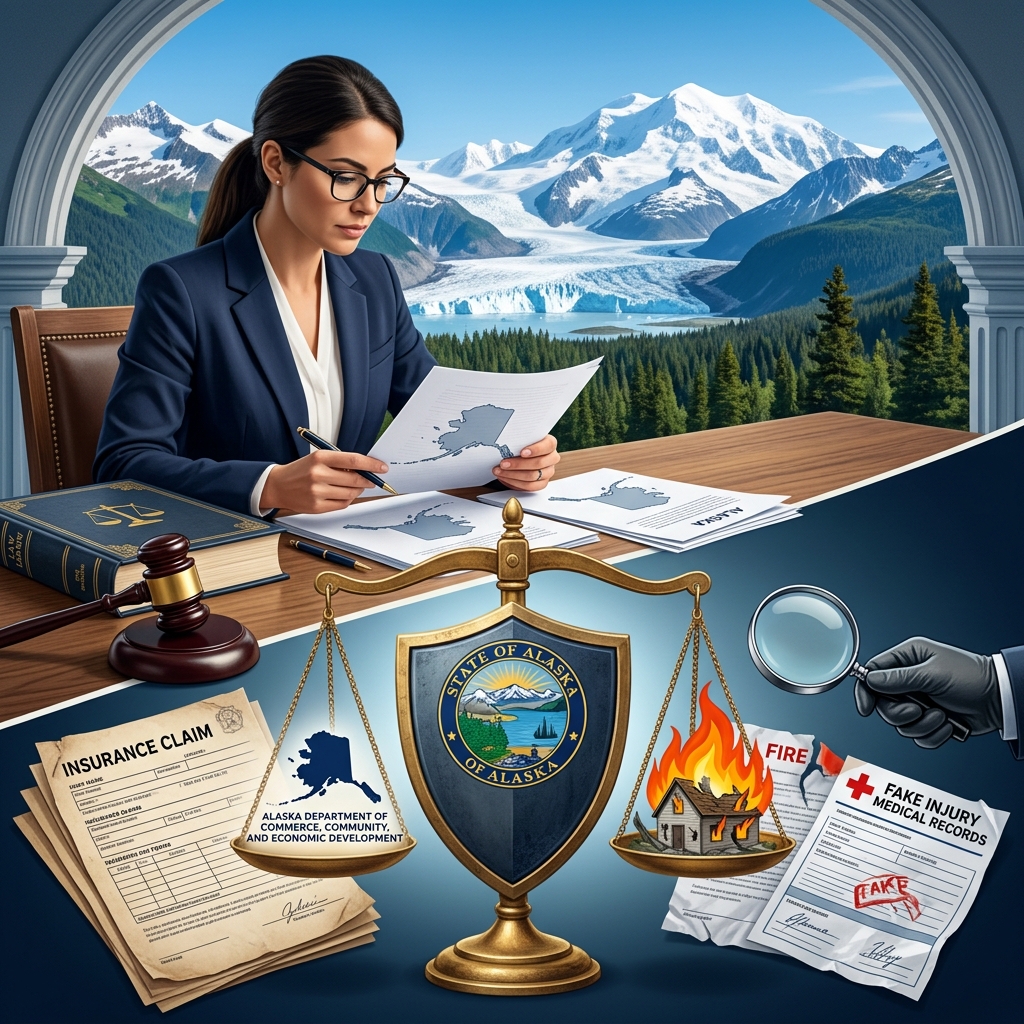
Insurance fraud affects policyholders, insurers, and the broader public by driving up costs and undermining trust in the insurance system. Alaska has adopted detailed statutes to define what constitutes a fraudulent insurance act and to set out criminal and civil penalties for people and companies who violate these rules. This guide explains the core concepts of Alaska insurance fraud law, the types of conduct that are prohibited, and the potential consequences of breaking these laws.
Overview of Insurance Fraud Under Alaska Law
Alaska law prohibits any fraudulent or criminal insurance act involving an insurance transaction regulated under the state’s insurance code. The core idea is that no person may intentionally use deception in connection with insurance premiums, claims, policies, or regulatory filings. The statute covers both individuals (such as policyholders and claimants) and organizations (such as insurers, agents, and brokers).
Insurance fraud in Alaska often involves one or more of the following elements:
- Intent to injure, defraud, or deceive.
- A connection to an insurance policy, claim, premium, or certificate.
- False, incomplete, or misleading statements or documents concerning a material fact.
Because the statute is broadly written, it covers a wide range of conduct, from misrepresenting loss amounts in a claim to operating an insurance business without providing actual coverage.
Who Can Be Liable for Insurance Fraud?
Alaska’s insurance fraud rules apply to nearly every participant in the insurance marketplace. This includes:
- Policyholders and claimants, who submit claims or provide sworn statements.
- Insurance companies, including domestic and foreign insurers doing business in Alaska.
- Agents, producers, and brokers who solicit, sell, or service insurance policies.
- Corporate officers and employees of insurance entities who prepare records or advertising materials.
If any of these parties intentionally misrepresent material facts in connection with an insurance transaction, they may be charged with a fraudulent insurance act.
Common Types of Fraudulent Insurance Acts
Alaska Statute 21.36.360 identifies numerous specific behaviors that qualify as fraudulent insurance acts when done with the intent to injure, defraud, or deceive. The following categories summarize major areas of concern.
Improper Premium Collection and Overcharging
One major type of fraud involves collecting premiums for insurance that either does not exist or is not provided according to approved rates and terms. Under Alaska law, a person commits a fraudulent insurance act if they:
- Collect premiums or charges for insurance that has not been provided or is not due to be provided by an authorized policy.
- Knowingly collect a sum in excess of the premium specified by the insurer in accordance with approved classifications and rates, or fixed premiums for non-approved lines.
These provisions are designed to prevent agents or companies from charging more than the lawful rates or accepting payments when no genuine coverage exists.
False or Misleading Claims Submissions
A core focus of insurance fraud law is the integrity of claims. Alaska law makes it a fraudulent insurance act to:
- Present a written or oral claim statement to an insurer knowing it contains false, incomplete, or misleading information or omits material facts.
- Assist or conspire with another person to prepare such a statement in support of a claim.
This includes misrepresenting the cause of loss, inflating repair costs, hiding prior damage, or omitting relevant information about the circumstances of a claim. Policyholders who knowingly give false sworn statements or irreconcilable sworn statements during claim examinations may also be found to have committed a fraudulent insurance act.
Forgery and Misuse of Certificates of Insurance
Certificates of insurance and similar documents are commonly used to prove coverage to lenders, landlords, or other third parties. Alaska law specifically prohibits and criminalizes conduct involving these documents, including:
- Falsely altering a certificate of insurance.
- Knowingly possessing a forged certificate of insurance.
- Knowingly issuing a forged certificate of insurance.
Any of these acts, when done with intent to deceive, constitute fraudulent insurance acts and expose the person to criminal liability.
Fraud by Insurers, Brokers, and Agents
Not all fraud originates with policyholders. Alaska law also targets misconduct by licensed professionals and companies. Examples include:
- Operating an insurance business in Alaska without proper licensing.
- Exhibiting false accounts, documents, or advertisements relating to an insurer’s affairs with the intent to deceive.
- Wrongfully removing or concealing records required to be kept under Alaska’s insurance record-keeping laws.
Additionally, regulations prohibit misrepresentation in policy illustrations, twisting (inducing the lapse or surrender of policies using misleading information), and discriminatory practices in underwriting or marketing.
How Intent and Materiality Affect Liability
For most fraudulent insurance acts under Alaska law, the key elements are intent and materiality.
Intent to Injure, Defraud, or Deceive
The statute generally requires that the person act with the intent to injure, defraud, or deceive. Simple mistakes, misunderstandings, or clerical errors are not usually treated as criminal fraud unless there is evidence of intentional deception.
Examples of intentional conduct can include:
- Deliberately inflating the value of damaged property in a claim.
- Knowingly making false statements about whether coverage exists.
- Issuing certificates of insurance that the person knows do not reflect actual policies.
Material Facts and Statements
Alaska insurance fraud law focuses on information that is material—that is, information that could influence the insurer’s decision to issue a policy, pay a claim, or set premium rates. Omitting or misrepresenting trivial details may not rise to the level of fraud, but misrepresenting major facts such as the cause of loss, the extent of damage, or the existence of prior claims often will.
During examinations, investigations, or hearings, giving false or inconsistent sworn statements about material matters can itself be a separate fraudulent insurance act.
Criminal Penalties and Possible Sentences
Insurance fraud can lead to criminal prosecution in Alaska, with penalties that vary depending on the type and seriousness of the offense. The nature of the charge (misdemeanor or felony) typically depends on factors such as the amount involved and the defendant’s prior record.
| Type of Offense | Potential Penalty Range | Examples |
|---|---|---|
| Class A Misdemeanor | Up to 1 year in jail; up to $10,000 fine; or both. | Smaller-scale deliberate claim misstatements or forged documents involving lower amounts. |
| Felony-level Insurance Fraud | Imprisonment up to 10 years; fines up to $100,000 for individuals; possible civil penalties and restitution. | Significant schemes, repeated offenses, or large monetary losses. |
These ranges illustrate how serious insurance fraud can be: even relatively limited fraudulent behavior may result in incarceration and substantial fines. Courts can also order defendants to pay restitution to victims, including insurers or government programs such as unemployment insurance.
Regulatory and Civil Consequences
Beyond criminal punishment, fraudulent insurance acts may trigger regulatory and civil responses. Regulatory agencies and courts may:
- Suspend or revoke insurance licenses for agents, producers, or companies.
- Impose civil fines or administrative penalties.
- Require restitution to injured parties, including reimbursing claims improperly paid.
- Restrict future participation in insurance programs (such as unemployment insurance).
For example, individuals convicted of unemployment insurance fraud in Alaska can face imprisonment, fines tied to the amount of overpayment, restitution obligations, and even garnishment of state tax returns. Although unemployment insurance is a specialized program, these consequences show how seriously the state treats fraudulent claims.
Examples of Insurance-Related Fraud Situations
Insurance fraud can occur across many lines of coverage. The underlying legal principles described above apply broadly to areas such as health, property, auto, liability, and unemployment insurance.
Property and Casualty Insurance
In property and casualty insurance, fraud might include:
- Claiming damage that occurred before policy inception as if it resulted from a covered event.
- Intentionally damaging property to collect insurance proceeds.
- Billing for repairs or replacement at inflated costs or for services not performed.
Auto Insurance
Auto insurance fraud may involve staged accidents, false injury claims, or misstatements about vehicle use. Alaska also requires drivers to carry minimum liability insurance limits, and proof of insurance must be provided upon request. Deception about coverage, filing claims with misleading accident descriptions, or forging proof-of-insurance documents may all fall under fraudulent insurance acts.
Unemployment Insurance
Although governed partly by separate statutes, unemployment insurance fraud involves claiming benefits while knowingly failing to meet eligibility requirements. Alaska penalties can include imprisonment of up to five years, fines connected to the overpayment amount, and restitution. The same general policy applies: false or misleading statements to obtain benefits can result in criminal charges and loss of future benefits.
Compliance Tips for Policyholders and Insurance Professionals
Because Alaska’s insurance fraud laws are comprehensive, both consumers and industry professionals should take practical steps to avoid violations.
For Policyholders and Claimants
- Tell the truth on applications and claims: Provide accurate information about prior claims, property condition, and accident circumstances.
- Review documents carefully: Before signing sworn statements, ensure that all details are correct and complete.
- Maintain records: Keep receipts, photos, and repair invoices to support your claims.
- Report discrepancies: If you discover an error in a claim or policy, notify your insurer promptly rather than letting it stand.
For Insurers, Agents, and Brokers
- Maintain proper licensing: Ensure you and your organization meet all Alaska licensing requirements before selling or servicing insurance.
- Follow rate and classification rules: Charge only premiums approved by regulators or contractually authorized by the insurer.
- Keep complete and accurate records: Do not remove or conceal records required under Alaska law.
- Use honest advertising: Avoid false or misleading statements in marketing, illustrations, or explanations of policy terms.
Implementing robust compliance programs, training staff on fraud laws, and maintaining internal auditing can significantly reduce the risk of violations and subsequent sanctions.
Frequently Asked Questions (FAQs)
Is every incorrect statement on an insurance form considered fraud in Alaska?
No. Under Alaska law, fraudulent insurance acts generally require knowing and intentional misrepresentation with the purpose of injuring, defrauding, or deceiving. Honest mistakes or clerical errors are not usually treated as criminal fraud, although they may still affect coverage.
Can an insurance company be charged with fraud, or is it only individuals?
Both companies and individuals can be liable. Insurance companies, their agents, and brokers who overcharge premiums, fail to provide paid-for coverage, misrepresent their licensing status, or falsify records can be prosecuted under Alaska’s insurance fraud laws.
What happens if I knowingly submit a forged certificate of insurance?
Alaska law explicitly states that falsely altering, possessing, or issuing a forged certificate of insurance with intent to deceive is a fraudulent insurance act. This may lead to criminal charges, fines, and possible imprisonment, especially if others rely on the forged document to their detriment.
Are there specific penalties for unemployment insurance fraud in Alaska?
Yes. Individuals convicted of unemployment insurance fraud can face up to five years in prison, fines based on a percentage of the overpayment, restitution, and possible garnishment of state tax returns. They may also lose eligibility for future benefits for periods linked to the fraudulent claims.
What should I do if I suspect insurance fraud?
If you suspect fraud—whether by another policyholder, an insurance company, or an agent—you can report the matter to the insurer’s fraud unit or to the relevant state authorities. Alaska’s enforcement system relies partly on reports to uncover fraudulent schemes and protect honest participants in the insurance market.
References
- Alaska Statutes § 21.36.360 – Fraudulent or Criminal Insurance Acts — Alaska Legislature / Justia. 2025-01-01. https://law.justia.com/codes/alaska/title-21/chapter-36/article-4/section-21-36-360/
- Alaska Insurance Fraud Laws — FindLaw. 2023-06-01. https://www.findlaw.com/state/alaska-law/alaska-insurance-fraud-laws.html
- Alaska Statutes Title 21. Insurance § 21.36.360 — FindLaw Codes. 2023-01-01. https://codes.findlaw.com/ak/title-21-insurance/ak-st-sect-21-36-360/
- Alaska-Insurance Fraud – Definition-AS § 21.36.360 — Coalition Against Insurance Fraud. 2022-09-15. https://insurancefraud.org/statutes/alaska-insurance-fraud-definition-as-%C2%A4-21-36-360/
- Alaska State Regulations & NAIC Insurance Law — Achievable Exam Catalog. 2024-03-01. https://app.achievable.me/study/insurance-casualty/learn/alaska-state-regulations-and-naic-insurance-law
- Claims Fraud Warnings by State – Alaska — Grinnell Mutual. 2023-05-01. https://www.grinnellmutual.com/claims/State-Fraud-Warning
- Unemployment Insurance Fraud in Alaska — Ballotpedia. 2023-11-01. https://ballotpedia.org/Unemployment_insurance_fraud_in_Alaska
Similar Articles








Read full bio of Sneha Tete




