
Alaska Adoption Laws: Comprehensive Guide For Families In 2025
A practical guide to who may adopt or be adopted in Alaska, required consents, home studies, and how adoptions are finalized and challenged.
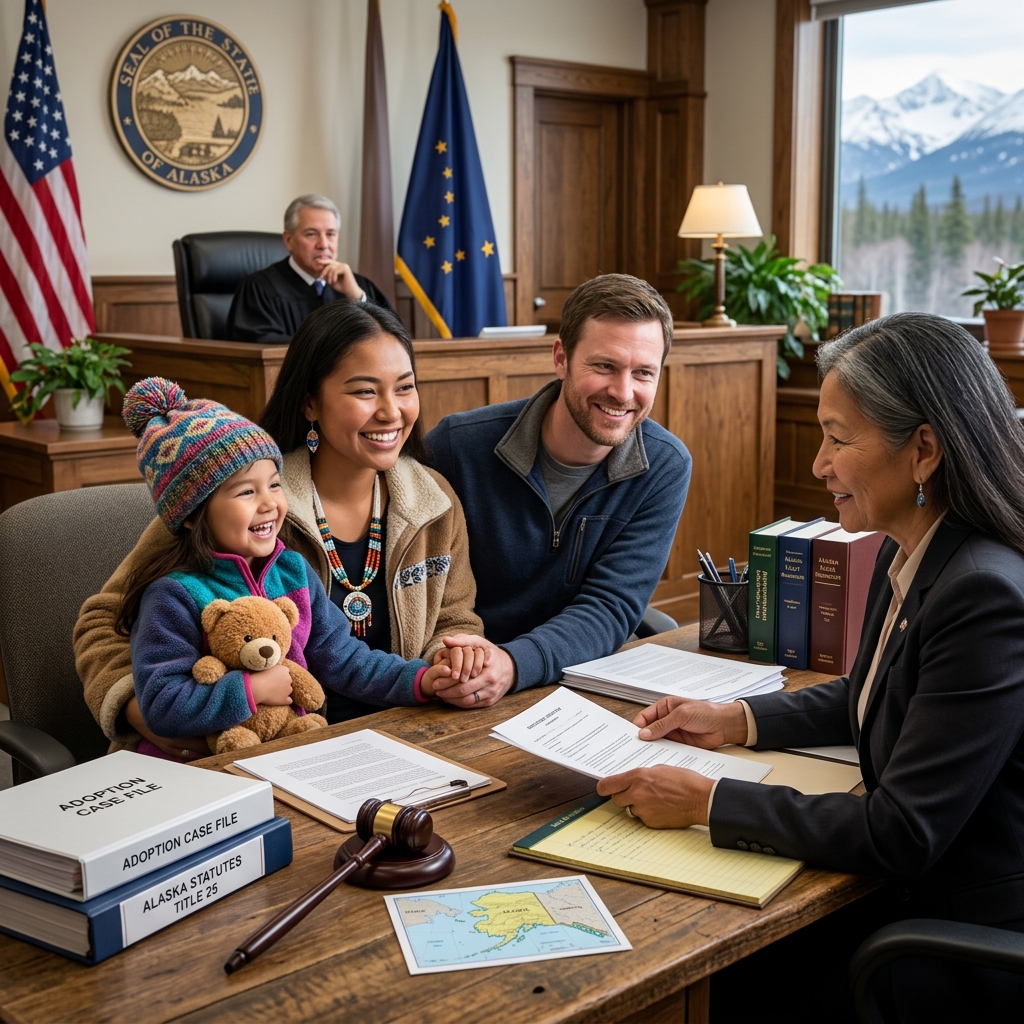
Alaska’s adoption laws are designed to create a permanent, legally recognized relationship between adoptive parents and the person being adopted, whether that person is a child or an adult. While the process can feel complex, the core legal rules are relatively clear once they are broken down into eligibility, consent, procedures, and special protections.
This guide explains the main legal features of adoption in Alaska, using accessible language while staying close to statutory requirements and official rules. It covers who may adopt, who may be adopted, when consent is required, how home studies and court proceedings work, and how Alaska handles adult adoptions and adoptions involving Native children.
Who May Adopt in Alaska
Alaska broadly allows many different people and family structures to adopt. The key goal is to ensure that adoptive parents are capable of providing a safe, stable, and nurturing home, not to limit adoption based on marital status or identity.
Basic eligibility to adopt
Under Alaska law and practice, the following people may adopt:
- Married couples, including spouses in legally recognized relationships.
- Unmarried individuals who meet background and suitability requirements.
- Stepparents who wish to adopt their spouse’s child.
- Domestic partners in legally recognized relationships.
Alaska’s adoption statutes and state practice do not discriminate based on sexual orientation or gender identity, and adults over 18 can adopt regardless of marital status or orientation.
Additional practical requirements
Beyond being legally allowed to adopt, would-be parents must also meet practical standards often evaluated through a home study and licensing process.
- Minimum age
- At least 18 years old to adopt generally.
- At least 21 years old to adopt from foster care or to be licensed as a foster parent.
- Background checks, including criminal and child abuse history checks.
- Stable housing and income sufficient to care for a child.
- Physical and emotional ability to meet a child’s needs.
Serious criminal convictions—for example, child abuse, neglect, or violent offenses—can disqualify an applicant from adopting. These safeguards are in place to protect the best interests of children placed for adoption.
Who May Be Adopted
Alaska law allows any person to be adopted, including both minors and adults. This is broader than in many states and reflects the state’s recognition that adoption can serve both child welfare and adult family-building needs.
Adoption of minors
For children, adoption creates a new legal parent–child relationship that fully replaces the prior legal ties to biological or legal parents, unless a statute or court order provides otherwise. Once an adoption is finalized:
- The adoptive parents have all legal, financial, and caregiving responsibilities for the child.
- The child is treated exactly like a biological child under Alaska law for inheritance, support, and family rights.
Adult adoptions
Alaska explicitly permits the adoption of adults. Adult adoption is used for situations such as formalizing a long‑standing parent‑like relationship or securing inheritance and decision‑making rights.
| Topic | Minor Adoption | Adult Adoption |
|---|---|---|
| Who may be adopted | Any child, including infants and teens. | Any adult, subject to consent and certain limitations. |
| Consent required from adoptee | Child 10+ generally must consent, unless the court waives consent in the child’s best interests. | Adult must give written consent; spouse or guardian may also need to consent. |
| Parental rights | Existing parental rights are terminated and replaced by adoptive parents’ rights. | Biological parental rights are typically not at issue; focus is on the adult’s decision and spouse/guardian consent. |
| Court review | Best interests of the child standard applies. | Court ensures valid consent and compliance with statutes. |
Consent Requirements in Alaska Adoptions
Consent is at the core of Alaska’s adoption process. Statutes and court rules specify who must agree to the adoption and how that consent must be documented. At the same time, the law allows exceptions when a parent has abandoned a child or failed to support or contact the child for extended periods.
Who must consent
Depending on the situation, the following people may need to provide written consent to an adoption:
- The person being adopted
- Children age 10 or older ordinarily must consent.
- Adults must consent to their own adoption.
- Biological or legal parents, usually including the mother and, in many cases, the father.
- Spouses of adults who are being adopted, unless a court finds an exception (for example, incapacity).
- Guardians or conservators of incapacitated adults being adopted.
Consents for adoption must generally be written, signed, and properly witnessed so the court can verify their validity. Alaska court rules specifically set out detailed requirements for the form and execution of consents to adoption.
Minor’s consent
For children, the age of consent is a key feature. Alaska law provides that a child aged 10 or older typically must agree to being adopted. However, the court may dispense with the child’s consent when doing so is in the child’s best interests, such as in certain cases involving neglect or abuse.
Withdrawal of consent
Parents and others who consent may sometimes change their minds, but strict rules apply:
- A parent who consents to adoption typically has ten days to revoke that consent by submitting written notice.
- After that period, withdrawing consent generally requires a court hearing, and the judge must be persuaded that revocation is in the best interests of the child or adult being adopted.
These timelines reflect a balance between allowing parents a brief reconsideration period and giving adoptive families stability once the process is underway.
When consent is not required
Alaska law also recognizes circumstances where the court may proceed with an adoption even without a parent’s consent. For example, the court may approve adoption if a parent has:
- Abandoned the child for at least six months.
- Failed to maintain contact with the child for one year.
- Failed to provide care and support for the child for one year.
In these cases, parental consent may not be necessary because the court’s focus shifts to the child’s safety and long‑term stability.
Home Study and Residency Requirements
Before an adoption can be finalized, Alaska generally requires a home study and a period of home residency, during which the child lives with the prospective adoptive parents under supervision.
What is a home study?
A home study is a comprehensive evaluation of the prospective adoptive family, conducted by a licensed social worker, agency, or court‑appointed investigator. It typically includes:
- Interviews with the prospective parents and sometimes other household members.
- Assessment of the family’s financial stability, health, and parenting abilities.
- Review of criminal and child protection records.
- Inspection of the home for safety, space, and sanitation.
For adoptions from state custody, the Office of Children’s Services often pays for the home study and related legal costs. For private or international adoptions, families usually cover the expense themselves.
Home residency before finalization
Alaska law requires that the child live in the adoptive home for a period before the court will finalize the adoption. The statutes do not specify an exact length of time, allowing flexibility based on individual circumstances.
During this residency period:
- The adoptive placement is monitored to ensure the child’s needs are being met.
- Social workers or agencies may conduct follow‑up visits and report to the court.
- Any serious issues can be addressed before a permanent decree is entered.
Court Process and Finalization
Adoption in Alaska is always completed through a formal court process. This ensures that all consents, home study requirements, and legal standards have been met before the adoption becomes permanent.
Filing the petition
The process usually begins with a petition for adoption filed in the Alaska Superior Court, Juvenile Division, or other appropriate division depending on the case.
The petition includes key information such as:
- Names and identifying details of the adoptive parents and person being adopted.
- Proof of consent from required parties.
- Information about the child’s placement and home residency.
- Any agreement about post‑adoption contact with biological parents, if applicable.
Closed proceedings and privacy
Adoption proceedings in Alaska are usually closed to the public, protecting the privacy of the child and family. Court files are not ordinarily open to public inspection, and hearings take place in a closed courtroom.
Decree of adoption
If the judge determines that:
- All legal requirements are satisfied, and
- The adoption is in the best interests of the child or adult being adopted,
the court issues a decree of adoption formally establishing the new legal relationship.
Once the decree is entered:
- The prior parent–child legal relationship is terminated (for children), and the adoptive parents assume full rights and responsibilities.
- The adoptee may receive a new birth certificate reflecting the adoptive parents, depending on the type of adoption and applicable rules.
Challenging an adoption
Alaska law provides a limited window of time for challenging an adoption decree. In general, challenges must be brought within one year, unless they are based on fraud or duress. Claims involving fraud or coercion may be considered after that period, but they face stringent standards.
Special Rules for Native Children and ICWA
Adoption of Native children in Alaska involves both state law and the federal Indian Child Welfare Act (ICWA)
Key ICWA‑related principles include:
- Higher standards for terminating parental rights of Native parents.
- Preference for placement with extended family, members of the child’s tribe, or other Native families, before considering non‑Native placements.
- Stricter rules about when consents to adoption of Native children may be given—for example, not within the first ten days after birth.
Prospective parents seeking to adopt Native children must be prepared for additional procedural steps and tribal involvement, all aimed at preserving the child’s cultural and community ties.
Costs, Timelines, and Types of Adoption
While the FindLaw overview focuses on legal rules, Alaska practice shows significant variation in costs and timelines depending on the type of adoption.
Types of adoption commonly used in Alaska
- Private agency or independent adoption – often used for infant placements, typically more expensive due to agency and legal fees.
- Adoption from foster care – usually lower cost or nearly free, because the state covers home study and legal fees in many cases.
- International adoption – involves overseas agencies and foreign law along with Alaska procedures, generally higher cost and longer timelines.
- Tribal adoption – structured under tribal law and ICWA for Native children, often coordinated with state courts.
- Adult adoption – typically focused on consent and documentation rather than home studies of the same depth.
Typical costs and financial assistance
Costs can include agency fees, attorney fees, home study charges, medical expenses, and court filing costs. Broad patterns include:
- Private and international adoptions can range from tens of thousands of dollars or more.
- Adoptions through the state’s foster care system may be largely covered by the Office of Children’s Services and federal adoption assistance funds.
- Families may qualify for a federal income tax credit that offsets adoption‑related expenses in qualifying cases.
Timelines to finalization
There is no single fixed timeline, but common ranges include:
- Foster care adoptions: often 12–24 months from placement to finalization, sometimes closer to six months if the home study is complete and the child is already placed.
- Private infant adoptions: sometimes two to four years due to waitlists and matching processes.
- Adoption of specific waiting children (for example, through Heart Gallery programs): often around 9–12 months from inquiry to finalization.
Post‑Adoption Contact and Openness
Alaska allows some flexibility regarding post‑adoption contact between children and their biological parents or relatives, particularly when all parties agree and the arrangement is properly documented.
Under Alaska law:
- Visits or contact with biological parents can be valid and enforceable if they are mentioned in the adoption petition, the consent to adoption, and the final decree.
- Such agreements may be considered as part of the court’s overall evaluation of the child’s best interests.
However, once parental rights are terminated and the adoption is finalized, biological parents cannot simply demand the return of the child. Their legal status as parents has ended.
Frequently Asked Questions about Alaska Adoption Laws
Is adoption in Alaska only for children?
No. Alaska law allows both children and adults to be adopted, as long as the legal requirements, including consent, are satisfied.
Do children have a say in their adoption?
Yes. In general, a child who is at least 10 years old must consent to their own adoption, although a court can waive this requirement when it is in the child’s best interests.
Can a parent change their mind after consenting?
Parents typically have a 10‑day period to revoke consent in writing. After that, they can only withdraw consent with the court’s permission, and must show that revocation serves the adoptee’s best interests.
Are adoption proceedings public in Alaska?
Generally, no. Adoption proceedings are conducted in a closed courtroom and the court file is not open to public inspection, protecting privacy for children and families.
Does Alaska treat adopted children differently from biological children?
No. Under Alaska law, adopted children have the same legal status as biological children of their adoptive parents, including in areas like inheritance and parental responsibilities.
References
- Alaska Adoption Laws — FindLaw. 2024-01-05. https://www.findlaw.com/state/alaska-law/alaska-adoption-laws.html
- Alaska Statutes Title 25, Chapter 23 – Adoption — State of Alaska / Justia. 2025-01-01. https://law.justia.com/codes/alaska/title-25/chapter-23/
- Adoption Rules — Alaska Court System. 2023-07-01. https://courts.alaska.gov/rules/docs/adop.pdf
- Alaska Youth Law Guide – Adoption — Alaska Bar Association. 2022-06-15. https://alaskabar.org/youth/sex-drugs-and-rock-n-roll/sex/pregnancy/adoption/
- Alaska — Adoptee Rights Law Center. 2023-11-10. https://adopteerightslaw.com/alaska/
- Steps to Adopt — Alaska Center for Resource Families. 2023-09-20. https://acrf.org/adopt/
- FAQ — Heart Gallery of Alaska. 2024-02-12. https://www.heartgalleryak.com/faq
Similar Articles








Read full bio of Sneha Tete


