
Traffic Stops, Marijuana, and NFL Legal Drama
How a routine traffic stop and a few marijuana cigars can raise complex constitutional questions in a high‑profile NFL case.
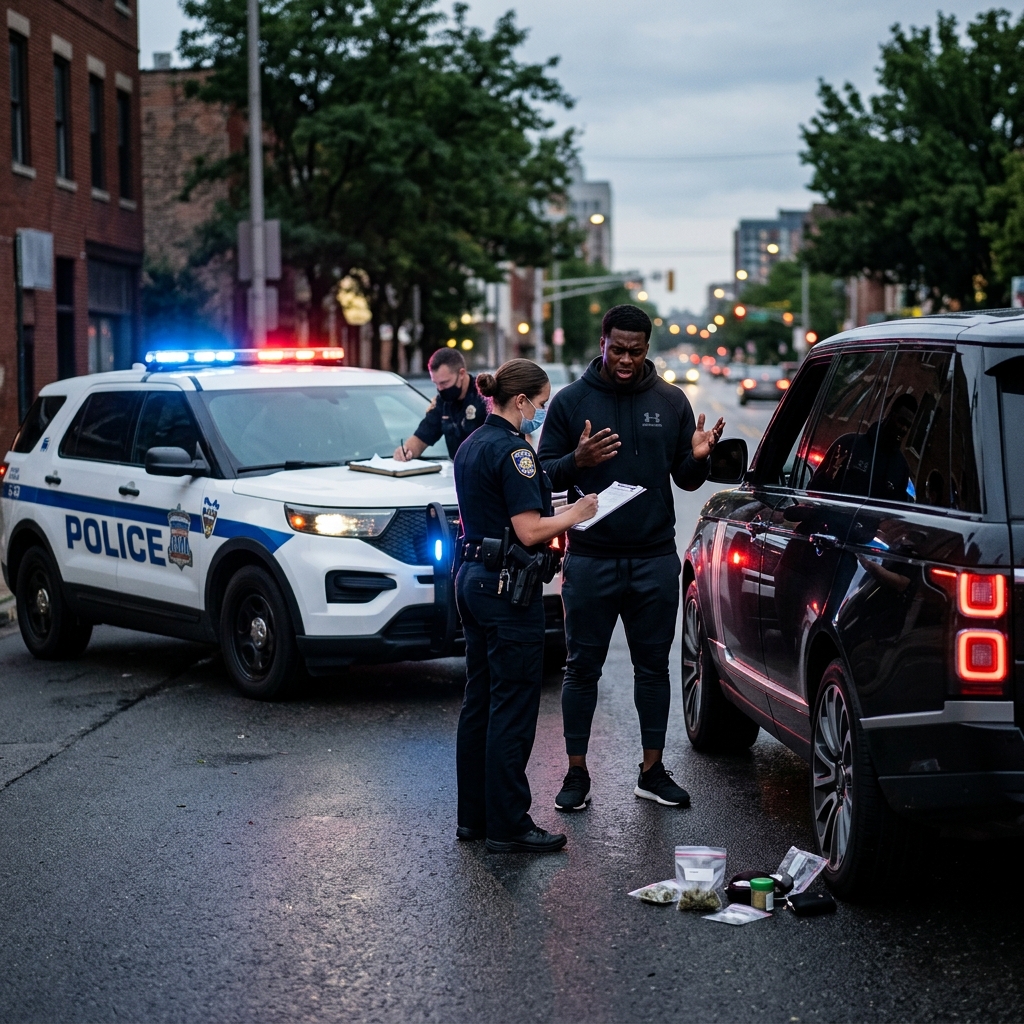
When an NFL star is pulled over, questioned, and charged with misdemeanor marijuana possession, the public often focuses on the player’s reputation and career. For criminal lawyers and judges, however, the spotlight falls on something more technical: Was the traffic stop itself legal? The answer to that question can determine whether the prosecution’s evidence survives—or disappears from the case entirely.
This article uses the widely reported marijuana case involving Pittsburgh Steelers wide receiver and Super Bowl MVP Santonio Holmes as a lens to examine how traffic stops, search and seizure law, and suppression motions work in real life. It does not retell the original article, but instead builds a fresh, detailed explanation of the legal concepts at play, grounded in the constitutional rules that govern every traffic stop in the United States.
From Routine Stop to Criminal Charge: What Happened?
Public reports indicate that Holmes was stopped by police while driving, and officers discovered several cigars that allegedly contained marijuana in his vehicle. He was later arraigned on a misdemeanor marijuana charge, with his attorney describing the offense as a low-level misdemeanor carrying a potential penalty of up to 30 days’ probation and a fine of around $500.
The crucial detail is not the amount of marijuana or the level of the charge, but how the evidence was found. Holmes’ defense lawyer reportedly announced his intent to file a motion to suppress, arguing that the traffic stop leading to the discovery of the marijuana cigars was invalid. If a court agreed, the marijuana could be excluded from evidence, potentially leaving prosecutors with little or nothing to present at trial.
Key Elements of the Case (as reported)
- Holmes was stopped in his vehicle by law enforcement.
- Officers found several cigars allegedly filled with marijuana.
- He was charged with misdemeanor marijuana possession.
- His attorney indicated the charge carried minor penalties but still required a defense strategy.
- The defense focused on challenging the validity of the stop through a suppression motion.
Understanding why the legality of a traffic stop is so important requires a closer look at the Fourth Amendment and the rules that govern police encounters on the road.
The Fourth Amendment and Traffic Stops
The Fourth Amendment to the U.S. Constitution protects people against unreasonable searches and seizures. In the context of driving, a traffic stop is considered a seizure because the driver is not free to leave. That means officers generally need a lawful basis—often called reasonable suspicion or sometimes probable cause—to stop a vehicle.
What Makes a Traffic Stop Legal?
Courts have developed a framework for evaluating all traffic stops. While details vary by jurisdiction, several core principles are widely accepted:
- Reasonable suspicion of a traffic violation: An officer must usually observe a violation, such as speeding, failing to signal, or driving with a broken taillight.
- Reasonable suspicion of criminal activity: In some situations, an officer may stop a car if there is a reasonable, articulable suspicion of crime, such as impaired driving or drug trafficking.
- Limited scope and duration: The stop should last only as long as necessary to address the reason for the stop, like checking license and registration, issuing a ticket, or conducting related safety checks.
If officers go beyond these limits—by stopping a car without a valid reason or unreasonably prolonging the encounter—courts may find that the stop violated the Fourth Amendment.
Why the Initial Reason for the Stop Matters
In many drug and contraband cases, the entire prosecution hinges on whether the initial roadside encounter was lawful. Evidence discovered as a direct result of an unconstitutional stop may be subject to the exclusionary rule, which prevents illegally obtained evidence from being used in court.
For Holmes, that means the defense is not just contesting whether the cigars contained marijuana or whether he knew about them. Instead, they are questioning whether the officers had a legitimate basis to stop the vehicle in the first place. If not, everything found afterward could potentially be excluded.
From Stop to Search: How Police Find Drugs in Vehicles
Traffic stops frequently lead to vehicle searches, especially when officers claim to smell marijuana, see contraband in plain view, or receive consent from the driver. Each type of search is governed by specific rules, based on U.S. Supreme Court decisions and state law.
Common Grounds for Vehicle Searches
| Search Basis | Legal Standard | Typical Example |
|---|---|---|
| Consent | Voluntary agreement by the driver or owner. | Driver says “Yes” when asked, “May I search your car?” |
| Plain view | Contraband visible from outside or during a lawful stop. | Officer sees a joint or pipe on the dashboard. |
| Probable cause | Facts that would lead a reasonable person to believe a crime is being committed. | Officer smells strong odor of marijuana and sees rolling papers. |
| Search incident to arrest | Limited search when a lawful arrest is made. | Driver is arrested; officers search immediate area for weapons or evidence. |
In high-profile cases like Holmes’, public reporting often focuses on what was found—marijuana cigars, in this instance—rather than how the search unfolded. Legally, however, the sequence of events is critical: if the initial stop or subsequent search violated constitutional rules, the resulting evidence may be thrown out.
Suppression Motions: The Defense’s Main Weapon
A motion to suppress is a formal request asking the court to exclude certain evidence from trial because it was obtained in violation of constitutional or statutory rights. Defense attorneys regularly use these motions in drug, firearm, and contraband cases, especially when evidence arises from traffic stops.
How Suppression Motions Work
- Filing the motion: The defense submits a written motion identifying the evidence at issue and explaining why it should be excluded.
- Legal arguments: The motion typically relies on constitutional provisions (such as the Fourth Amendment) and case law interpreting those protections.
- Evidentiary hearing: Courts often hold a suppression hearing where officers testify about the stop and search, and the defense may cross-examine them.
- Judicial ruling: The judge decides whether the stop, search, or seizure was lawful and whether the evidence should be suppressed.
In Holmes’ case, his attorney reportedly planned to challenge the traffic stop that led to the discovery of three marijuana-filled cigars in the vehicle. If the stop lacked a lawful basis, the marijuana could be excluded, leaving prosecutors with little evidence and possibly forcing them to dismiss or substantially reduce the case.
Why Prosecutors Take Suppression Seriously
When major evidence is at risk of suppression, prosecutors may reassess their strategy. They might:
- Negotiate a more favorable plea agreement for the defendant.
- Reduce or dismiss charges if the remaining evidence is weak.
- Invest resources in defending the legality of the stop, including calling multiple officers to testify at the hearing.
For defendants, suppression motions can be outcome-determinative. In some cases, winning a suppression motion effectively ends the prosecution; in others, it significantly improves the chances of acquittal or a lighter sentence.
Marijuana, Driving, and Legal Nuance
Holmes’ case also illustrates a subtle but important distinction: he was reportedly not accused of driving under the influence of marijuana. Instead, the charge involved possession of marijuana cigars found in his vehicle. That difference matters for both public safety and legal analysis.
Marijuana Possession vs. Impaired Driving
- Possession offenses typically focus on whether an individual knowingly had a controlled substance, regardless of whether they were impaired at the time.
- Driving under the influence (DUI or DWI) focuses on whether the person’s ability to operate a vehicle was impaired by drugs or alcohol.
Most jurisdictions treat impaired driving as a more serious offense than simple possession because of the direct risk to public safety. Advocacy groups and legal scholars consistently underscore that driving while impaired by any substance, including marijuana or alcohol, is dangerous and remains illegal.
In a case like Holmes’, the legal spotlight is not on intoxication behind the wheel, but on how police conduct traffic stops and apply possession laws during those encounters.
High-Profile Defendants and Public Perception
Cases involving athletes, entertainers, or other public figures often attract disproportionate media coverage. When a Super Bowl MVP faces a marijuana charge, the intersection of sports, criminal law, and public opinion becomes more apparent.
Impact on Reputation and Career
Even low-level misdemeanor charges can affect a professional athlete’s career:
- Team discipline, such as suspensions or fines, may follow an arrest.
- League policies may impose penalties even when criminal sanctions are minimal.
- Sponsorships and public image can be damaged by reports of drug-related charges.
Yet, from a strictly legal standpoint, the athlete is treated like any other defendant. Courts focus on lawful procedures and constitutional rights, not on the defendant’s fame. That means an NFL player can win or lose a suppression motion just like anyone else—based entirely on the facts and law surrounding the traffic stop.
Practical Lessons for Everyday Drivers
While the Holmes case is high-profile, the underlying issues are common. Any driver can find themselves subject to a traffic stop, and understanding basic rights and obligations is useful.
What Drivers Should Know During a Traffic Stop
- Provide required documents: Drivers are generally required to show license, registration, and proof of insurance when lawfully requested.
- Remain calm and courteous: Polite interaction can reduce tension and help ensure the encounter remains brief.
- Right to remain silent: Individuals may decline to answer certain questions about where they are going or what they are doing, beyond providing legally required identification.
- Consent to search: Drivers can usually refuse consent to search their vehicle. If officers proceed without consent, they must rely on another legal basis, which can later be challenged in court.
These principles do not guarantee that evidence will be excluded, but they set the stage for a more informed defense if a case arises from a traffic stop.
FAQs: Traffic Stops, Marijuana, and Evidence
Frequently Asked Questions
1. Why would a defense lawyer focus on the traffic stop instead of the marijuana itself?
Challenging the validity of the traffic stop can be more effective than disputing what officers found. If the court rules that the stop was unconstitutional, the marijuana evidence may be suppressed, which can cripple the prosecution’s case.
2. Does a minor marijuana charge still justify a suppression motion?
Yes. Even low-level misdemeanors can have significant consequences, including fines, probation, and collateral impacts on employment or professional licensing. Defense attorneys often pursue suppression to protect their clients’ rights, regardless of the charge’s severity.
3. Is it always illegal to drive after using marijuana?
Laws differ by jurisdiction, but driving while impaired by marijuana is widely illegal and considered dangerous. Some places also criminalize driving with certain levels of THC in the bloodstream. The key legal question is whether the substance affects safe driving, not simply whether someone has used it.
4. Can police search my car if they smell marijuana?
In many jurisdictions, the odor of marijuana has been treated as a factor supporting probable cause to search a vehicle, although evolving marijuana laws are changing how courts interpret that smell. Local law and recent court decisions play a major role in determining what the odor alone allows officers to do.
5. What happens if evidence is suppressed?
If key evidence like marijuana, weapons, or contraband is suppressed, prosecutors may be unable to prove the charges beyond a reasonable doubt. They might dismiss the case, reduce charges, or seek alternative evidence. For defendants, a successful suppression motion is often a major strategic victory.
Why This Case Matters Beyond Football
The legal controversy surrounding Santonio Holmes’ marijuana charge shows how constitutional protections operate in everyday encounters with law enforcement. Although the case involved a professional athlete and attracted media attention, the core legal questions—Was the stop lawful? Were the search and seizure properly conducted?—are the same ones that arise in thousands of routine cases each year.
By focusing on the legality of traffic stops and the use of suppression motions, this case highlights broader themes:
- The central role of the Fourth Amendment in regulating police conduct.
- The power of courts to enforce constitutional limits by excluding evidence.
- The real-world impact of legal rules on defendants, whether famous or not.
For drivers, lawyers, and fans alike, the underlying message is consistent: what happens in the few minutes after a patrol car’s lights flash can have lasting legal consequences. Understanding those rules is essential, whether the defendant is an ordinary citizen or a Super Bowl MVP.
References
- Steelers’ Holmes arraigned on marijuana charge — FindLaw (AP report). 2008-10-24. https://www.findlaw.com/legalblogs/tarnished-twenty/steeler-santonio-holmes-arraigned-on-misdemeanor-marijuana-charge/
- Clouded Judgment: Marijuana, Law Enforcement, and Justice — American Civil Liberties Union. 2013-06-27. https://www.aclu.org/news/smart-justice/clouded-judgement
- Fourth Amendment — Legal Information Institute, Cornell Law School. Last updated 2020-06-10. https://www.law.cornell.edu/wex/fourth_amendment
- Pittsburgh Steelers’ Santonio Holmes Waives Hearing on Pot Bust — Fox News. 2008-12-04. https://www.foxnews.com/story/pittsburgh-steelers-santonio-holmes-waives-hearing-on-pot-bust
Similar Articles








Read full bio of Sneha Tete




