Bringing a child into your family, whether by birth or adoption, is one of the biggest life changes you will ever experience. It is also a legal turning point that can dramatically affect how your property passes when you die. An existing will that made sense before you became a parent may no longer reflect your wishes or comply with state law once a new child joins the family.
This article explains how the arrival of a new child interacts with your will, how different states treat children who are not mentioned in a will, what happens with adopted children and inheritance, and the practical steps you can take to make sure every child is properly protected.
Why a New Child Can Disrupt an Existing Will
A will is written at a specific point in time, based on your then-current family situation and your intentions. When a child is born or adopted later, the document may no longer match your actual family structure. Many people assume that their new child will automatically receive a share of their estate, but this is not always true and can depend heavily on state law.
Key reasons your will may become outdated after childbirth or adoption include:
- New heirs exist who are not named in the document.
- Beneficiary balances change when you want to shift assets to provide for all children fairly.
- Guardianship decisions may need to be revisited now that there are more children to care for.
- Tax and planning strategies may need to be adjusted to reflect a larger family and different long-term goals.
Understanding Pretermitted (Omitted) Child Laws
Most U.S. states have statutes that protect children who are born or adopted after a will is signed but are not mentioned in that will. These are often called pretermitted child or omitted child laws.
In broad terms, these laws try to answer a simple question: If you had already had this child when you wrote your will, would you have wanted to provide for them?
General concept
Although the details vary by state, many statutes follow similar principles:
- A child born or adopted after the will was executed and not provided for is presumed to have been accidentally omitted.
- The child may be entitled to a share of the estate similar to what they would have received if there were no will (under intestacy rules), or proportionate to what other children receive under the will.
- The presumption can be overcome if the will shows a clear intention to exclude future children or to limit what they receive.
Some states treat pretermitted children very generously, while others are more restrictive. Because inheritance law is largely state-based, the exact outcome will depend on where you live and where your estate is administered.
Common exceptions to protection
Pretermitted child statutes typically include exceptions where the child will not receive an automatic share, such as:
- The will clearly indicates that future children are intentionally excluded.
- The parent left most or all of the estate to the other parent of the child, and the law assumes that the surviving parent will support the child from that inheritance.
- The parent made lifetime gifts to the new child that the court treats as a substitute for inheritance.
Group gifts and after-born children
Many wills leave assets to a group description instead of listing every beneficiary by name, for example “to all my children in equal shares.” When a will uses this kind of language, state law often allows children born or adopted after the will was signed, but before the parent’s death, to be treated as members of the group and inherit with the other children.
However, children who come into the family after the parent’s death are generally not included unless the will specifically states otherwise. In most jurisdictions, a child must at least be conceived before the parent’s death to be treated as an heir for inheritance purposes, although some states have specialized statutes addressing assisted reproduction and posthumous conception.
How Adoption Affects Inheritance Rights
Adoption fundamentally changes legal parent–child relationships. Once an adoption is finalized, the law generally treats the adopted child as the full legal child of the adoptive parents, with the same inheritance rights as a biological child.
Adopted children and adoptive parents
In most U.S. jurisdictions, including states such as Virginia, Maryland, Delaware, and Oklahoma, adopted children are regarded as having full legal child status with respect to their adoptive parents. That means:
- The child can inherit from adoptive parents through a will.
- The child can inherit from adoptive parents even if there is no will, via intestacy laws.
- The child may also inherit through adoptive parents from other relatives, such as adoptive grandparents, in the same way as a biological child.
Effect on inheritance from biological parents
Adoption usually severs the legal ties between the child and their biological parents. Federal child welfare guidance recognizes that when parental rights are terminated through adoption, the legal basis for inheritance from biological parents is ordinarily removed.
In practice, that usually means:
- An adopted child generally does not inherit from biological parents under intestate succession (when the biological parent dies without a will).
- A biological parent can still leave property to a child who has been adopted by someone else, but they must do so expressly in a valid will or trust.
Special considerations in your estate plan
When adoption is part of your family story, careful drafting helps avoid confusion or disputes:
- Use clear definitions of “child,” “issue,” or “descendant” so there is no question that adopted children are included.
- Avoid ambiguous wording that might be interpreted as excluding an adopted child or favoring only biological descendants.
- If you are an adoptee and want to benefit biological relatives, or if you are a biological parent of an adopted-out child, explicit provisions in your will are essential.
Life Events, Employee Benefits, and Estate Planning
While this article focuses on wills, parents should also recognize that childbirth and adoption trigger important rights in other areas, including employment and health coverage. These rights often intersect with estate planning because they affect how your family is protected during your lifetime.
Newborns, adopted children, and health coverage
Federal law provides special enrollment opportunities for health plans when a child is born, adopted, or placed for adoption. Under the Health Insurance Portability and Accountability Act (HIPAA), a parent, spouse, and new child can enroll in a health plan within 30 days of birth, adoption, or placement, even outside the usual open enrollment period.
Key protections include:
- The plan must allow enrollment if the family is otherwise eligible.
- Coverage must be effective as of the date of birth, adoption, or placement for adoption.
- No preexisting condition exclusions may be imposed on a newborn, adopted child, or child placed for adoption when enrolled within the 30‑day window.
Ensuring timely health coverage for a new child complements your will and broader estate plan by reducing financial risk during the child’s early life.
Leave rights for new parents
Beyond health coverage, federal law such as the Family and Medical Leave Act (FMLA) offers job-protected leave to eligible employees for childbirth or the placement of a child for adoption or foster care. This safeguard helps parents care for a new child without losing employment, which in turn supports the assets and income that your estate plan depends on.
Practical Steps When a Child Joins Your Family
Whenever your family grows, you should review your entire estate plan, not just your will. The following steps provide a practical roadmap.
1. Review your existing documents
Start by gathering and reading:
- Your current will and any codicils (amendments).
- Trust documents.
- Beneficiary designations for life insurance, retirement accounts, and payable-on-death (POD) or transfer-on-death (TOD) accounts.
- Powers of attorney and health care directives.
Look for how “children” are defined, whether all children are treated equally, and whether there is any language addressing future-born or adopted children.
2. Decide how you want to treat all children
With a new child, you may need to reevaluate the overall distribution of your estate. Consider:
- Do you want equal shares for all your children, regardless of when they were born or whether they are adopted?
- Are there children with special needs who require additional financial protections or a supplemental needs trust?
- Do you plan to leave any assets directly to grandchildren or other relatives, and how should that interact with what each child receives?
3. Update guardianship and care arrangements
For minor children, your will is usually the place where you nominate a guardian to care for them if you and the other parent die before the children reach adulthood. When another child arrives:
- Confirm that your chosen guardian is still willing and able to take on the role for all children.
- Consider whether a different guardian is more appropriate now that the size or needs of your family have changed.
- Think about separate guardians for the children and for their property (for example, a family member to care for the children and a trusted friend or professional to manage money).
4. Coordinate non-probate assets
Many valuable assets pass outside of your will through beneficiary designations. To ensure consistency:
- Review beneficiaries on life insurance, 401(k), IRA, pension, and brokerage accounts.
- Avoid naming minor children outright as beneficiaries if possible, since they typically cannot receive or manage funds directly.
- Consider naming a trust for the benefit of your children as beneficiary, so a trustee can manage the funds under clear rules.
5. Consider creating or revising a trust
Trusts can be particularly useful when you have minor children or a mixture of biological and adopted children. A well-drafted trust can:
- Hold and manage funds for children until they reach specific ages or milestones.
- Provide long-term support for children with disabilities without disqualifying them from public benefits.
- Reduce the risk of conflict among siblings by clearly outlining how and when distributions are made.
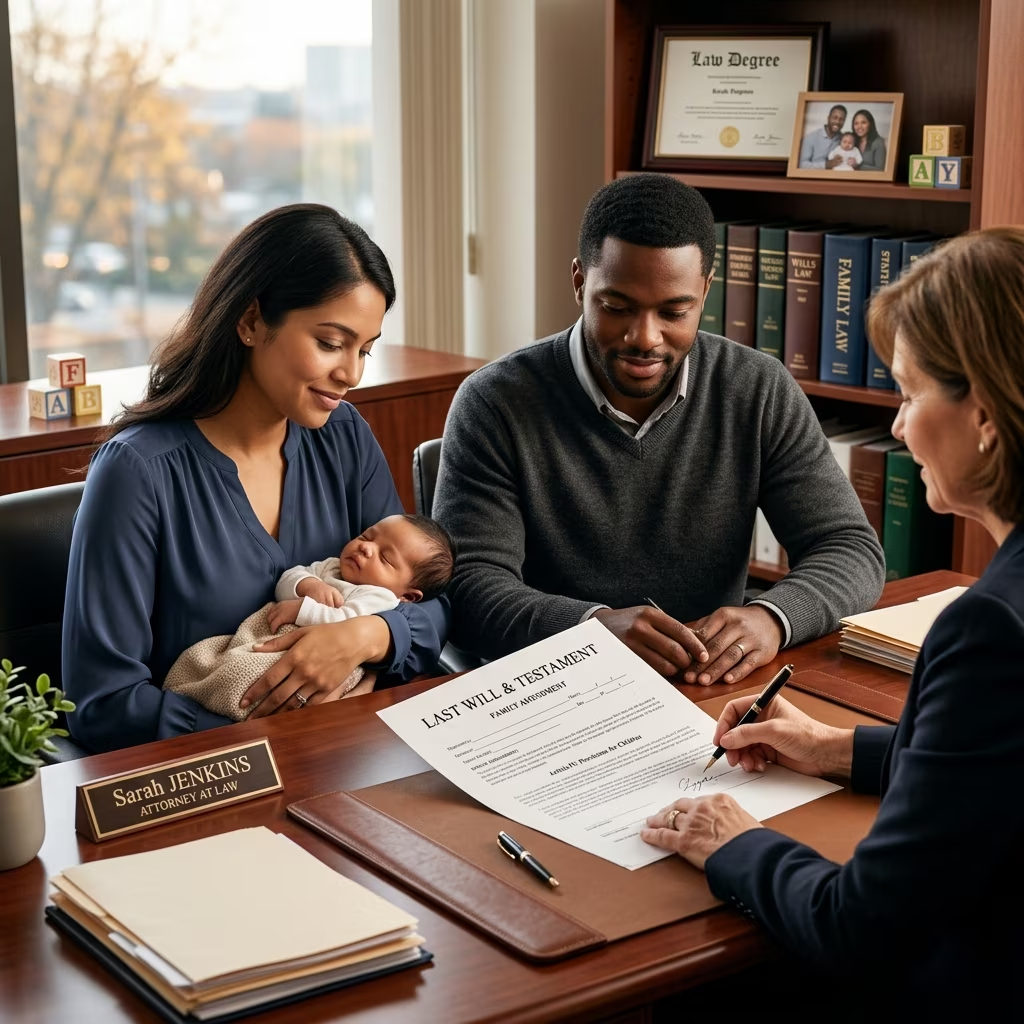
6. Seek legal advice in your state
Because rules on pretermitted children, adoption, intestacy, and will interpretation vary widely by jurisdiction, it is usually wise to consult an estate planning attorney licensed in your state. An attorney can explain:
- How your state’s omitted child statute would apply to your new child.
- Whether your current wording adequately covers adopted or future children.
- Which formalities are required to make your updated will or trust valid.
Illustrative Comparison: Before and After Childbirth or Adoption
| Planning Issue | Before New Child | After Birth or Adoption |
|---|---|---|
| Named heirs in will | Only existing spouse or children listed; group terms may or may not be used. | New child may be unmentioned and possibly protected only by pretermitted child laws. |
| Guardianship | Guardian nomination covers fewer or no children. | Guardian must be able to care for all children; nomination should be updated. |
| Adoption status | No adopted children, or adoption not yet finalized. | Adopted child has full legal rights with adoptive parents; biological ties often severed. |
| Health coverage | Family enrolled based on pre-child status. | Special enrollment rights for newborn or adopted child within 30 days. |
| Non-probate assets | Beneficiaries may include spouse or older children only. | Beneficiary designations should be reviewed to reflect all children and any trusts. |
Frequently Asked Questions
Does my will automatically include children born after I sign it?
Not always. Some wills use group terms like “my children,” which can include later-born or later-adopted children, but others name each child individually. State pretermitted child laws may give an omitted child a share of the estate, yet these laws vary significantly. To avoid uncertainty, it is best to revise your will whenever a new child joins your family.
Are adopted children treated the same as biological children in inheritance?
In most U.S. jurisdictions, adopted children are treated as full legal children of their adoptive parents, with the same rights to inherit through wills and under intestacy as biological children. Proper drafting should clearly state that the term “child” includes adopted children so there is no doubt about your intentions.
Can an adopted child inherit from biological parents?
Generally, no—at least not automatically. Adoption usually terminates the legal parent–child relationship with biological parents, which also ends default inheritance rights from those parents if they die without a will. However, a biological parent can still leave property to the child by specifically naming them as a beneficiary in a valid will or trust.
What if I never update my will after having a child?
If you do not update your will, your new child may still receive some protection through your state’s pretermitted child statute, but that may not reflect your real wishes about amounts, timing, or guardianship. An outdated will can create confusion, delays, and family conflict. Updating your estate plan is usually faster and less expensive than dealing with disputes later.
Do childbirth and adoption affect only my will?
No. These events also impact health insurance coverage, beneficiary designations, and sometimes employment rights like leave under federal law. A holistic review of your financial and legal arrangements is important whenever your family grows.
References
- Status of a Will after Childbirth or Adoption — LegalMatch Law Library. 2023-05-01. https://www.legalmatch.com/law-library/article/status-of-a-will-after-childbirth-or-adoption.html
- Adoption and Inheritance: Your 2026 Crucial Guide — WhitbeckBennett. 2024-01-15. https://wblaws.com/who-inherits-what-unpacking-adoption-and-inheritance-laws/
- Protections for Newborns, Adopted Children, and New Parents — U.S. Department of Labor. 2021-09-01. https://www.dol.gov/node/63379
- Handbook on Leave and Workplace Flexibilities for Childbirth, Adoption, and Foster Care — U.S. Office of Personnel Management. 2016-01-01. https://www.opm.gov/policy-data-oversight/pay-leave/leave-administration/fact-sheets/handbook-on-leave-and-workplace-flexibilities-for-childbirth-adoption-and-foster-care.pdf
- FMLA & Adoption: Do Birth Parents Get Maternity Leave? — American Adoptions. 2022-03-10. https://www.americanadoptions.com/pregnant/giving-baby-up-for-adoption-maternity-leave