
Understanding the Online Copyright Infringement Liability Limitation Act
How OCILLA protects online service providers through conditional safe harbors while preserving copyright owners’ enforcement rights.
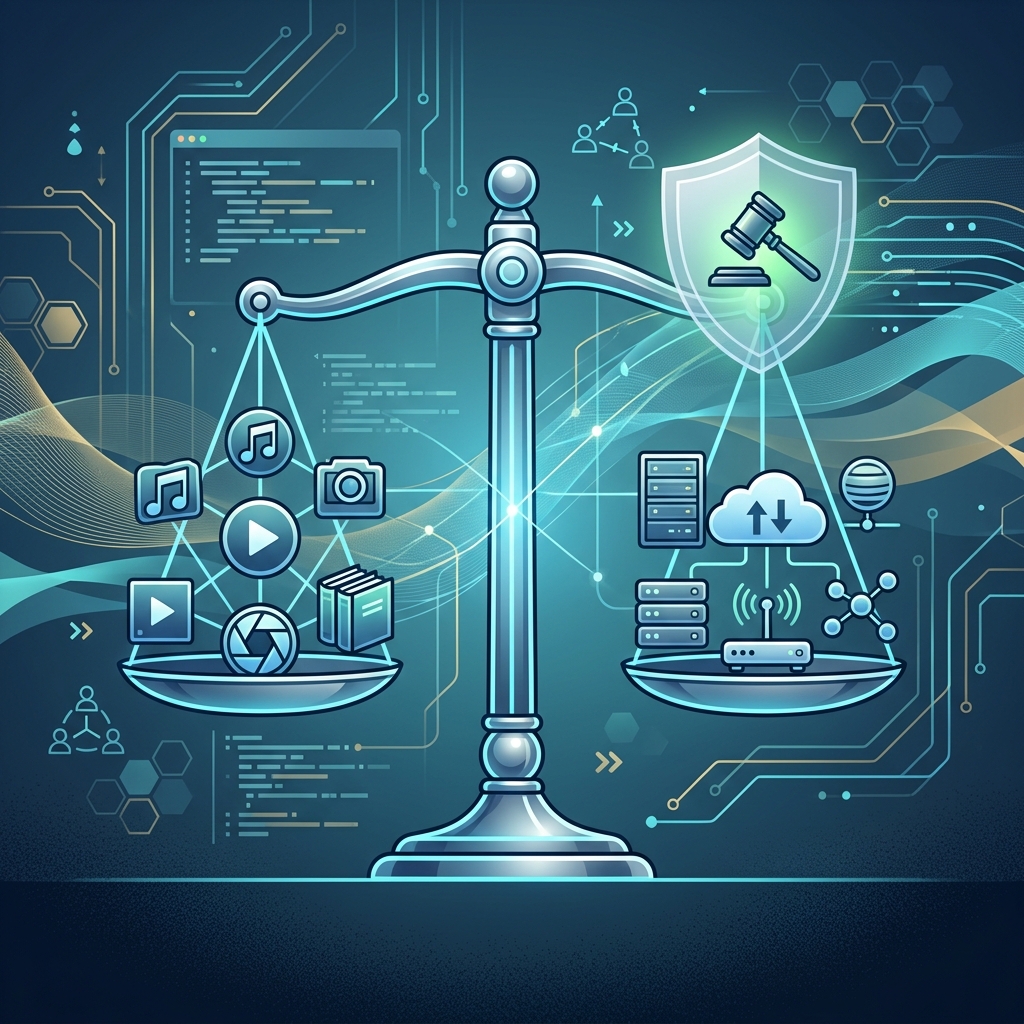
The Online Copyright Infringement Liability Limitation Act (OCILLA) is the part of U.S. copyright law that defines when online service providers can avoid monetary liability for copyright infringement carried out by their users. It was enacted as Title II of the Digital Millennium Copyright Act (DMCA) and is codified mainly in 17 U.S.C. § 512.
OCILLA created a set of conditional safe harbors that shield qualifying online platforms from damages as long as they follow specific rules, including adopting a repeat infringer policy and cooperating with copyright owners through notice-and-takedown procedures. This framework is central to how modern internet services host user-generated content while managing copyright risks.
Background: Why OCILLA Was Enacted
By the late 1990s, the growth of the internet raised new questions for copyright law. Hosting providers, search engines, universities, and other online intermediaries increasingly stored or transmitted content uploaded by users. Without statutory protection, these entities risked massive damages whenever users posted infringing material.
Congress addressed this challenge by passing the Digital Millennium Copyright Act of 1998, which in Title II introduced OCILLA and added section 512 to the Copyright Act. The goal was to balance:
- Copyright owners’ interests in enforcing their rights online.
- Innovation and free flow of information enabled by online intermediaries.
- Fair risk allocation so platforms are not strictly liable for every user’s misconduct.
OCILLA’s answer is conditional immunity: platforms gain protection only if they comply with defined obligations, especially around responding to infringement notices and managing repeat infringers.
Who OCILLA Applies To
OCILLA focuses on online service providers (OSPs), a term broadly understood to include entities that offer online services such as hosting, transmission, or indexing of content. In practice, it covers a wide range of intermediaries:
- Commercial web hosts and cloud storage providers.
- Social media platforms and video-sharing websites.
- Search engines and online directories.
- Internet service providers that route network traffic.
- Libraries and educational institutions when they act as online intermediaries.
OCILLA does not grant blanket immunity. Instead, each safe harbor applies to specific categories of activity, and an OSP must meet detailed conditions to qualify.
Core Concept: Safe Harbors Under Section 512
The centerpiece of OCILLA is a set of four safe harbors in section 512 of the Copyright Act. When an OSP satisfies the requirements of one of these safe harbors, it is shielded from monetary liability for copyright infringement that occurs through the covered activity. Courts may still issue limited injunctive relief to stop ongoing infringement.
| Safe Harbor | Covered Activity | Typical Examples |
|---|---|---|
| 512(a) | Transitory digital network communications | Routing and transmitting data across the internet for users. |
| 512(b) | System caching | Temporary storage to improve network efficiency and performance. |
| 512(c) | Storage at the direction of users | Hosting user-uploaded files, posts, videos, or images. |
| 512(d) | Information location tools | Search engines, linking services, and indexing of third-party content. |
Each safe harbor sets its own eligibility criteria, but OCILLA also imposes overarching conditions that all qualifying OSPs must satisfy.
General Requirements for All Safe Harbors
Regardless of which safe harbor an OSP relies on, section 512 establishes several baseline obligations that apply across the board.
Adopting a Repeat Infringer Policy
To benefit from the safe harbors, an OSP must adopt and reasonably implement a policy for terminating users who are repeat infringers in appropriate circumstances. This requirement is intended to prevent platforms from shielding chronic violators.
Key elements typically include:
- A clear written policy explaining what counts as repeat infringement.
- Procedures for tracking infringement notices linked to specific accounts.
- Graduated responses such as warnings, suspensions, and eventual termination.
- Consistent enforcement to avoid claims that the policy is merely symbolic.
Accommodating Standard Technological Measures
Section 512 also requires service providers to accommodate and not interfere with standard technological measures used by copyright owners to protect their works. These measures might include widely adopted tools for identifying or managing copyrighted content, as long as they meet statutory criteria.
In practice, this obligation discourages OSPs from disabling industry-standard content protection technologies or intentionally bypassing recognized mechanisms that help detect infringement.
Safe Harbor for User-Directed Storage (512(c))
The most practically significant safe harbor for many platforms is section 512(c), which covers information residing on systems or networks at the direction of users. This is the provision closely associated with the well-known notice-and-takedown system.
Under 512(c), an OSP can avoid monetary liability for infringing content uploaded by users if it meets several conditions, including:
- Lack of actual knowledge of specific infringing material.
- No awareness of facts or circumstances from which infringement is apparent.
- Prompt removal or blocking of access once the OSP obtains such knowledge or receives proper notice.
- No direct financial benefit from infringement where the OSP has the right and ability to control the activity.
- Proper designation of an agent to receive notices of claimed infringement, filed with the U.S. Copyright Office.
When these criteria are satisfied, the OSP is exempt from monetary damages tied to the user-directed storage, although courts may still order limited injunctive measures.
Notice-and-Takedown: How OCILLA Handles Complaints
A central mechanism of OCILLA is the notice-and-takedown process, which governs how copyright owners notify an OSP of alleged infringement and how the provider must respond to maintain safe harbor protection.
Elements of a Valid Infringement Notice
To trigger takedown obligations and safe harbor benefits, a complaint must substantially include specific information set out in 17 U.S.C. § 512(c)(3). An effective notice generally contains:
- A physical or electronic signature of the copyright owner or authorized agent.
- Identification of the copyrighted work claimed to have been infringed, or a representative list for multiple works.
- Identification of the allegedly infringing material or activity and information sufficient to locate it (such as a URL).
- Contact information for the complaining party.
- A statement of good-faith belief that use of the material is not authorized by the copyright owner, its agent, or the law.
- A statement that the information is accurate and, under penalty of perjury, that the complaining party is authorized to act for the owner.
An OSP that receives a substantially compliant notice and then acts expeditiously to remove or block the material preserves its safe harbor protection.
Obligation to Act “Expeditiously”
Once an OSP receives proper notification or otherwise becomes aware of infringement, section 512 requires it to act expeditiously to remove or disable access to the material. Timely action is essential: unjustified delay can jeopardize safe harbor status and expose the provider to contributory or vicarious liability.
A typical compliant workflow might include:
- Logging and reviewing incoming notices for completeness.
- Rapidly locating the identified content.
- Removing or blocking access to the material in good faith.
- Notifying the user who posted the material about the takedown.
Counter-Notification and Putback Procedures
OCILLA includes safeguards against wrongful or mistaken takedowns. Users whose content has been removed may submit a counter-notification to challenge the claim and seek restoration of their material.
Requirements for a Counter-Notification
To be effective, a counter-notice must provide specified information, such as:
- The user’s physical or electronic signature.
- Identification of the material that has been removed or disabled and where it appeared before removal.
- A statement under penalty of perjury that the user has a good-faith belief the material was removed due to mistake or misidentification.
- The user’s contact information and consent to jurisdiction of a suitable federal court.
Upon receiving a valid counter-notification, the OSP must promptly forward it to the original complainant and inform them that the material will be restored within a statutory period unless the copyright owner files court action.
Timing and Restoration of Content
Section 512 calls for a delay of roughly 10 to 14 business days after the OSP forwards the counter-notice before the provider may restore the content. During this period, the copyright owner may initiate an infringement lawsuit. If the OSP is informed that an action has been filed, it typically keeps the material offline pending resolution.
This framework aims to strike a balance between rapid response to infringement claims and fair treatment of users whose lawful content may be mistakenly targeted.
Other Safe Harbors: Transmission, Caching, and Search Tools
While 512(c) often receives the most attention, OCILLA’s other safe harbors are equally important for the technical functioning of the internet.
Transitory Digital Network Communications (512(a))
Section 512(a) covers situations where a service provider merely acts as a conduit for data transmission, such as an ISP routing packets across the network. To qualify, the provider must satisfy conditions like:
- Transmission is initiated by someone other than the provider.
- Content is carried through automated processes without provider selection or modification.
- Any intermediate copies are retained only as long as reasonably necessary and are not accessible beyond anticipated recipients.
When these conditions are met, the OSP’s role as a passive conduit is shielded from monetary liability, reflecting the recognition that carriers cannot feasibly screen all traffic.
System Caching (512(b))
System caching safe harbor applies to intermediate and temporary storage made for the purpose of improving network efficiency. For example, an OSP may automatically cache frequently accessed data to speed delivery to end users.
Eligibility generally requires that:
- The material is made available through an automatic technical process.
- Cached copies are not modified in content.
- Retention does not exceed reasonably necessary durations.
- Access to cached material respects any conditions imposed by the source site.
Information Location Tools (512(d))
Section 512(d) protects providers that offer information location tools such as search engines and indexes, where they link or refer users to content hosted elsewhere. To qualify, these providers must respond to proper notices and remove links to allegedly infringing material while meeting other knowledge and benefit conditions similar to 512(c).
This safe harbor recognizes that simply referencing or linking to content is different from hosting it, but still warrants tailored rules to manage infringement risks.
Special Protections for Educational Institutions
OCILLA includes a special limitation on liability for certain nonprofit educational institutions when they operate as online service providers. Libraries and universities may benefit from safe harbors for activities such as providing network access or hosting instructional materials, subject to section 512’s conditions.
These tailored provisions aim to support research and education while preserving copyright enforcement mechanisms.
Practical Implications for Platforms and Rightsholders
OCILLA shapes the everyday operations of online platforms and the strategies of copyright owners seeking to enforce their rights.
Impacts on Online Service Providers
To effectively rely on OCILLA, OSPs typically implement:
- DMCA policies explaining notice-and-takedown procedures and repeat infringer rules.
- Internal workflows for reviewing notices, removing content, and tracking users.
- Designated DMCA agents listed both publicly and with the U.S. Copyright Office.
- Technical mechanisms to quickly disable access to specific content upon receiving valid notices.
Options for Copyright Owners
Rights holders rely on OCILLA to efficiently police infringement online. Their main tools are:
- Sending compliant takedown notices to OSPs to prompt removal of infringing material.
- Using the subpoena process under section 512 to obtain identifying information about alleged infringers from service providers.
- Initiating civil lawsuits when infringement persists or where damages are sought beyond platform-based remedies.
OCILLA thus functions as a central procedural bridge between copyright enforcement and online hosting.
Frequently Asked Questions (FAQs)
1. Does OCILLA eliminate all liability for online service providers?
No. OCILLA provides limitations on monetary liability if an OSP qualifies for a safe harbor, but it does not erase all forms of relief. Courts may still issue injunctions to stop ongoing infringement, and providers that do not meet safe harbor conditions can face full statutory damages.
2. What happens if a platform ignores a valid takedown notice?
If a provider fails to act expeditiously after receiving a compliant notice, it risks losing safe harbor protection and may be liable for contributory or vicarious infringement based on users’ actions, potentially facing substantial statutory damages.
3. Is every complaint a valid DMCA notice under OCILLA?
No. To trigger formal obligations under section 512, a notice must include specific statutory elements such as identification of the work, location of the infringing material, contact information, and good-faith and perjury statements. Deficient notices might not obligate removal, though an OSP may still choose to investigate.
4. Can users restore their content after a takedown?
Yes, in many circumstances. Users may send a counter-notification that meets section 512 requirements. If the copyright owner does not file suit during the statutory waiting period, the OSP generally may restore the content without losing safe harbor protection.
5. How does OCILLA relate to the broader DMCA?
OCILLA is Title II of the DMCA and specifically addresses online service provider liability limitations, while other DMCA titles deal with anti-circumvention rules and additional copyright provisions. Together, they form a coherent framework for digital-era copyright enforcement.
References
- Online Copyright Infringement Liability Limitation Act | Wex — Legal Information Institute, Cornell Law School. 2023-08-01. https://www.law.cornell.edu/wex/online_copyright_infringement_liability_limitation_act
- Section 512 of Title 17: Online Service Provider Safe Harbors — U.S. Copyright Office. 2023-01-10. https://www.copyright.gov/512/
- The Digital Millennium Copyright Act of 1998 — Middle Tennessee State University, ITD. 2019-05-15. https://itd.mtsu.edu/dm-copyright-act/
- Using the Digital Millennium Copyright Act to Limit Potential Liability for Online Service Provider Copyright Infringement — University of Richmond Journal of Law & Technology. 2001-03-01. https://scholarship.richmond.edu/cgi/viewcontent.cgi?article=1084&context=jolt
- The Digital Millennium Copyright Act: Highlights of New Copyright Provision Establishing Limitation of Liability for Online Service Providers — Association of Research Libraries. 1998-11-02. https://www.arl.org/resources/the-digital-millenium-copyright-act-highlights-of-new-copyright-provision-establishing-limitation-of-liability-for-online-service-providers/
Similar Articles








Read full bio of Sneha Tete


