
Spotting Job and Money-Making Scams Before They Cost You
Learn how to recognize fake job offers and risky money-making schemes, avoid common traps, and protect your finances and personal information.
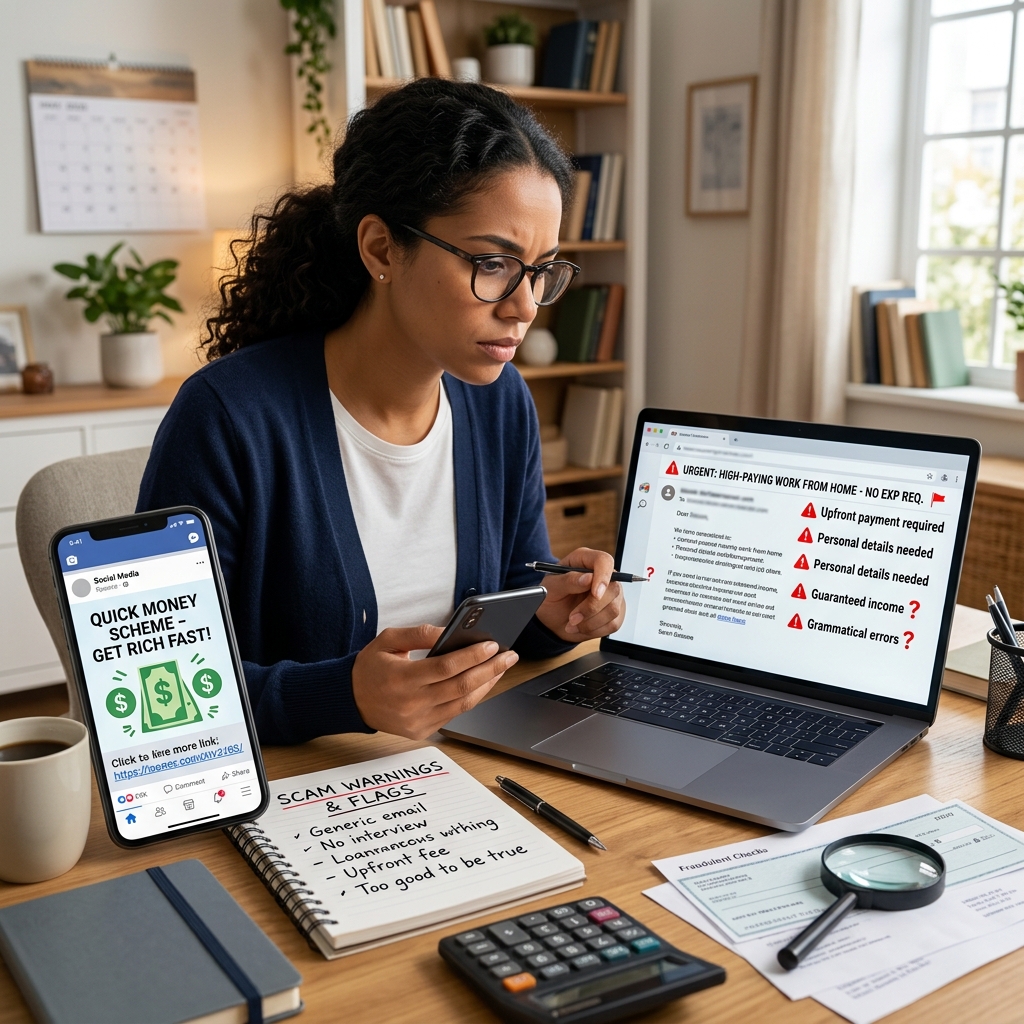
Promises of easy income and flexible work are everywhere — especially online. While some offers are legitimate, many are carefully crafted job and money-making scams designed to steal your cash and personal information. According to the U.S. Federal Trade Commission (FTC), scammers frequently promote jobs that claim you can earn a lot of money quickly with minimal effort, a pattern seen across fake employment and money-making opportunity schemes. Understanding how these scams work is the first step to staying safe.
1. Why Job and Money-Making Scams Are So Common
Economic uncertainty, rising living costs, and the growth of remote work have created fertile ground for scam recruiters and fake business opportunities. Law enforcement agencies report a steady increase in complaints about work-from-home offers, bogus online jobs, and deceptive investment or income-generating schemes. Scammers know that many people are actively looking for new roles, side gigs, or ways to earn from home, and they tailor their pitches to these needs.
These scams often appear:
- On job search websites and social media platforms
- In unsolicited emails, text messages, and direct messages
- As online ads promising unusually high earnings with little work
- As invitations to private groups or channels offering “secret” methods to make money
They typically lead to one of three outcomes: you pay upfront fees, you share sensitive data that can be used for identity theft, or you perform tasks that ultimately involve sending money to scammers under false pretenses.
2. Core Red Flags That Signal a Likely Scam
Although scams come in many forms, most share a set of recognizable warning signs. The more of these you see in a single offer, the more cautious you should be.
2.1 Unrealistic Income Promises
Government consumer advice warns that offers claiming you can earn large amounts of money quickly, with very little effort, are almost certainly scams. These offers may use phrases like “no experience needed” or “earn thousands a week part-time.” While high-paying legitimate roles exist, they provide clear job descriptions, required qualifications, and a realistic pay range.
- Too-good-to-be-true earnings: Extremely high pay for simple tasks or entry-level work.
- Guaranteed income: Claims that you “can’t lose” or that income is guaranteed regardless of performance.
- No clear explanation: Vague descriptions of how the money is actually made.
2.2 Requests for Upfront Payments
One of the clearest indicators of a scam is being asked to pay money to get a job or opportunity. The FTC and state attorneys general emphasize that legitimate employers do not charge applicants for job placement, training access, or special certifications required just to be considered for employment.
- Fees for “training” or “starter kits” for a role you have not yet started
- Charges to access lists of jobs, insider opportunities, or exclusive directories
- Payments to a recruiter or placement firm as a condition of representation
If someone asks you to pay to be hired or to begin work, treat it as a serious red flag.
2.3 Pressure to Share Sensitive Personal Information
Scam job offers often aim to collect personal details that can be used for identity theft, unauthorized credit applications, or direct access to your finances. Official consumer protection guidance advises never to share your Social Security number, full bank account details, or copies of identity documents early in the hiring process.
- Requests for your Social Security number before a formal offer and written documentation
- Demands for bank account or payment app details to “set up direct deposit” immediately
- Instructions to send photos of your ID, passport, or driver’s license without a clear, legitimate reason
2.4 Vague or Inconsistent Job Information
Scam postings often avoid concrete details. You may see grand descriptions of “systems” or “programs” but little practical information about the work involved, the employer, or day-to-day responsibilities.
- Job titles that sound impressive yet lack specific duties
- Descriptions focused mainly on earnings rather than tasks
- Company names that are generic or difficult to verify online
2.5 Suspicious Communication and Online Presence
Law enforcement and banking industry guidance highlight several signs of fake recruiters and impersonated companies. These include:
- Email addresses that do not match the company domain (for example, using free email services instead of corporate domains)
- Social media profiles or websites that are newly created, sparse, or full of errors
- Job postings that cannot be found on the official company careers page
- Interviews conducted entirely via text or chat without video, phone, or professional scheduling
3. Common Types of Job and Money-Making Scams
Scammers adapt their tactics to trends, but several broad categories recur frequently in consumer complaints and official advisories.
| Scam Type | How It Works | Key Risk |
|---|---|---|
| Pay-to-work “jobs” | Applicants are told to pay fees for training, placement, or equipment. | Loss of money; no real job materializes. |
| Fake check and payment schemes | You’re sent a check to deposit and instructed to send part of the money back. | Bank later flags the check as fake; you owe the full amount. |
| Work-from-home & online task scams | Simple tasks (clicking, posting, data entry) are framed as high-income work. | Upfront fees or escalating payments with no legitimate income. |
| Cryptocurrency job scams | Remote “jobs” require using crypto apps or platforms to perform tasks. | Funds sent into fake or controlled accounts; recovery is difficult. |
| Government and postal job scams | Offers claim access to special government jobs for a fee. | Payment for information that is publicly available for free. |
3.1 Pay-to-Work and Placement Fee Scams
In these schemes, the “employer” or placement firm insists on fees for training, certifications, or exclusive access to job lists. Legitimate staffing agencies are typically paid by the hiring company, not by job seekers, a distinction emphasized in federal consumer guidance. If a recruiter asks for payment, especially upfront, you are likely dealing with a scam.
3.2 Fake Check and Reimbursement Jobs
Fake check scams often appear disguised as mystery shopping, equipment purchasing roles, or payment processing jobs. You are asked to deposit a check and then use some of the money to buy items or send funds elsewhere. The FTC notes that any job offer requiring you to deposit a check and then send money on is a strong sign of a fake check scam. When the bank discovers the check is fraudulent, you are responsible for the full amount.
3.3 Work-From-Home and Online Task Offers
Work-from-home scams promise easy tasks — such as posting reviews, data entry, or simple online clicks — that supposedly lead to significant earnings. The Minnesota Attorney General’s office advises that many work-at-home pitches require upfront payments and provide little detail about the actual business or how it generates legitimate revenue. Most people never earn what was promised; many lose money or expose their information.
3.4 Cryptocurrency-Based Job Scams
The FBI reports a growing number of scams where criminals pose as employees of real companies and recruit people for remote jobs that involve transactions through cryptocurrency platforms. From recruitment to conclusion, these scams typically occur entirely online.
- The victim is offered training and tasks that involve moving or “investing” funds via specific apps or websites.
- Domain names and apps may closely mimic legitimate financial or tech companies.
- Over time, the victim sends larger amounts to maintain or “unlock” supposed earnings.
These jobs often require you to deposit your own money to perform tasks, something the FBI warns legitimate job opportunities should never demand.
3.5 Government and Postal Job Scams
Scammers advertise guaranteed positions or exam preparation materials for federal government or postal jobs in exchange for fees. Official government information stresses that details about federal and postal job openings are free and publicly available, and applying for these roles does not require payment to private intermediaries. Any ad that promises special access to government jobs for a fee should be treated as suspect.
4. How to Verify Job Offers and Opportunities
Before sharing personal information or paying money, take practical steps to confirm whether a job or opportunity is legitimate. Consumer protection authorities recommend a combination of independent research and direct verification.
4.1 Research the Employer
- Search for the company’s official website and verify that contact details and job postings match what you received.
- Look up the organization in reputable business directories or with the Better Business Bureau when available.
- Check for news reports, regulatory actions, or complaints tied to the company name.
4.2 Confirm the Job Listing
- Visit the employer’s official careers page to see if the same job is listed there.
- Contact the company through publicly listed phone numbers or email addresses, not those provided only in the ad.
- Ask specific questions about duties, hiring timelines, and who will supervise you if hired.
4.3 Evaluate Communication Quality
- Watch for poor grammar, inconsistent details, or messages sent at odd hours.
- Be cautious if all interaction is limited to messaging apps or text with no formal interview process.
- Take note if the interviewer refuses to appear on camera or provide verifiable identification linked to the company.
4.4 Involve Someone You Trust
Before agreeing to anything, describe the offer to a trusted friend, family member, or colleague. The FTC recommends talking to someone you trust and explaining the offer, as this gives you time to think and may reveal concerns you did not notice alone.
5. Protecting Yourself If You Suspect a Scam
If you realize that a job or opportunity is a scam — or you have already shared information or funds — acting quickly can reduce harm. Guidance from federal and state authorities offers clear steps to consider.
5.1 Stop Communication and Payments
- Immediately stop responding to messages, calls, or emails from the suspected scammer.
- Do not send any additional money or provide further information, even if they threaten or pressure you.
- Ignore follow-up offers that claim they can recover lost funds for a fee.
5.2 Secure Your Financial Accounts
- Contact your bank, credit union, or card issuer and explain what happened.
- Ask about monitoring, closing, or changing accounts if you shared account numbers or card details.
- Review recent transactions and report unauthorized charges promptly.
5.3 Protect Your Identity
- If you shared your Social Security number or other sensitive data, consider placing a credit freeze or fraud alert with major credit reporting agencies.
- Monitor your credit reports for accounts you did not open.
- Change passwords and enable multi-factor authentication on key accounts.
5.4 Report the Scam
Reporting scams helps authorities track patterns, warn others, and sometimes take action against fraudulent operations.
- File a complaint with the Federal Trade Commission, which collects reports on consumer scams and provides advice on next steps.
- For online fraud and cryptocurrency-related job scams, report to the FBI’s Internet Crime Complaint Center (IC3).
- Contact your state or local consumer protection office or attorney general’s office, especially for work-at-home scams.
- If money has been stolen, consider filing a report with local law enforcement as well.
6. Practical Tips to Stay Safe While Job Hunting
Combining skepticism with practical habits can make you much harder to target. Consider the following guidelines as you navigate job searches and money-making offers.
- Never pay for the promise of a job. Legitimate employers and government agencies do not charge application or placement fees.
- Be wary of unsolicited offers. Treat unexpected job invitations via email, text, or social media with caution.
- Verify domains and contact information. Check for slight misspellings or unusual domain names that mimic well-known companies.
- Slow down and think. Scammers often use urgency and pressure. Take time to research and consult others.
- Keep personal data private. Only share sensitive information after you have confirmed legitimacy and reached appropriate stages of a formal hiring process.
7. Frequently Asked Questions (FAQs)
Q1: Is it ever normal to pay for training or equipment for a job?
Some legitimate jobs may require you to buy specific tools or pay for professional licenses, but this usually occurs after you have clearly been hired by a verifiable employer. Consumer protection guidance indicates that when payment is a condition to get a job or be considered for one, it is more likely to be a scam. Always research the employer independently and confirm their policies before paying.
Q2: How can I tell if a remote job offer is real?
Check whether the job appears on the company’s official careers page, confirm the recruiter’s identity and email domain, and search for independent information about the organization. A legitimate remote role should have a clear description, a formal interview process, and verifiable company contact details.
Q3: What should I do if I already deposited a check from a supposed employer?
Contact your bank or credit union immediately and explain that you may have deposited a fraudulent check. Ask how to protect yourself from losses and report the situation to relevant consumer protection and law enforcement authorities.
Q4: Are all work-from-home opportunities risky?
No, many are legitimate. The risk lies in offers that promise unusually high earnings for simple tasks, require upfront fees, or provide little detail about the company and work involved. Use thorough research and verification steps before committing to any work-from-home role.
Q5: Why are cryptocurrency job scams particularly dangerous?
Cryptocurrency transactions are often irreversible, and scammers may use sophisticated fake platforms and impersonated domains to mislead victims. Once funds are sent, recovering them can be extremely difficult. Treat any job that requires using your own funds on unfamiliar crypto apps or websites as highly suspect.
References
- Job Scams — Federal Trade Commission. 2023-08-10. https://consumer.ftc.gov/articles/job-scams
- Money-Making Opportunity Scams — Federal Trade Commission. 2023-08-10. https://consumer.ftc.gov/all-scams/money-making-opportunity-scams
- Cryptocurrency Job Scams — Federal Bureau of Investigation. 2024-03-22. https://www.fbi.gov/how-we-can-help-you/victim-services/national-crimes-and-victim-resources/cryptocurrency-job-scams
- Job Scam Safety — Arrowhead Credit Union. 2023-06-15. https://www.arrowheadcu.org/job-scams
- Work-at-Home Scams — Minnesota Attorney General’s Office. 2022-11-01. https://www.ag.state.mn.us/consumer/publications/workathomescams.asp
- Job Scams — American Bankers Association. 2023-04-05. https://www.aba.com/advocacy/community-programs/consumer-resources/protect-your-money/job-scams
Similar Articles








Read full bio of medha deb




