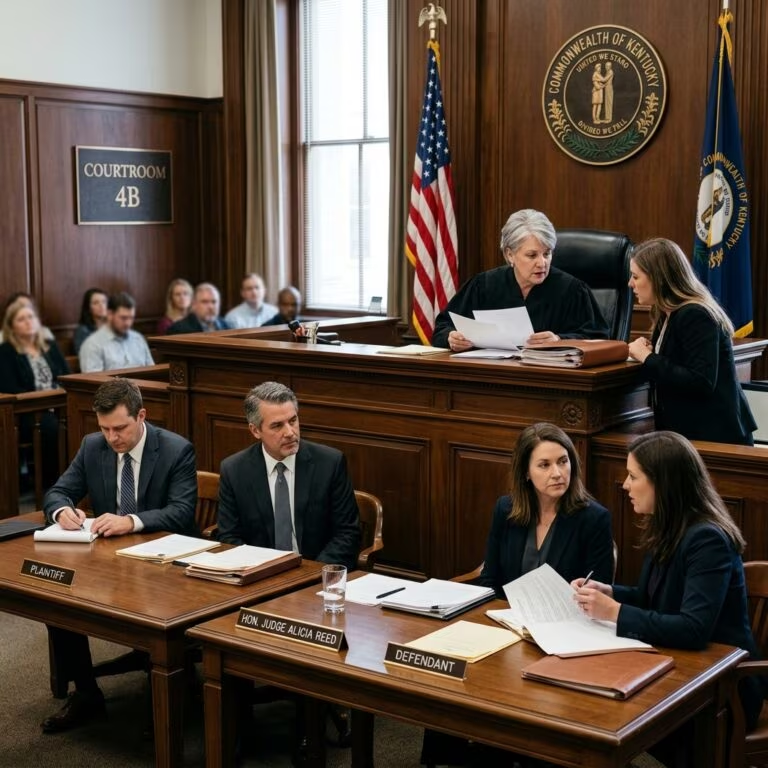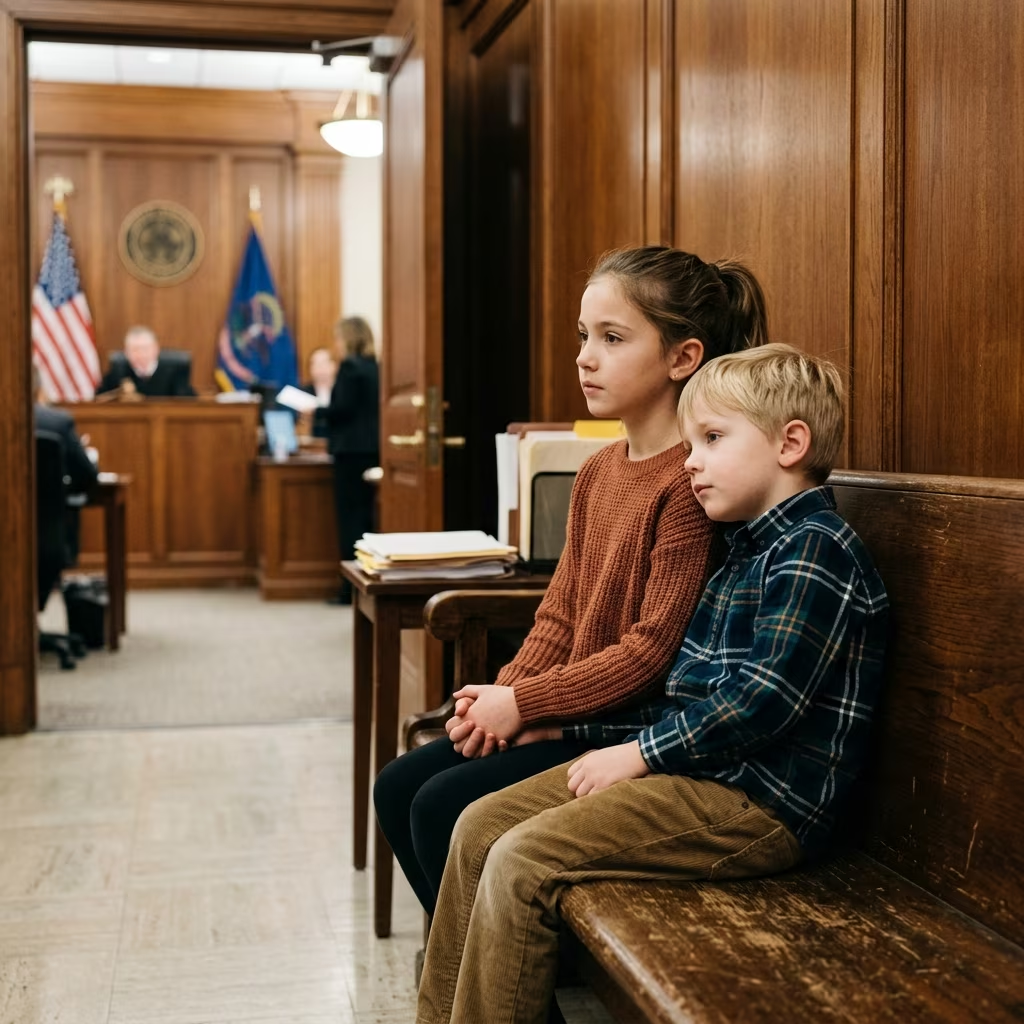
When parents cannot safely or consistently care for a child, an older sibling may be the person best positioned to step in and provide a stable home. In North Dakota, however, you cannot simply decide to “take custody” of your younger brother or sister. You must go through a formal legal process, usually by seeking guardianship of a minor or becoming a relative placement approved by the courts or child welfare authorities. This guide explains, in practical terms, how sibling custody works in North Dakota and what steps an older brother or sister can take to protect a younger sibling.
Key Concepts: Custody, Guardianship, and Relative Care
North Dakota law uses several different terms to describe who has legal authority over a child. Understanding these concepts is the foundation for any sibling who wants to pursue custody or guardianship.
Custody vs. Parental Rights and Responsibilities
In North Dakota statutes and case law, traditional “custody” language has largely been replaced by parental rights and responsibilities, which include both decision-making and where the child lives. This framework primarily applies to disputes between parents, but the underlying standards are important whenever a court decides where a child should live.
| Term | What It Generally Means | Typical Use |
|---|---|---|
| Decision-making responsibility | Authority to make major choices about education, medical care, religion, and activities. | Usually allocated between parents in custody orders. |
| Residential responsibility | Where the child lives most of the time; similar to physical custody. | Determines the primary household for the child. |
| Guardianship of a minor | Court appointment of an adult to act as the child’s legal guardian when parents cannot or do not. | Common way relatives, including siblings, gain legal authority. |
| Relative placement | Placement of a child with a family member when the child welfare system is involved, often as foster or guardianship care. | Used in deprivation or abuse/neglect cases. |
Guardianship of a Minor
For an older sibling, the most relevant process is usually guardianship of a minor. In North Dakota, there are two main avenues to establish guardianship:
- Filing a minor guardianship case in State District Court; and
- Guardianship ordered through Juvenile Court as part of a deprivation proceeding (a case about abuse, neglect, or lack of proper parental care).
In both settings, the court must determine that appointing a guardian is necessary because parental rights are terminated, suspended, or cannot be exercised effectively, and that the proposed guardian is suitable.
When Sibling Custody or Guardianship May Be Appropriate
North Dakota law does not create a special “sibling custody” category, but courts and child welfare agencies recognize the value of keeping children with family whenever possible. An older sibling may be considered as a caregiver in several situations:
- Parents are incarcerated, missing, or otherwise unavailable for an extended period.
- There is ongoing abuse, neglect, or substance use that endangers the younger child’s safety.
- Parents voluntarily agree to a guardianship because they are temporarily unable to care for the child.
- The child is already living with the older sibling informally, and schools or medical providers require legal authority.
In state policy, a “fit and willing relative” can be considered for guardianship when the child is placed out of the home, and siblings are to be placed together whenever that is in their best interests. An adult sibling can qualify as such a relative.
Best Interests of the Child: Core Standard for North Dakota Courts
Whether a sibling is seeking guardianship through District Court or being considered in a juvenile deprivation case, judges apply the overarching principle of the best interests of the child. North Dakota statutes list a set of factors courts must consider when determining where a child should live and who should make decisions.
Key Best Interests Factors
According to North Dakota Century Code and case law, the court may consider, among others, the following points when deciding placement:
- Emotional ties and relationships: Quality of the bond between the child and each caregiver, including siblings.
- Stability of home environment: Whether the proposed guardian can offer consistent housing, routines, and supervision.
- Child’s age and developmental needs: Physical, educational, and emotional requirements and how each placement meets them.
- Mental and physical health of parties: Any conditions that affect the ability to parent safely and reliably.
- Child’s preference: The child’s stated wishes, especially for older children, evaluated in light of maturity and possible undue influence.
- History of domestic violence or abuse: Safety concerns weigh heavily against leaving a child in a harmful environment.
- Ability to foster family connections: Willingness of the guardian to support appropriate contact with parents and other relatives.
For an older sibling, demonstrating a strong, nurturing relationship and a track record of caring for the younger child can be particularly persuasive.
Pathways for Siblings to Gain Legal Authority
The specific steps an older sibling must take depend on whether the state’s child welfare system is involved and whether the parents agree to the change. Broadly, there are three common pathways.
1. District Court Guardianship Petition
An adult sibling who wants clear, long-term authority over a younger brother or sister often files for guardianship in North Dakota State District Court. The process typically includes:
- Preparing and filing a Minor Guardianship Petition that explains who the child is, who currently has custody, and why guardianship is necessary.
- Including required documents such as a verification (sworn statement), proposed orders, and any supporting evidence.
- Obtaining a hearing date from the clerk of court.
- Legally serving the petition and notice of hearing on:
- The minor child if age 14 or older;
- The person who has had principal care of the child in the 60 days before the petition; and
- Any living parent.
- Attending the hearing and presenting evidence that guardianship is in the child’s best interests.
At the hearing, the sibling must prove the legal grounds for guardianship, such as parental unavailability or risk to the child, and show that they are capable of fulfilling the guardian’s responsibilities.
2. Guardianship Through Juvenile Court (Deprivation Cases)
If child protective services is already involved and the case is in Juvenile Court, guardianship for a sibling may be addressed as part of a broader deprivation, abuse, or neglect proceeding. In these cases:
- The state assesses whether the child is deprived of proper parental care.
- Child welfare authorities must make reasonable efforts to keep siblings together in the same placement whenever safe.
- The court may transfer guardianship to a fit and willing relative, which can include an adult sibling, if reunification with parents is not feasible.
An older sibling who wants to be considered should communicate clearly with the assigned caseworker, complete any required background checks or home assessments, and express willingness to support the child’s ongoing needs.
3. Informal Care and Powers of Attorney
Not every situation requires immediate guardianship. In some cases, parents may still be involved but want the older sibling to handle day-to-day matters. North Dakota allows certain alternative arrangements that can help, such as:
- A power of attorney authorizing a relative to make decisions for the child.
- School or medical forms recognizing a caregiver’s temporary authority.
However, for enrolling a child in school or making major medical decisions, legal custody or guardianship is generally required. Informal arrangements may not be enough to satisfy institutions or protect the sibling’s ability to advocate effectively for the child’s needs.
Sibling Placement and North Dakota Child Welfare Policy
North Dakota’s child welfare guidelines place strong emphasis on maintaining family connections, particularly among siblings. When children enter foster care or are removed from the home:
- Agencies must make reasonable efforts to place siblings in the same foster, relative, guardianship, or adoptive setting, unless joint placement would harm a child’s safety or well-being.
- If siblings cannot be placed together, authorities must provide for frequent visits or ongoing interaction, again subject to safety concerns.
- Relatives, including siblings, can be prioritized as caregivers if they pass required assessments such as criminal history record investigations and home evaluations.
Adult siblings who want to care for younger brothers or sisters in these circumstances should be prepared to cooperate with licensing, background checks, and home studies, especially when the arrangement may be long-term.
Practical Preparation for an Older Sibling Seeking Guardianship
Legal standards are important, but courts also look closely at practical details. Before filing for guardianship or asking to be considered as a relative placement, an older sibling can strengthen the case by carefully planning.
Demonstrating Capacity to Care for the Child
Courts and agencies will assess whether the proposed guardian can provide a safe, stable, and nurturing environment. Useful evidence includes:
- Housing stability: Lease or mortgage documents, proof of adequate space, and safety of the home.
- Financial readiness: Employment records, budget plans, and information about access to public benefits or support programs.
- Prior caregiving experience: Details on how much you have already been caring for the younger sibling, including supervising school, medical appointments, and daily routines.
- Support network: Other relatives, friends, or community resources who can assist with childcare, transportation, or emergencies.
Documenting the Child’s Situation
Courts typically require a clear picture of the child’s current environment and needs. Helpful documentation includes:
- School records, attendance statements, and reports about the child’s academic performance.
- Medical records showing ongoing treatment, missed appointments, or unaddressed health issues.
- Any prior involvement of social services or law enforcement related to the parents’ conduct.
- Statements from teachers, counselors, or other professionals about the child’s well-being.
Respecting the Child’s Voice
North Dakota law acknowledges that a child’s preference is relevant to placement decisions, especially as children get older and more mature. While the child does not have an absolute right to choose where to live, the court may give weight to consistent, well-explained preferences.
Practical tips include:
- Encourage honest conversations with the younger sibling about wants and fears.
- Avoid pressuring or coaching the child; courts are wary of undue influence.
- Consider whether counseling or a guardian ad litem evaluation could help the child express views safely.
Common Challenges in Sibling Custody Cases
Seeking guardianship or custody as an older sibling can be emotionally and legally complex. Some frequent hurdles include:
- Parental opposition: Parents may contest guardianship even if they are not providing adequate care.
- Limited resources: Young adults may struggle to show sufficient financial or housing stability.
- Legal complexity: Guardianship rules and court procedures can be confusing without guidance.
- Emotional strain: Balancing family relationships, the sibling bond, and legal responsibilities can be overwhelming.
Because of these challenges, seeking legal advice or assistance—from private counsel, legal services organizations, or self-help materials provided by North Dakota courts—can be critical for success.
Frequently Asked Questions (FAQs)
Can a minor sibling get custody of another minor in North Dakota?
Generally, guardians must be adults. A minor sibling is unlikely to be appointed as a guardian. However, an older minor’s views and caregiving role may influence where the child is placed, and other adult relatives may be appointed as guardians instead.
Do I need guardianship if my younger sibling is already living with me?
Informal arrangements often work day to day, but many schools, medical providers, and agencies require formal legal authority to enroll a child, consent to treatment, or access records. Guardianship or legal custody ensures your authority is recognized.
Will the court keep my sibling with me even if the parents disagree?
The court’s decision focuses on the child’s best interests, not parental wishes alone. If you demonstrate that living with you is safer and more stable, and parents cannot meet the child’s needs, the court may grant guardianship even over parental objection.
How important is my sibling’s own preference about where to live?
The child’s preference is one of several factors the court considers, particularly for older children, but it is not the sole deciding factor. The judge will weigh the child’s maturity, consistency of the preference, and whether it aligns with overall best interests.
Do North Dakota courts try to keep siblings together?
Yes. When children enter foster care or similar placements, agencies must make reasonable efforts to place siblings together, unless joint placement would jeopardize safety or well-being. If siblings cannot live together, ongoing contact and visits should be supported when safe.
References
- Placement of Children With Relatives – North Dakota — Child Welfare Information Gateway. 2023-06-01. https://www.childwelfare.gov/resources/placement-children-relatives-north-dakota/
- North Dakota Custody — WomensLaw.org. 2022-04-01. https://www.womenslaw.org/laws/nd/custody/all
- Factors in North Dakota Child Custody — Fremstad Law. 2021-09-15. https://www.fremstadlaw.com/factors-in-north-dakota-child-custody/
- Establishing Guardianship of a Minor Child — North Dakota Courts. 2020-07-01. https://www.ndcourts.gov/Media/Default/Legal%20Resources/Legal%20Self%20Help/Minor%20Guardianship/Guardianship-of-Minor-Research-Guide.pdf
- At What Age Can a Child Decide Who to Live With in North Dakota? — Rosenquist Law Office. 2023-05-10. https://rosenquistlawoffice.com/blog/family-law/at-what-age-can-a-child-decide-who-to-live-with-in-north-dakota/
- You and the Law in North Dakota: The Rights of Grandparents and Stepgrandparents — North Dakota State University Extension. 2014-01-01. https://www.ndsu.edu/agriculture/extension/publications/you-and-law-north-dakota-rights-grandparents-and-stepgrandparents
- Family and Child Law — Legal Services of North Dakota. 2019-03-01. https://lsnd.org/category/family-law/