
Understanding Short‑Term Disability Eligibility When You Can’t Work
Learn how short‑term disability insurance works, who qualifies, and how it fits alongside employer, state, and federal protections when you’re unable to work.
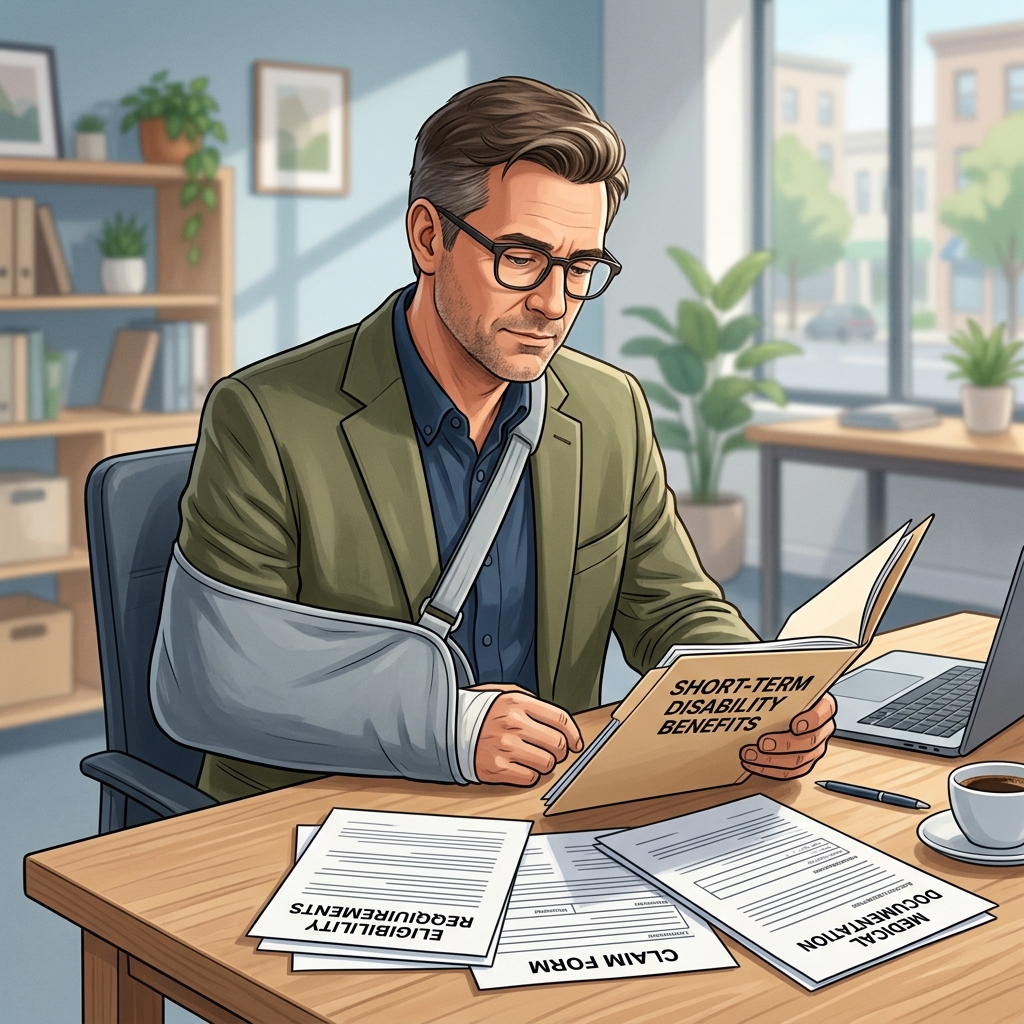
Being unable to work because of an illness, injury, or pregnancy can quickly create serious financial stress. Short‑term disability insurance is designed to bridge that gap by replacing a portion of your income for a limited time while you recover. This guide explains what short‑term disability is, who may qualify, and how it interacts with other protections like state disability benefits and federal disability programs.
What Short‑Term Disability Insurance Is (and Isn’t)
Short‑term disability insurance is a private insurance benefit that pays a percentage of your wages when a temporary medical condition keeps you from doing your job.
Typical features include:
- Income replacement of roughly 40–70% of your pre‑disability earnings, depending on the policy.
- Limited duration, usually from about 9 weeks up to 3–6 months, and sometimes as long as 52 weeks under certain employer plans.
- Coverage for non‑work‑related conditions; work‑related injuries are generally handled through workers’ compensation programs.
Short‑term disability is not the same as long‑term disability insurance or Social Security Disability Insurance (SSDI). Federal SSDI benefits are only paid for total disability expected to last at least 12 months or result in death, and the program specifically does not cover short‑term or partial disability. Private short‑term disability, by contrast, focuses on shorter periods when you are temporarily unable to work.
Common Ways to Get Short‑Term Disability Coverage
Employees access short‑term disability in several ways, depending on their employer and where they live.
- Employer‑provided group plans – Many employers offer short‑term disability as part of a benefits package. Some pay the premiums entirely, while others require employees to contribute or purchase additional “buy‑up” coverage.
- Voluntary or supplemental coverage – Employers may offer voluntary plans in which employees can purchase more robust benefits, often through payroll deductions.
- Individual policies – If your employer does not provide coverage, you may buy a policy directly from an insurance company or agent.
- State disability insurance programs – A few states run their own short‑term disability or wage‑replacement programs, funded through payroll contributions. For example, California’s Disability Insurance program can pay benefits for up to 52 weeks when you are unable to perform your usual work because of illness, injury, surgery, pregnancy, or childbirth.
What Conditions Typically Qualify as a Short‑Term Disability
To receive benefits, your condition must meet your policy’s definition of disability, which generally requires that you are unable to perform the essential duties of your job for a specified minimum period. Policies vary, but coverage often includes:
- Recovery from surgery or significant medical procedures.
- Serious illnesses or injuries that temporarily prevent you from working.
- Pregnancy and childbirth, including complications and postpartum recovery.
- Certain mental health conditions that interfere with work.
- Musculoskeletal and back or joint disorders that limit mobility or strength.
- Some digestive or other medical disorders that require time away from work.
Short‑term disability policies usually exclude benefits for conditions covered by workers’ compensation, cosmetic procedures, and disabilities that arise during a waiting period or outside defined eligibility rules. Exact details depend on the specific policy language.
Core Eligibility Requirements You Should Expect
Although each plan has its own terms, most short‑term disability programs share a few core eligibility criteria.
1. Employment and Coverage Status
To qualify, you typically must:
- Be actively employed or recently employed when the disability begins.
- Have coverage in force under an employer plan or individual policy; premiums must be paid and the policy must be active.
- In states with public disability programs, have earned at least a minimum amount of wages with state disability contributions withheld. For example, California requires at least $300 in wages subject to State Disability Insurance deductions.
2. Medical Inability to Perform Your Job
Policies generally require that you are medically certified as unable to perform your regular work for at least a specified period. Common elements include:
- A qualifying condition that prevents you from doing your job duties.
- Documentation from a licensed health professional (doctor, therapist, or other authorized practitioner) confirming your disability and expected recovery time.
- Ongoing care and treatment to remain eligible for continuing benefits.
3. Waiting or Elimination Period
Short‑term disability benefits rarely start on the first day you miss work. Most policies include a waiting period, also called an elimination period, during which you are disabled but not yet receiving payments.
- Typical waiting periods range from about one week to 30 days, with around 14 days being common.
- Some state programs require that you are unable to perform your usual work for at least eight days before benefits become payable.
Because of these rules, you will often need to rely on sick leave, vacation time, or savings to cover expenses during the initial days or weeks of a disability.
How Short‑Term Disability Benefits Are Calculated and Paid
Once you qualify and your claim is approved, short‑term disability payments are usually made weekly and are based on a percentage of your prior earnings.
| Benefit Feature | Typical Structure |
|---|---|
| Replacement rate | About 40–70% of pre‑disability wages, sometimes subject to a weekly or monthly maximum. |
| Payment frequency | Usually weekly, paid directly to you to use as needed. |
| Benefit duration | Commonly 9 weeks to 6 months, with some employer plans extending up to 52 weeks. |
| Tax treatment | If premiums are paid with pretax dollars, benefits are generally taxable; if paid with after‑tax dollars, benefits are often tax‑free. |
For state disability programs, benefit amounts and formulas are set by statute and based on your earnings history. For example, California’s program calculates a weekly benefit from wages in a designated base period and pays for up to 52 weeks if you remain eligible.
How Short‑Term Disability Interacts with Other Programs
When you are unable to work, short‑term disability is only one piece of the protection puzzle. It often overlaps with other programs, and understanding those interactions is important.
Short‑Term Disability vs. State Disability Insurance
Some states operate public disability insurance programs that function similarly to short‑term disability, although the rules and benefit levels differ. These programs typically:
- Are financed through payroll contributions deducted from employee wages.
- Cover temporary disability due to illness, injury, surgery, or pregnancy that prevents you from doing your usual work.
- Require filing claims within specific time frames (for example, California generally requires claims within 49 days of disability onset).
In a state with such a program, you might have both a public benefit and a private short‑term disability policy. Some employer plans are designed to supplement state benefits rather than duplicate them, so your private payments may be reduced by amounts you receive from the state.
Short‑Term Disability vs. Federal Social Security Disability Programs
Federal disability programs are structured quite differently from short‑term disability insurance:
- Social Security Disability Insurance (SSDI) requires that you have worked in jobs covered by Social Security and earned enough work credits, then become unable to engage in substantial gainful activity due to a medically determinable impairment expected to last at least 12 months or result in death.
- SSDI specifically does not pay benefits for short‑term or partial disability.
- Supplemental Security Income (SSI) is a needs‑based program for people with limited income and resources who have long‑term disabilities; short‑term disability payments generally disqualify you from SSI while they are being received, because SSI is income‑based.
Short‑term disability can act as a bridge while you determine whether your condition may qualify for SSDI or other long‑term benefits. If your disability extends beyond your short‑term coverage period and is expected to last a year or more, you may need to explore long‑term disability insurance or federal disability programs.
Steps to Take If You Think You May Be Eligible
If a health condition is preventing you from working, consider the following steps to protect your income and clarify your eligibility.
1. Review Your Coverage Options
- Check your employee handbook or benefits portal for information on short‑term disability and any state disability programs that may apply.
- If your employer does not offer coverage, evaluate whether you have an individual policy or live in a state with a public disability insurance program.
- Confirm waiting periods, benefit amounts, duration, and any exclusions in your policy documents.
2. Talk to Your Health Care Provider
- Explain your job duties and why your condition prevents you from performing them.
- Ask your provider to document functional limitations (such as restrictions on lifting, standing, walking, or focusing) and expected recovery timelines; this documentation is crucial for claim approval.
- Remain under regular care and treatment to show ongoing disability if your claim continues over time.
3. File Your Claim Promptly and Accurately
- Submit your claim as soon as allowed by your policy or state program, but within required deadlines. For instance, California generally expects claims for Disability Insurance benefits to be filed no later than 49 days after disability begins.
- Provide complete and truthful information about your work, earnings, condition, and treatment.
- Include all requested medical certifications; incomplete documentation is a common reason for claim delays or denials.
4. Plan for the Financial Impact
- Remember that benefits rarely replace 100% of your wages; expect to live on a reduced income during the benefit period.
- Account for tax treatment: if your employer pays premiums with pretax dollars, benefits are usually taxable, which reduces net income; if you pay with after‑tax dollars, benefits are often tax‑free.
- Use sick leave, vacation time, emergency savings, or other resources to cover expenses during the waiting period and any gaps in coverage.
Frequently Asked Questions About Short‑Term Disability Eligibility
Do I qualify for short‑term disability if I can still work part‑time?
Most short‑term disability policies require that you are unable to perform the major duties of your regular occupation. Some plans may allow partial benefits if you can only work reduced hours, but others pay only when you are completely out of work. The exact rule depends on your policy; review the “definition of disability” carefully.
Is pregnancy considered a short‑term disability?
Pregnancy and childbirth are among the most common reasons for short‑term disability claims. Many private policies and state disability programs treat the period immediately before and after delivery, as well as pregnancy‑related complications, as covered disabilities when they prevent you from doing your usual work.
Can I receive both short‑term disability and Social Security Disability Insurance?
In practice, short‑term disability covers temporary disabilities, while SSDI only pays for long‑term or permanent disabilities expected to last at least a year. Because SSDI has a five‑month waiting period and does not cover short‑term conditions, it rarely overlaps directly with short‑term disability. However, if your disability continues beyond the short‑term period and meets SSDI’s strict criteria, you may eventually qualify for SSDI after short‑term benefits end.
What happens when my short‑term disability benefits run out?
When benefits end, you generally must either return to work or explore other options. These might include long‑term disability insurance, state disability programs with longer durations, workplace accommodations, or federal disability programs such as SSDI or SSI if your condition is expected to last 12 months or more and you meet their financial and medical requirements.
Are mental health conditions covered?
Many short‑term disability policies include mental health conditions as covered disabilities when they prevent you from working, though they sometimes have specific limitations or shorter benefit periods. Depression, anxiety, and other disorders may qualify when documented by a mental health professional and when they result in an inability to perform your job duties.
Do I automatically get short‑term disability through my employer?
No. Some employers provide short‑term disability coverage as a standard benefit, while others offer it only as an optional, employee‑paid plan, and some do not offer it at all. Always confirm your status by checking benefits materials or speaking with your human resources department.
References
- Disability Benefits: How You Qualify — Social Security Administration. 2023-08-10. https://www.ssa.gov/benefits/disability/qualify.html
- What Is Short-Term Disability Insurance? — MetLife. 2023-06-01. https://www.metlife.com/stories/disability-insurance/what-is-short-term-disability/
- Am I Eligible for Disability Insurance Benefits? — California Employment Development Department. 2023-07-15. https://edd.ca.gov/en/disability/Am_I_Eligible_for_DI_Benefits/
- Protect Your Income with Short Term Disability Insurance — Guardian Life. 2022-11-30. https://www.guardianlife.com/disability-insurance/short-term
- Short-Term Disability: What Qualifies & How It Works — ADP. 2023-05-20. https://www.adp.com/resources/articles-and-insights/articles/s/short-term-disability.aspx
- Short Term Disability and Its Benefits — Patient Advocate Foundation. 2022-09-01. https://www.patientadvocate.org/explore-our-resources/maintaining-employment-employment-benefits/short-term-disability-and-its-benefits/
Similar Articles








Read full bio of Sneha Tete




