
Should You Sell Your Home With or Without a Real Estate Agent?
Explore the real costs, risks, and benefits of hiring an agent versus selling your home on your own so you can choose the right path.
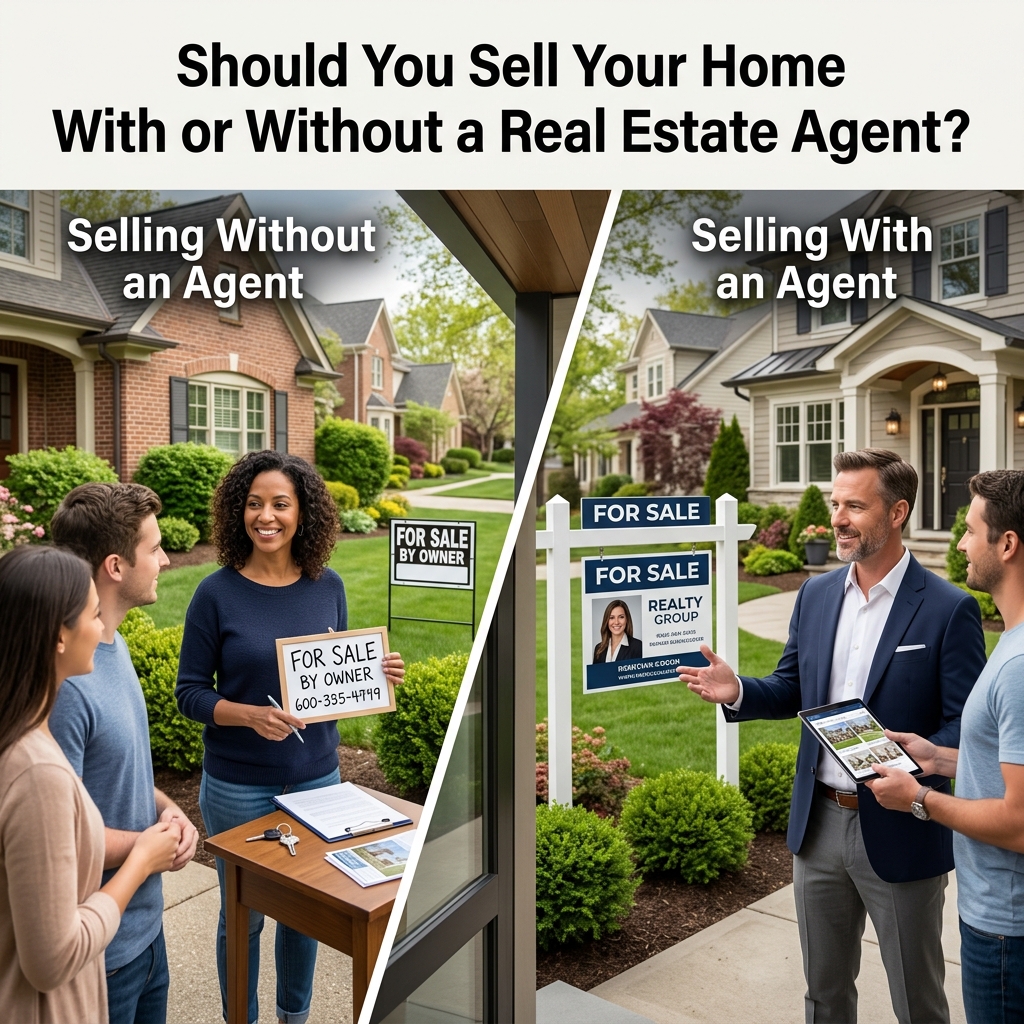
Selling a home is often one of the largest financial transactions a person will ever make, and a key early decision is whether to hire a real estate agent or sell the property on your own as For Sale By Owner (FSBO). The right choice depends on your comfort with legal paperwork, local market knowledge, and how much time and effort you are prepared to invest.
Understanding Your Two Main Paths to a Home Sale
Most residential sellers choose between two broad approaches:
- Agent-assisted sale: You hire a licensed real estate broker or agent to list, market, negotiate, and guide the transaction through closing.
- FSBO sale: You act as your own listing agent, handling pricing, marketing, showings, negotiation, and paperwork without paying a listing commission.
There are also hybrid options, such as selling to a cash buyer or using a flat-fee multiple listing service (MLS) while still managing negotiations yourself, but most decisions revolve around whether you want full professional representation or are comfortable leading the process.
Key Trade-Offs: Cost, Control, and Risk
When weighing an agent-assisted sale against FSBO, three trade-offs usually dominate the discussion:
- Cost: Agent commissions generally range around 5–6% of the sale price, split between listing and buyer’s agents. By selling FSBO, you may avoid the listing-side commission but might still pay a buyer’s agent fee if the buyer is represented.
- Control: FSBO gives you direct control over pricing, marketing, showing schedules, and negotiations. Using an agent delegates much of that work to a professional but also means you share decision-making.
- Risk and complexity: Real estate transactions involve legally binding contracts, disclosures, title issues, and closing procedures. Without professional guidance, errors or omissions can create financial or legal exposure.
What a Real Estate Agent Typically Does for Sellers
An experienced listing agent provides more than just putting a sign in the yard. Typical services include:
- Pricing strategy: Preparing a comparative market analysis (CMA) to estimate market value based on recent comparable sales and current competition.
- Marketing and advertising: Creating MLS listings, coordinating professional photography and possibly video or 3D tours, and promoting the home across online portals and social media.
- Managing showings and open houses: Scheduling and hosting tours, screening inquiries, and collecting feedback from potential buyers.
- Offer review and negotiation: Evaluating offers beyond just price (financing terms, contingencies, closing timeline) and negotiating on your behalf.
- Transaction coordination: Guiding you through inspections, appraisals, contingency deadlines, and required disclosures.
- Closing support: Working with title companies, attorneys, and lenders to ensure documents are correct and the sale closes smoothly.
For sellers who prefer to minimize hands-on involvement, these services can justify the commission, especially in markets where pricing and negotiation are complex or rapidly changing.
What You Take On When You Sell FSBO
Selling your home without an agent gives you the chance to save on listing commissions, but you assume full responsibility for tasks that agents would normally manage.
- Pricing the property: You will need to research comparable properties and current market conditions to set a realistic asking price, sometimes using online data, paid CMAs, or an appraisal.
- Marketing and exposure: Without MLS access through an agent, you may rely on FSBO websites, social media, classified ads, and yard signs to attract buyers.[10]
- Staging and photography: Preparing the home for showings and arranging high-quality photos or video tours to compete effectively with agent-listed homes.
- Managing showings: Scheduling tours, answering questions, and being available at times convenient for buyers.
- Negotiating offers directly: Reviewing contracts, counteroffers, contingencies, and timelines without an intermediary.
- Handling legal paperwork: Ensuring contracts, disclosures, and closing documents comply with state and local requirements and do not inadvertently create liability.
Many FSBO sellers choose to hire a real estate attorney or title company to assist with contracts and closing, which reduces risk but still keeps overall costs lower than full agent representation.
Side-by-Side Comparison: Agent vs. FSBO
| Aspect | With Real Estate Agent | FSBO (Without Agent) |
|---|---|---|
| Upfront cost | No upfront listing fee in many cases; commission due at closing. | Low upfront costs, but you may pay for photography, marketing, legal review, or flat-fee MLS. |
| Commission | Typical total commission around 5–6%, split between agents. | Potentially avoid listing-side commission; may still offer commission to buyer’s agent. |
| Market exposure | Full MLS access and agent networks; strong online and offline promotion.[10] | FSBO websites, social media, and local ads; often less exposure than MLS unless using flat-fee services.[10] |
| Time commitment | Agent handles most day-to-day tasks; you approve major decisions. | You oversee pricing, marketing, showings, and negotiations personally. |
| Legal and paperwork support | Agent provides standard forms and helps coordinate disclosures and closing steps. | You must gather correct forms and often hire an attorney or title company for guidance. |
| Negotiation expertise | Agent negotiates routinely and understands common terms and pitfalls. | You negotiate directly, which may be challenging if you lack experience. |
Situations Where Hiring an Agent Is Often Wise
While FSBO can work well for some sellers, certain circumstances make professional representation particularly valuable:
- Complex property or legal issues: Title defects, boundary disputes, seller financing, or inherited properties often benefit from professional guidance and may require an attorney even if you use an agent.
- Highly competitive or unfamiliar market: Rapidly changing prices and multiple-offer scenarios require sharp pricing strategies and negotiation skills.
- Limited time or availability: If you cannot easily host showings or manage marketing, delegating to an agent reduces stress.
- Comfort level with contracts: If reading and understanding legal documents feels overwhelming, an agent can simplify the process and coordinate with attorneys and title companies.
In these cases, the cost of an agent may be offset by reduced risk, faster sale times, and potentially stronger net proceeds if pricing and negotiation are handled skillfully.
When Selling FSBO May Be a Practical Option
FSBO is not just for seasoned investors; it can be viable for everyday homeowners in certain situations:
- Known buyer: Selling to a family member, neighbor, or tenant sometimes involves minimal marketing. In such scenarios, you may primarily need legal and title support rather than full brokerage services.
- Experience with real estate: Owners who have bought and sold property before and are comfortable with contracts and negotiation may feel confident leading the process.
- Strong local demand: In very hot markets, buyers actively search for opportunities, and FSBO listings can attract attention even without traditional agent marketing.[10]
- Cost sensitivity: For sellers who need every possible dollar from the sale—for example, to pay off a mortgage or fund a move—avoiding listing commissions can be compelling.
Even in these circumstances, it is common to involve a real estate attorney or title company for document review and closing support to reduce legal risk.
Essential Steps If You Choose to Sell Without an Agent
If you decide to pursue an FSBO sale, a structured plan can help you stay organized and avoid costly missteps. Common steps include:
- Research market value: Gather data on recent sales of similar homes, adjusting for size, condition, and location. Consider a paid CMA or appraisal if comparables are limited.
- Prepare the property: Make necessary repairs, declutter, and consider cosmetic improvements that offer a good return on investment, such as fresh paint or landscaping.
- Create compelling marketing materials: Invest in professional photography when possible; buyers increasingly rely on online images and virtual tours to decide which homes to visit.
- Choose your listing platforms: Use FSBO-specific websites, broader portals, and social media posts to reach a wide audience. Flat-fee MLS services can extend reach to buyers whose agents search on the MLS.
- Host showings and respond promptly: Be flexible about scheduling tours and answer inquiries quickly to keep potential buyers engaged.
- Evaluate offers carefully: Look beyond price to contingencies, financing type, closing dates, and repair requests. An attorney can help interpret the implications of contract language.
- Manage the closing process: Coordinate with the buyer’s lender, arrange inspections and appraisals, and work with a title company or attorney to ensure correct transfer of ownership.
Balancing Financial Savings Against Potential Pitfalls
The potential savings from selling FSBO can be significant, particularly on higher-priced homes. However, mispricing, limited marketing exposure, or contract mistakes can quickly erode those savings. Studies and industry guidance often emphasize that:
- Accurate pricing is crucial: Overpricing can lead to longer time on market and eventual price reductions, while underpricing can leave money on the table.
- Professional marketing matters: High-quality photos and strong online presence can materially influence buyer interest and perceived value.
- Legal compliance is non-negotiable: States frequently mandate specific disclosures (such as lead-based paint in older homes), and failing to provide them can create liability.
For many sellers, a hybrid approach—self-managing certain aspects while paying for targeted professional services such as legal review, photography, or a flat-fee MLS—strikes an effective balance between savings and protection.
Frequently Asked Questions About Agents and FSBO
Do I legally need a real estate agent to sell my home?
No. In most U.S. jurisdictions, there is no legal requirement to hire an agent to sell residential real estate, although you must comply with applicable contract and disclosure laws.
Can I hire an attorney instead of an agent?
Yes. Many FSBO sellers hire a real estate attorney to draft or review contracts, handle title issues, or oversee closing. This is particularly recommended when the transaction involves unusual terms or potential disputes.
Will buyers avoid FSBO listings?
Some buyers prefer working through agents, but many will consider FSBO homes, especially if they are well-presented and fairly priced. Offering a reasonable commission to buyer agents via a flat-fee MLS listing can improve exposure.
Does using an agent guarantee a higher selling price?
There is no universal guarantee. An experienced agent can help optimize pricing and marketing, which may improve your net outcome, but local conditions, property characteristics, and buyer demand still drive final sale prices.
What if I start as FSBO and then change my mind?
Many sellers begin FSBO and later decide to hire an agent after experiencing the workload or challenges. Switching paths is common, but it is wise to review any listing agreements carefully before signing to understand commission terms and contract duration.
How to Decide Which Approach Is Right for You
Choosing between an agent-assisted sale and FSBO is ultimately a personal decision grounded in your risk tolerance, available time, and familiarity with real estate transactions. To make a thoughtful choice, consider:
- Your schedule: Do you have the flexibility to respond quickly to inquiries and host frequent showings?
- Your comfort with negotiation: Are you willing and able to negotiate directly with buyers and their agents?
- Your understanding of contracts: Can you read, understand, and follow complex legal documents, or will you need additional support?
- Your financial priorities: Would you prefer to invest time to reduce commission costs, or pay for professional services to simplify the process?
Many sellers find that talking with both agents and real estate attorneys before deciding provides clarity on expected costs, responsibilities, and risks, making it easier to select the path that best aligns with their goals and comfort level.
References
- How to Sell a House by Owner: Step-by-Step Guide — JPMorgan Chase Bank, N.A. 2023-06-01. https://www.chase.com/personal/mortgage/education/owning-a-home/how-to-sell-a-house-by-owner
- Sell Your House Without a Realtor — Opendoor Technologies Inc. 2023-04-10. https://www.opendoor.com/articles/sell-your-house-without-a-realtor
- How to sell your house without a Realtor – FSBO tips — Fidelity Investments. 2022-09-15. https://www.fidelity.com/learning-center/life-events/how-to-sell-your-house-without-a-realtor
- 5 Tips for Selling Your Home Without an Agent — Consumer Reports. 2021-04-08. https://www.consumerreports.org/selling-a-home/tips-for-selling-your-home-without-an-agent/
- Selling Your House Without a Realtor: Pros, Cons, and Steps to Follow — HomeLight, Inc. 2023-05-12. https://www.homelight.com/blog/selling-your-house-without-a-realtor/
- Thinking of Selling a Home Without a Realtor in Washington? Read This First — Northwest Debt Relief Law Firm. 2023-01-20. https://www.bankruptcy-law-seattle.com/Articles/selling-a-home-without-a-realtor-in-washington/
Similar Articles








Read full bio of medha deb




