
Refusing to Testify After a Subpoena: Risks and Rights
Understand what a subpoena really means, when you must testify, and the serious legal consequences of refusing to appear or answer questions.
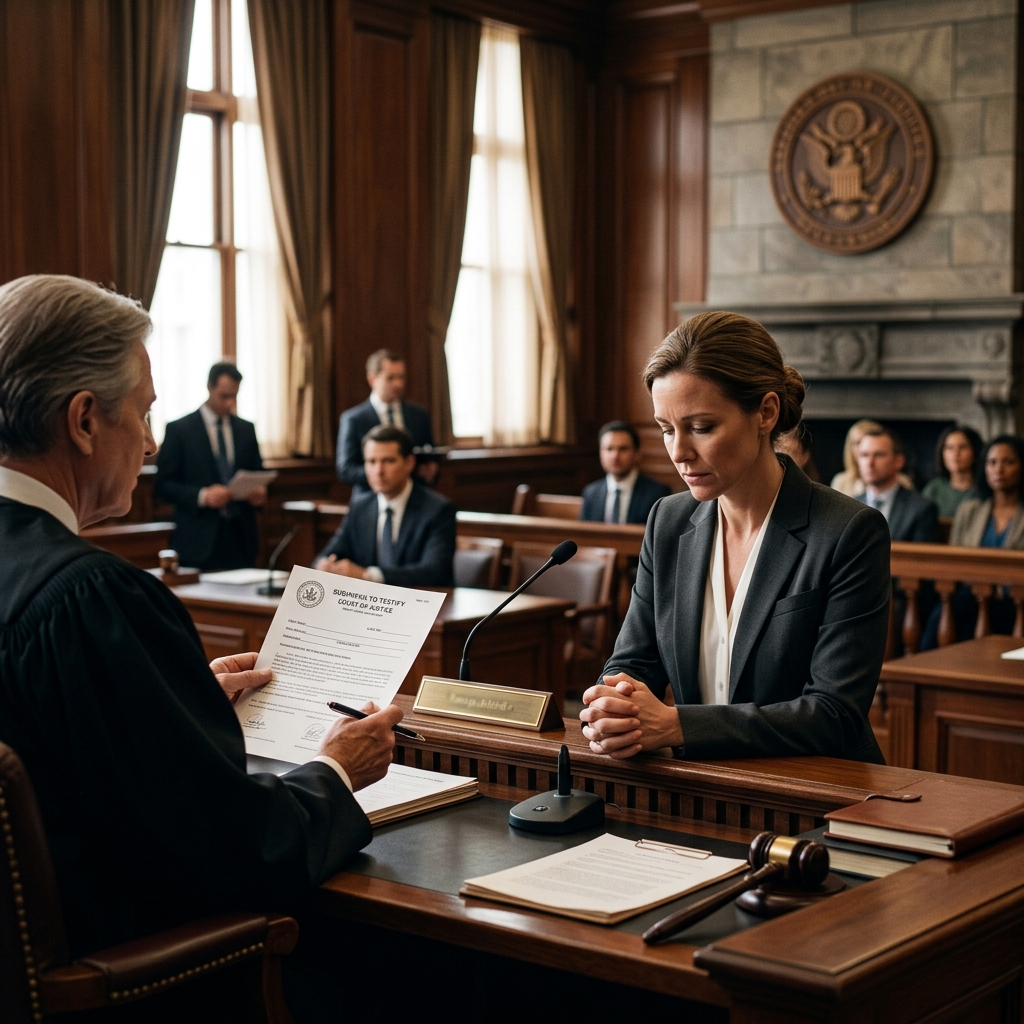
Being ordered to testify in court can be intimidating, especially when you fear personal consequences, loyalty conflicts, or renewed trauma. Yet once you receive a subpoena, your choices are no longer just personal preferences; they become legal questions with potentially serious outcomes.
This article explains what a subpoena is, why courts can compel testimony, what happens if you refuse to testify, and how constitutional protections like the Fifth Amendment may apply. It also offers practical guidance on responding lawfully and safely when you do not want to take the stand.
Understanding Subpoenas: What That Paper Really Means
A subpoena is not a suggestion or a polite request. It is a formal court order that requires you to appear, testify, or produce evidence. If you ignore it, you risk being held in contempt of court, which can include fines and even jail time.
Common Types of Subpoenas
- Subpoena to testify: Requires a person to appear at a specific place, date, and time to give testimony under oath.
- Subpoena for documents (subpoena duces tecum): Orders production of records, physical evidence, or other materials relevant to a case.
In both forms, a subpoena reflects the court’s authority to obtain evidence needed to resolve disputes and enforce criminal laws. Failing to obey that order can trigger enforcement measures designed to protect the integrity of the justice system.
Who Can Be Subpoenaed?
Courts and grand juries can subpoena people in a wide range of roles, including:
- Victims in criminal cases
- Eyewitnesses to events or alleged crimes
- Experts asked to explain technical or professional matters
- Record custodians (such as businesses, hospitals, or banks) who hold relevant documents
Generally, once subpoenaed, you are legally required to comply unless you have a valid legal objection or protected privilege.
Legal Duty to Testify: Why Refusal Is Not Simple
The legal system depends on witness testimony to establish facts. For that reason, courts treat subpoenas as a serious obligation. If you receive one, you are expected to:
- Appear at the specified place and time
- Answer lawful questions, unless a recognized privilege applies
- Produce requested materials, if ordered to do so
Failure to comply can be treated as interference with the court’s ability to do its job, which is where contempt of court comes in.
Contempt of Court: The Main Consequence of Refusing to Testify
If you ignore a subpoena or refuse to testify without valid legal grounds, a judge may hold you in contempt of court. Contempt is a legal finding that you have disobeyed or disrespected the court’s authority.
Two Broad Types of Contempt
| Type of Contempt | Main Purpose | Typical Penalties |
|---|---|---|
| Civil contempt | Pressure you to comply with a court order, such as testifying or producing evidence. | Fines or jail that may continue until you comply or the case ends. |
| Criminal contempt | Punish willful disobedience or disruptive conduct that undermines respect for the court. | Fixed fines or jail terms imposed as punishment, separate from the underlying case. |
While exact penalties vary by jurisdiction and circumstances, the underlying message is clear: courts take disobedience seriously, and contempt can leave you with a criminal record, fines, and time behind bars.
Typical Scenarios Leading to Contempt
- Not showing up at all after receiving a properly served subpoena
- Refusing to answer questions without asserting a lawful privilege
- Ignoring orders to produce documents or other evidence
In some cases, if a subpoenaed witness fails to appear, the court may issue a bench warrant authorizing their arrest to bring them before the court.
Your Constitutional Right Against Self-Incrimination
Despite this broad power to compel testimony, there is a crucial limit: you cannot be forced to incriminate yourself in a criminal matter. In the United States, the Fifth Amendment provides the right against self-incrimination.
What the Fifth Amendment Protects
The Fifth Amendment states that no person “shall be compelled in any criminal case to be a witness against himself.” In practice, this means:
- You may refuse to answer questions or provide testimony that could reasonably be used to charge or convict you of a crime.
- You can assert this right both in criminal and certain civil proceedings if answers may expose you to criminal liability.
- The court cannot punish you solely for invoking the privilege when properly applied.
Criminal defendants themselves have an especially strong version of this protection and generally cannot be forced to testify at their own trial.
How to Invoke the Fifth Amendment
Simply staying silent without explanation can be misunderstood and may lead to contempt. Instead, witnesses typically need to clearly state that they are invoking their right against self-incrimination. Common phrases include:
- “I respectfully invoke my Fifth Amendment right against self-incrimination.”
- “On advice of counsel, I decline to answer on the grounds that it may incriminate me.”
If the judge believes your concern about self-incrimination is legitimate, the court should not force you to answer questions that fall within the scope of the privilege.
Other Legal Grounds to Refuse or Limit Testimony
The Fifth Amendment is not the only potential protection. In some circumstances, you may challenge a subpoena or refuse to answer specific questions based on other privileges and legal doctrines.
Common Privileges
- Attorney–client privilege: Confidential communications between a lawyer and client about legal advice are typically protected.
- Doctor–patient and similar professional privileges: Some jurisdictions protect certain sensitive professional relationships, such as psychotherapist–patient communications.
- Spousal privilege: In limited circumstances, spouses may be protected from testifying against each other, depending on the jurisdiction and type of proceeding.
These privileges usually do not allow you to ignore a subpoena completely, but they can restrict which questions you must answer once you appear.
Challenging a Subpoena
If a subpoena is overly broad, improperly served, or seeks irrelevant or privileged information, a lawyer may file a motion such as a motion to quash or motion to modify to narrow or cancel the order.
- Service issues: The subpoena may be invalid if not served according to legal rules.
- Jurisdiction problems: The court may lack authority over you or the matter.
- Scope concerns: Requests may be too burdensome, invasive, or unrelated to the issues in dispute.
These challenges must be raised through formal legal procedures, not by simply ignoring the subpoena.
Victims and Witnesses Who Don’t Want to Testify
Many people resist testifying because of emotional strain, fear of retaliation, loyalty to friends or family, or disagreement with how prosecutors are handling the case. However, personal discomfort alone usually does not excuse noncompliance with a subpoena.
Potential Consequences for Victims and Witnesses
- Civil contempt designed to compel appearance and testimony, possibly including jail until compliance.
- Criminal contempt for willful refusal or disruptive conduct, resulting in fines or short fixed jail terms.
- Possible damage to the underlying case, which can affect both prosecution and defense strategies.
In serious cases, continued defiance can lead to extended proceedings focused solely on your refusal, which can be costly and damaging for you regardless of the outcome of the original case.
Grand Jury Subpoenas: Special Risks
Grand juries, which investigate potential crimes and decide whether to issue indictments, have significant subpoena powers. If you are subpoenaed to a grand jury, you usually must appear and answer questions unless a valid privilege applies.
Refusing to Testify Before a Grand Jury
- Skipping the appearance after proper subpoena service can lead to contempt and arrest.
- Appearing but refusing to answer without invoking the Fifth Amendment or another lawful privilege can also lead to contempt.
- Federal courts can impose jail time and substantial fines for contempt related to grand jury proceedings.
Because grand jury testimony is often secret and can directly affect whether someone is charged with a crime, it is especially important to get legal advice before deciding how to respond.
Witness Tampering: Why You Cannot Pressure Others to Refuse
Trying to convince someone else to ignore a subpoena or to stay away from court can create an entirely new set of criminal charges. Many states have specific laws making it a felony to intentionally prevent, dissuade, or manipulate a person who has been summoned as a witness.
Examples of unlawful witness interference include:
- Threatening harm if the witness appears or tells the truth
- Offering bribes or illegal benefits in exchange for silence
- Destroying evidence or misleading the witness about their obligations
Even if your goal is simply to protect a friend, these actions can turn you into a defendant facing serious felony charges.
Practical Steps If You Don’t Want to Testify
If you feel unsafe, conflicted, or at risk of self-incrimination, there are lawful ways to address those concerns without simply refusing to appear.
Key Actions to Take
- Read the subpoena carefully: Note the date, time, location, and what is being requested.
- Consult a lawyer promptly: A criminal defense attorney or other qualified lawyer can evaluate risks and possible defenses.
- Discuss privileges: Determine whether the Fifth Amendment or other privileges may protect you from certain questions.
- Consider challenging the subpoena: If appropriate, your lawyer may file motions to quash or narrow the order.
- Prepare for testimony: If you must testify, preparation can reduce confusion and emotional stress.
Ignoring legal deadlines or attempting to navigate complex privilege issues on your own can increase the likelihood of contempt and other unintended consequences.
Frequently Asked Questions (FAQs)
Can I simply refuse to testify because I don’t want to get involved?
Generally, no. If you are properly subpoenaed, you must appear and comply unless you have a valid legal privilege or successfully challenge the subpoena in court. Personal reluctance alone is not enough to avoid testifying.
What happens if I don’t show up after being subpoenaed?
The judge may issue a warrant for your arrest and later hold you in contempt of court, which can result in fines or jail time. The penalties can continue until you comply or the court resolves the contempt.
Is it safe to just “plead the Fifth” to every question?
The Fifth Amendment must be invoked in relation to questions that could reasonably expose you to criminal liability. Blanket refusal to answer all questions may not be appropriate, and a judge can require you to respond to questions that do not pose a risk of self-incrimination.
Can I be punished for asserting the Fifth Amendment?
You should not be penalized simply for asserting a valid Fifth Amendment privilege. However, if the court determines your invocation is not justified, refusal to answer could lead to contempt. Legal guidance is crucial to apply the privilege correctly.
What should I do if testifying may expose me to retaliation or danger?
Raise safety concerns with your lawyer, the prosecutor, or the court. In some cases, authorities may consider protective orders, relocation assistance, or other safety measures. These concerns do not usually cancel a subpoena, but they may influence how and when you testify.
Key Takeaways
- A subpoena is a binding court order, not an optional invitation.
- Refusing to testify or ignoring a subpoena can lead to civil or criminal contempt, including fines and jail.
- The Fifth Amendment protects you from being forced to incriminate yourself, but it must be properly invoked.
- Other privileges and formal motions can sometimes limit or challenge subpoenas, but these require legal action, not inaction.
- Attempting to stop another person from testifying can constitute witness tampering, a separate and serious crime.
If you are facing a subpoena and are worried about testifying, the most important step is to speak with a qualified attorney as soon as possible. Proper legal advice can help you protect your rights while avoiding the serious consequences of unlawful refusal.
References
- What Happens if a Victim or Witness Refuses to Testify? — Leah Legal. 2023-05-12. https://www.leahlegal.com/what-happens-if-a-victim-or-witness-refuses-to-testify/
- What Happens If You Refuse to Testify Before a Grand Jury? — NYC Criminal Attorneys. 2022-09-01. https://www.nyccriminalattorneys.com/what-happens-if-you-refuse-to-testify-before-a-grand-jury/
- What Happens If a Witness Refuses To Testify in Your Defense? — Justin Lowe, P.C. 2021-11-15. https://www.justinlowepc.com/blogs/what-happens-if-a-witness-refuses-to-testify-in-your-defense/
- May the Court Force Me to Testify? — FindLaw. 2020-08-20. https://www.findlaw.com/litigation/going-to-court/may-the-court-force-me-to-testify.html
- Can I Refuse to Testify if I Get a Subpoena? — LegalMatch. 2019-04-10. https://www.legalmatch.com/law-library/article/subpoena-to-testify.html
- How Do I Get Out of a Subpoena? — Harrison & Hart, LLC. 2022-03-03. https://www.harrisonhartlaw.com/how-do-i-get-out-of-a-subpoena/
Similar Articles








Read full bio of Sneha Tete




