
Redefining Advocacy: How Modern Youth Activists Are Reshaping Social Justice
Discover how the new generation of activists is moving beyond traditional politics to build intersectional, digitally-driven movements for systemic change.
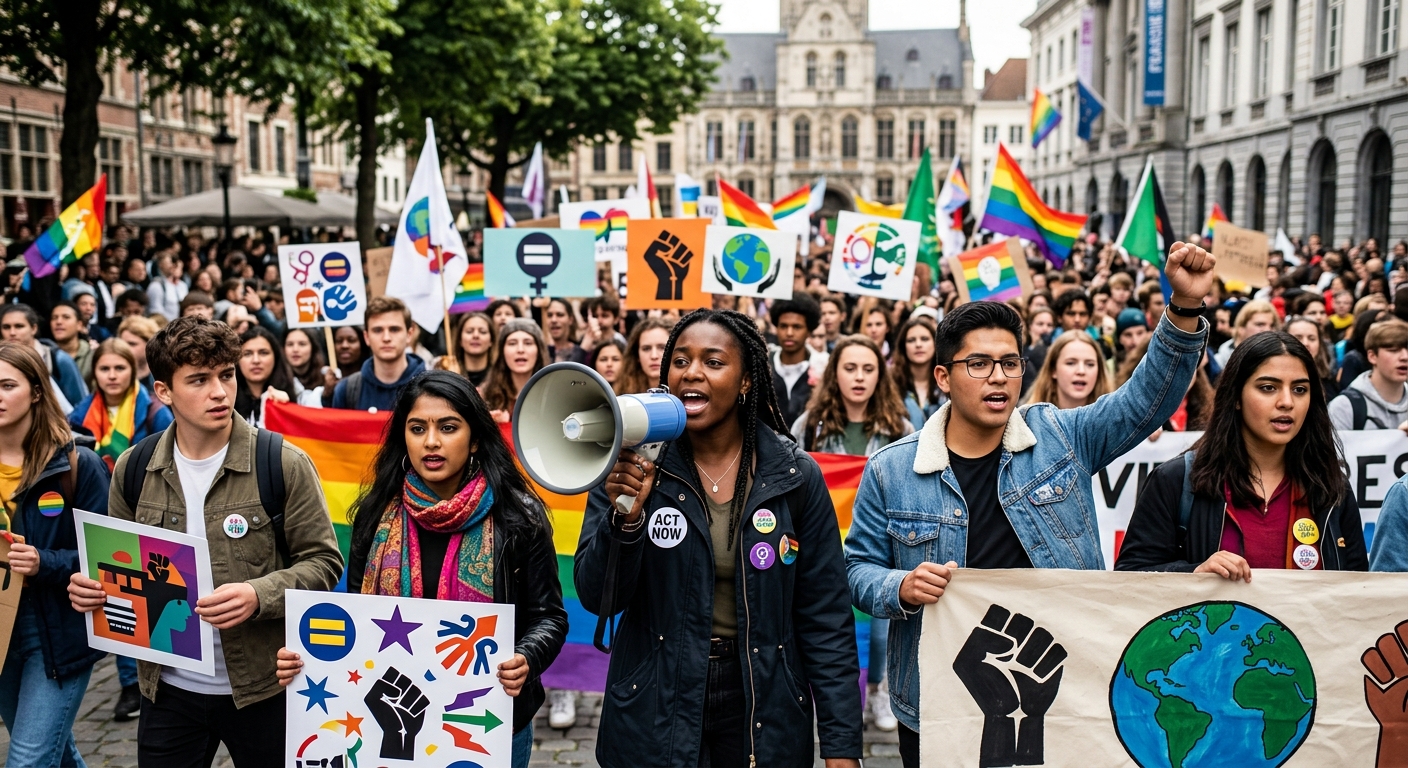
The Dawn of a New Era in Advocacy
The paradigm of social change is undergoing a profound and rapid transformation. Historically, civic engagement was largely defined by a set of predictable, institutionally sanctioned activities: voting in biennial elections, attending local town hall meetings, and writing letters to elected representatives. Today, however, a new generation of youth activists is rewriting the rulebook entirely. These young leaders are dismantling the traditional boundaries of political participation, opting instead for dynamic, grassroots strategies that prioritize direct action, collective care, and systemic overhaul.
The urgency of modern crises—ranging from the escalating climate emergency and economic instability to deep-seated racial inequities and attacks on civil liberties—has catalyzed a movement that refuses to wait for gradual legislative shifts. Youth activists are no longer asking for a seat at the established political table; they are building their own tables. They are cultivating inclusive, uncompromising spaces where marginalized voices are not merely heard but are actively leading the conversation. This shift represents a fundamental evolution in how society conceptualizes democracy, moving away from passive participation toward active, daily resistance.
The Shift from Partisanship to Issue-Based Solidarity
One of the most defining characteristics of modern youth activism is the explicit rejection of rigid partisan loyalties. Recent polling data indicates that young Americans are increasingly distancing themselves from the established two-party political system. Instead of identifying strictly as Democrats or Republicans, a significant and growing portion of Generation Z and younger Millennials classify themselves as political independents. This shift does not signify apathy or political disengagement; rather, it reflects a deeply held belief that institutional politics often compromise too heavily and fail to address the root causes of societal suffering.
Young organizers are prioritizing issue-based advocacy. Their loyalties lie with human rights, environmental sustainability, and economic justice, rather than with corporate-backed political brands. This issue-centric approach allows for more agile and uncompromising advocacy. When a political establishment backs down on climate targets or human rights protections, youth activists are immediately ready to organize boycotts, protests, and digital campaigns to hold those very institutions accountable, regardless of the political party in power.
Furthermore, this generation understands that voting is the floor, not the ceiling, of civic duty. While they recognize the strategic importance of the ballot box, they view it as merely one tool within a vast arsenal of democratic engagement. They frequently supplement electoral participation with mutual aid networks, community defense initiatives, and consumer activism, recognizing that true power resides in the collective action of everyday communities.
Comparing Civic Models
| Attribute | Traditional Civic Engagement | Modern Youth Activism |
|---|---|---|
| Focus | Partisan alignment and party loyalty | Issue-based solidarity and human rights |
| Primary Tools | Voting, lobbying, campaign donations | Direct action, mutual aid, digital campaigns |
| Pace of Change | Incremental and legislative | Urgent, systemic, and cultural overhaul |
| Leadership Structure | Hierarchical and centralized | Decentralized, leaderful, and collective |
Digital Organizing: The New Frontier of Social Change
The advent of digital technology has fundamentally altered the mechanics of social movements. For contemporary youth activists, social media platforms are not merely recreational spaces; they are critical infrastructure for organizing, educating, and mobilizing. The ability to disseminate information instantaneously across the globe has democratized activism, allowing grassroots campaigns to achieve unprecedented scale without the need for massive financial backing or mainstream media approval.
Digital organizing facilitates a decentralized leadership model. Unlike the civil rights movements of the mid-20th century, which often relied on highly visible, charismatic leaders, today’s movements are largely leaderful—meaning they are driven by a broad collective of organizers rather than a single figurehead. This decentralized structure makes modern movements remarkably resilient. If one node of the network is disrupted or targeted, the broader movement seamlessly continues to function and adapt.
However, this heavy reliance on digital platforms is not without its complexities. Activists must constantly navigate algorithmic bias, corporate censorship, digital surveillance, and the pervasive threat of online harassment. Furthermore, they are actively challenging the phenomenon of “slacktivism”—the tendency for digital participation to begin and end with a shared post or a hashtag. To counter this, sophisticated youth organizers use digital spaces primarily as funnels, converting online awareness into offline, tangible action. They utilize encrypted messaging apps to coordinate physical protests, crowdfunding platforms to sustain local mutual aid funds, and collaborative open-source software to draft comprehensive policy demands.
Intersectionality at the Forefront
At the beating heart of modern youth activism is an unwavering commitment to intersectionality. Coined by legal scholar Kimberlé Crenshaw, the term describes how various forms of inequality—such as racism, sexism, classism, and ableism—operate together and exacerbate each other. Young activists possess a profound, lived understanding that social justice issues cannot be tackled in isolated silos.
For example, the youth-led climate movement frequently emphasizes that environmental degradation disproportionately impacts low-income neighborhoods and communities of color, a concept known as environmental racism. Therefore, advocating for environmental sustainability inherently requires advocating for racial and economic justice simultaneously. This holistic approach ensures that the solutions proposed by young activists are comprehensive and do not inadvertently marginalize vulnerable subgroups within their coalitions.
This intersectional framework also fosters unprecedented solidarity across different advocacy groups. Organizations fighting for LGBTQ+ rights are frequently seen marching alongside labor unions demanding fair wages; immigrant rights groups collaborate seamlessly with activists protesting against police brutality. By recognizing the deeply interconnected nature of systemic oppression, youth activists are building massive, formidable coalitions that possess the numbers, the strategic diversity, and the moral clarity necessary to challenge deeply entrenched power structures.
Confronting Socioeconomic Barriers to Participation
While the passion and innovation of youth activists are undeniable, it is critical to acknowledge the systemic barriers that dictate who gets to participate safely and effectively in these movements. Activism, particularly unpaid grassroots organizing, is often a privilege. Extensive research highlights a stark disconnect between young people’s economic struggles and their capacity to engage in democracy.
Youth from low-income backgrounds frequently lack the disposable time, financial safety nets, and resources required to attend protests, volunteer for campaigns, or run for local office. When surviving the day-to-day economic realities—such as paying rent, managing student debt, or working multiple jobs—consumes the majority of one’s bandwidth, civic participation inevitably takes a backseat. This dynamic risks creating an activist ecosystem dominated by relatively privileged voices, which can inadvertently skew the priorities and policy demands of the broader movement away from the most pressing economic issues.
To counteract this, thriving social justice organizations are actively reimagining how to support working-class and marginalized youth. This includes providing stipends for organizers, offering free childcare and transportation for community meetings, and establishing mutual aid funds that directly address the immediate material needs of the community. By treating economic support as a foundational element of organizing, movements can ensure that those most impacted by systemic injustice are the ones authentically leading the fight against it.
Transforming Education to Foster Global Citizenship
The foundations of lifelong civic engagement are often laid within the educational system. However, traditional curricula frequently fail to equip students with the practical skills and historical context necessary for effective advocacy. Recognizing this gap, youth advocates and progressive educators are pushing for a pedagogical shift toward global citizenship education.
Fostering global citizenship involves much more than just teaching geography or standardized history; it requires a competence-based curriculum that enhances students’ core values, attitudes, and critical thinking capabilities. Schools must become active incubators for civic competence, where students are encouraged to critically analyze global issues, understand diverse cultural perspectives, and practice self-advocacy in real-time.
When educational institutions empower students to challenge the status quo and engage in critical discourse rather than rote memorization, they cultivate a generation of autonomous agents capable of pursuing civic and political action effectively. This educational transformation is vital for sustaining the momentum of youth-led movements, ensuring that young people enter the public sphere not just with fiery passion, but with the strategic acumen required to enact meaningful, long-term change.
The Psychological Toll and the Importance of Community Care
The unrelenting pursuit of social justice exacts a significant psychological and emotional toll. Young activists are frequently exposed to traumatic events, systemic violence, and the exhausting reality of fighting seemingly immovable bureaucratic institutions. The phenomena of activist burnout and compassion fatigue are rampant, posing a severe threat to both the individuals and the sustainability of the movements they champion.
Recognizing that systemic change is a marathon rather than a sprint, modern youth organizers are increasingly prioritizing mental health and community care. The narrative is shifting away from the toxic glorification of endless sacrifice and toward the understanding that rest is a radical, necessary act of preservation. Progressive organizations are integrating trauma-informed practices into their workflows, mandating mental health days, and facilitating access to culturally competent therapeutic resources.
Moreover, the concept of community care—where the collective takes active responsibility for the well-being and safety of its members—is replacing the highly individualized and often commercialized notion of self-care. By fostering environments where vulnerability is supported, boundaries are respected, and rest is actively encouraged, youth activists are building resilient, sustainable movements that can withstand the arduous journey toward justice.
Conclusion
The vision of social justice articulated by today’s youth activists is bold, inclusive, and relentlessly forward-looking. By moving beyond traditional political frameworks, embracing digital innovation, centering intersectionality, and demanding systemic accountability, they are fundamentally redefining what it means to be an engaged citizen in the 21st century. While they face formidable challenges—from navigating complex algorithmic landscapes to overcoming entrenched socioeconomic barriers and managing activist burnout—their adaptive strategies and unyielding solidarity offer a profound source of hope. Society must not only listen to these young voices but must also actively dismantle the institutional barriers that hinder their participation. Providing the necessary structural, financial, and emotional support will ensure that this brilliant generation can fully realize their transformative vision for a truly just and equitable world.
Frequently Asked Questions (FAQ)
What is the difference between traditional political engagement and modern youth activism?
Traditional political engagement usually focuses on voting, party loyalty, and lobbying within existing institutional frameworks. Modern youth activism tends to be more issue-based, decentralized, and heavily reliant on direct action, mutual aid, and digital organizing to achieve systemic change outside of the traditional two-party system.
How does intersectionality play a role in youth movements?
Intersectionality is the understanding that various forms of discrimination (such as racism, classism, and sexism) are interconnected. Youth movements use this framework to build broad coalitions, recognizing that fighting for climate justice, for instance, also requires fighting for racial and economic equality.
What are the biggest barriers young activists face today?
Significant barriers include socioeconomic constraints (where unpaid organizing excludes lower-income youth), mental health challenges and burnout, algorithmic suppression on digital platforms, and a lack of structural support from established political institutions.
How is social media changing the landscape of social justice?
Social media allows for rapid, global mobilization and decentralized leadership, giving marginalized groups a platform to bypass traditional media gatekeepers. However, activists must also navigate challenges like online harassment, digital surveillance, and the need to translate online awareness into offline action.
References
- Youth Are Taking Civic Action, But Need Opportunities and Support to Overcome Socioeconomic Barriers — Center for Information & Research on Civic Learning and Engagement (CIRCLE) at Tufts University. 2025-09-30. https://circle.tufts.edu/latest-research/youth-are-taking-civic-action-need-opportunities-and-support-overcome
- Young People’s Civic and Political Engagement and Global Citizenship — United Nations. 2018-01-18. https://www.un.org/en/chronicle/article/young-peoples-civic-and-political-engagement-and-global-citizenship
- Young Americans are increasingly rejecting the Democratic and Republican parties, a new poll shows — AP News. 2026-01-12. https://apnews.com/
Similar Articles








Read full bio of Sneha Tete


