
Private Jails and Prisons in the United States
How for-profit detention facilities operate, why they are controversial, and what they mean for civil rights and criminal justice reform.
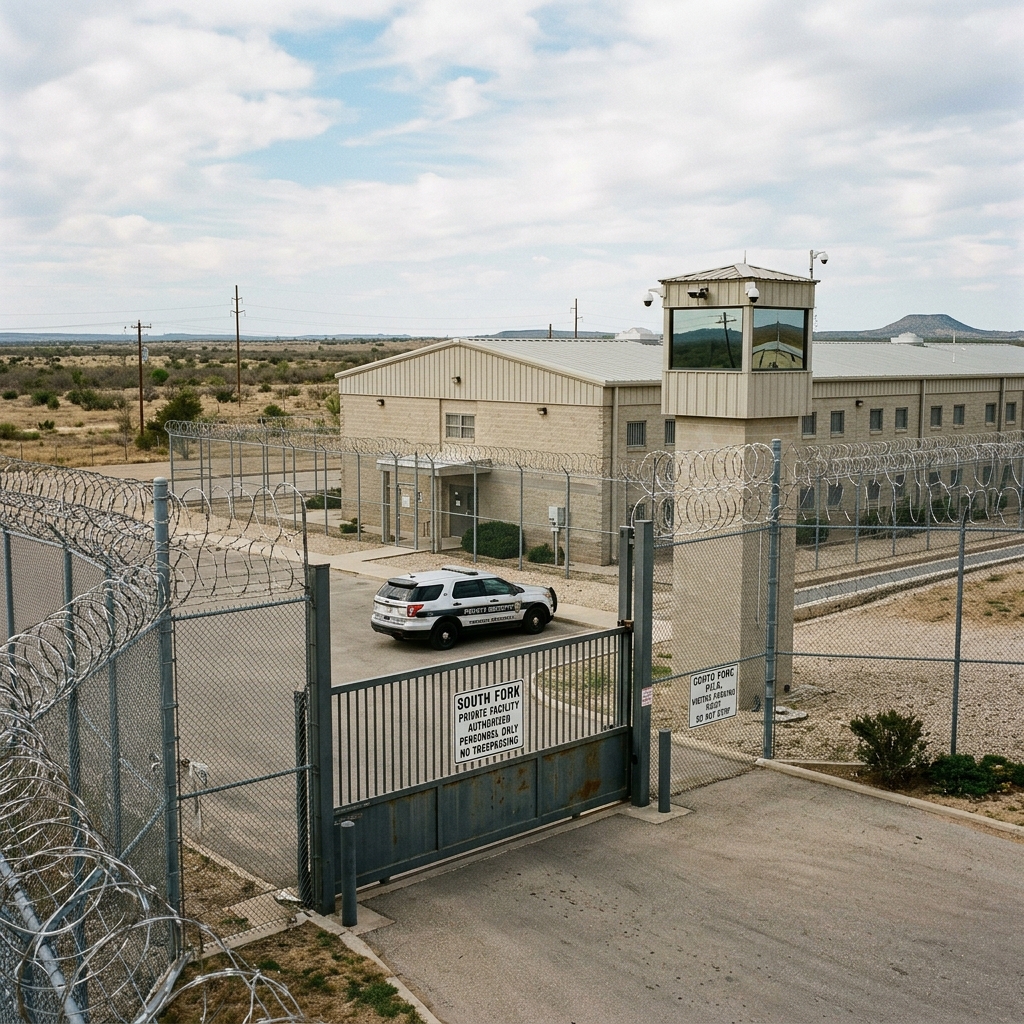
Across the United States, incarceration is not handled solely by government agencies. A significant portion of people in custody are held in privately operated jails and prisons, run by corporations that contract with federal, state, and local authorities. These facilities are often called private prisons or for-profit detention centers, and they sit at the center of a heated debate about cost, safety, and civil rights.
This article explains how private jails developed, how they are regulated, why they are controversial, and what options exist if you or a loved one is detained in such a facility.
What Are Private Jails and Who Uses Them?
A private jail or prison is a correctional facility operated by a nongovernmental company under contract with a public agency. The government still decides who is incarcerated and for how long, but it pays a private corporation to house and manage people in custody. These companies typically receive a per-prisoner, per-day payment (often called a “per diem” rate) or a fixed-fee contract for operating the facility.
Key characteristics of private facilities
- Corporate management – Facilities are run by private companies rather than directly by a corrections department.
- Contract-based operation – The relationship is governed by contracts setting staffing levels, security requirements, and payment terms.
- Profit motive – Companies aim to generate profit for shareholders, usually by controlling costs and maintaining or increasing occupancy.
- Public oversight varies – Oversight depends on the contract and state or federal law; some facilities are monitored closely, others less so.
Private facilities may hold:
- People serving state or federal criminal sentences
- Pretrial detainees awaiting trial or sentencing in local jails
- Immigration detainees held by federal authorities, primarily under the Department of Homeland Security (DHS)
Scope of private incarceration in the U.S.
Although most people incarcerated in the United States are still held in public facilities, private incarceration remains a sizeable piece of the system:
- In 2022, about 90,873 people were held in private prisons, representing roughly 8% of all state and federal prisoners.
- In 2023, 28 states used private prisons, together holding about 7.1% of all prisoners in the country.
- Use varies widely by state: some rely heavily on private facilities, while others do not use them at all.
- Private contractors also house a large share of immigration detainees; in some years, nearly three-quarters of federal immigration detainees have been held in privately operated facilities.
| Category | Public Facilities | Private Facilities |
|---|---|---|
| Share of state and federal prisoners (approx.) | About 92–93% | About 7–8% |
| Number of states using facilities (2023) | All 50 states use public prisons and jails | 28 states use private prisons |
| Management | Government agencies (state DOC, BOP, local jails) | Private corporations under contract |
| Primary incentive structure | Public safety, legal compliance, political oversight | Profit, contract renewal, shareholder returns |
How and Why Private Jails Emerged
Modern private prisons grew out of the mass incarceration era that began in the late 20th century. In the 1980s, U.S. incarceration rates increased sharply, driven by policies associated with the “War on Drugs,” mandatory minimum sentences, and tougher sentencing laws. Public systems struggled with overcrowded prisons and ballooning corrections budgets, and lawmakers began to look to private companies as a way to expand capacity quickly.
Timeline of growth
- 1980s – The first modern contract prison opens in Tennessee in 1984, operated by Corrections Corporation of America (now CoreCivic).
- 1990s–2000s – The private prison industry expands as states and the federal government turn to corporate operators to address overcrowding and perceived cost pressures.
- 2010s – Criticism intensifies around safety, accountability, and the role of profit in incarceration. Some states reduce or end private prison contracts, while others maintain them.
- 2020s – The federal government and several states move to limit or phase out certain private prison contracts, though private facilities remain significant, especially in immigration detention.
Supporters argued that private companies could build and run facilities more cheaply and efficiently than the government. Critics responded that turning incarceration into a business would create perverse incentives to keep prison beds full and cut corners on safety, staffing, and rehabilitation programs.
Who Profits from Private Incarceration?
A relatively small number of corporations dominate the private prison market in the United States. Companies such as GEO Group and CoreCivic manage a large share of contracts for state and federal prison and detention facilities. These corporations report billions of dollars in annual revenue, much of it from government contracts funded by taxpayers.
Common contract features
Private jail and prison contracts often include terms that shape how facilities operate and how risk is allocated between governments and corporations:
- Per-bed or per-diem payments – Governments pay a set amount per incarcerated person per day.
- Minimum occupancy clauses – Contracts can guarantee that a certain percentage of beds will remain filled, sometimes 80–100%, or require the government to pay for empty beds.
- Performance metrics – Some contracts tie renewal or bonuses to measures like staffing levels or incident reports, though these metrics may be incomplete or hard to verify.
- Liability and indemnification – Contracts may address who is liable for injuries, deaths, or civil rights violations in the facility.
Minimum occupancy clauses are particularly controversial because they can pressure governments to keep incarceration levels high, even as reform efforts aim to reduce prison populations.
Lobbying and political influence
Private prison companies and related vendors have long engaged in lobbying and campaign contributions to influence criminal justice policy and secure government contracts. Advocacy groups argue that this creates a powerful financial interest in maintaining harsh sentencing laws, aggressive enforcement practices, and high detention levels, especially impacting marginalized communities.
Legal and Constitutional Issues in Private Jails
People held in private jails and prisons retain their constitutional rights, including protections under the Eighth Amendment against cruel and unusual punishment and under the Fourteenth Amendment for due process and equal protection. However, enforcing these rights can be more complex in privately run facilities.
Key constitutional protections
- Eighth Amendment – Prohibits cruel and unusual punishment, which covers deliberate indifference to serious medical needs, unsafe conditions, or excessive force.
- Fourteenth Amendment – Applies due process and equal protection guarantees, especially for pretrial detainees who have not been convicted.
- First Amendment – Protects freedom of religion, speech, and access to the courts, including the right to file grievances.
When a government contracts with a private company to operate a facility, courts generally treat the private operator as performing a public function, meaning constitutional standards still apply. However, questions can arise about:
- Whether certain claims can be brought directly against private corporations for constitutional violations
- What legal theories (such as state tort law or federal civil rights statutes) are available
- How contractual terms affect accountability and oversight
Some court decisions have limited the ability of people in private facilities to bring certain federal constitutional claims directly against private entities, pushing many suits into state-law frameworks or requiring proof that government officials were involved in the misconduct. The specifics vary by jurisdiction and the type of claim.
Conditions of confinement and civil rights concerns
Advocacy groups, journalists, and researchers have documented numerous concerns about conditions in private jails and prisons, including:
- Understaffing and high staff turnover, which can lead to violence and inadequate supervision
- Limited access to medical and mental health care
- Use of solitary confinement and other restrictive practices
- Inadequate programming for education, work, and rehabilitation
- Disproportionate impacts on young people and people of color
Comparative research has found that private facilities often house less serious offenders but still show significant risks and disparities. Civil rights groups argue that the profit motive encourages chronic understaffing and cost-cutting that directly affects safety and basic human dignity.
Do Private Jails Save Money or Improve Outcomes?
One of the main arguments for private jails is that they can operate at lower cost than public facilities. The evidence on cost savings and performance, however, is mixed and often contested.
Cost comparisons
Studies of private vs. public prisons have found:
- Any cost savings are often modest once differences in prisoner populations and security levels are accounted for.
- Cost reductions frequently come from lower staff pay and benefits, higher staff-to-prisoner ratios, or reduced programming and services.
- Some analyses suggest that when contracts include strong oversight and require comparable services, cost differences shrink or disappear.
Public safety and rehabilitation
There is limited evidence that private prisons provide better outcomes in terms of recidivism (reoffending), safety, or rehabilitation. Some research suggests that private facilities may have:
- Comparable or higher rates of violence and misconduct compared to similar public prisons
- Fewer educational and rehabilitative programs per person, which can undermine reentry success
- Less transparency, making it harder for the public to evaluate performance
Because companies are not rewarded for reducing the number of people in their custody, critics argue that private incarceration fundamentally conflicts with reform goals aimed at shrinking the prison population.
Immigration Detention and Private Facilities
Beyond criminal sentences and local jails, private corporations play a major role in immigration detention. U.S. Immigration and Customs Enforcement (ICE), under the Department of Homeland Security, relies heavily on contracts with private operators to run detention centers holding people awaiting immigration hearings, deportation, or release.
In some recent years, nearly three-quarters of ICE detainees were held in privately run facilities. Civil rights organizations have raised concerns about:
- Unsafe conditions and medical neglect
- Barriers to legal representation and family contact
- Use of remote or rural locations far from lawyers and courts
- Prolonged detention for people with strong community ties or viable legal claims
Because immigration detention is civil rather than criminal, detainees face unique legal hurdles. They often do not have a right to a government-funded attorney and may struggle to challenge conditions or access the courts, especially in privately run facilities located far from legal resources.
Policy Shifts and the Future of Private Jails
In recent years, policymakers and advocates have pushed to reduce reliance on private facilities. Changes have occurred at both the federal and state levels.
Federal actions
- Federal policy has periodically restricted the Department of Justice from renewing certain private prison contracts, particularly for Bureau of Prisons (BOP) facilities.
- These measures generally do not cover immigration detention, which is governed by separate agencies and contracts.
Even where federal criminal facilities have reduced private prison use, state prisons, local jails, and immigration detention centers continue to rely on private operators.
State and local reforms
States have taken a variety of approaches:
- Some states have banned or phased out private prisons for state prisoners.
- Others have reduced contracts or closed specific facilities while keeping the option available.
- A number of jurisdictions have implemented stronger oversight and reporting requirements, or limited the use of minimum occupancy clauses in contracts.
Advocates for reform often call for:
- Eliminating profit from incarceration entirely
- Reducing prison and jail populations through sentencing and bail reform
- Investing in community-based alternatives and reentry support
If You or a Loved One Is in a Private Jail
Being held in a private facility can raise practical and legal questions. While specific options depend on your jurisdiction and the terms of the contract, some general steps may help protect rights and improve transparency.
Practical steps to consider
- Identify the facility and operator – Confirm whether the jail or prison is privately operated and which company manages it.
- Obtain and review facility rules – Request written policies on visitation, grievances, medical care, religious practice, and discipline.
- Use the grievance system – File grievances promptly and keep copies of all paperwork, dates, and responses.
- Document problems – Record details of unsafe conditions, denial of medical care, discrimination, or abuse, including names, dates, and witnesses where possible.
- Seek legal advice – Contact a criminal defense lawyer, civil rights attorney, or legal aid organization familiar with conditions-of-confinement and civil rights claims.
Family members and supporters can also contact state or local oversight bodies, such as an inspector general or ombuds, and may file complaints with civil rights organizations or bar associations if they believe rights are being violated.
Frequently Asked Questions About Private Jails
Are private jails legal in the United States?
Yes. Private jails and prisons are legal, and many federal, state, and local agencies contract with private companies to operate facilities. However, they must still comply with the U.S. Constitution, federal laws, and applicable state laws regarding conditions and treatment of people in custody.
Do people in private jails have the same rights as those in public facilities?
In general, yes. People in private jails retain the same constitutional and statutory rights as those in public facilities, including protections against cruel and unusual punishment and rights to due process and access to the courts. The challenge is often enforcement and accountability, which may differ depending on whether claims are brought against government actors, private companies, or both.
Do private prisons really reduce government costs?
The evidence is mixed. Some studies suggest modest cost savings, often tied to lower staffing costs or fewer programs, while others find that savings disappear when private facilities are required to provide services comparable to public prisons. Cost comparisons can be complicated by differences in populations, security levels, and contract terms.
Are private prisons more dangerous?
Research has found that private facilities can have similar or higher rates of violence and misconduct compared to public prisons when populations and security levels are comparable. Critics argue that understaffing, high turnover, and pressure to cut costs can undermine safety, while industry representatives contend that they meet or exceed contract standards.
Can a state or the federal government abolish private prisons?
Yes, governments can decide not to renew or enter contracts with private operators. Some states have passed laws limiting or banning private prisons for certain populations. At the federal level, policy decisions can restrict the use of private facilities for specific agencies, although separate action is usually required to address immigration detention.
What role do private prisons play in mass incarceration?
Private prisons do not cause mass incarceration by themselves, but they operate within and may reinforce a system of high incarceration rates. Critics argue that profit-driven contracts, minimum occupancy clauses, and lobbying efforts can help sustain harsh policies and large prison populations. Reform efforts often focus both on reducing overall incarceration and on limiting the role of private profit in detention.
References
- Private Prisons in the United States — The Sentencing Project. 2023-10-19. https://www.sentencingproject.org/reports/private-prisons-in-the-united-states/
- How many states use private prisons? — USAFacts. 2024-01-25. https://usafacts.org/articles/how-many-states-use-private-prisons/
- Prison Contracts: Profits & Politics — Tufts University Prison Divestment. 2020-05-01. https://sites.tufts.edu/prisondivestment/prison-contracts/
- Private Prison Industry: Overview — EBSCO Research Starters. 2022-09-01. https://www.ebsco.com/research-starters/law/private-prison-industry-overview
- Private Prisons — American Civil Liberties Union (ACLU). 2019-11-01. https://www.aclu.org/issues/smart-justice/mass-incarceration/private-prisons
- Private and Public Sector Prisons—A Comparison of Select Characteristics — Federal Probation, U.S. Courts. 2004-06-01. https://www.uscourts.gov/sites/default/files/68_1_5_0.pdf
Similar Articles








Read full bio of Sneha Tete




