
Preparing for a Child Custody & Visitation Consultation
Learn how to organize documents, tell your story, and work effectively with a lawyer before your first child custody and visitation consultation.
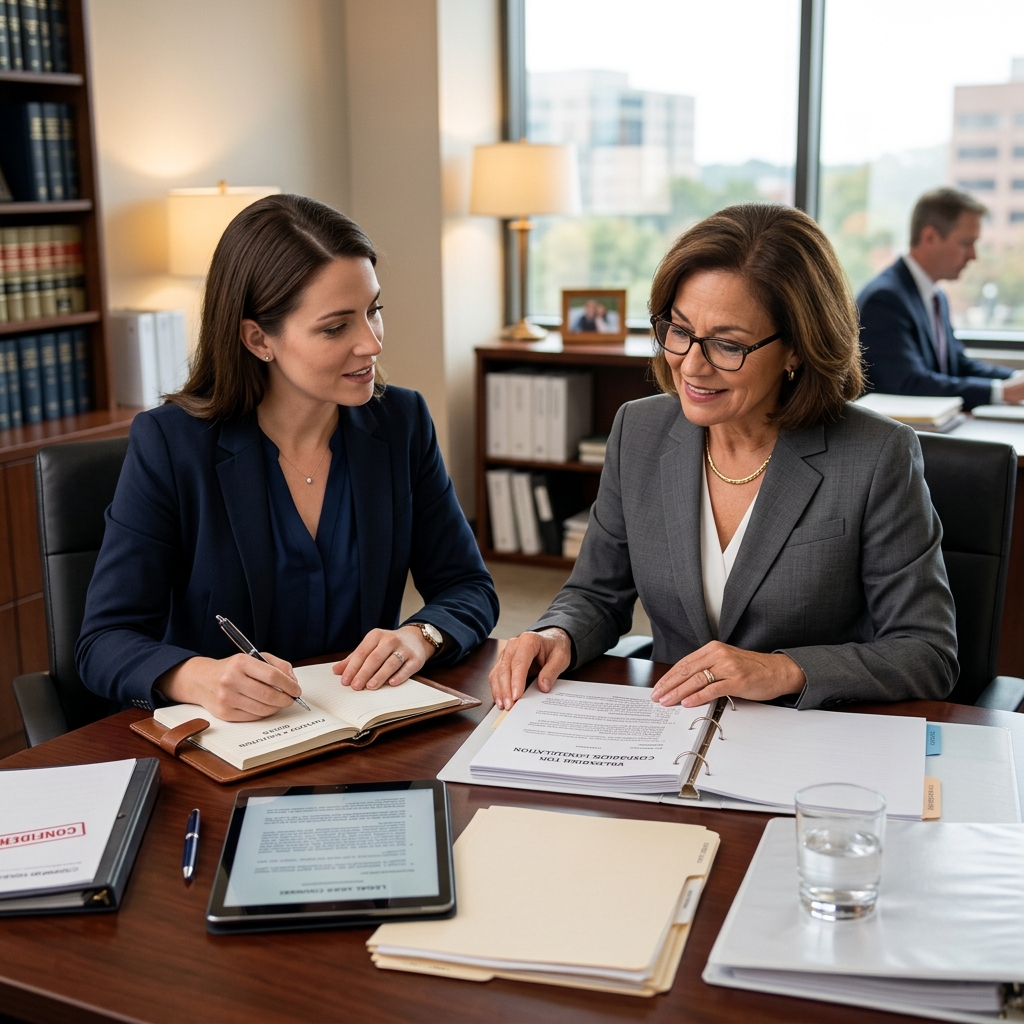
Navigating child custody and visitation is emotionally draining and legally complex. A well-prepared consultation with a family law attorney can help you understand your options, protect your rights, and focus the case on what matters most: your child’s well-being.
This guide explains how to prepare for your first custody and visitation meeting with a lawyer, what to bring, how to organize your information, and how courts generally evaluate parenting arrangements.
Understanding the Purpose of a Custody Consultation
A child custody and visitation consultation is usually your first in-depth meeting with a family law attorney about parenting time, decision-making, and where your child will live. The attorney uses this meeting to assess your situation, identify legal issues, and outline possible strategies.
During the consultation, you will typically discuss:
- Your current parenting schedule and informal arrangements.
- Any existing court orders involving custody, visitation, or support.
- Concerns about safety, stability, or the other parent’s behavior, if applicable.
- Your goals for custody and visitation going forward.
Arriving prepared lets the attorney spend less time piecing together basic facts and more time analyzing the law and designing a plan that fits your family.
Key Legal Concepts You Should Know
Before your consultation, it helps to understand some core legal concepts that commonly arise in custody and visitation matters.
| Term | What It Means |
|---|---|
| Legal custody | Authority to make major decisions about the child’s education, healthcare, religion, and general welfare. |
| Physical custody | Where the child lives day to day and who provides daily care and supervision. |
| Sole custody | One parent has primary or exclusive legal and/or physical custody. |
| Joint custody | Parents share legal and/or physical custody, often with a detailed schedule for parenting time. |
| Visitation / parenting time | The specific schedule when the child spends time with the non-residential parent, sometimes supervised if safety is a concern. |
| Best interest of the child | The guiding legal standard courts use to decide custody and visitation based on the child’s health, safety, and emotional needs. |
Most courts prefer arrangements that encourage frequent and continuing contact with both parents, as long as it is safe and serves the child’s best interests.
Preparing Essential Documents and Records
One of the most important steps before your consultation is gathering and organizing documents. These materials help the attorney understand your history and evaluate what evidence might matter if your case goes to court.
Existing Legal Documents
Bring copies of any legal papers related to your child or your relationship with the other parent.
- Current or prior custody and visitation orders.
- Divorce decrees or separation agreements mentioning parenting arrangements.
- Child support orders and recent payment records.
- Restraining orders, protection orders, or police reports, if safety has been an issue.
- Any pending court filings (complaints, motions, or responses).
Financial Information
Because custody and parenting time often intersect with child support and the ability to provide a stable environment, your attorney will likely ask for basic financial data.
- Recent pay stubs and proof of income.
- Tax returns from the last one to two years.
- Bank statements and investment account summaries.
- Rent or mortgage statements and utility bills.
- Records of childcare costs, school fees, and health insurance premiums for your child.
Records Showing Your Involvement with Your Child
Courts often look at which parent has been consistently involved with the child’s daily life and important events. Bring documentation that reflects your role:
- School records, report cards, and emails from teachers or administrators.
- Medical and dental appointment records, including who scheduled and attended visits.
- Documents related to therapy or special needs services your child receives.
- Evidence of extracurricular involvement, such as sports, clubs, music lessons, or religious activities.
- Calendars showing parenting time, holidays, and major events you attended.
Quality matters more than quantity: a small number of clear, relevant documents is more useful than stacks of unsorted papers.
Communication and Behavior Records
If your concerns involve missed visits, poor communication, or problematic behavior by the other parent, documentation can be important.
- Text messages, emails, or messages from co-parenting apps regarding schedule changes, cancellations, or disputes.
- Logs of visitation, including late arrivals, no-shows, or refusals.
- Screenshots of social media posts that relate directly to parenting or safety concerns.
- Police reports or child-protective services records, if applicable.
Remember that your own messages may be reviewed by the court. Avoid hostile or inflammatory language, and keep communication focused on the child.
Organizing Your Information Before the Meeting
An attorney can work more efficiently when your information is clear and organized. Consider preparing a brief written summary before your consultation.
Create a Family Snapshot
Outline key details about your family in one or two pages:
- Names and ages of your children.
- Current living arrangements (who lives where, and with whom).
- Basic description of the current parenting schedule, even if it is informal.
- Any major health, educational, or special needs issues.
Describe Your Child’s Routine
Courts and attorneys often want to understand what day-to-day life looks like for your child.
- Wake-up and bedtime routines.
- School schedule and transportation (who drops off and picks up).
- Homework supervision and academic support.
- Meals, activities, and time spent with each parent.
Specific examples, like “I take our child to school and attend parent-teacher conferences,” are more helpful than general claims.
Clarify Your Goals
Decide what you hope to achieve through the custody and visitation process before you meet with the attorney.
- Whether you seek joint or sole legal custody.
- Your preferred parenting time schedule (weekdays, weekends, holidays, vacations).
- Any safety conditions you consider necessary, such as supervised visits.
- How you would like to handle major decisions about schooling and healthcare.
Having realistic and child-centered goals helps the attorney evaluate whether negotiation, mediation, or court involvement is the most appropriate path.
Questions to Ask Your Attorney During the Consultation
A consultation is not only for the lawyer to learn about your case; it is also your opportunity to understand the law, the process, and the attorney’s role.
Consider bringing a written list of questions so you don’t forget important topics.
- Process and timeline: “What steps are involved in a custody and visitation case, and how long do they usually take in this court?”
- Legal standards: “How does our state apply the ‘best interest of the child’ standard, and what factors are most important?”
- Evidence: “Which documents or witnesses are most helpful in my situation, and what should I avoid bringing?”
- Negotiation vs. litigation: “Is it realistic to resolve this through agreement or mediation, or is a court hearing likely?”
- Communication with the other parent: “How should I communicate with my co-parent while the case is pending?”
- Risks and strengths: “What do you see as the strongest and weakest parts of my case?”
- Fees and expectations: “How do you bill for your services, and what will you expect from me as a client?”
Agreement, Mediation, and Court Orders
There are generally two ways custody and visitation arrangements are established: by agreement between the parents or by court order after a judge’s decision.
Resolving Custody by Agreement
Many families reach parenting arrangements without a full trial, sometimes with the help of mediation or collaborative law.
- Parents discuss custody and visitation and agree on a schedule, decision-making authority, and communication guidelines.
- A mediator or attorney helps convert the agreement into clear written terms.
- The agreement is submitted to the court so it can be incorporated into a formal order, making it enforceable.
Negotiated agreements can give parents more control over the details and reduce conflict and cost, as long as both parents are able to communicate and put the child’s needs first.
When a Court Must Decide
If parents cannot agree on custody or parenting time, one party can ask the court to hold a hearing and decide.
- The parties file appropriate forms to request a hearing and propose their preferred arrangements.
- The judge evaluates evidence and testimony using the “best interest” standard.
- A court order is issued that sets custody, visitation, and related requirements.
- Orders can later be modified if there is a significant change in circumstances, such as relocation or evolving needs of the child.
Your attorney will discuss whether a negotiated resolution is realistic and, if not, how to prepare for a potential custody hearing.
How Courts Evaluate Custody and Visitation
Although specifics differ across jurisdictions, courts commonly consider a range of factors to determine what arrangement serves the child’s best interests.
- Safety and stability: The child’s physical safety, emotional security, and stability of each home environment.
- Parental involvement: Each parent’s history of caring for the child’s daily and long-term needs.
- Co-parenting ability: Willingness to support the child’s relationship with the other parent and communicate respectfully.
- Health and special needs: The child’s medical, developmental, or educational needs and how each parent addresses them.
- History of abuse or neglect: Evidence of domestic violence, substance abuse, or other serious concerns, where applicable.
- Child’s preferences: In some jurisdictions and at certain ages, the court may consider the child’s wishes, balanced against other factors.
Focusing your case on these child-centered factors during the consultation helps your attorney align your strategy with what courts typically look for.
Working Effectively with Your Attorney
Your relationship with your lawyer is a partnership. How you prepare and behave can significantly influence the effectiveness of that partnership.
Be Honest and Complete
Share all relevant information, including facts that may seem unfavorable. Attorneys can only protect your interests if they understand the full picture.
- Disclose prior arrests, investigations, or protective orders involving you or the other parent.
- Explain any past lapses in parenting time and the reasons behind them.
- Mention health conditions or work schedules that might affect your availability.
Hidden information often emerges later and can damage your credibility in court.
Stay Child-Focused, Not Conflict-Focused
Courts respond better to parents who emphasize what they can provide and how they meet their child’s needs, rather than attacking the other parent.
- Describe how you support your child’s emotional and physical well-being.
- Show willingness to encourage a healthy relationship with the other parent when it is safe.
- Avoid speculation, exaggeration, or unsupported accusations.
Follow Professional Guidance
Your attorney may advise you to adjust certain behaviors, such as limiting social media use, keeping communication neutral, or documenting events differently. Treat this guidance seriously, as it is designed to protect both you and your child.
Practical FAQs About Custody & Visitation Consultations
How long does a typical custody consultation last?
Initial consultations vary by attorney, but they commonly last between 30 minutes and 90 minutes. Complex cases or situations involving safety concerns may require more than one meeting.
Do I need to bring my child to the consultation?
In most situations, you should not bring your child to the consultation. The meeting is focused on legal strategy and adult-level discussion. If your attorney believes meeting the child is appropriate, it will usually happen at a different time and setting.
What if I don’t have all my documents ready?
You can still benefit from a consultation even if your paperwork is incomplete. Bring what you have and ask the attorney which additional documents to gather. Many lawyers prefer to review key records after the initial meeting once they understand the case.
Is mediation always required before going to court?
Not always. Some jurisdictions require mediation or parenting classes before a contested hearing, while others do not. Your attorney can explain the local rules and whether mediation could help in your particular situation.
Can custody orders be changed later?
Yes. Most custody and visitation orders can be modified if there is a substantial change in circumstances, such as relocation, evolving needs of the child, or significant changes in a parent’s stability. Your attorney can help you understand when a modification request is appropriate.
Taking the Next Step
Preparing thoroughly for your child custody and visitation consultation gives you a clearer understanding of the process and allows your attorney to focus on strategy rather than basic fact-finding. By organizing records, clarifying your goals, and keeping the focus on your child’s best interests, you lay the groundwork for more effective advocacy—whether your case is resolved through agreement, mediation, or a court hearing.
References
- How to Prepare for Your Child Custody & Visitation Consultation — LegalMatch. 2023-05-10. https://www.legalmatch.com/law-library/article/how-to-prepare-for-your-child-custody-visitation-consultation.html
- A guide on what to bring to a child custody consultation — Albin Law Group. 2022-08-15. https://www.albinlawgroup.com/blog/what-to-bring-to-a-child-custody-consultation/
- How to reach child custody and support agreements — California Courts Self-Help. 2022-11-30. https://selfhelp.courts.ca.gov/create-agreements-child-custody-and-support
- Custody/Visitation – Family and Juvenile — Mississippi Legal Services. 2021-06-01. https://www.mslegalservices.org/issues/family-and-juvenile/custodyvisitation
- How to Prepare for a Child Custody Hearing — Westchester Divorce Attorney. 2023-03-20. https://www.westchesterdivorceattorney.com/how-to-prepare-for-a-child-custody-hearing
- How to Prepare for a Custody Hearing in Kentucky — Ashley Larmour, Attorney at Law. 2023-01-10. https://www.ashleylarmour.com/how-to-prepare-for-custody-hearing-kentucky
- How to Prepare for Your Custody Hearing in Virginia — Collins Family Law Group. 2022-09-05. https://collinsfamilylawpc.com/how-to-prepare-for-your-custody-hearing-in-virginia/
Similar Articles








Read full bio of Sneha Tete


