
Police Scanner Apps: Legal Guide For 2025, State Laws Explained
Understand when listening is legal, when it becomes a crime, and how police scanner apps fit into U.S. federal and state law.
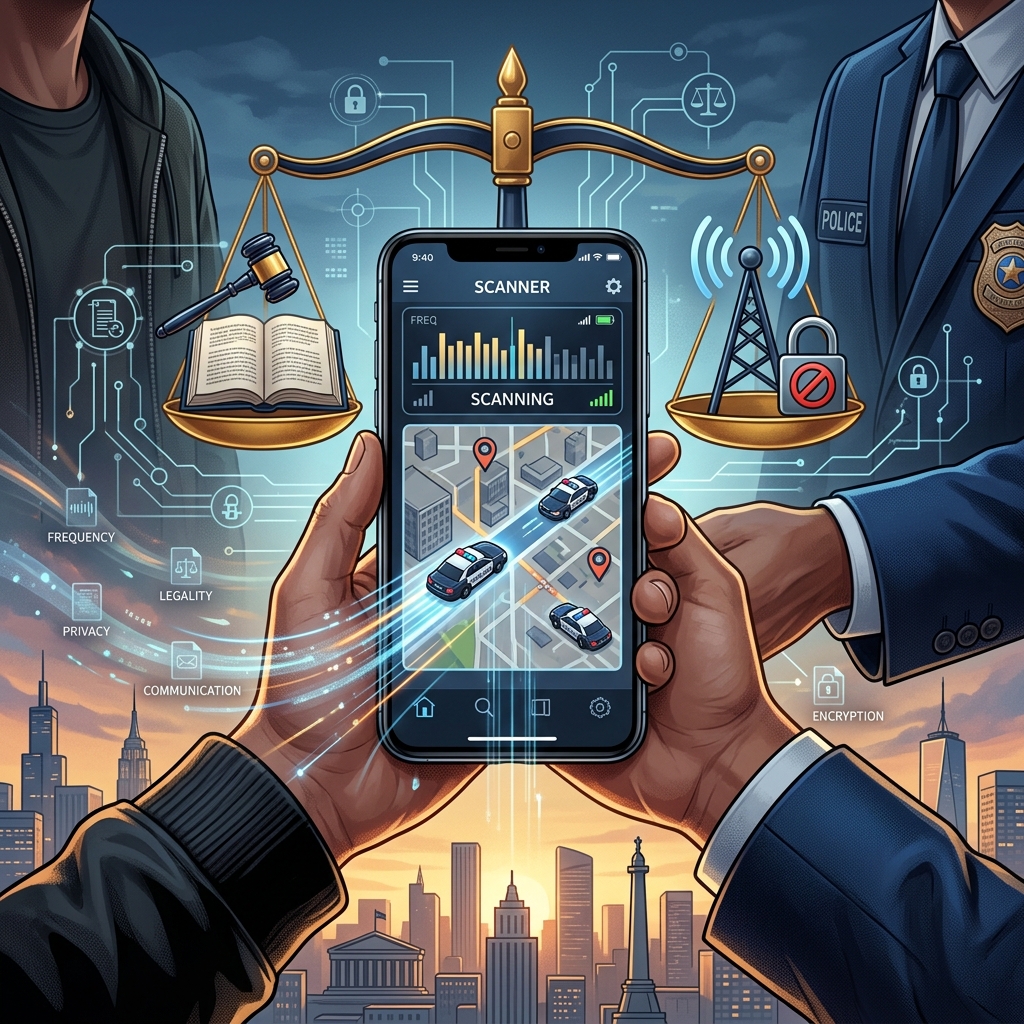
Police scanner apps have turned almost any smartphone into a potential window onto real-time police and emergency radio traffic. Curious residents, true crime fans, amateur reporters, and even aspiring storm chasers often use these apps to follow what is happening in their communities. But the crucial question many people overlook is whether using a police scanner or scanner app is always legal.
The answer is nuanced. Under U.S. federal law, listening to most unencrypted radio transmissions is generally permitted, but a web of state laws and criminal-use provisions can make the same activity illegal in specific situations. Understanding this combination of federal rules, state statutes, and your own intended use is essential to avoid unintentionally committing a crime.
Key Takeaways at a Glance
- Owning and listening to a police scanner is generally legal under U.S. federal law, so long as the communications are unencrypted public safety transmissions.
- Some states criminalize mobile use of scanners in vehicles without specific exemptions or licenses.
- Many states add extra penalties if a scanner or app is used while committing a crime or to evade arrest.
- Federal law makes it illegal to intercept or decode cellular, scrambled, or encrypted communication, and the FCC restricts sale of devices capable of doing so.
- Police scanner apps typically stream already-public feeds, but using what you hear to help commit a crime can still be prosecuted.
How Police Scanner Apps Work
Traditional police scanners are dedicated radio receivers that tune into public safety frequencies used by law enforcement, fire, EMS, and other agencies. Police scanner apps provide a similar experience, but instead of directly receiving radio waves, they stream audio feeds from volunteers and organizations who operate physical scanners connected to the internet.
In practical terms:
- Your phone does not act as a radio receiver in most apps; it plays back an audio stream.
- The underlying radio monitoring is performed by another person or system running a scanner.
- The transmissions are generally limited to unencrypted public safety channels.
This technical structure is important legally, because it means many apps are not themselves intercepting radio signals in the way a hardware scanner does. Instead, they redistribute audio from transmissions that are already publicly accessible.
Federal Law: What Is Allowed and What Is Not
At the federal level, several statutes shape what you can and cannot do with police scanners and related devices.
The Communications Act and Public Airwaves
The Communications Act of 1934 treats the radio spectrum as a public resource and allows the public to monitor unencrypted radio communications that are not specifically protected, which includes most police, fire, EMS, aviation, and rail traffic. Listening alone, without more, typically does not violate federal law when the transmission is readily available to the general public.
However, the same law includes Section 705, which limits the unauthorized publication or use of intercepted radio communications for personal or commercial advantage. In practice, this means:
- Mere listening to scanner traffic is usually lawful under Section 705.
- Using the information for your own benefit or another person’s benefit, or widely disseminating it, could technically violate Section 705, although enforcement in news media contexts has been rare.
The Electronic Communications Privacy Act (ECPA)
The Electronic Communications Privacy Act and related provisions of the federal Wiretap Act generally prohibit intercepting or decoding certain protected communications, such as cellular calls and scrambled or encrypted transmissions.
In the scanner context, that means:
- You may listen to unencrypted police and emergency radio traffic that is readily accessible to the public.
- You may not lawfully decode encrypted public safety channels, cellular transmissions, or protected communications, even with sophisticated equipment.
FCC Rules on Scanner Equipment
The Federal Communications Commission (FCC) enforces technical limits on radio scanning equipment. Federal regulations prohibit the FCC from authorizing scanners that:
- Can receive frequencies dedicated to domestic cellular services,
- Can be readily modified by users to intercept cellular communications, or
- Are easily altered to convert certain digital transmissions into voice audio.
It is illegal in the United States to manufacture, import, sell, or lease scanner equipment that violates these constraints. These rules target the hardware side of scanning but indirectly influence what the average user can reasonably access.
State Laws: Where Things Get Complicated
Even if federal law allows you to listen to unencrypted public safety communications, states can still impose their own restrictions. These state-level statutes often focus on the location of the scanner (especially in vehicles) and the purpose for which it is used.
Common State-Level Restrictions
Across the United States, three broad patterns appear in state law:
- Mobile scanner bans: Some states prohibit equipping a motor vehicle with a police scanner or similar receiver, unless the user has a valid exemption such as a law enforcement role or an amateur (HAM) radio license.
- Criminal-use enhancements: Many states increase penalties when a scanner is used while committing or attempting to commit a crime, treating it as a tool that facilitates the offense.
- Driving-related restrictions: Certain jurisdictions bar using a scanner or scanner app while operating a motor vehicle, similar to bans on texting or handheld phone use.
Illustrative Example: State Restrictions on Vehicle Scanners
Some states explicitly prohibit installing or using police radio receivers in vehicles except for specified categories of people. For example, a state statute may say that no person may equip any motor vehicle with a receiver capable of picking up police emergency frequencies, except for peace officers, state patrol members, or holders of certain radio licenses.
Other laws create a separate offense for possessing or using a scanner during the commission of a felony. For instance, a statute may provide that anyone who uses a device capable of receiving police transmissions while committing a felony can be charged with an additional felony, carrying an extra prison term and fine.
| Scenario | Federal Law | Common State Approach |
|---|---|---|
| Owning a scanner at home | Generally legal for unencrypted public safety channels. | Legal in nearly all states. |
| Using a scanner installed in a car | Not specifically banned at federal level. | Illegal or restricted in several states without exemptions or licenses. |
| Using a scanner or app while committing a felony | No separate federal scanner-specific enhancement. | Often treated as a separate offense or sentencing enhancement. |
| Listening to encrypted or cellular communications | Generally prohibited by ECPA/Wiretap Act. | State law may add penalties for unlawful interception or disclosure. |
Are Police Scanner Apps Treated Differently from Hardware Scanners?
Legally, the distinction between a dedicated radio scanner and a phone app seems significant, but many statutes were written before widespread smartphone adoption and therefore do not refer to apps by name. Instead, they focus on the function of the device: receiving police communications.
Courts and enforcement agencies are likely to look at what the device actually does:
- If law targets “radio equipment” capable of receiving police frequencies, a phone app that only streams audio from another source may fall into a gray area.
- However, some laws are written broadly enough to cover any “device” capable of receiving police communications, which could include smartphones with scanner apps installed.
- Even if the app itself is technically outside the original scope, using it to facilitate a crime can still be prosecuted under general criminal statutes or scanner-specific enhancement laws.
Moreover, as a matter of policy, some public safety agencies have responded to the widespread availability of scanner apps by moving more of their operations to encrypted radio systems, which are not legally accessible for casual listening.
When Listening Crosses the Line into Criminal Conduct
Simply listening to scanner traffic is rarely the end of the legal analysis. A key factor is how you use the information you hear.
Using Scanner Information to Commit a Crime
Many states treat the use of a police scanner or app during the commission of a crime as an aggravating factor. Legislatures view scanners as tools that can help criminals avoid detection or coordinate their actions, such as acting as a lookout who monitors police movements.
Common patterns include:
- Making it a separate offense to possess or use a scanner during the commission or attempted commission of a felony, punishable by additional jail time and fines.
- Allowing courts to treat scanner use as a factor in sentencing enhancements for crimes like burglary, robbery, or drug trafficking.
Driving While Using a Scanner App
Some jurisdictions prohibit using a scanner or scanner app while operating a motor vehicle, regardless of the content. This is often justified as a traffic safety measure similar to bans on texting while driving. In addition, where statutes ban installing or operating a police receiver in a vehicle, having a scanner app actively monitoring police channels could arguably fall within the scope of those laws.
Publishing, Broadcasting, or Sharing Scanner Content
For journalists, citizen reporters, and social media users, another question arises: can you share what you hear over the scanner? Under Section 705 of the Communications Act, the mere interception of police or fire communications that are readily available to the public is allowed, but divulging or publishing their content for your or another person’s benefit can violate the statute.
However, case law such as the Supreme Court’s decision in Bartnicki v. Vopper has raised doubts about the constitutionality of some restrictions on publishing lawfully obtained communications in matters of public concern. Legal experts therefore view federal prosecution of broadcasters for airing scanner traffic as unlikely, though the statutory language technically remains in place.
Best Practices for Using Police Scanner Apps Legally
Because laws vary significantly by state and technology keeps evolving, there is no single rule that covers every situation. Still, several practical guidelines can reduce legal risk for most users:
- Know your state law: Look up specific scanner and communications statutes in your state, especially provisions involving mobile use or criminal enhancements.
- Limit use while driving: Avoid operating a scanner app while driving, especially in states known to restrict mobile scanners.
- Do not use scanners to assist crime: Never rely on scanner traffic to carry out or cover up illegal activity. Laws targeting such use can be severe.
- Respect encryption and privacy: If a channel is encrypted or scrambled, it is meant to be private. Trying to defeat that protection brings serious federal consequences.
- Consider the impact of sharing: Before posting or live-streaming scanner content, especially about ongoing incidents, think about legal restrictions and safety implications for victims, officers, and the public.
Frequently Asked Questions (FAQ)
Is it legal under U.S. federal law to listen to police radio?
Yes, federal law generally allows listening to unencrypted police, fire, EMS, and similar public safety communications that are readily accessible to the public. You may not, however, intercept encrypted or cellular communications.
Can I have a police scanner in my car?
It depends on your state. Federal law does not specifically ban car-mounted scanners, but some states prohibit installing or using scanners in vehicles unless you fall within particular exemptions (such as being a peace officer or licensed amateur radio operator). Check your state’s statutes before installing any scanner equipment in a vehicle.
Are police scanner apps legal to download and use?
Downloading and using a police scanner app to listen to public safety audio that is lawfully available is generally legal, especially when you are simply listening and not committing another offense. The legality can change if your state restricts mobile scanners in vehicles or if you use the app to help commit a crime.
Can I be charged with a crime for using a scanner while committing another offense?
Yes. Many states impose separate penalties if you possess or use a scanner or similar device during the commission or attempted commission of a felony, adding prison time and fines beyond the underlying offense.
Is it legal to post what I hear on a police scanner on social media?
Federal law allows listening to readily accessible radio communications but restricts the unauthorized divulgence of such content under Section 705 of the Communications Act. While enforcement against news outlets has been rare and constitutional questions exist, there is still some legal risk in rebroadcasting or exploiting scanner content, and the specifics may depend on the facts, your intent, and applicable state law.
Do I need a license to use a police scanner?
Federal law does not require a license merely to listen to unencrypted public safety communications. However, in certain states that restrict mobile scanners, having an amateur radio license or similar credential may qualify you for an exemption from vehicle-based scanner bans.
Why Law Around Police Scanners Keeps Changing
Police scanner laws are not static. Several forces drive ongoing change:
- Technological innovation: The move from analog radios to digital trunked systems and encryption forces lawmakers to revisit old statutes that assumed simple analog scanners.
- Smartphone ubiquity: The fact that nearly everyone carries an internet-connected device raises new questions about whether app-based listening should be treated differently from traditional hardware.
- Public safety concerns: Agencies sometimes respond to widely accessible scanner apps by encrypting more of their communications to protect officer safety, victim privacy, and tactical information.
- Transparency and accountability: Journalists and civil liberties advocates often argue for continued public access to key public safety channels, especially for monitoring major incidents and ensuring government accountability.
Because of these competing pressures, anyone who uses police scanners or apps regularly should periodically recheck both federal and state legal developments and, when in doubt, seek advice from a qualified attorney.
References
- Are Police Scanner Apps Illegal? — FindLaw Legal Blog, Criminal Defense. 2020-03-04. https://www.findlaw.com/legalblogs/criminal-defense/police-scanner-apps-may-be-criminal/
- Are Police Scanners Legal? State-by-State Guide — Zip Scanners. 2026-01-01 (updated). https://www.zipscanners.com/blogs/learn/are-police-scanners-legal
- Scanner App FAQ and Applicable Statutes — City of Red Wing, Minnesota (Official City Blog). 2018-10-29. https://www.redwingmn.gov/Blog.asp?IID=33&ARC=69
- Use of Information From Police Scanners — Radio Television Digital News Association (RTDNA). 2016-08-01. https://www.rtdna.org/use-of-information-from-police-scanners
Similar Articles








Read full bio of Sneha Tete




