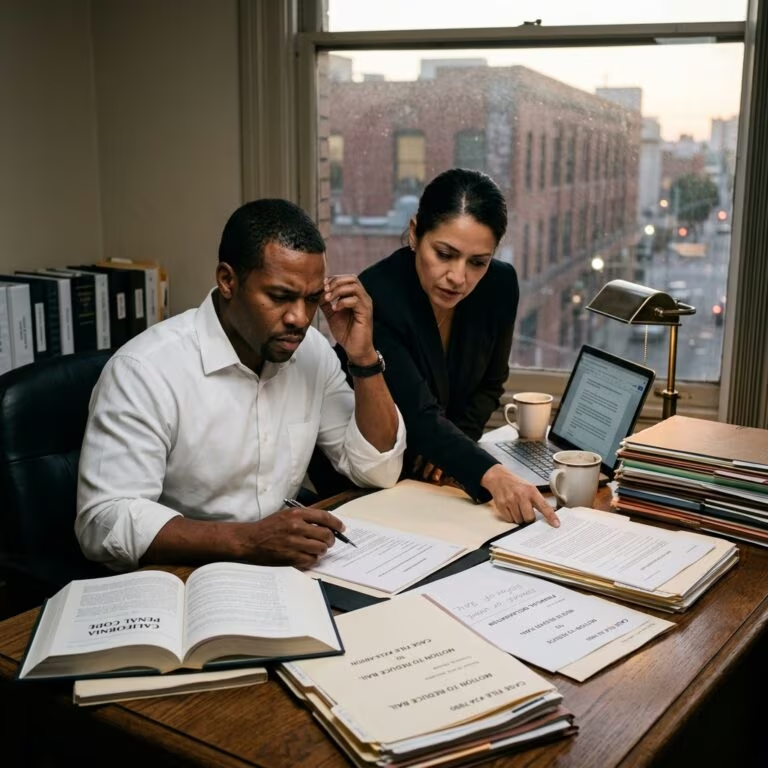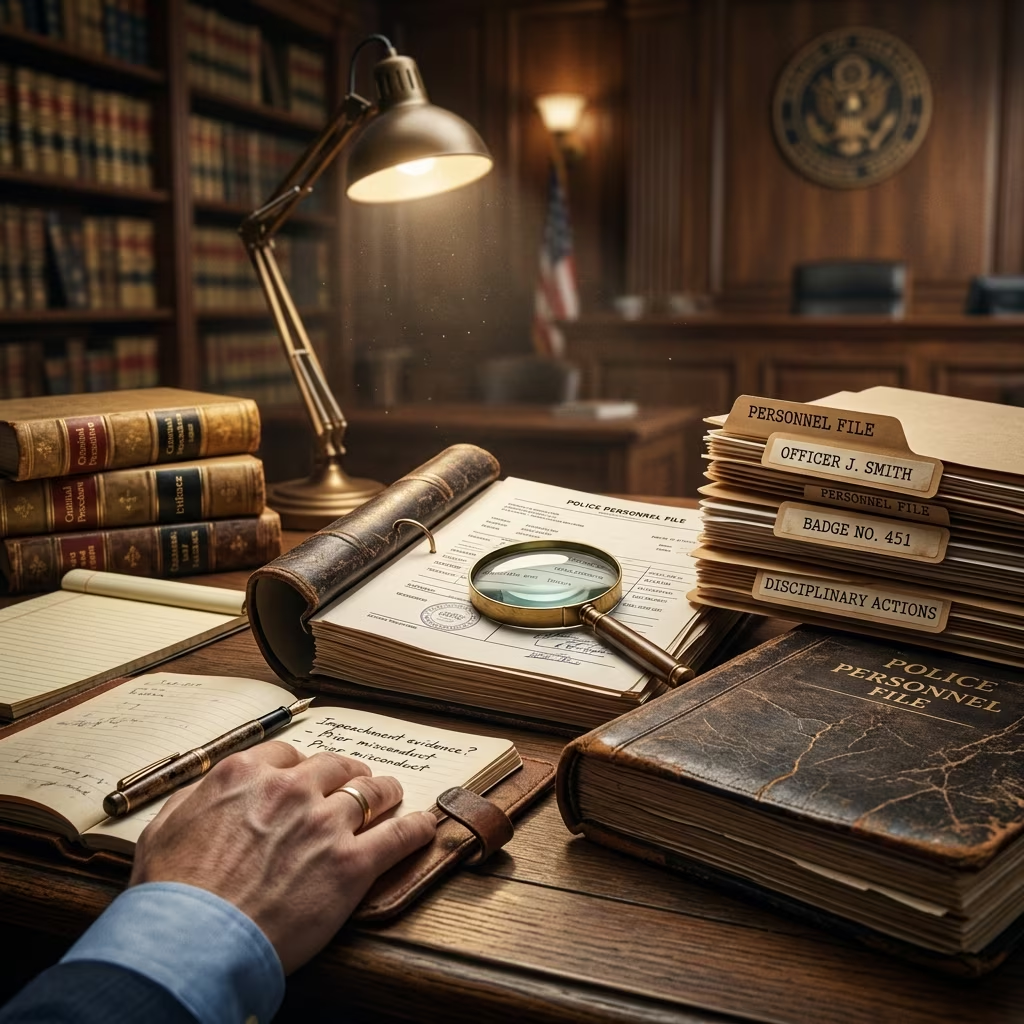
When a criminal case depends heavily on a police officer’s credibility, the contents of that officer’s personnel file can become crucial evidence. These files may include information about prior misconduct, dishonesty, or excessive force that can be used to challenge the officer’s testimony and support a defendant’s constitutional rights to a fair trial and to confront adverse witnesses.
This article explains how police personnel records are treated in criminal cases, which legal tools are used to access them, what limits and privileges apply, and how these files interact with broader rules of evidence and constitutional protections.
Understanding Police Personnel Records
Police personnel files are not just employment paperwork. They are typically a collection of documents maintained by a law enforcement agency and may include:
- Hiring and background information
- Performance evaluations and promotions
- Internal affairs investigations and disciplinary actions
- Citizen complaints and use-of-force reviews
- Commendations, awards, and training records
Many jurisdictions treat these records as confidential by default, particularly when they relate to disciplinary matters or internal investigations into officer conduct. These confidentiality rules are often codified in statutes governing peace officer personnel records and discovery in criminal proceedings.
Why Personnel Files Matter in Criminal Defense
Defense attorneys seek access to personnel files primarily to uncover material that can be used to:
- Impeach credibility – evidence that an officer has previously lied, falsified reports, or engaged in dishonesty in investigations can be powerful impeachment material.
- Show bias or motive – prior conflicts, discriminatory conduct, or patterns of targeting certain groups may show bias.
- Challenge use of force – prior sustained findings of excessive force can cast doubt on an officer’s description of a particular encounter.
- Support suppression motions – if there is evidence of a pattern of unlawful searches or arrests, it may support claims that a specific search or seizure in the case was unconstitutional.
- Locate witnesses – complaints and internal investigations often list witnesses whose testimony may help the defense.
At the same time, there is a competing interest in protecting officer privacy, safety, and the integrity of internal discipline systems. Courts and legislatures balance these interests through a combination of privileges, discovery procedures, and, increasingly, public transparency laws.
Confidentiality, Privilege and Statutory Protections
Most states adopt some version of a qualified governmental privilege for police personnel records. The basic structure usually includes:
- A statutory rule that personnel files and internal affairs records are confidential and cannot be disclosed in civil or criminal proceedings except under defined procedures.
- Definitions of what counts as a “personnel record,” often including evaluations, complaints, disciplinary findings, and internal investigation materials.
- Procedures that require court review before disclosure, such as a written motion and a threshold showing of relevance or “good cause” by the requesting party.
These rules do not usually create an absolute shield. Instead, they allow courts to weigh the defendant’s need for potentially exculpatory information against the government’s interest in confidentiality. Many states authorize in camera review—private examination of the records by the judge—to carry out this balance.
Defense Motions to Obtain Personnel Files
In many jurisdictions, a defendant cannot simply subpoena personnel records from the police department or demand them from the prosecutor. Instead, the defense must file a specialized motion (often called a Pitchess-type motion in states that follow the California model) to request access to peace officer personnel records.
Typical Requirements for a Defense Motion
Although terminology varies, defense counsel usually must include:
- Written notice to the law enforcement agency and the prosecutor stating that officer records are requested.
- Identification of the officer(s) whose records are sought, usually by name and agency.
- Specification of categories of misconduct that are relevant, such as dishonesty, fabrication of evidence, use of excessive force, or illegal searches.
- A supporting declaration or affidavit explaining why those categories may be relevant to the specific case, often grounded in the defendant’s version of events or contradictions in police reports.
Some statutes require a showing of “good cause” or a “reasonable belief” that the records contain information material to the defense. Courts generally do not permit fishing expeditions but require some connection between the alleged misconduct and the issues in the case.
In Camera Review by the Court
If the motion meets the threshold standard, the judge will often conduct an in camera review of the requested records:
- The police agency brings the requested files to the judge, not to the defense.
- The judge privately examines the records to see if any materials fall within the categories requested and appear relevant.
- Only materials deemed relevant and not covered by other privileges are ordered disclosed to the defense, sometimes with redactions.
This process is designed to protect sensitive information while ensuring defendants receive evidence that could affect the outcome of their case.
Public Records Laws and Expanding Transparency
In recent years, several states have moved towards greater transparency in police misconduct records through public records statutes. For example, California amended its law to require disclosure of certain officer misconduct and serious use-of-force records under the state’s public records act, independent of a court discovery motion.
| Category of Record | Disclosure Status | Typical Examples |
|---|---|---|
| Officer-involved shootings and deadly force | Disclosable after investigation or within a statutory timeline | Reports and findings on firearm discharges or force causing death/great bodily injury. |
| Sustained dishonesty | Disclosable | Findings that an officer lied in reports or investigations. |
| Sustained sexual assault against the public | Disclosable | Records of investigations and discipline for sexual misconduct involving on-duty authority. |
| Sustained discrimination, unlawful searches or arrests | Disclosable | Findings involving prejudice, discriminatory conduct, illegal searches, or unlawful arrests. |
These transparency laws supplement, but do not replace, criminal discovery procedures. A defense attorney may use both:
- File a public records request to obtain already-disclosable records of serious misconduct.
- File a targeted court motion to access other personnel information that remains confidential but may be critical to the defense.
Constitutional Disclosure Duties and Brady Material
Even where personnel files are statutorily confidential, prosecutors have a constitutional duty under Brady v. Maryland and related cases to disclose evidence that is favorable to the accused and material to guilt or punishment. That duty extends to information within law enforcement files, including personnel and internal affairs records, when they contain:
- Prior findings of dishonesty by a testifying officer
- Evidence of racial bias or discriminatory enforcement
- Misconduct directly related to the type of testimony being offered (for example, falsifying reports)
Some jurisdictions use a “Brady alert” system: agencies notify prosecutors when an officer’s personnel file may contain impeachment material, prompting the prosecutor to seek court guidance or disclosure. The prosecutor’s obligation is independent of whether the defense files a motion; it is rooted in due process, not just statutory discovery.
Limits on Disclosure and Redactions
Even when a court finds that some personnel records should be turned over, several limitations may apply:
- Privacy protections – personal identifiers (addresses, phone numbers, medical details) are often redacted to protect the officer and third parties.
- Safety concerns – information may be withheld if disclosure would pose a specific, articulable danger to an officer or another person.
- Ongoing investigations – agencies may be permitted to delay disclosure while an active criminal or administrative investigation remains open.
- Scope limits – courts typically order production only of records closely related to the categories of misconduct and time periods described in the motion.
At the same time, some statutes make clear that unsustained allegations and exonerated complaints can still be discoverable if the court finds them reasonably likely to lead to admissible evidence. The judge’s role is to filter what is genuinely relevant from the broader contents of the file.
Using Personnel File Information at Trial
Once defense counsel obtains records from a personnel file, they must still navigate the rules of evidence to use that information at trial. Common uses include:
- Cross-examining the officer about prior instances of dishonesty or misconduct relevant to credibility.
- Calling witnesses identified in prior complaints or internal affairs investigations.
- Introducing disciplinary findings to show a pattern of behavior or to challenge an officer’s description of events.
Court rules often limit the use of prior acts evidence; attorneys must show that the incidents are relevant to truthfulness or another material issue, and that their probative value is not substantially outweighed by the risk of confusion or unfair prejudice. Protective orders may restrict how counsel may share or publicize records obtained through discovery.
Practical Tips for Defendants and Families
Defendants and their families are frequently unaware that police personnel files may contain important information. While only a licensed attorney can file formal motions, there are practical steps a defendant can take:
- Document the incident thoroughly – write down your memory of events, including officer names, badge numbers, and statements made during the encounter.
- Share concerns early – tell your attorney if you believe the officer lied, used excessive force, or acted in a way that might connect to past complaints.
- Ask about public records – in states with strong transparency laws, your attorney may be able to obtain misconduct records even without court intervention.
- Respect confidentiality orders – if your lawyer obtains personnel records subject to a court order, do not share them publicly without legal advice.
Because each state’s laws differ, a local criminal defense lawyer is in the best position to advise on whether personnel file discovery is available and how it can be pursued.
Common Issues and Misunderstandings
Court practice around officer personnel files generates several recurring misunderstandings:
- Myth: All officer complaints are public
In many states, only certain categories of serious misconduct are public; other materials remain confidential and require a court motion. - Myth: The defense can just subpoena the file
Statutes often prohibit direct subpoenas and require specialized procedures and judicial review before any disclosure. - Myth: Only sustained complaints matter
Even unsustained or exonerated complaints may be ordered disclosed if a judge finds that they could lead to relevant evidence, particularly where the defense has specific reasons to believe the complaints were mishandled. - Myth: Prosecutors have full access to personnel files
In some jurisdictions, prosecutors do not automatically have access; they may receive only limited alerts and must also use formal procedures if they seek confidential records directly.
Frequently Asked Questions
Can a defendant see everything in an officer’s personnel file?
No. Even when a judge grants a defense motion, the court usually discloses only those portions of the file that are relevant to the case and not protected by other privileges or safety concerns. Sensitive personal information and materials unrelated to the issues in the case are commonly redacted or withheld.
Do public records laws eliminate the need for a court motion?
Not entirely. Public records laws often cover only specific categories of serious misconduct or use of force. If the defense seeks other types of information—such as certain internal evaluations or prior complaints that do not fall within those categories—a court motion and in camera review may still be required.
What happens if the prosecution does not disclose impeachment material from an officer’s file?
If the government fails to disclose material impeachment evidence that could reasonably affect the outcome of the trial, the conviction may be subject to reversal under constitutional standards derived from Brady and related cases. Courts will assess whether the nondisclosure undermines confidence in the verdict.
Can an officer resign to keep misconduct out of public view?
Some modern transparency statutes provide that records of specified misconduct remain disclosable even when the officer resigns before an investigation is completed. However, the exact rules vary by state, and resignation may still complicate how and when records become available.
Why does the judge review the records privately instead of giving them directly to the defense?
Private judicial review allows the court to protect privacy, ongoing investigations, and sensitive internal information while still ensuring that relevant, admissible evidence reaches the defense. This balances the defendant’s fair trial rights with the government’s legitimate confidentiality interests.
References
- California Further Expands Public Access To Law Enforcement Officers’ Personnel Files — Liebert Cassidy Whitmore. 2021-10-20. https://www.lcwlegal.com/news/california-further-expands-public-access-to-law-enforcement-officers-personnel-files/
- Obtaining Police Personnel Records to Aid the Defense — Honeychurch & Giambona, LLP. 2018-04-10. https://www.honeychurchlaw.com/obtaining-police-personnel-records-to-aid-the-defense/
- Police Transparency Handbook — First Amendment Coalition. 2023-06-01. https://firstamendmentcoalition.org/handbook/police-transparency-handbook/
- Certain Police Personnel Records No Longer Confidential — Best Best & Krieger LLP. 2019-01-02. https://bbklaw.com/resources/certain-police-personnel-records-no-longer-confide
- Obtaining Information from Law Enforcement Personnel Files: A Defense Attorney’s Perspective — California Lawyers Association. 2020-09-01. https://calawyers.org/litigation/obtaining-information-from-law-enforcement-personnel-files-a-defense-attorneys-perspective/