
OSHA’s New Heat Rules: Shade and Water for Outdoor Workers
A practical compliance guide to OSHA’s proposed heat standards on shade, water and rest for outdoor and indoor workplaces.
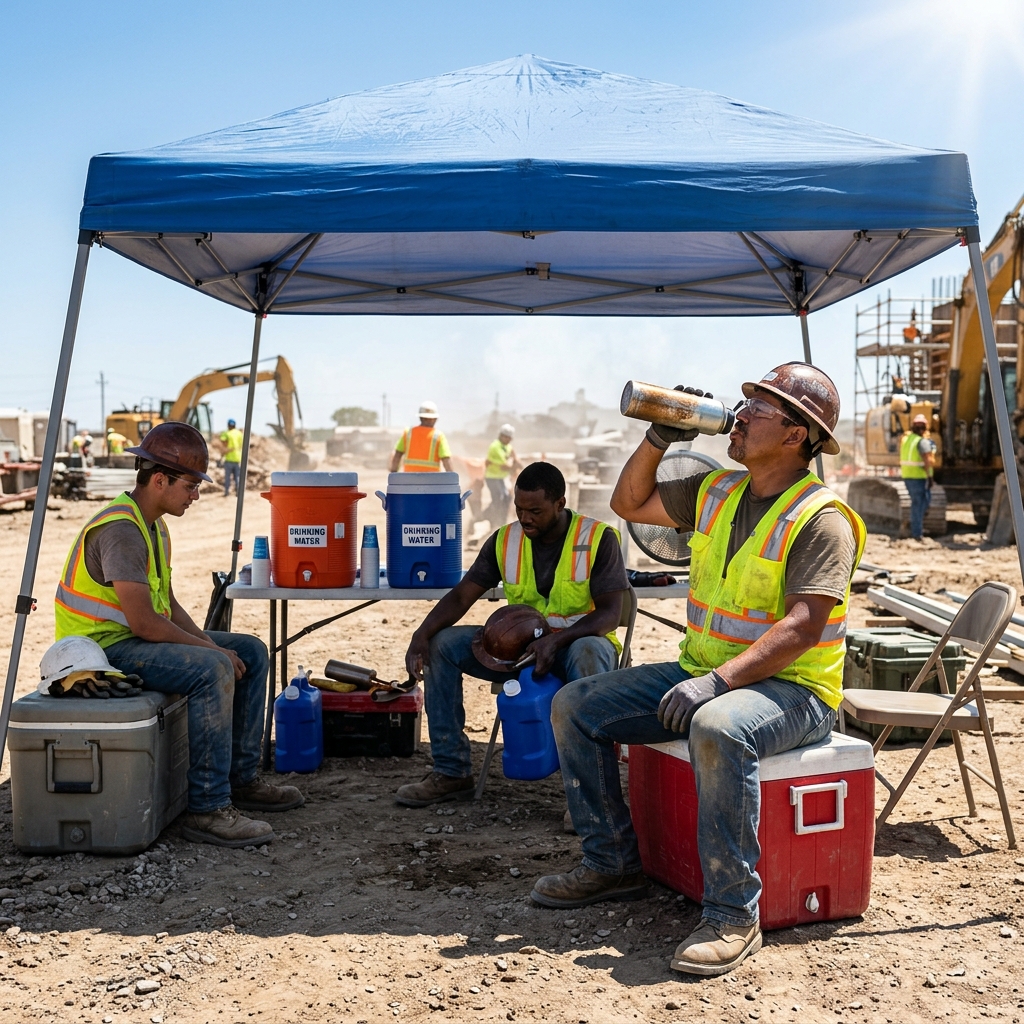
Heat exposure is no longer just a seasonal concern for employers; it is rapidly becoming a core compliance issue. The Occupational Safety and Health Administration (OSHA) has proposed a first-of-its-kind rule that would formalize national standards for heat safety, including requirements for water, shade, and rest breaks for outdoor and many indoor workers. These rules aim to reduce heat-related illnesses and fatalities by requiring employers to plan ahead, monitor conditions, and respond promptly when temperatures climb.
This article explains what small businesses and other employers need to know about OSHA’s evolving approach to heat stress. It focuses on practical steps to provide shade and water, comply with trigger thresholds, and integrate heat safety into everyday operations without overwhelming limited resources.
Why Heat Safety Is Becoming a Core Compliance Priority
Heat-related illnesses—from mild heat cramps to life-threatening heat stroke—are preventable when employers manage temperature, work pace, and access to cooling resources. Yet each year, workers in construction, agriculture, landscaping, delivery services, warehousing and other sectors experience serious incidents during hot spells. OSHA has historically relied on the General Duty Clause to enforce heat safety, but the new proposal would codify specific expectations.
Several trends explain OSHA’s heightened focus on heat:
- Increasing frequency and intensity of heat waves, lengthening the period each year when workers face hazardous conditions.
- More outdoor and non-air-conditioned work settings, including warehouses, greenhouses, food service, and temporary event venues.
- Documented preventability of heat illness through water, rest, shade and acclimatization programs.
OSHA now emphasizes the simple prevention message: Water. Rest. Shade. Employers must provide cool drinking water, scheduled breaks, and a cool or shaded location so workers can recover from heat stress.
Overview of OSHA’s Proposed National Heat Standard
The proposed OSHA heat rule would create a dedicated standard for heat injury and illness prevention covering both outdoor and many indoor workplaces where workers can experience dangerous heat exposure. While still in the rulemaking process, the proposal outlines a framework that is likely to shape national expectations even before final adoption.
At the heart of the proposal is a requirement that covered employers establish a Heat Injury and Illness Prevention Plan (HIIPP) tailored to their worksites. This plan must describe how the employer detects, monitors, and mitigates heat-related hazards, including specific arrangements for water, shade, rest, and emergency response.
Initial and High Heat Triggers
The proposed rule is built around two main heat triggers, defined using the heat index (a combined measure of temperature and humidity):
| Trigger Level | Heat Index Threshold | Key Requirements |
|---|---|---|
| Initial Heat Trigger | 80°F or higher for over 15 minutes in any hour | Water access; shaded or indoor rest areas; acclimatization; communication; basic monitoring. |
| High Heat Trigger | 90°F or higher heat index | More frequent paid breaks; buddy system or observation; hazard alerts; intensified monitoring. |
These triggers aim to ensure employers respond before conditions become extreme, rather than waiting until workers already show severe symptoms.
Water Requirements: Hydration as the First Line of Defense
OSHA’s guidance and proposed rule make clear that cool, potable water is a basic obligation when workers face heat exposure. Proper hydration is essential to prevent heat-related illness, especially when physical exertion, heavy protective clothing or direct sun are involved.
Quantity and Accessibility Expectations
Under the proposed standard, when the initial heat trigger is met, employers would need to provide at least one quart of drinking water per employee per hour in suitably cool condition. This aligns with approaches taken by states such as California and Washington, which already require similar quantities for outdoor work.
OSHA’s existing guidance further emphasizes that water must be:
- Cool enough to encourage regular drinking, but not excessively cold.
- Potable (meeting public health drinking water standards) and free of charge to workers.
- Close to work areas, familiar to workers, and easy to access throughout the shift.
Workers should be encouraged to drink small amounts of water frequently rather than waiting until they feel thirsty. For jobs lasting more than two hours, electrolyte-containing beverages (such as appropriate sports drinks) may also be provided, especially when heavy sweating is anticipated.
Employer Action Tips on Hydration
- Place water stations within a short walking distance of each work zone.
- Use insulated containers or coolers to keep water at a comfortable temperature.
- Train supervisors to remind workers regularly to drink water, particularly early in the shift.
- Monitor consumption levels during heat waves to ensure the one-quart-per-hour benchmark is realistically achievable.
Shade and Cool Areas: Allowing the Body to Recover
Heat exposures are especially dangerous when workers have no place to cool down. OSHA’s guidance stresses that workers must be able to take breaks in a cool location, which may be a shaded outdoor area, an air-conditioned vehicle, a nearby building, or a tent with fans and misting devices. Where indoor heat is high, employers must provide access to a cooler zone away from ovens, furnaces or other heat sources.
Trigger-Based Shade Requirements
Under the proposed heat standard, once the heat index meets the initial trigger, employers must provide access to shaded and/or indoor rest areas and allow paid rest breaks in those areas. States that already regulate heat, such as California, require shade to be available when temperatures exceed 80°F and accessible whenever employees feel the need to cool down.
Key principles drawn from these rules include:
- Shade must be present or quickly accessible when temperatures reach or exceed defined thresholds.
- Cool-down areas must be large enough for workers on break to sit comfortably without crowding.
- Shade should be as close as practicable to the work area to avoid long, exhausting walks.
Designing Effective Shade Solutions
Small businesses have flexibility in how they provide shade, as long as the result keeps workers out of direct sun and reduces radiant heat. Practical options include:
- Pop-up canopies or tarps positioned near work activity zones.
- Use of existing structures, such as garages, sheds or covered loading docks.
- Air-conditioned vehicles used as cooling stations during breaks.
- Portable shade structures for mobile crews (e.g., landscaping, utility work).
When indoor temperatures are high—such as in warehouses or manufacturing facilities—employers should designate a cooler area with ventilation, fans or air conditioning where breaks can occur.
Rest Breaks and Work Practices at Higher Heat Levels
Providing shade and water is not enough if workers are pushed to maintain the same pace under extreme heat. OSHA recommends that employers require breaks and lengthen them as heat stress rises. The proposed rule codifies this concept by setting more demanding requirements at the high heat trigger (90°F heat index).
Rest Break Requirements at 90°F and Above
Once the high heat trigger is met, employers would need to:
- Allow 15-minute paid breaks every two hours in designated cool or shaded areas.
- Implement a buddy system or supervisor observation to watch for signs and symptoms of heat illness in workers.
- Provide a hazard alert reminding workers to drink water and take breaks.
In practice, employers may go beyond these minimums by further adjusting schedules, rotating workers, and temporarily reducing physically demanding tasks during peak heat hours.
Adjusting Work Practices
Effective heat management often includes changes to how work is organized:
- Scheduling the most strenuous tasks during the cooler parts of the day (early morning or evening).
- Shortening shifts or adding extra crew members so workloads can be shared.
- Using mechanical aids or machinery to reduce physical exertion on the hottest days.
- Relaxing productivity expectations temporarily to prioritize safety.
These interventions can significantly reduce heat strain when combined with water, shade, and rest.
Acclimatization and Training: Preparing Workers for the Heat
Many heat-related illnesses occur during a worker’s first days in a hot environment, before the body has adjusted. OSHA recommends acclimatization—gradually increasing exposure to heat—along with targeted training on symptoms and prevention.
Acclimatization Programs
The proposed OSHA rule would require employers to implement acclimatization plans for new and returning workers during their first week of work when heat triggers apply. OSHA’s guidance similarly advises employers to encourage workers during their initial days in heat to:
- Consume adequate fluids (water and appropriate sports drinks).
- Work shorter shifts with frequent breaks.
- Quickly report and identify any heat illness symptoms.
An acclimatization plan typically looks like:
- Day 1–2: Light duties, shorter exposure periods, frequent monitoring.
- Day 3–4: Gradual increase in workload and time in heat.
- Day 5+: Full duties once the worker shows no signs of heat strain, with continued access to water and shade.
Training and Communication
Training must cover both prevention steps and emergency response. Employers should teach workers to recognize early signs of heat exhaustion (fatigue, dizziness, heavy sweating, nausea) and heat stroke (confusion, loss of consciousness, hot dry skin) and to respond by seeking shade, water, and medical help quickly.
Key elements of a training program include:
- How to use worksite water stations and shade areas.
- When and how to call for emergency assistance.
- Roles of supervisors and designated heat safety coordinators.
- Procedures for pausing work if a worker shows heat illness symptoms.
Regular two-way communication—via radios, phones, or face-to-face checks—is essential, especially when crews are dispersed or working in remote locations.
Learning from Existing State Standards
Several states, including California, have already implemented detailed heat illness prevention standards. These rules help illustrate what OSHA’s national framework may look like in practice and provide a model for proactive compliance.
California’s Heat Illness Prevention Model
California requires employers with outdoor workers to provide training, water, shade, and planning for heat emergencies. Key requirements include:
- Shade must be present when temperatures exceed 80°F, and workers may take a cool-down rest whenever they feel the need.
- Access to potable water that is fresh, suitably cool, and free of charge.
- Cool-down areas kept below 82°F, shielded from sun and radiant heat, and large enough for resting workers.
- Annual training on heat exposure symptoms and prevention, integrated into accident prevention programs.
These state rules demonstrate that structured water, shade, rest, and training requirements are workable, even for smaller employers, when advanced planning is in place.
Practical Compliance Roadmap for Small Businesses
For small employers, the key challenge is translating OSHA’s expectations into simple, repeatable procedures. The following roadmap offers a practical starting point.
Step 1: Assess Heat Risks and Workflows
- Identify which job tasks occur outdoors or in hot indoor environments.
- Note times of day and seasons when heat exposure is highest.
- Determine which workers are new, returning, or otherwise more vulnerable (e.g., health conditions, heavy PPE).
Step 2: Draft a Heat Injury and Illness Prevention Plan
- Specify how your business will provide water (location, quantity, responsible person).
- Describe shade or cool areas and how workers will access them.
- Outline break schedules based on heat triggers and job type.
- Include acclimatization steps for new and returning employees.
- Define emergency response procedures, including who calls for medical help and how work pauses.
Step 3: Establish Daily Monitoring and Communication
- Monitor local heat index forecasts and on-site conditions using weather apps or WBGT meters where feasible.
- Document when daily triggers (80°F, 90°F) are reached and what measures were implemented.
- Assign supervisors or a heat safety coordinator to conduct frequent check-ins.
Step 4: Train Supervisors and Workers
- Provide annual training on heat risks, symptoms, and proper use of water and shade.
- Use brief toolbox talks at the start of hot days to reinforce key messages.
- Ensure all workers know they can report symptoms without fear of retaliation.
Step 5: Review and Improve After Heat Events
- After heat waves or incidents, review what worked and what did not.
- Update the plan to address gaps in water access, shade coverage, or training.
- Include worker feedback on break schedules and cooling arrangements.
FAQs: Shade, Water, and OSHA’s Heat Rules
Do OSHA rules already require employers to provide water and shade?
OSHA guidance clearly requires employers to provide cool, potable water and access to cool or shaded areas for breaks when heat stress is present. The proposed heat standard would formalize these expectations as specific regulatory duties at defined heat index triggers.
What is the difference between OSHA guidance and a formal standard?
Guidance describes OSHA’s recommended practices and is often enforced through the General Duty Clause. A formal standard, such as the proposed heat rule, establishes explicit legal requirements that OSHA can enforce through inspections and citations.
At what temperature must employers start taking specific actions?
Under the proposed rule, the initial heat trigger occurs at a heat index of 80°F for at least 15 minutes in an hour, which activates requirements for water, shade access, and acclimatization. The high heat trigger at 90°F imposes more stringent break and monitoring duties. Some state standards, like California’s, already use similar temperature thresholds.
Do indoor employers also need to worry about these heat rules?
Yes. The proposed OSHA standard applies to both outdoor and many indoor environments where heat exposure could cause illness. Indoor employers may need to provide cooler break areas, increased air movement, or air conditioning to reduce heat exposure.
How can a small business afford these measures?
Most heat controls involve relatively modest costs: providing water coolers, low-cost shade structures, adjusted schedules, and basic training. These measures are generally far less expensive than the consequences of heat-related injuries, potential OSHA citations, and lost productivity.
References
- Heat – Standards — Occupational Safety and Health Administration (OSHA). 2024-06-18. https://www.osha.gov/heat-exposure/standards
- Heat – Water. Rest. Shade — Occupational Safety and Health Administration (OSHA). 2023-08-09. https://www.osha.gov/heat-exposure/water-rest-shade
- OSHA Proposes First of Its Kind Heat Regulations for Indoor and Outdoor Work — Honigman LLP. 2024-07-02. https://www.honigman.com/alert-2660
- Heat Illness Prevention in Outdoor Places of Employment (Section 3395) — California Division of Occupational Safety and Health (Cal/OSHA). 2023-05-01. https://www.dir.ca.gov/title8/3395.html
- Overview: Working in Outdoor and Indoor Heat Environments — Occupational Safety and Health Administration (OSHA). 2022-07-12. https://www.osha.gov/heat-exposure
- Employer Responsibilities for Protecting Employees from the Heat — ADP / SBSHRS. 2023-06-20. https://sbshrs.adpinfo.com/blog/employer-responsibilities-for-protecting-employees-from-the-heat
- OSHA Water Requirements: Employers to Provide Water — OSHA.com. 2023-04-15. https://www.osha.com/blog/water-requirements
Similar Articles








Read full bio of medha deb




