
North Carolina Custody Rules for Unmarried Parents
A practical legal guide to child custody, paternity, and visitation rights for unmarried parents navigating North Carolina family courts.
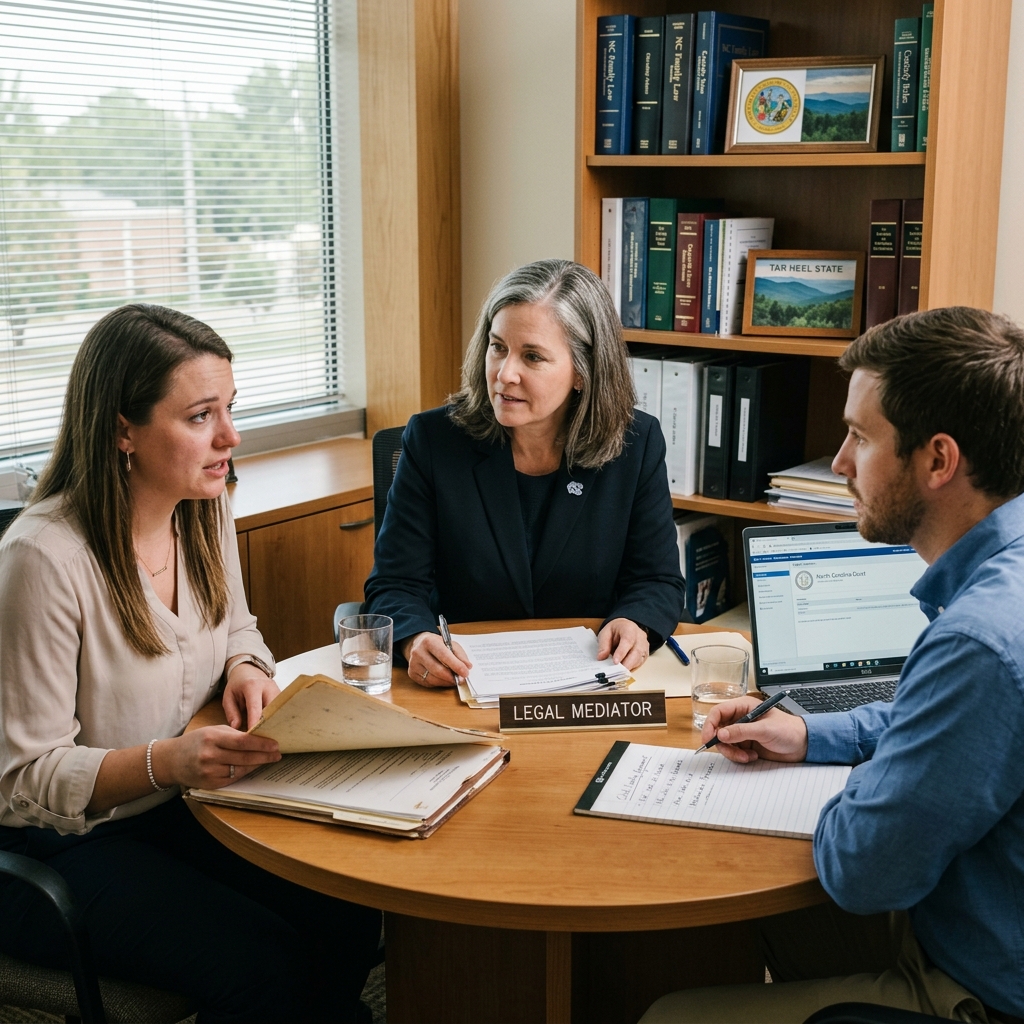
Unmarried parents in North Carolina often discover that child custody and visitation questions feel more complicated than they expected. The law does not require parents to be married to have rights and responsibilities toward their children, but it does treat issues like paternity, custody, and child support in specific ways that can surprise families.
This guide explains how North Carolina approaches custody for unmarried parents, what happens before and after paternity is established, how courts decide custody and visitation, and what steps you can take to protect your relationship with your child.
Key Principles for Unmarried Parents in North Carolina
North Carolina family law is built around several core ideas that apply equally to unmarried and married parents once legal parentage is established.
- Best interests of the child: Judges decide custody and visitation based on what arrangement best supports the child’s safety, stability, and well‑being, not on the marital status of the parents.
- Equal potential rights: A legally recognized mother and father can both seek custody and visitation; the law does not automatically prefer one parent because of gender or marital status.
- Legal parentage matters: For unmarried fathers, rights exist only after paternity is legally acknowledged or established through court proceedings.
- Child support and custody are related but separate: Financial responsibility and physical time with the child are decided in different legal processes, although one can influence the other.
Custody Before and After Paternity Is Established
When a child is born to unmarried parents, North Carolina distinguishes between the period before paternity is legally confirmed and the period after confirmation.
Before Legal Paternity: Why the Mother Usually Has Sole Custody
At birth, if the parents are not married and the father’s legal status has not yet been established, the law generally treats the birth mother as having primary custody of the child. She makes day‑to‑day decisions about the child’s care and may decide whether the alleged father can visit the child.
To be clear, this does not mean a biological father has no relationship or informal involvement, but until the law recognizes him as a parent, he:
- Cannot demand court‑ordered custody or visitation
- Has limited authority over major decisions, such as schooling or medical care
- Will not typically be ordered to pay court‑ordered child support until parentage is established
After Paternity: Equal Rights and Responsibilities
Once paternity is legally confirmed, North Carolina generally treats unmarried parents like married parents for purposes of custody, visitation, and child support.
After legal paternity exists:
- The father may file for custody or visitation and participate in legal decisions affecting the child.
- Both parents may be ordered to comply with a custody schedule and parenting plan approved by the court.
- The court can award child support based on statewide guidelines to ensure the child’s financial needs are met.
Establishing Paternity in North Carolina
Establishing paternity is often the first critical step for an unmarried father who wants legal recognition, and for a mother who needs the court’s help with support or a clear parenting plan.
Common Ways to Establish Parentage
North Carolina law allows several methods for legally recognizing a parent of a child born out of wedlock.
- Affidavit of Parentage: Parents may sign a sworn document acknowledging the other parent’s legal status, commonly at the hospital shortly after birth.
- Listing on the birth certificate: Being named as a parent can support proof of parentage, though additional legal steps may still be required for custody and visitation orders.
- Civil court action: Either parent can file a lawsuit asking the court to determine parentage, which may involve DNA or other genetic testing.
Under North Carolina statutes, a civil action to establish parentage can generally be brought at any time before the child turns 18. In contested cases filed more than three years after birth or after a putative parent’s death, genetic evidence is usually required.
Why Paternity Matters for Both Parents
Once parentage is recognized, several important consequences follow:
- The father gains the ability to seek custody, visitation, and involvement in major decisions about the child’s life.
- The child may gain rights such as inheritance, insurance coverage, and access to benefits through the father’s employment or Social Security.
- Both parents become eligible for court‑ordered child support arrangements that consider incomes and time spent with the child.
Types of Custody Arrangements
North Carolina courts use several terms to describe how time and decision‑making authority are shared between parents.
| Custody Type | What It Means | Typical Use |
|---|---|---|
| Legal custody | Authority to make major decisions about education, health care, religious upbringing, and other long‑term issues. | Often shared (joint legal custody) unless one parent is unfit or unable to participate. |
| Physical custody | Where the child lives on a day‑to‑day basis and who handles routine care. | May be primarily with one parent or shared; the non‑custodial parent usually has visitation. |
| Primary custody | One parent has the child for most overnights, with the other parent having visitation time. | Common when work schedules, distance, or conflict make equal time difficult. |
| Joint custody | Parents share legal and/or physical custody; the child spends significant time with both. | Often preferred when parents live reasonably close and can cooperate. |
Courts may approve creative schedules, including alternating weeks, split weekends, or different arrangements for holidays and school breaks, as long as they serve the child’s best interests.
How North Carolina Courts Decide Custody
When parents cannot agree on a parenting plan, a judge must decide. North Carolina uses a flexible, fact‑specific analysis centered on the child’s best interests.
Factors Judges Commonly Consider
- Safety and well‑being: Any history of domestic violence, substance abuse, or neglect weighs heavily against unsupervised custody or visitation.
- Stability of each home: Judges consider housing, routines, and the ability to provide consistent care.
- Parent–child relationship: The strength of each parent’s bond, past involvement, and willingness to foster the child’s connection with the other parent.
- Work schedules and logistics: Practical issues such as distance between households and each parent’s availability.
- Child’s needs and age: Younger children may need more consistent routines; older children’s reasonable preferences may be taken into account.
Role of Mediation and Settlement
In most North Carolina custody cases, the court will send the parents to a Custody Mediation Program before a judge hears the dispute. Mediation gives parents a chance to develop their own parenting plan with guidance from a neutral mediator.
If parents reach an agreement:
- The mediator or attorneys help put the plan in writing.
- The judge reviews the agreement to ensure it is in the child’s best interests.
- Once approved, the parenting plan becomes a court order that both parents must follow.
Unmarried Fathers: Building and Protecting Rights
Unmarried fathers often face additional steps to be recognized fully by the legal system, even when they are actively involved in their children’s lives.
Steps for Fathers Seeking Custody or Visitation
- Confirm paternity: Sign an appropriate acknowledgment or pursue a court action with DNA testing if necessary.
- File a custody complaint: Once recognized as a parent, a father may file for custody in the child’s home state and county of residence.
- Document involvement: Keep records of time spent with the child, financial support, and efforts to co‑parent.
- Demonstrate cooperation: Courts look favorably on parents who encourage the child’s relationship with the other parent and follow existing orders.
After paternity is established, unmarried fathers can generally request the same range of custody and visitation arrangements as any other parent, and can be held to the same obligations, including child support.
Child Support and Financial Responsibilities
Child support in North Carolina is guided by statewide formulas that consider each parent’s income, the number of children, and the amount of time each parent spends with the child.
Key Points About Child Support for Unmarried Parents
- Either parent may request child support after legal parentage is established.
- The custodial parent can seek support from the non‑custodial parent through court proceedings or the child support enforcement office.
- Failure to pay court‑ordered child support can lead to penalties, including wage garnishment and, in serious cases, contempt sanctions.
- Support orders can be modified if circumstances change significantly, such as income shifts or major changes in custody time.
When Non‑Parents Seek Custody or Visitation
Although this guide focuses on unmarried parents, North Carolina law also allows certain non‑parents, such as grandparents or other caregivers, to seek custody or visitation in limited circumstances.
For non‑parents to obtain custody, they usually must show that:
- The parents are unfit to care for the child, or
- The parents have failed to act consistent with their parental rights, such as abandoning the child to be raised by a non‑parent.
Importantly, having court‑ordered custody rights alone does not automatically make a person a legal parent for purposes such as child support. North Carolina appellate courts have emphasized that only a child’s legal mother or father—or someone who has formally agreed in writing—can generally be ordered to pay support.
Practical Steps to Start a Custody Case
Whether you are a mother or father, the basic court process is similar.
- Confirm the child’s home state: File in the state where the child has lived for the six months before the case begins, which is usually North Carolina if the child has been living here.
- Choose the proper county: Within North Carolina, you may file in the county where the child lives, is physically present, or where a parent resides.
- File a custody complaint: You or your lawyer must submit a formal document to the court outlining your requests and basic facts.
- Serve the other parent: The complaint and summons must be delivered (usually by sheriff or certified mail), or the judge cannot issue orders.
- Participate in mediation: Expect to attend the court’s Custody Mediation Program unless the court grants an exception.
- Prepare for hearings: If no agreement is reached, the judge will hear evidence and make a custody and visitation decision.
Frequently Asked Questions (FAQs)
Do unmarried fathers automatically have custody rights in North Carolina?
No. A father must first be legally recognized as a parent—usually through an affidavit, birth certificate acknowledgment, or court‑ordered paternity—before he can seek custody or visitation.
Can an unmarried mother refuse all visitation until paternity is established?
In many situations, yes. Until the law recognizes the father as a legal parent, the mother usually controls access to the child. Once paternity is established, the father may request court‑ordered visitation or custody.
Is custody decided differently for unmarried and married parents?
After parentage is established, North Carolina uses the same best‑interest standard and similar custody options for both unmarried and married parents.
Who can file for custody in North Carolina?
Any parent—married, separated, divorced, or never married—may file for custody. Certain non‑parents, such as grandparents or relatives, can also file under limited circumstances.
What happens if a parent violates a custody order?
The other parent can ask the court to enforce the order by filing motions for contempt or an order to show cause. Judges can impose penalties ranging from warnings and fines to, in serious cases, jail time or attorney’s fees.
References
- Child Custody — North Carolina Judicial Branch. 2023-04-01. https://www.nccourts.gov/help-topics/family-and-children/child-custody
- The Rights of Unmarried Parents – North Carolina — Child Welfare Information Gateway (U.S. Department of Health and Human Services). 2022-09-15. https://www.childwelfare.gov/resources/rights-unmarried-parents-north-carolina/
- An unmarried partner with joint legal and physical custody is not a parent and cannot be ordered to pay child support — UNC School of Government, Civil Side Blog. 2024-03-21. https://www.sog.unc.edu/blogs/civil-side/unmarried-partner-joint-legal-and-physical-custody-not-parent-and-cannot-be-ordered-pay-child
- North Carolina Child Custody Law for Unmarried Parents — Culbertson & Associates, PLLC. 2023-02-10. https://www.culbertsonatlaw.com/practice-areas/child-custody/north-carolina-child-custody-law-for-unmarried-parents/
- What Are My Rights as an Unmarried Father? — Patrick Harper & Dixon LLP. 2022-11-30. https://www.patrickharperdixon.com/what-are-my-rights-as-an-unmarried-father/
Similar Articles








Read full bio of Sneha Tete


