
Nonconforming Use in Florida Real Estate
Understand how Florida treats legally established but now out-of-step property uses, and what that means for owners, buyers, and investors.
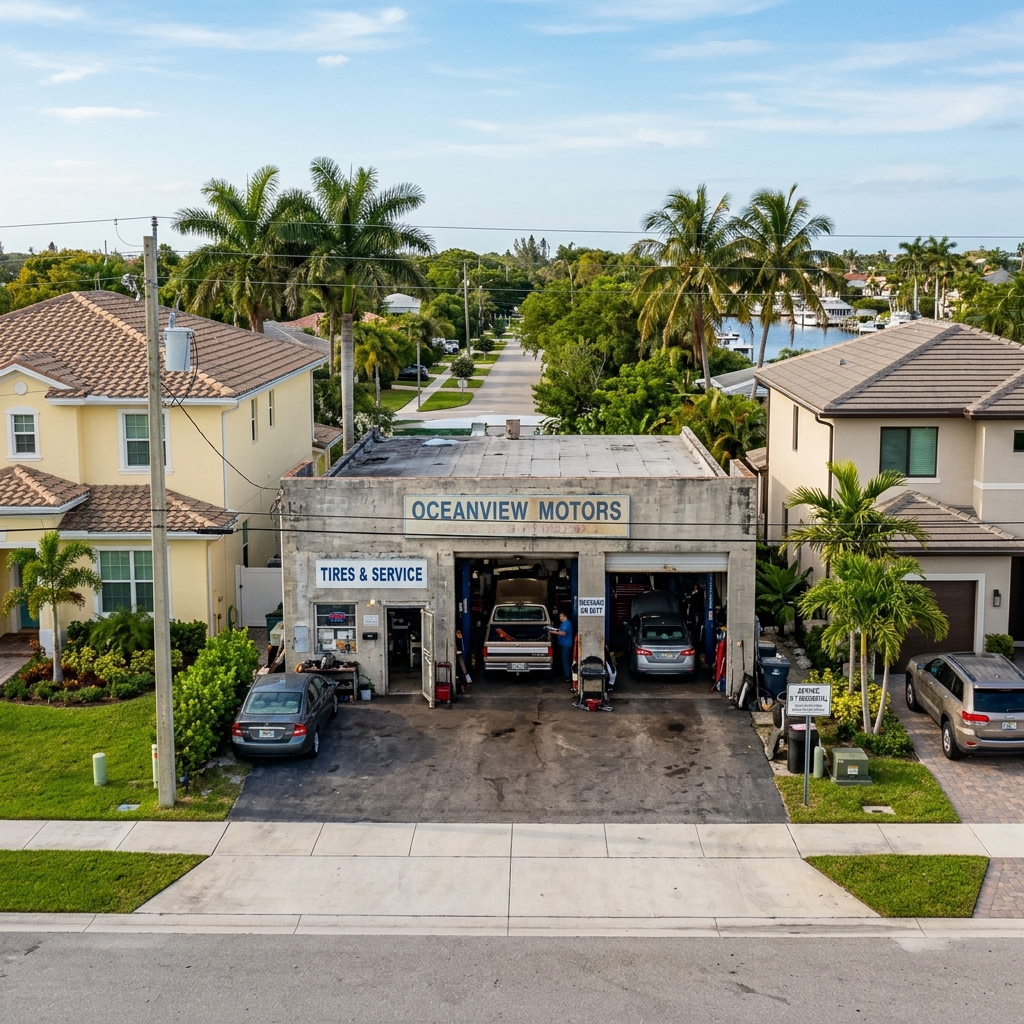
In Florida, nonconforming uses are a recurring issue in real estate transactions, development projects, and local land use disputes. A property that was legally used in one way years ago may suddenly be out of step with modern zoning rules, yet it often keeps certain protected rights under state and local law. This guide explains what nonconforming use means, when it arises, how it can end, and what owners and buyers in Florida should consider.
What Is a Nonconforming Use Under Florida Law?
In zoning and land use law, a nonconforming use typically refers to a use of land or a structure that was lawfully established under older zoning regulations but does not comply with current zoning restrictions adopted later. Importantly, the use was permissible when it began; only subsequent legal changes made it noncompliant.
- The use or structure complied with the zoning code at the time it was established.
- Later, the zoning ordinance changed and would no longer allow that use or structure if it were new.
- Despite the change, the existing use may be allowed to continue, often called being “grandfathered.”
Florida courts and local governments generally treat nonconforming uses as a balance between two policy choices: protecting property owners’ expectations and allowing communities to gradually move toward current planning goals.
Common Examples in Florida Real Estate
- A small commercial store operating in an area later rezoned for single-family homes only.
- A multi-unit residential building in a district that now limits density to fewer units.
- An industrial facility located in a corridor later designated for mixed-use or residential redevelopment.
In each scenario, the use may continue because it was lawful when established, but its future expansion, reconstruction, or transfer can be heavily regulated by local zoning ordinances.
Key Legal Characteristics of Nonconforming Uses
Nonconforming use law in Florida involves several recurring concepts that largely determine the scope and longevity of a property owner’s rights.
Grandfathered Status and Local Zoning Codes
Local governments in Florida (cities and counties) typically recognize nonconforming uses through specific provisions in their zoning codes. These ordinances define:
- What counts as a “nonconforming use” or “nonconforming structure.”
- Whether and how the use may continue, expand, or be rebuilt.
- The conditions under which the use will be considered terminated or abandoned.
Because land use is primarily local, the exact rules vary by jurisdiction. Some Florida counties require formal determinations by zoning officials to confirm nonconforming status for a property.
Regulation vs. Confiscation: The Legal Tension
Florida law generally allows local governments to regulate and ultimately phase out nonconforming uses, but they must do so within constitutional limits. Excessive restrictions can raise questions about regulatory takings or due process. Courts often analyze whether the owner has had a reasonable opportunity to benefit from the property before being forced to change the use.
How Nonconforming Uses Arise in Florida
Nonconforming status almost always arises from a change in law, not from an owner’s voluntary decision to break the rules. Typical pathways include:
- Zoning map amendments that change the allowed uses in a district.
- Text amendments to the zoning code that redefine permitted uses, densities, or building standards.
- Overlay districts that add new requirements on top of base zoning (e.g., historic preservation, coastal management).
When these changes take effect, existing lawful uses that no longer match the new standards may be classified as nonconforming. Owners often seek confirmation from local zoning staff to document this status, especially prior to sale or redevelopment.
Rights of Property Owners With Nonconforming Uses
Florida courts have long recognized that owners of nonconforming uses have protectable interests, but those interests are not absolute. Key rights include:
Right to Continue the Existing Use
Owners are generally entitled to continue the use as it existed when the law changed, subject to any conditions imposed by local ordinances. This right is based on the principle that government should not retroactively criminalize previously lawful conduct in land use.
- The use can often continue indefinitely, provided it is not abandoned, destroyed beyond a specified threshold, or significantly altered.
- Local codes may restrict changes in intensity (e.g., more units or greater activity) or changes in character (e.g., switching from one commercial use to another).
Limits on Expansion and Modification
Florida local governments commonly regulate whether a nonconforming use can be expanded, rebuilt, or altered. Many ordinances:
- Prohibit enlarging the building footprint or increasing floor area for a nonconforming structure.
- Restrict adding new nonconforming uses to a site or intensifying the existing use.
- Allow routine repairs and maintenance, but treat major reconstruction differently.
Nonconforming status is meant to be temporary; as a result, most ordinances are drafted to discourage growth of uses that conflict with current planning policies.
How Nonconforming Uses Are Eliminated
Florida case law and commentary describe several primary mechanisms by which nonconforming uses can be legally phased out. These methods are frequently codified in local ordinances and applied over time.
| Method | Basic Idea | Typical Local Approach |
|---|---|---|
| Attrition (Amortization) | Use continues for a set period, then must end. | Ordinance gives a grace period to recover investment, after which the use is prohibited. |
| Destruction | Significant damage or loss of the structure can cut off nonconforming rights. | Many jurisdictions use a threshold (often 50% of value or area) above which rebuilding is not allowed as nonconforming. |
| Abandonment / Discontinuance | If the use stops for a defined period, the right to resume it is lost. | Ordinances specify a time (e.g., months or years) of non-use after which nonconforming status terminates. |
| Obsolescence | Use becomes outdated or inconsistent with community needs. | Applied less mechanically; often intertwined with broader redevelopment policies. |
Attrition and Amortization Periods
Attrition, sometimes called amortization, involves letting the nonconforming use continue for a “reasonable” time before requiring termination. The goal is to allow owners to recoup their investment so that immediate shutdown is not unfairly punitive.
- Local governments set specific time frames in their ordinances.
- Courts examine whether the period is reasonable relative to the nature of the investment and the hardship imposed.
Destruction and the “50 Percent” Rule
Destruction-based termination occurs when the physical structure supporting the nonconforming use is damaged or demolished beyond a defined extent. Many Florida jurisdictions adopt a “50 percent rule,” under which:
- If more than half of the structure’s value or area is destroyed, the owner cannot rebuild it as a nonconforming use.
- Reconstruction must comply with current zoning regulations, effectively ending the nonconforming status.
These thresholds are intended to prevent owners from perpetually rebuilding nonconforming structures after major losses and to encourage alignment with modern planning goals.
Abandonment and Discontinuance
Nonconforming uses can also end when the owner stops using the property in the protected manner for a specified time period. Local ordinances typically define:
- A fixed period of non-use (for example, six months, one year, or two years).
- Whether intent to abandon is required or whether objective discontinuance alone is enough.
Once abandonment or discontinuance is established, most ordinances prohibit re-establishing the nonconforming use. Any subsequent use must conform to current zoning standards.
Burdens of Proof: Who Must Prove What?
Disputes over nonconforming status often hinge on evidence. Florida cases and commentary indicate how courts allocate the burden of proof between property owners and local governments.
- Establishing nonconforming status: The property owner usually must show that the use was lawfully established before the zoning change and has continued without interruption.
- Proving termination or abandonment: Once nonconforming status is shown, the burden generally shifts to the local government to prove that the use has been abandoned, discontinued, destroyed beyond the threshold, or otherwise lost.
Documentation such as building permits, business licenses, tax records, and long-term occupancy evidence can be crucial in these disputes. Owners and buyers should ensure they maintain or obtain clear records, particularly when planning redevelopment or seeking financing.
Implications for Florida Buyers, Sellers, and Investors
Nonconforming status can significantly affect property value, marketability, and risk allocation in real estate transactions. Parties should consider several practical steps.
Due Diligence Considerations
- Confirm zoning classification and permitted uses through local government resources (planning or zoning departments).
- Request written confirmation of nonconforming status, if available, from zoning officials.
- Review the local code’s provisions on destruction, abandonment, and expansion of nonconforming uses.
- Examine historical records to verify continuous lawful use (permits, business records, tax filings).
Contract and Financing Issues
Nonconforming status may affect:
- Purchase contracts — buyers often seek representations and warranties regarding zoning compliance and nonconforming rights.
- Lender underwriting — some lenders may view nonconforming uses as higher risk because they can be terminated more easily than conforming uses.
- Insurance — policies may treat reconstruction differently when the original structure is nonconforming.
Redevelopment and Exit Strategies
Owners who plan to redevelop nonconforming properties must understand whether future projects can retain existing rights, or whether new construction must fully comply with current zoning. In many cases, redevelopment triggers a requirement that new structures meet modern standards, effectively ending any grandfathered protection.
Frequently Asked Questions (FAQs)
Is a nonconforming use illegal?
No. A nonconforming use is typically lawful because it complied with zoning rules when it began. It becomes “nonconforming” only after later zoning changes make new uses of the same kind impermissible.
Can a Florida city force me to stop a nonconforming use immediately?
Local governments can phase out nonconforming uses, but they usually must provide a reasonable time period or apply generally applicable rules (such as destruction or abandonment standards) rather than abrupt, targeted shutdowns. Specific procedures and timelines depend on the local ordinance.
What happens if my nonconforming building suffers major storm damage?
Many Florida jurisdictions apply a percentage threshold (often around 50%) to determine whether a heavily damaged nonconforming structure may be rebuilt as nonconforming. If damage exceeds that threshold, reconstruction may be allowed only in full compliance with current zoning.
Does temporary vacancy count as abandonment?
It depends on the local code. Some jurisdictions consider objective discontinuance for a specified period enough to terminate nonconforming rights, whether or not the owner intended to abandon the use. Others may take intent into account. Always review the applicable ordinance.
Should I get legal advice about a nonconforming property?
Yes. Because nonconforming law is heavily local and fact-specific, consulting a Florida real estate or land use attorney can be crucial to understanding your rights, obligations, and options regarding a particular property.
References
- The Status of Nonconforming Use Law in Florida — The Florida Bar Journal. 2003-01-01. https://www.floridabar.org/the-florida-bar-journal/the-status-of-nonconforming-use-law-in-florida/
- The Status of Nonconforming Use Law in Florida — vLex (republication of Florida Bar Journal article). 2003-01-01. https://law-journals-books.vlex.com/vid/status-nonconforming-use-law-florida-54832781
- Non-Conforming Use: Zoning — Barnes Walker, Goethe, Perron & Shea, PLLC. 2024-01-01 (approx.). https://barneswalker.com/legal-glossary/n/non-conforming-use-zoning/
- Nonconforming Use — Legal Information Institute, Cornell Law School. 2022-06-01. https://www.law.cornell.edu/wex/nonconforming_use
- Nonconforming Use Determination — Orange County Government, Florida. 2023-01-01. https://www.orangecountyfl.net/PermitsLicenses/Permits/NonconformingUseDetermination.aspx
- Nonconforming Use: Understanding Zoning Laws and Rights — USLegal. 2022-01-01. https://legal-resources.uslegalforms.com/n/nonconforming-use
- Non-Conforming Use in Florida Real Estate — LegalMatch. 2021-05-01. https://www.legalmatch.com/law-library/article/non-conforming-use-in-florida-real-estate.html
Similar Articles








Read full bio of Sneha Tete




