
Nevada Insurance Fraud: Laws, Penalties, and Enforcement
Understand how Nevada defines insurance fraud, the penalties involved, and how claims and suspected violations are investigated and prosecuted.
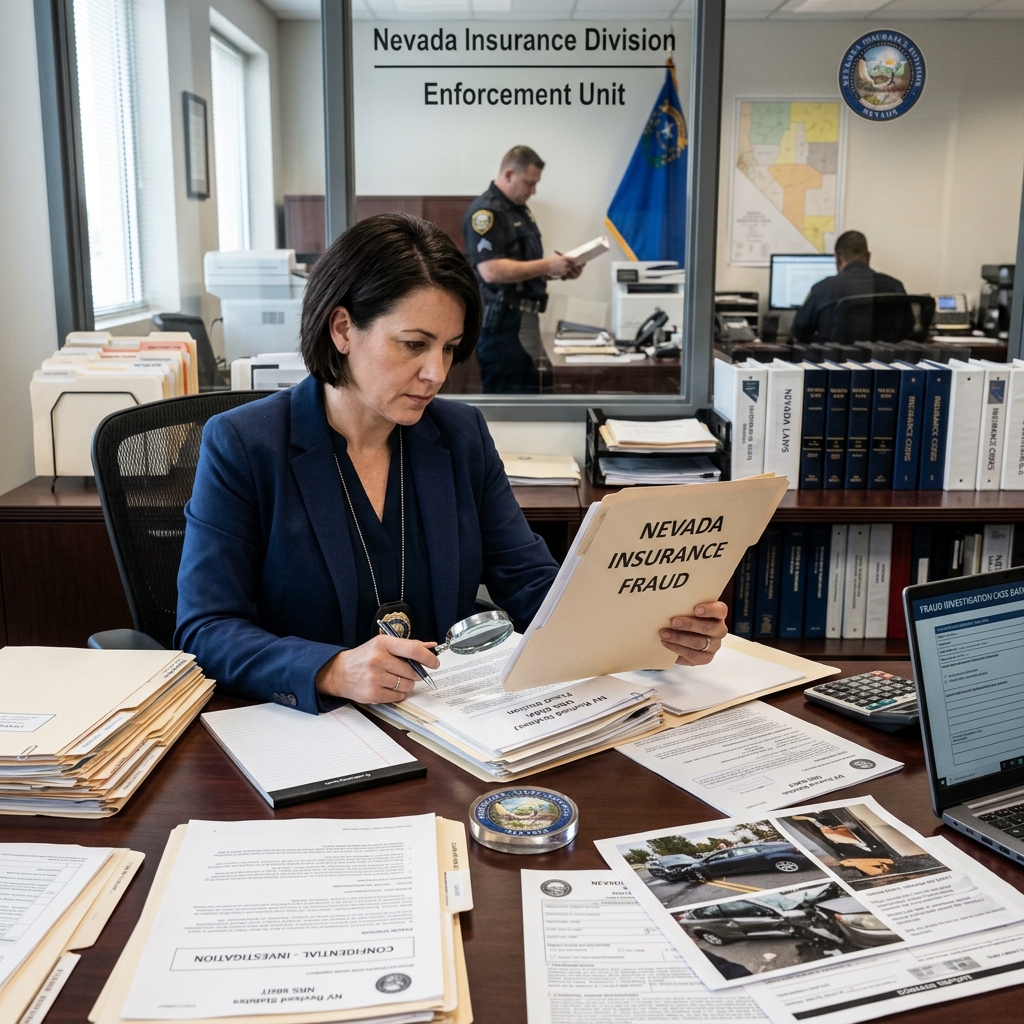
Insurance is designed to spread risk and provide financial protection when accidents, illness, or unexpected events occur. In Nevada, deliberately misusing that system through insurance fraud is a serious criminal offense. Under the Nevada Revised Statutes, insurance fraud is classified as a category D felony, carrying the possibility of prison time, fines, and restitution to victims. This article explains how Nevada law defines insurance fraud, the penalties and enforcement mechanisms involved, and what both consumers and insurers should know about reporting and defending against allegations.
Legal Framework Governing Insurance Fraud in Nevada
Nevada regulates insurance fraud primarily through its trade practices and fraud statutes, found in Chapter 686A of the Nevada Revised Statutes (NRS). These laws address both fraudulent conduct by policyholders and unlawful practices by insurers.
- NRS 686A.2815 describes what qualifies as “insurance fraud,” focusing on knowingly false or misleading statements made in connection with insurance applications and claims.
- NRS 686A.291 establishes the criminal penalty, specifying that a person who commits insurance fraud is guilty of a category D felony and must be punished as provided in Nevada’s general felony sentencing statute.
- NRS 686A.310, often referred to as the Nevada Unfair Claims Settlement Practices Act, sets out unfair practices by insurers in handling claims, which can give rise to civil liability.
Together, these statutes create a framework that covers:
- Fraudulent conduct by individual policyholders and claimants.
- Fraudulent or unfair practices by insurers and their agents.
- Reporting duties and cooperation obligations between insurers, regulators, and law enforcement.
How Nevada Law Defines Insurance Fraud
Nevada’s statutory definition of insurance fraud centers on intentional deceit. A person commits insurance fraud when they knowingly and willfully engage in certain types of misrepresentation or concealment in order to obtain insurance benefits or coverage.
Core Elements of Insurance Fraud
Under NRS 686A.2815, insurance fraud generally involves one or more of the following actions, performed knowingly and willfully:
- False statements in applications: Presenting information to an insurer or its agents that conceals, omits, or misrepresents facts material to the issuance of a policy. This includes leaving out important data or providing misleading answers to obtain coverage or a lower premium.
- False statements in claims: Submitting information in support of a claim for payment or benefits under a policy when the person knows the statement hides or misrepresents material facts related to that claim.
- Assisting or conspiring: Helping, soliciting, or conspiring with others to present false or misleading information to an insurer in connection with applications or claims.
- Intent to defraud: Acting or failing to act with intent to deceive an insurer to obtain a policy or proceeds that the person is not legally entitled to receive.
- Practitioner or insurer-assisted fraud: As a practitioner (such as a health care provider), insurer, or agent, assisting or urging another person to commit a fraudulent act through deceit or misrepresentation.
Significantly, the statute also covers those who participate in, aid, abet, or permit employees or agents to commit these acts, reflecting an effort to address organized or systemic fraud schemes.
Intent Requirement and Innocent Errors
Because Nevada treats insurance fraud as an intent crime, prosecutors must show that the person acted knowingly and willfully, rather than by mistake or misunderstanding. Innocent errors, clerical mistakes, or misstatements made without awareness of their falsity generally do not meet the statutory threshold for insurance fraud.
Common Types of Insurance Fraud in Nevada
Insurance fraud can appear in many forms across different lines of coverage. Nevada law does not limit the statute to specific types of policies; it applies broadly to policies issued in the state by authorized insurers.
Fraud by Policyholders and Claimants
Examples of fraudulent conduct by insured individuals or claimants include:
- Exaggerated or fabricated claims: Overstating the extent of damage, inflating medical bills, or claiming injuries that did not occur.
- Staged accidents: Orchestrating car collisions or other incidents with the intent to collect insurance proceeds.
- False theft reports: Claiming that a vehicle or property was stolen when it was not, in order to obtain a payout.
- Concealed prior damage: Failing to disclose pre-existing damage or conditions in applications or claims.
- Misrepresenting risk factors: Providing inaccurate information about driving history, property use, or business operations to secure lower premiums.
Fraud and Unfair Practices Involving Insurers
Nevada law also targets unlawful behavior by insurers and their agents. Under NRS 686A.310, certain claims-handling practices are deemed unfair trade practices, and violations can lead to civil liability. Examples include:
- Failure to promptly settle claims when liability is reasonably clear.
- Misrepresentation of policy provisions to avoid paying valid claims.
- Unreasonable delays in investigation or payment without proper justification.
While these behaviors are distinct from the criminal offense of insurance fraud, they illustrate Nevada’s broader approach to maintaining integrity in insurance markets.
Criminal Penalties for Insurance Fraud
Insurance fraud in Nevada is classified as a category D felony, one of the lower felony categories but still a serious offense with significant consequences.
| Consequence | Description |
|---|---|
| Felony classification | Insurance fraud is a category D felony under NRS 686A.291. |
| Imprisonment | Category D felonies in Nevada may carry a prison term of 1 to 4 years. |
| Fines | Courts may impose fines, often up to $5,000 for insurance fraud, in addition to incarceration. |
| Restitution | Offenders can be ordered to pay restitution to victims, including insurers and other parties harmed by the fraudulent conduct. |
| Collateral consequences | Conviction can affect employment, licensing, and future dealings with insurers, as well as immigration and professional status. |
The exact sentence in any given case depends on several factors, including the scope of the fraudulent activity, the amount of loss, the defendant’s criminal history, and any aggravating or mitigating circumstances considered by the court.
Reporting Duties and Investigation of Suspected Fraud
To combat insurance fraud, Nevada imposes reporting duties on insurers and encourages individuals to report suspected fraudulent activity. These responsibilities are designed to facilitate coordination between insurers, regulators, and law enforcement.
Insurer Reporting Obligations
Under NRS 686A.280 and related provisions, insurers and certain entities must report information concerning insurance fraud to the Nevada Insurance Commissioner and the Attorney General. Reports are made on forms prescribed by these officials, and insurers are required to provide information about suspected fraud upon written request.
In practice, this means:
- Insurers must flag suspicious claims and share relevant information with regulators and law enforcement.
- Cooperation with investigations is mandated when the Attorney General, Insurance Commissioner, or other agencies seek information.
Nevada Attorney General’s Insurance Fraud Unit
The Insurance Fraud Unit (IFU) within the Nevada Attorney General’s Office is the primary law enforcement body responsible for investigating and prosecuting insurance fraud. The IFU handles complaints from both insurers and citizens.
Key aspects of IFU operations include:
- Receiving complaints through dedicated forms for concerned citizens and insurance companies.
- Conducting investigations into suspected fraudulent claims or schemes.
- Working with local and federal law enforcement when necessary.
- Bringing criminal charges against individuals and entities who violate Nevada’s insurance fraud statutes.
How Consumers and Insurers Can Report Suspected Fraud
Concerned citizens and insurers in Nevada have several avenues to report suspected insurance fraud:
- Submitting a complaint through the Nevada Attorney General’s Insurance Fraud Unit using either a general complaint form or an insurance company complaint form.
- Reporting suspicious activity via the Insurance Fraud Unit’s consumer complaints system, which allows online or mailed submissions.
- Contacting the Nevada Attorney General’s offices in Carson City, Las Vegas, or Reno using published telephone numbers to initiate a report or seek guidance.
Civil Remedies and Related Fraud Concepts
In addition to criminal penalties, insurance-related misconduct can give rise to civil liability. Nevada recognizes both common law fraud claims and statutory causes of action under its Unfair Claims Settlement Practices Act.
Common Law Fraud in Nevada
According to Nevada law, plaintiffs alleging fraud must prove specific elements by clear and convincing evidence. These elements typically include:
- A false representation made by the defendant.
- Defendant’s knowledge or belief that the representation is false, or awareness that there was insufficient basis for the statement.
- Intent to induce the plaintiff to act or refrain from acting in reliance on the misrepresentation.
- Justifiable reliance by the plaintiff on the misrepresentation.
- Damages suffered by the plaintiff as a result of that reliance.
Nevada imposes a three-year statute of limitations for fraud-based civil actions, starting from the time the aggrieved party discovers the facts constituting the fraud.
Unfair Claims Settlement Practices
NRS 686A.310 outlines activities that are considered unfair claim settlement practices by insurers, such as failing to promptly and fairly settle claims where liability is clear. Policyholders who suffer damages due to such practices may bring a civil action against the insurer.
This statutory scheme is distinct from criminal insurance fraud but demonstrates Nevada’s effort to regulate both sides of the insurance relationship—preventing fraudulent claims and ensuring fair treatment of legitimate claimants.
Defending Against Insurance Fraud Allegations
Because insurance fraud is an intent-based felony, defenses often focus on challenging the prosecution’s evidence of knowledge, willfulness, and material misrepresentation.
Common Defense Themes
Typical defense strategies in Nevada insurance fraud cases may include:
- Lack of intent: Arguing that any false information resulted from misunderstanding, clerical error, or incomplete documentation rather than deliberate deceit.
- No material misrepresentation: Showing that alleged inaccuracies were not material to the issuance of the policy or payment of the claim.
- Insufficient evidence: Challenging the sufficiency and reliability of documentation, witness testimony, or expert opinions used to prove fraud.
- Legitimate claim: Demonstrating that the claimant was legally entitled to benefits and that the insurer’s suspicion was misplaced.
Importance of Legal Counsel
Given that a conviction can lead to imprisonment, fines, and a permanent felony record, individuals and entities facing insurance fraud allegations in Nevada often seek representation from criminal defense attorneys familiar with white-collar and insurance-related offenses. Legal counsel can evaluate the strength of the evidence, negotiate with prosecutors, and develop strategies tailored to the specific facts of the case.
Frequently Asked Questions About Nevada Insurance Fraud
Is every incorrect statement on an insurance form considered fraud?
No. Under Nevada law, insurance fraud requires knowing and willful misrepresentation or concealment of material facts. Innocent errors, typographical mistakes, or misunderstandings without intent to deceive generally do not constitute criminal fraud.
What types of insurance are covered by Nevada’s fraud statutes?
Nevada’s insurance fraud provisions apply broadly to any policy issued in the state by an authorized insurer, including auto, health, property, and commercial coverage. The focus is on the conduct—false or misleading statements in applications or claims—rather than the specific type of policy.
Who investigates and prosecutes insurance fraud in Nevada?
The Nevada Attorney General’s Insurance Fraud Unit is the primary agency responsible for investigating and prosecuting insurance fraud cases. Insurers are required to report suspected fraud, and citizens can submit complaints directly to the unit.
What are the potential penalties for a first-time insurance fraud conviction?
A first-time conviction for insurance fraud as a category D felony can result in 1 to 4 years of imprisonment, fines, and restitution to victims. The court may also consider factors such as the amount of the loss and the defendant’s prior record when determining the sentence.
Can an insurer be held liable for mishandling my claim?
Yes. While criminal insurance fraud generally focuses on wrongful conduct by claimants, Nevada’s Unfair Claims Settlement Practices Act allows policyholders to pursue civil remedies when insurers engage in unfair claim-handling practices, such as failing to promptly settle claims where liability is clear.
References
- NRS: Chapter 686A – Trade Practices and Frauds — Nevada Legislature. 2025-01-01. https://www.leg.state.nv.us/nrs/NRS-686A.html
- Nevada Revised Statutes § 686A.2815 – Insurance Fraud — Justia / Nevada Revised Statutes. 2025-01-01. https://law.justia.com/codes/nevada/chapter-686a/statute-686a-2815/
- Nevada Insurance Fraud Laws — FindLaw. 2023-06-15. https://www.findlaw.com/state/nevada-law/nevada-insurance-fraud-laws.html
- NRS § 686A.2815 – Nevada “Insurance Fraud” Laws — 702 Defense. 2024-03-10. https://702defense.com/nrs/686a-2815-insurance-fraud/
- Nevada – Insurance Law Compendium — ALFA International. 2022-09-01. https://www.alfainternational.com/compendium/insurance-law/nevada/
- Insurance Fraud Unit (IFU) — Nevada Attorney General. 2024-02-20. https://ag.nv.gov/About/Criminal_Justice/Insurance_Fraud/
- Automobile Insurance Fraud — Hofland & Tomsheck. 2023-05-01. https://www.lvnvlawfirm.com/practice-areas/lv-criminal-law-center/white-collar-crimes-2/automobile-insurance-fraud/
Similar Articles








Read full bio of medha deb




