
Missouri Resisting Arrest Laws: Key Rules and Penalties
Understand what counts as resisting arrest in Missouri, when it becomes a felony, and how the law applies in real encounters with police.
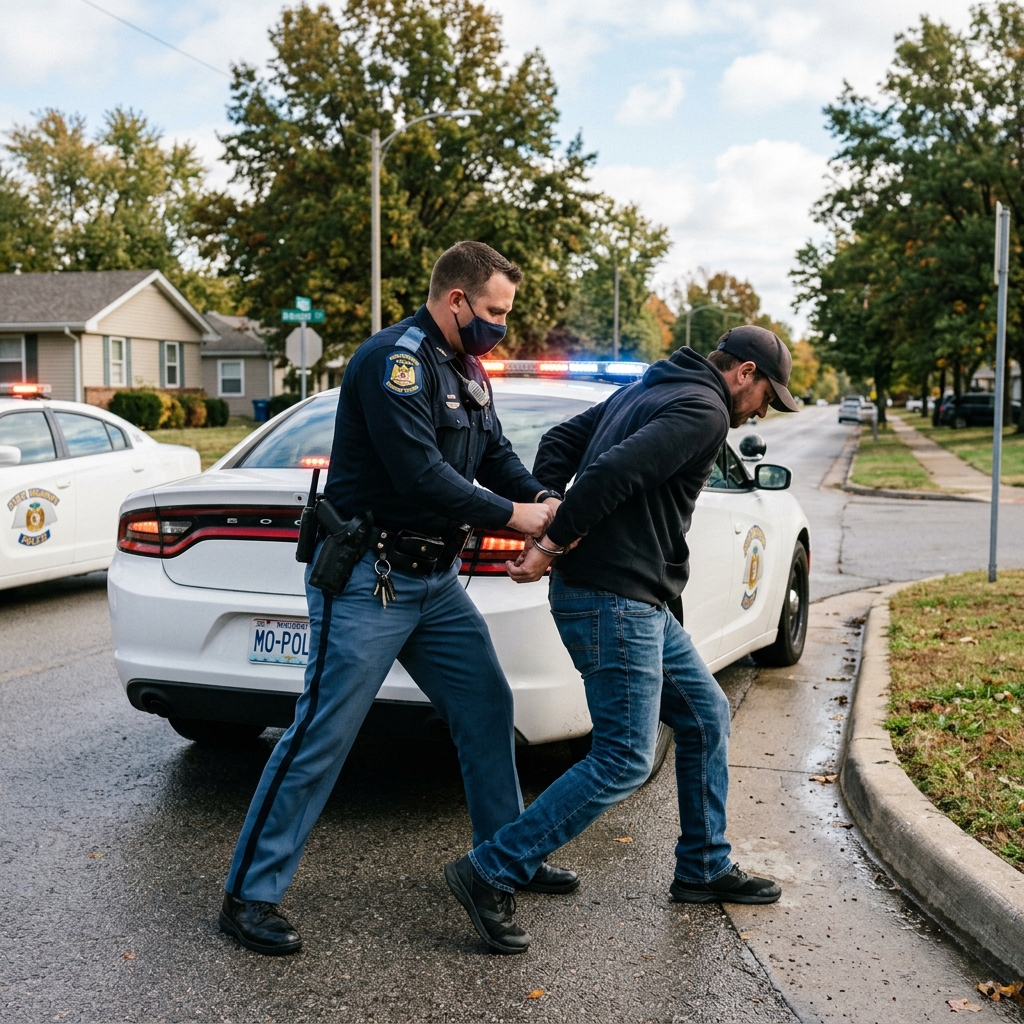
Missouri treats resisting or interfering with arrest as a serious criminal offense. Under state law, you can be charged even if the underlying crime is minor or if you believe the arrest is unfair. Understanding how Missouri defines resisting arrest, what conduct is covered, and the potential penalties is essential for anyone living, working, or traveling in the state.
Overview of Missouri’s Resisting Arrest Statute
Missouri governs resisting arrest through Section 575.150 of the Revised Statutes of Missouri, titled “Resisting or interfering with arrest, detention, or stop.” The law focuses on situations where a person tries to prevent an officer from completing an arrest, detention, or investigative stop.
At its core, the statute applies when:
- You know or reasonably should know that a law enforcement officer is making an arrest, detention, or stop; and
- You act for the purpose of preventing the officer from carrying out that arrest, detention, or stop.
Whether the officer is arresting you or someone else, the law can apply if you use certain kinds of conduct to interfere with the official action.
What Counts as Resisting or Interfering Under Missouri Law?
Missouri’s statute does not criminalize arguing with an officer or verbally protesting an arrest by itself. Instead, it targets actions that actively obstruct law enforcement. The statute lists two main categories of conduct:
- Resisting your own arrest, detention, or stop by either:
- Using or threatening the use of violence or physical force against the officer; or
- Fleeing from the officer.
- Interfering with another person’s arrest, detention, or stop by using or threatening violence, physical force, or physical interference.
Missouri law defines physical force broadly as power or compulsion exerted on another person. This means that even body movements such as pulling away, going limp, or stiffening your arms can sometimes be argued as physical resistance in court.
Common Examples of Resisting Arrest
While each case turns on its specific facts, the following behaviors frequently lead to resisting arrest charges in Missouri:
- Running away on foot after an officer orders you to stop.
- Driving off or refusing to pull over after an officer activates lights or sirens.
- Pushing, hitting, or kicking an officer attempting to handcuff or detain you.
- Refusing to be handcuffed and physically struggling during an arrest.
- Stepping between an officer and another person who is being arrested and using force to block the officer.
Some law firms note that even actions like stiffening your body or pulling your arms away during handcuffing can be treated as “physical force” under the statute, depending on how the officer and prosecutor describe the incident.
Legal Elements the Prosecution Must Prove
Resisting arrest is not a strict liability offense. To secure a conviction, the state must prove specific elements beyond a reasonable doubt.
| Element | Description |
|---|---|
| Knowledge | The defendant knew, or reasonably should have known, that a law enforcement officer was making an arrest, detention, or stop. |
| Purpose | The defendant acted for the purpose of preventing the officer from completing that arrest, detention, or stop. |
| Conduct | The defendant either resisted by violence, physical force, or fleeing, or interfered with another person’s arrest through violence, physical force, or physical interference. |
If the prosecution cannot show that you knew about the arrest or stop, or that your actions were intended to obstruct it, a resisting arrest conviction may not be legally supported.
Misdemeanor vs. Felony Resisting Arrest
Missouri law recognizes both misdemeanor and felony versions of resisting arrest. The severity of the charge depends on factors such as the underlying offense and the risks created by your conduct.
Class A Misdemeanor Resisting Arrest
In most situations, resisting or interfering with arrest, detention, or stop is charged as a Class A misdemeanor. This generally applies when:
- You resist your own arrest, detention, or stop for an offense that is not a felony; and
- You do not create a substantial risk of serious physical injury or death to any person.
Missouri courts and practitioners note that a Class A misdemeanor can carry up to one year in the county jail and a substantial fine. Some sources mention fines up to several thousand dollars for a misdemeanor resisting arrest conviction.
Felony Resisting Arrest: Class D and Class E
The statute elevates resisting arrest to a felony in certain circumstances:
- Resisting or interfering with an arrest for a felony is a Class D felony.
- Resisting arrest by fleeing in a way that creates a substantial risk of serious physical injury or death to any person is also a Class D felony.
Other references explain that felony resisting arrest can carry up to four years in the Missouri Department of Corrections and significantly higher fines than misdemeanor cases. For example, some sources describe fines that may reach $10,000 or more for certain felony classifications.
Additionally, if an arrest begins as a misdemeanor but facts emerge during the encounter that support a felony arrest, continued resistance can be treated as felony resisting.
How Resisting Arrest Charges Often Arise
Resisting arrest charges frequently develop out of relatively routine police encounters. Legal practitioners in Missouri report several common patterns:
- A traffic stop escalates when the driver speeds away or refuses to exit the vehicle.
- An officer responds to a disturbance call and the person involved refuses to be handcuffed, physically struggles, or tries to break free.
- Friends or family members intervene during an arrest and use force or physical interference to protect the person being detained.
- The suspect initially faces a low-level charge, but the alleged resistance causes prosecutors to add a resisting arrest count, increasing overall exposure.
These situations demonstrate how a relatively minor underlying offense can turn into a serious case once resisting or interfering is alleged.
Impact of a Resisting Arrest Conviction
Beyond immediate penalties, a resisting arrest conviction can carry long-term consequences.
- Criminal record: The offense may appear on background checks, affecting employment, housing, and licensing.
- Sentencing exposure: Jail or prison time, plus fines that can reach thousands of dollars.
- Probation conditions: Courts may impose probation with strict conditions, including compliance with law enforcement and no new offenses.
- Collateral consequences: A felony conviction, in particular, can affect voting rights, firearm possession, and professional opportunities, depending on applicable law.
Because the statute covers a wide range of conduct, many defendants are surprised to learn that actions they saw as minor resistance can be charged as a separate crime.
Practical Tips During Police Encounters
Attorneys and legal guides often recommend specific steps during police encounters to avoid conduct that could be treated as resisting or interfering with arrest.
- Comply with physical instructions: If an officer tells you to stop, stay still, or place your hands where they can be seen, follow those commands.
- Avoid physical struggle: Do not push, pull away, or otherwise use your body to oppose handcuffing or detention.
- Do not flee: Running or driving away after the officer signals you to stop can turn a simple stop into a resisting arrest case, and may elevate the charge if others are put at risk.
- Assert rights verbally: If you wish to contest the stop or arrest, do so by asking questions or requesting a lawyer, rather than using force or flight.
- Document concerns later: Alleged unlawful arrest or excessive force can be challenged through complaints or in court rather than through physical resistance.
While these tips do not guarantee you will avoid arrest or charges, they generally reduce the risk that your conduct will be characterized as resisting under Missouri law.
Frequently Asked Questions
Is verbally arguing with an officer considered resisting arrest in Missouri?
Under Section 575.150, resisting arrest focuses on physical force, threats of violence, or fleeing from an officer, as well as physical interference with another person’s arrest. Simply arguing or stating that you disagree with the officer is not, by itself, listed as resisting. However, if verbal argument escalates into physical actions or refusal to comply with commands, it may contribute to a resisting charge.
Can I be charged with resisting arrest if the arrest turns out to be unlawful?
The statute does not require that the arrest ultimately be upheld in court. It requires that you know or reasonably should know an officer is attempting an arrest, detention, or stop, and that you act to prevent it. Courts generally expect disputes about lawfulness to be resolved in legal proceedings rather than through physical resistance.
What if I did not realize the person was a police officer?
To convict you, the state must show that you knew or reasonably should have known that a law enforcement officer was carrying out the arrest, detention, or stop. If there is credible evidence that you did not recognize the person as an officer, that may be relevant to challenging the knowledge element.
How serious is a Class A misdemeanor resisting arrest charge?
Although a Class A misdemeanor is less severe than a felony, it still carries up to one year in jail and significant fines under Missouri law. It also creates a criminal record that can affect future opportunities, so defendants often treat these cases very seriously.
When does fleeing turn resisting arrest into a felony?
Missouri law specifically states that resisting arrest by fleeing in a manner that creates a substantial risk of serious physical injury or death to any person is a Class D felony. Examples may include high-speed chases, dangerous driving through crowded areas, or other conduct that threatens significant harm.
When to Seek Legal Assistance
Because resisting arrest charges often arise from tense, fast-moving encounters, the facts can be disputed. Witness accounts, video footage, and the officer’s report may differ. If you are charged under Section 575.150, many Missouri practitioners recommend consulting a criminal defense attorney as early as possible.
- An attorney can evaluate whether the state can prove you knew of the arrest or stop and that you acted with the purpose of preventing it.
- They can examine whether your conduct truly involved violence, physical force, or flight as defined in the statute.
- They may challenge the classification of the charge as a misdemeanor or felony, especially where the risk of serious injury is disputed.
Even though the underlying incident may have been brief, the legal consequences of a resisting arrest charge can be long-lasting, making informed legal guidance important.
References
- Revised Statutes of Missouri, Section 575.150 — Missouri Revisor of Statutes (MO.gov). 2023-08-28. https://revisor.mo.gov/main/OneSection.aspx?section=575.150
- Revised Statutes of Missouri, Section 575.150 (Full Page) — Missouri Revisor of Statutes (MO.gov). 2023-08-28. https://revisor.mo.gov/main/PageSelect.aspx?section=575.150&bid=53219
- Understanding Missouri’s Resisting Arrest Charge — Cole & Martin Attorneys at Law. 2026-01-15. https://www.coleandmartin.com/blog/2026/january/understanding-missouri-s-resisting-arrest-charge/
- Resisting Arrest in Missouri — Missouri Legal (The Law Office of Sarah J. Wentz, LLC). 2024-03-10. https://www.missourilegal.com/practice-areas/criminal/resisting-arrest-in-missouri/
- Revised Missouri Resisting Arrest Laws — Sansone & Lauber, St. Louis Criminal Defense. 2023-06-20. https://www.missourilawyers.com/criminal-law/resisting-arrest/
- Jefferson County Missouri Resisting Arrest Lawyer — Lednick Law Firm. 2025-05-02. https://www.lednicklaw.com/jefferson-county-missouri-resisting-arrest-lawyer
- Resisting Arrest Attorneys in Jefferson County, MO — Griffith & Barbee, Attorneys at Law. 2024-09-18. https://gblawmo.com/resisting-arrest/
Similar Articles








Read full bio of medha deb




