
Missouri Domestic Violence Temporary Protection Orders
Understand how temporary orders of protection work in Missouri, including who qualifies, what they cover, and how to file safely.
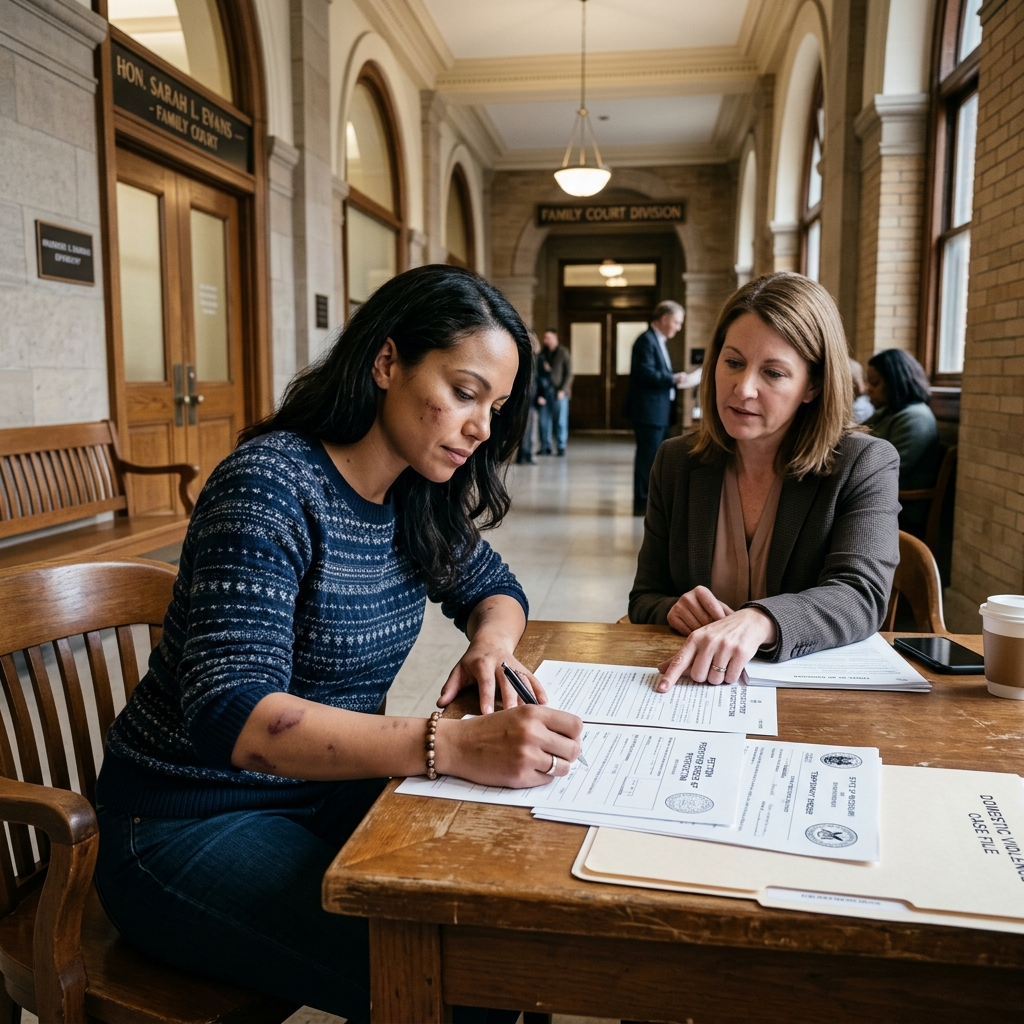
Missouri law gives people facing domestic violence, stalking, or sexual assault access to powerful court orders that can quickly increase their safety. These are commonly called orders of protection and include temporary, emergency relief as well as longer-term protection after a court hearing. Although many people use the phrase “restraining order,” Missouri statutes and courts typically refer to these as orders of protection.
Core Concepts: Orders of Protection vs. Restraining Orders
In everyday language, the terms restraining order and order of protection are often used interchangeably. Under Missouri law, however, they are not identical.
- Order of protection: A civil court order designed mainly to address domestic violence, stalking, sexual assault, and similar threats to personal safety involving specific relationships.
- Restraining order: A broader civil order that can arise in many types of lawsuits (for example, business disputes) and is not limited to abuse within a household or family.
For survivors of domestic violence, the relevant remedy is almost always the order of protection, not a generic civil restraining order.
| Feature | Order of Protection (Domestic Violence) | Civil Restraining Order |
|---|---|---|
| Primary purpose | Stop domestic violence, stalking, or sexual assault and protect safety. | Control conduct in a civil dispute (e.g., property or business conflicts). |
| Typical relationships | Family or household members, intimate partners, or similar relationships. | Business partners, neighbors, or other civil litigants. |
| Consequences of violation | Often criminal penalties, including potential arrest. | Usually civil contempt or monetary sanctions. |
| Emergency relief | Ex parte temporary orders may be granted without advance notice to the respondent. | Emergency orders are less common and typically require some notice unless extreme circumstances exist. |
Who Can Ask for a Domestic Violence Order of Protection?
Missouri law allows an adult to seek protection if they have experienced domestic violence, stalking, or sexual assault, usually at the hands of a family or household member in adult abuse cases.
Qualifying relationships commonly include:
- Current or former spouses
- Adults who live together or previously lived together
- People related by blood or marriage
- Individuals who are or were in a romantic or intimate relationship
- Parents of a child in common, regardless of marital or living history
There are also separate procedures for child protection orders when a minor is the person needing protection.
Temporary (Ex Parte) Orders: Fast Protection in Emergencies
The most urgent tool in Missouri’s protection system is the ex parte order of protection. “Ex parte” simply means that the judge can act after hearing from only one side—the person requesting protection—without waiting for the accused person to appear.
A judge may issue an ex parte order when the petition and the survivor’s sworn statements show a present and immediate danger of abuse or harm.
Common Protections in a Temporary Order
While every case is different, an ex parte order may include measures such as:
- No-contact instructions (by phone, text, social media, or in person)
- Requirements to stay away from the survivor’s home, workplace, or school
- Orders not to harass, stalk, threaten, or harm the survivor
- Temporary possession of the home or other essential property
- Interim custody or visitation provisions for children in serious cases
These orders are designed to last only until a full court hearing can be held, where both sides can present evidence.
How Long Does a Temporary Order Last?
An ex parte order of protection generally remains in effect until the court holds a hearing on whether to issue a full order. Missouri courts typically schedule that hearing within about 15 days of the ex parte order, though timing can vary based on local procedures and service of process.
Full Orders of Protection: Longer-Term Relief
A full order of protection is issued only after a court hearing where both the person seeking protection (the petitioner) and the person accused of abuse (the respondent) have a chance to tell their side of the story and present evidence.
At the hearing, the judge must determine whether the petitioner has proved domestic violence, stalking, or sexual assault by a preponderance of the evidence, meaning it is more likely than not that the abuse occurred.
Duration of a Full Order
Missouri statutes allow full orders of protection to last for a substantial period.
- In most situations, a full order lasts between 180 days (about six months) and one year.
- When the judge makes specific written findings that the respondent poses a serious danger to the physical or mental health of the petitioner or child, the order may extend between two and ten years.
- Orders can often be renewed or extended if the danger continues, subject to court approval.
Additional Relief Available in a Full Order
Beyond basic no-contact provisions, a full order of protection can address broader safety and stability concerns.
Depending on the facts, a judge may order:
- Exclusive possession of the home to the survivor
- Temporary custody, visitation schedules, or supervised visitation for children
- Child support or maintenance (spousal support) on a temporary basis
- Payment of certain bills or medical costs related to the abuse
- Surrender of firearms when required by law
- Completion of counseling, batterer intervention, or substance use programs for the respondent
Local court forms usually allow the petitioner to check boxes or describe the specific protections they are requesting.
Where and How to File in Missouri
Petitions for orders of protection are filed in Missouri’s circuit courts, often with dedicated forms and assistance available at the courthouse.
Choosing the Correct County
Missouri law generally lets a person file a petition in any of the following places:
- The county where the petitioner lives
- The county where the abuse, stalking, or sexual assault occurred
- The county where the respondent can be served with court papers
Typical Filing Steps
While procedures vary slightly from county to county, the basic process is similar across Missouri:
- Obtain the petition forms
Forms are available at the circuit court clerk’s office, and many courts also publish them on their websites. Some counties allow electronic submission, while others rely on paper filings. - Complete the petition
The petitioner provides identifying information, describes the relationship to the respondent, and details the abuse, threats, or stalking incidents. It is important to include specific dates or approximate time frames and explain why ongoing danger exists. - Submit the petition to the court
Petitions are usually filed with the circuit clerk during business hours. In emergencies outside normal hours, law enforcement agencies can often help submit requests for an ex parte order to an on-call judge. - Ex parte decision
A judge reviews the written petition—sometimes speaking briefly with the petitioner—and decides whether immediate temporary protection is justified. - Service on the respondent
If an order is issued and a hearing is scheduled, law enforcement or a process server must deliver the documents to the respondent. The hearing usually cannot move forward until proper service occurs. - Court hearing
At the hearing, both parties may present testimony, call witnesses, and submit documents like medical records, photographs, or messages. The judge decides whether to grant a full order and what provisions it should contain.
Standards of Proof and Evidence
Unlike criminal trials, orders of protection are civil proceedings. The required standard is preponderance of the evidence, not “beyond a reasonable doubt.”
Judges may consider various types of evidence, including:
- First-hand testimony from the petitioner describing abuse or threats
- Witness statements from friends, family, neighbors, or coworkers
- Photographs of injuries or property damage
- Texts, emails, social media messages, or voicemails
- Police reports or medical records documenting injuries or fear
The court focuses on whether ongoing contact places the petitioner at risk of harm, not just whether a single criminal offense occurred.
What Happens if an Order of Protection Is Violated?
Missouri treats violations of orders of protection as serious matters. When someone knowingly violates a valid order, law enforcement may respond and criminal charges can follow.
Possible Consequences for the Respondent
- Immediate arrest if an officer has probable cause to believe a violation occurred
- Criminal charges that can result in fines, probation, or jail time
- Escalation to more serious offenses if violations are repeated
- Civil contempt proceedings in addition to or instead of criminal action
For the petitioner, it is critical to document each violation and report it quickly to law enforcement or the prosecutor’s office.
Practical Safety and Legal Tips
Orders of protection are an important tool, but they work best when combined with safety planning and informed decisions. Consider these steps:
- Keep copies of the current order with you, at home, and at work or school.
- Share information about the order with trusted people, such as employers, school staff, or neighbors.
- Update law enforcement if the respondent’s behavior escalates or the type of violations change.
- Consult legal aid or a private attorney if you are unsure which protections to request or how the order interacts with divorce, custody, or criminal cases.
- Connect with advocates at domestic violence shelters or hotlines for help planning for safety and understanding your options.
Frequently Asked Questions about Missouri Domestic Violence Orders
Is there a filing fee for an order of protection?
Missouri law generally does not require a petitioner in a domestic violence, stalking, or sexual assault case to pay a filing fee to request an order of protection. Some related costs, like service or copies, may be addressed later by the court, but survivors are not typically blocked from filing due to inability to pay.
Do I need a lawyer to get an order of protection?
You are not required to have an attorney to file for an order of protection, and many people appear on their own using court-provided forms. However, legal representation can be helpful, especially if the case is complicated or involves children, property, or overlapping criminal charges.
Can the court order the abuser to move out of the home?
Yes, in appropriate cases a full order of protection can grant the petitioner temporary exclusive possession of the shared home and require the respondent to move out, particularly when staying together would pose a danger.
What if the respondent lives in a different county?
You do not necessarily have to file where the respondent lives. You may generally file in the county where you live, where the abuse occurred, or any county where the respondent can be served.
Can I modify or extend an existing order?
Orders of protection can often be renewed or modified if circumstances change or the risk continues. The petitioner usually needs to file a request with the court before the current order expires and may need to attend a short hearing.
Will a protection order affect child custody decisions?
Orders of protection can include temporary custody and visitation terms, and evidence of domestic violence may be considered in later family law cases. Judges are required to prioritize the best interests and safety of the child when making custody decisions.
References
- Missouri Restraining Orders — WomensLaw.org. Updated 2023. https://www.womenslaw.org/laws/mo/restraining-orders/all
- What You Need to Know About Filing for a Restraining Order in Missouri — Friedrich Law Office, P.C. 2022. https://www.friedrichlaw.com/blog/what-you-need-to-know-about-filing-for-a-restraining-order-in-missouri/
- Orders of Protection vs. Restraining Orders in Missouri — Scrivner Law Firm. 2022. https://www.scrivnerlawfirm.llc/services/order-of-protection-hearings-for-domestic-disputes/orders-of-protection-vs-restraining-orders-in-missouri/
- What types of orders of protection are there? How long do they last? — WomensLaw.org. Updated 2023. https://www.womenslaw.org/laws/mo/restraining-orders/orders-protection-due-domestic-violence/basic-information/what-types
- Revised Statutes of Missouri, Section 455.040 — Missouri Revisor of Statutes. Current through 2024. https://revisor.mo.gov/main/PageSelect.aspx?section=455.040
- File Order of Protection — 16th Circuit Court of Jackson County, Missouri. Accessed 2026. https://www.16thcircuit.org/order-of-protection
- Orders of Protection — Mid-Missouri Legal Services. Accessed 2026. https://www.mmls.org/our-services/orders-of-protection/
Similar Articles








Read full bio of medha deb


