
Maryland Tenant Rights: Key Protections and Obligations
Understand essential tenant protections, landlord duties, and rental laws in Maryland before you sign or renew a lease.
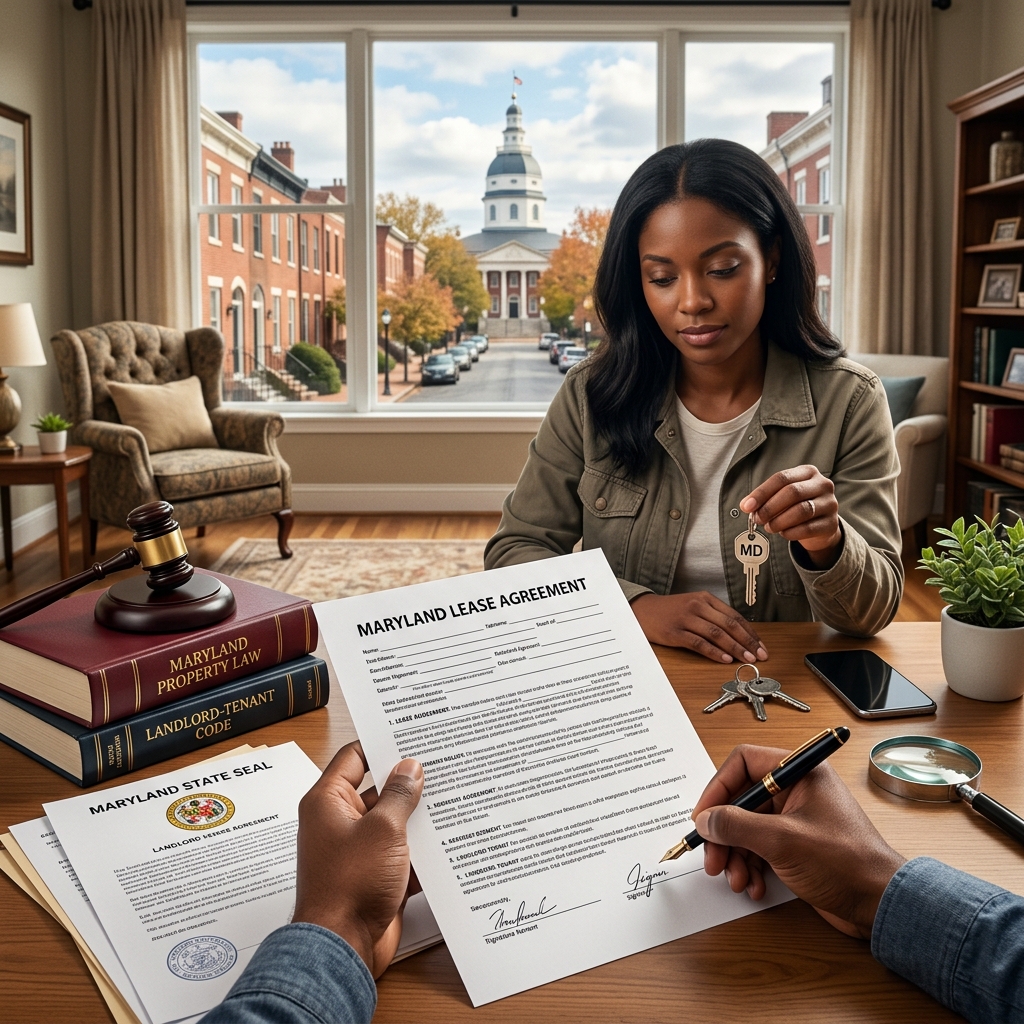
Maryland has developed a detailed set of laws to balance the relationship between landlords and tenants in residential housing. These rules govern everything from the condition of the rental unit, to the amount of security deposit that can be charged, to the way evictions must be handled. Understanding these protections is critical for both tenants and landlords, especially in light of recent changes that expand renters’ rights and clarify landlord responsibilities.
This guide explains the major rights of Maryland tenants, the obligations of landlords, and the legal tools renters can use when housing conditions are unsafe or agreements are not honored. It is not legal advice, but an educational overview drawn from official state resources and reputable legal organizations.
1. Overview of Maryland Landlord-Tenant Law
Maryland landlord-tenant law is primarily found in the state Real Property Code and related statutes addressing rental housing, habitability, rent escrow, and eviction procedures.[10] Recent legislation, including the Tenant Safety Act of 2024 and the Renters’ Rights and Stabilization Act of 2024, has strengthened tenant protections and clarified obligations for landlords.
- Statewide framework: Rules apply to residential rentals across Maryland, although some local jurisdictions (such as Baltimore City) may adopt additional requirements.
- Court oversight: Many disputes are resolved in the District Court, which can order repairs, rent reductions, and, if necessary, evictions.
- New rights: New laws define a statewide warranty of habitability, cap security deposits, and create a Tenants’ Bill of Rights that must be shared with renters.
Because Maryland law is frequently updated, tenants should review the most recent Tenant Bill of Rights and local rules before signing or renewing a lease.
2. Lease Agreements and Basic Tenant Rights
A lease is the legal contract that sets out the terms of the rental arrangement. Maryland law establishes certain baseline rights and expectations that apply even if they are not written into the lease.[10]
2.1 Written leases and essential terms
Many Maryland tenants have written leases that specify rent, duration, responsibilities for utilities, and rules for use of the property. Landlords who own multiple units or who offer longer-term leases generally must provide written agreements, and tenants have the right to receive a copy.
- Right to negotiate: Tenants may negotiate changes to lease terms before signing, such as clarifying maintenance responsibilities or adjusting late fees.
- Continued tenancy: When a fixed-term lease ends but the tenant continues to pay rent and the landlord accepts it, a new periodic tenancy (often month-to-month) typically arises under Maryland law.
- Receipts and documentation: Tenants have the right to demand receipts for rent and should keep all written communications and records related to the tenancy.
2.2 Tenants’ Bill of Rights
Maryland has created a Tenants’ Bill of Rights, published by the Office of Tenant and Landlord Affairs. This document summarizes significant tenant protections and must be provided with residential leases starting in 2025.
- It explains key rights, including habitability, protections against retaliation, fair eviction procedures, and limits on security deposits.
- The Bill of Rights is available in multiple languages and is updated annually.
Receiving and reading this document is one of the simplest ways for tenants to understand the legal framework governing their rental.
3. Habitability and Safe Housing Conditions
Maryland law now recognizes a statewide warranty of habitability, meaning every residential rental must be fit for human habitation for the entire time a tenant lives there.
3.1 What “fit for human habitation” means
The Tenant Safety Act of 2024 defines habitability as freedom from serious conditions or defects that pose, or could quickly become, a fire risk or a serious danger to the health, safety, or lives of occupants.
- Examples include severe leaks, lack of heat in winter, exposed wiring, structural instability, or serious pest infestations.
- These conditions must be addressed promptly once the landlord is on notice.
Habitability obligations apply from the start of the lease until it ends; landlords cannot ignore serious defects simply because the tenancy is nearing termination.
3.2 How tenants should report serious defects
Tenants must generally provide notice of dangerous conditions before they can use certain legal remedies.
- Written notice: A letter sent by certified mail describing the defect is one recognized way to provide notice.
- Actual notice: If the landlord personally sees the condition—such as during an inspection—actual notice is established.
- Agency notice: A written violation, condemnation, or other notice from a government agency identifying the defect also counts.
Tenants should keep copies of all communications and any inspection reports, as these documents can be critical if court action becomes necessary.
4. Tools for Addressing Unsafe or Unrepaired Conditions
When landlords fail to repair serious defects, Maryland tenants have several legal tools. Two of the most important are rent escrow and lawsuits based on the warranty of habitability.
4.1 Rent escrow through the District Court
Under Maryland law, a tenant can pay rent into an escrow account established at the local District Court instead of directly to the landlord when serious or dangerous defects remain unrepaired.
- Rent escrow is used to encourage repairs while allowing tenants to stay in the unit.
- The court may hold hearings, review evidence, and order repairs or rent reductions based on conditions.
Rent escrow generally looks forward, overseeing repairs and controlling rent payments while the tenant remains in the property.
4.2 Warranty of habitability lawsuits
In addition to rent escrow, tenants may bring lawsuits directly under the warranty of habitability to seek compensation.
- Courts can award actual damages, reduce rent that is due or unpaid, terminate the lease, order the return of unused security deposit, and require payment of relocation expenses, when appropriate.
- Multiple tenants may join together in a single lawsuit, which can be important in multi-unit buildings where conditions affect many residents.
- If the court grants relief, it may also award reasonable attorneys’ fees and litigation costs.
Habitability actions generally look backward, compensating tenants for time spent living in unsafe or unfit conditions.
5. Security Deposits: Limits and Return Rules
Security deposits are a common feature of residential leases, but Maryland strictly regulates the amount landlords may charge and the way deposits must be handled.
5.1 Deposit limits and collection
Recent law changes cap most residential security deposits at no more than one month’s rent, replacing older rules that allowed up to two months’ rent.
- Standard maximum: One month of rent, with limited exceptions defined by statute.
- No punitive use: A landlord cannot keep the deposit solely because the tenant broke the lease; they must show actual damages or other legal grounds.
- Interest: Deposits generally earn interest at a rate specified in Maryland’s deposit law, which is owed back to the tenant when the deposit is returned.
5.2 Return of the deposit and inspection
Tenants are entitled to the return of their deposit, minus legitimate deductions for damages, and any required interest within a specified period after moving out.
- Maryland law requires that deposits be returned within 45 days of the end of the tenancy, with an itemized list of any deductions.
- Tenants may request to be present at the final inspection, typically by sending certified mail at least 15 days before moving, so they can see claimed damages firsthand.
Tenants who believe their deposit was wrongfully withheld can seek relief through the courts, and documentation such as photos and correspondence is often vital.
6. Evictions and Legal Protections Against Retaliation
Maryland strictly controls how and when landlords may evict tenants. Self-help tactics, such as changing locks or telling tenants to leave without a court order, are prohibited.
6.1 Grounds for eviction
Landlords must have legally recognized grounds and follow formal procedures to evict a tenant.
| Ground | Description | Typical Notice Requirements |
|---|---|---|
| Nonpayment of rent | Tenant fails to pay rent owed under the lease. | Landlord must give at least 10 days’ written notice of intent to file for eviction before filing a case in court. |
| Holding over | Tenant remains after the lease term ends without a new agreement. | Requires proper written notice consistent with Maryland law and the lease. |
| Breach of lease | Serious violation of lease terms, such as prohibited conduct or damage. | Typically one month’s written notice, or 14 days if the violation involves safety threats. |
For each ground, landlords must file in court, obtain a judgment of possession, and then secure a warrant of restitution before a sheriff supervises any physical eviction.
6.2 Eviction process and tenant defenses
The eviction process follows a structured path through the courts.
- Court issues a summons and sets a hearing date.
- Tenants should attend the hearing to present defenses, such as proof of rent payment, evidence of unsafe conditions, or improper notice.
- If the landlord wins, the court issues a judgment of possession and, upon request, a warrant of restitution authorizing the sheriff to carry out eviction.
- Appeals must usually be filed quickly—often within four days for nonpayment cases and within ten days for breach or holding over cases.
Tenants can often stop a nonpayment eviction by paying all rent owed (including court costs) before the sheriff arrives to perform the eviction.
6.3 Protection against retaliation
Maryland law protects tenants from retaliation when they assert their rights in good faith. Landlords may not increase rent, reduce services, evict, or threaten to evict tenants because they complained about conditions, reported violations, joined a tenants’ organization, or participated in legal actions against the landlord.
- Protected activities include reporting unhealthy conditions, filing or joining lawsuits, and cooperating with inspections.
- Retaliatory actions can be challenged in court, and tenants may be entitled to remedies if retaliation is proven.
7. Additional Financial Protections for Tenants
Beyond deposits and habitability, Maryland law includes protections related to late fees, court costs, and other charges.
- Late fees: Landlords may generally charge no more than 5% of the monthly rent as a late fee, and only as permitted by law and the lease.
- Rent court limitations: In rent court, landlords may usually collect only rent, late fees, and court costs—not unrelated fees or damages.
- Eviction filing fees: Recent changes have increased court fees for filing nonpayment of rent cases, although these costs are typically charged to tenants only if the landlord prevails, and may be deducted from the security deposit.
Tenants should review all fee provisions in the lease and compare them with Maryland law; unlawful fee provisions may not be enforceable.
8. Right of First Refusal and Opportunities to Purchase
New laws give some Maryland tenants a right of first refusal if the owner decides to sell certain small residential rental properties.
8.1 When the right of first refusal applies
Tenants generally have this right if they are named on the lease and have lived for at least six months in a rental building containing one, two, or three units.
- The right applies when the owner intends to sell the property to outside parties.
- Tenants may receive an exclusive negotiation period before the property is listed.
8.2 Forms of tenant purchase opportunities
Maryland law outlines several ways tenants can exercise this purchase opportunity.
- Before listing the property, the landlord may negotiate directly with tenants during an exclusive period.
- If the landlord later accepts an offer from another buyer that is more than 10% lower than the tenant’s earlier offer, the tenant may match that lower offer and buy the property.
- If the landlord receives an unsolicited offer to purchase, the tenant must be given a chance to match it.
This policy aims to expand homeownership opportunities and stabilize housing for tenants who wish to remain in their communities.
9. Practical Tips for Maryland Tenants
Knowing the law is only part of protecting your rights. Tenants benefit from following practical steps throughout the rental relationship.
- Document everything: Keep copies of leases, receipts, notices, repair requests, photos of conditions, and inspection reports.
- Use written communication: For serious issues, especially habitability problems, send letters by certified mail and keep tracking information.
- Attend all court hearings: Ignoring a summons can lead to default judgments; appearing allows tenants to present evidence and defenses.
- Seek legal help: Nonprofit legal services and tenants’ organizations can help interpret Maryland law and represent renters in court.
- Review the Tenant Bill of Rights: Every new lease should include the latest version, and tenants can access it online in multiple languages.
10. Frequently Asked Questions (FAQs)
10.1 Can my landlord evict me without going to court?
No. Maryland law prohibits landlords from evicting or threatening to evict tenants without going through the court process, obtaining a judgment, and having a sheriff present for a scheduled eviction. Changing locks or ordering a tenant to leave without legal process is not allowed.
10.2 What if my rental unit has serious safety problems?
If your unit has serious defects that pose health or safety risks, you should notify the landlord promptly, preferably in writing by certified mail, and consider contacting local housing authorities. If the landlord does not repair the conditions, you may be able to pay rent into a court-controlled escrow account or file a habitability lawsuit seeking repairs, rent reductions, and other relief.
10.3 How much can my landlord charge for a security deposit?
For most residential rentals in Maryland, landlords may not charge more than one month’s rent as a security deposit, subject to limited exceptions in the statute. Tenants are generally entitled to the deposit plus required interest, minus lawful deductions for damage, returned within a set period after moving out.
10.4 Can my landlord raise my rent because I complained about conditions?
Maryland law protects tenants from retaliation. Landlords may not increase rent, decrease services, or evict tenants because they made good faith complaints about unhealthy housing conditions, violations of law or the lease, joined a tenants’ organization, or took part in legal actions against the landlord.
10.5 Do I have a right to buy my rental home if the owner sells?
In certain small residential properties (one- to three-unit buildings), tenants who have lived there for at least six months and are named on the lease may have a right of first refusal to purchase the property before it is sold to outside buyers. This can include an exclusive negotiation period, the right to match a lower accepted offer, or the right to match unsolicited offers.
References
- Landlord-Tenant Disputes — Office of the Attorney General of Maryland. 2024-03-15. https://oag.maryland.gov/i-need-to/Pages/landlord-tenant-disputes.aspx
- Warranty of Habitability in Rental Housing — Maryland People’s Law Library. 2024-10-01. https://www.peoples-law.org/warranty-habitability-rental-housing
- Renter Rights and Laws — MarylandHomeownership.com / Maryland Department of Housing & Community Development partner site. 2024-10-01. https://www.marylandhomeownership.com/rental/rental-rights-and-laws/
- Maryland Tenants’ Bill of Rights — Maryland Department of Housing and Community Development (DHCD). 2024-07-01. https://dhcd.maryland.gov/Tenant-Landlord-Affairs/Documents/Tenant-Bill-of-Rights-V2.pdf
- TOP 10 Tenant’s Rights in Maryland — Public Justice Center. 2019-04-26. https://www.publicjustice.org/wp-content/uploads/2019/09/Top_10_Tenants_Rights_in_MD_4-26-19.pdf
- Landlord – Tenant — Maryland People’s Law Library. 2023-11-10. https://www.peoples-law.org/cat/landlord-tenant
- Maryland’s New Rental Laws — Maryland Volunteer Lawyers Service. 2024-10-01. https://mvlslaw.org/new-maryland-rental-laws/
Similar Articles








Read full bio of medha deb


