
Louisiana Traffic Laws: 2025 Guide With Key Rules, Fines, Tips
A practical guide to Louisiana road rules, driver duties, and penalties.
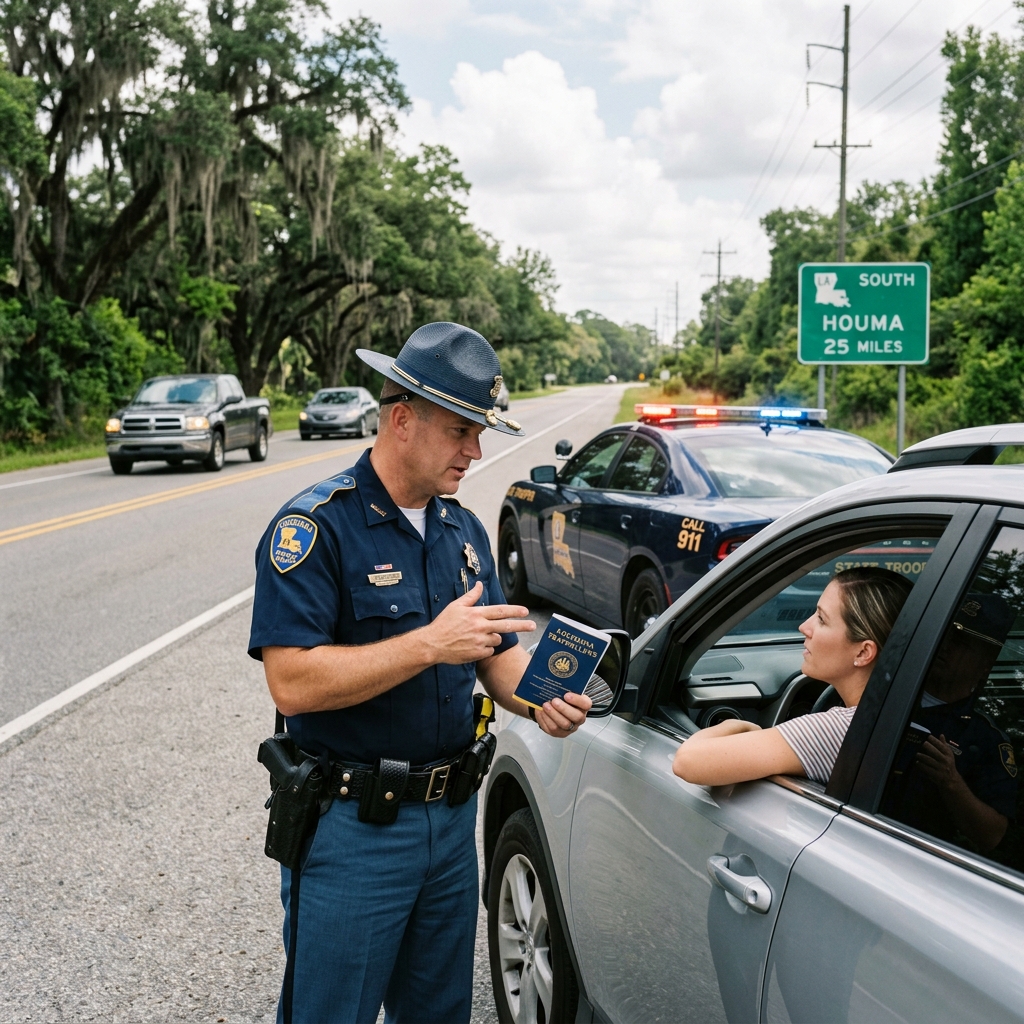
Louisiana drivers face a wide set of traffic rules that cover everyday conduct on the road, from speeding and phone use to insurance, sobriety, and license suspension. The basic framework comes from the state’s motor vehicle and traffic regulations, while recent changes have added stricter rules for handheld device use, uninsured drivers, and certain dangerous driving behaviors.
This guide organizes the most important parts of Louisiana traffic law into plain language. It is designed to help drivers understand what the rules require, how violations are commonly punished, and which habits can lead to fines, court costs, or loss of driving privileges.
What Louisiana traffic law covers
Louisiana’s traffic rules do more than set speed limits. They regulate how drivers obtain and keep a license, when a vehicle must be insured, how motorists should behave in traffic, and what happens after a crash or citation.
In practice, the law touches nearly every part of driving:
- Licensing and proof of driving privilege
- Insurance and financial responsibility
- Speeding and lane use
- Seat belt and child restraint requirements
- Texting, handheld phone use, and distracted driving
- DWI testing, suspension, and other criminal penalties
- Reporting requirements after a collision
Licensing and the right to drive
To drive legally on Louisiana public roads, a person must hold a valid driver’s license, and driving with a suspended or revoked license can create additional penalties. The state also limits how many licenses a person may hold and requires proper identification when applying for or renewing driving credentials.
For younger drivers, Louisiana places extra restrictions on nighttime driving and on the conditions under which a minor may operate a vehicle. These rules are part of the state’s broader effort to reduce crash risk among less experienced drivers.
Insurance and financial responsibility
Louisiana requires motorists to maintain proper automobile liability coverage for registered vehicles. Operating a vehicle without insurance can expose a driver to serious financial consequences, especially after a crash.
Recent changes have increased the pressure on uninsured motorists. According to current reporting on the new laws, uninsured drivers may face harsher out-of-pocket exposure after an accident, including damages that must be paid directly when claims arise. The practical result is simple: if a driver lacks insurance, even a minor collision can become expensive quickly.
Speed limits and lane discipline
Speeding remains one of the most common traffic problems in Louisiana. State rules generally prohibit driving above posted limits and also prohibit driving so slowly that traffic is obstructed.
Louisiana law and related guidance commonly distinguish among different road types:
| Road type | Common speed rule | Notes |
|---|---|---|
| Ordinary highways | Posted limit controls | Lower speeds may apply where signs require them |
| Interstate or access-controlled highways | Up to 70 mph in many areas | Only when not otherwise posted |
| Multi-lane highways | Commonly 65 mph | Subject to local signs and special restrictions |
Drivers should also pay attention to the left lane. A newer Louisiana rule can penalize motorists for driving under the posted speed limit in the left lane, reflecting the state’s effort to keep traffic moving and reduce lane-blocking behavior.
Passing, right-of-way, and basic roadway order
Louisiana road law also governs how vehicles interact with one another. State traffic rules address right-of-way at intersections, passing rules, and driving on the correct side of the road. These rules may seem routine, but they are among the most important for preventing collisions.
Common duties include:
- Yielding when another driver has the right-of-way
- Passing only when the lane and roadway conditions make it safe
- Driving on the proper side of the road unless an exception applies
- Using extra caution where visibility is limited or traffic controls are unclear
In a crash investigation, failure to follow these ordinary right-of-way rules can become a major issue when fault is assigned.
Seat belts and child passenger protection
Louisiana requires vehicle occupants to use seat belts in moving vehicles, and child passengers must be carried in a restraint system that meets applicable safety standards. These laws are intended to reduce injuries in the event of sudden braking, rollover, or impact.
Families should treat child restraint compliance as a legal issue, not just a safety preference. An improper seat, loose installation, or incorrect restraint type can create both safety risk and possible legal exposure.
Handheld phones, texting, and distracted driving
Distracted driving is now a major focus of Louisiana traffic enforcement. The state has moved toward a broader ban on holding a phone while driving, while still allowing hands-free use for calls and GPS navigation.
Louisiana guidance also prohibits writing, sending, or reading text messages and bars social media activity behind the wheel. Although the details vary by statute and enforcement phase, the core message is consistent: drivers are expected to keep their hands and attention on the road.
There are limited exceptions for emergencies and certain work-related communication needs, such as reporting a crash, medical emergency, serious hazard, or similar urgent situation. Even so, the safest assumption is that any handheld interaction with a device can create legal risk.
Alcohol, DWI, and open-container rules
Louisiana’s drunk-driving laws are among the most serious traffic-related offenses because they combine roadway danger with criminal penalties. Driving under the influence of alcohol or drugs is a criminal offense, and the state sets blood alcohol concentration thresholds based on driver category.
| Driver group | Common BAC limit |
|---|---|
| Adults over 21 | 0.08 |
| Commercial drivers | 0.04 |
| Drivers under 21 | 0.02 |
The state also restricts open containers in moving vehicles. A driver or occupant generally may not possess an open alcoholic beverage in a moving motor vehicle. For underage drivers, Louisiana also maintains strict rules against buying, consuming, or possessing alcohol.
What happens after a traffic stop or citation
A traffic citation in Louisiana can lead to more than a simple fine. Depending on the offense, a driver may face court costs, points, higher insurance rates, or a short-term or long-term license problem.
Some violations are treated as nonmoving offenses, while others carry more serious penalties because they involve unsafe driving behavior or public risk. Repeated violations can matter just as much as a single serious offense, especially when courts evaluate whether a driver has become a habitual offender.
Common consequences include:
- Money penalties and court costs
- Driver record points or equivalent enforcement consequences
- Insurance surcharges or policy issues
- Temporary suspension or revocation of driving privileges
- Possible jail exposure for serious offenses
License suspension and habitual offender risk
Louisiana can suspend a license for a range of reasons, including serious offenses and refusal to cooperate with chemical testing in a DWI investigation. A driver who refuses a breath or chemical test at a DWI checkpoint may lose driving privileges for a year, while a test showing an unlawful BAC can also lead to suspension.
Habitual violations create another layer of risk. According to the available reporting, accumulating at least 10 traffic violations within three years can lead to the loss of driving privileges as a habitual offender. That threshold matters because repeated small violations may eventually produce consequences much more serious than the original ticket.
Crashes, reporting duties, and documentation
When a vehicle crash causes injury, death, or property damage, Louisiana law requires the driver to report the incident and provide identifying information. This requirement helps police, insurers, and injured parties document what happened and determine next steps.
After a collision, drivers should focus on three priorities:
- Checking for injuries and calling emergency help if needed
- Exchanging required information
- Preserving evidence such as photos, witness details, and location data
Failure to report or leaving the scene can worsen an already serious legal situation.
Vehicle equipment and visibility rules
Traffic law does not stop at driving behavior. Louisiana also regulates equipment issues such as window tinting, and the state recently relaxed tint limits by lowering the required visible light transmission for front side windows from 45% to 25%.
That kind of change matters because equipment violations can trigger stops even when the driver is not speeding or weaving. Drivers who modify their vehicles should confirm that tint, lights, mirrors, and other equipment comply with current standards before taking the vehicle on public roads.
How to reduce your risk on Louisiana roads
The easiest way to avoid trouble is to treat traffic law as a daily driving checklist rather than a set of rules you only think about after a citation. A careful driver usually stays safer, avoids penalties, and keeps insurance and license issues under control.
Helpful habits include:
- Keeping proof of insurance current and accessible
- Using hands-free technology instead of holding a phone
- Watching posted speed limits and lane restrictions
- Using seat belts every trip
- Never driving after drinking or using impairing substances
- Reporting a crash promptly when the law requires it
Drivers should also remember that traffic enforcement changes over time. Louisiana lawmakers have recently updated phone rules, left-lane enforcement, tint standards, uninsured-driver penalties, and hit-and-run consequences, so older habits may no longer be legally safe.
Frequently asked questions
Is texting while driving illegal in Louisiana? Yes. Louisiana prohibits writing, sending, or reading text messages while driving, and newer rules also restrict handheld phone use more broadly.
What is the legal BAC limit in Louisiana? For most drivers over 21, the limit is 0.08 BAC. Commercial drivers and drivers under 21 are subject to lower limits.
Can I drive with a phone in my hand if I am using GPS? Louisiana allows hands-free or wireless use, but holding the device while driving is restricted under the newer statewide approach.
Can I lose my license for too many tickets? Yes. Louisiana can suspend or revoke driving privileges for serious offenses, refusal to take testing, or repeated violations that lead to habitual offender treatment.
Do I have to report every crash? Crashes involving injury, death, or property damage must be reported under Louisiana rules, and drivers must provide the required identifying information.
Final takeaways for Louisiana drivers
Louisiana traffic law is built around several core ideas: keep the car insured, drive at safe and lawful speeds, stay off the phone, do not drive impaired, and follow reporting and restraint rules when a crash or child passenger is involved.
For most drivers, the biggest legal risks come from habits that feel minor in the moment but add up fast over time. A single citation can be expensive; repeated violations, a DWI stop, or an uninsured crash can affect a license, a wallet, and a driving record for much longer.
References
- New Louisiana traffic laws taking effect Aug. 1 — KATC. 2025-08-01. https://www.katc.com/news/new-louisiana-traffic-laws-taking-effect-aug-1
- Louisiana Revised Statutes Title 32 (2025) – Motor Vehicles and Traffic Regulation — Louisiana State Legislature / Justia. 2025. https://law.justia.com/codes/louisiana/revised-statutes/title-32/
- Traffic Safety Laws — Louisiana Highway Safety Commission. 2026. https://www.lahighwaysafety.org/resources/traffic-safety-laws/
- Louisiana Traffic Laws — FindLaw. 2026. https://www.findlaw.com/state/louisiana-law/louisiana-traffic-laws.html
- Louisiana Drivers Guide — LSU Health New Orleans. 2020. https://www.lsuhsc.edu/administration/academic/ois/docs/2052%20-%20LA%20English%20Drivers%20Guide%20R%200211.pdf
- Louisiana Traffic Laws | Here’s What You Need to Know — Mahone Firm. 2026. https://mahonefirm.com/louisiana-traffic-laws/
Similar Articles








Read full bio of Sneha Tete


