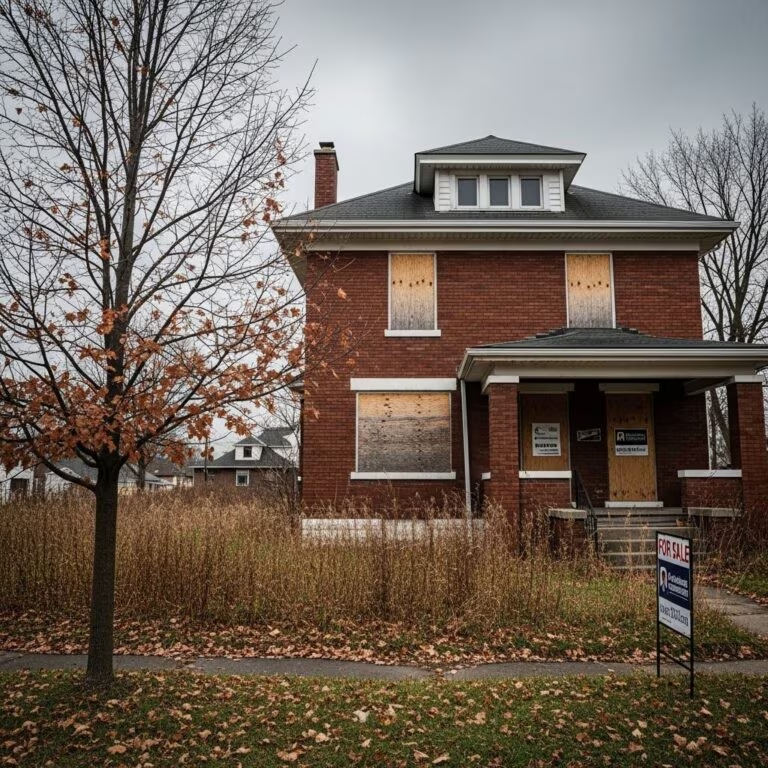
Owning a rental property is both an investment and a business, and like any business, it faces risks that can quickly erode your profits if you are not properly insured. Landlord insurance is designed specifically to help rental property owners manage those risks by providing targeted protection for the building, your income, and your legal liability when tenants or visitors are injured or suffer damage on the premises.
This guide explains what landlord insurance is, how it protects your rental properties, which core coverages you should consider, and how to tailor a policy to your specific situation as a landlord or real estate investor.
What Makes Landlord Insurance Different from Homeowners Insurance?
Many first-time landlords assume their standard homeowners insurance will protect them when they start renting out a property. In most cases, that assumption is incorrect. Insurance companies treat a rental property as a commercial risk rather than a purely personal residence, and they typically require a dedicated landlord or dwelling policy once you are regularly collecting rent from tenants.
- Business activity: Renting a property is considered a business exposure, with risks such as tenant injuries, property damage caused by tenants, and disputes over habitability that are not fully contemplated by a standard homeowners policy.
- Different occupancy patterns: Tenants use and maintain properties differently than owners. Insurers therefore design landlord coverage around more frequent turnover, varied maintenance habits, and potentially less direct oversight by the owner.
- Income dependence: Rental properties often represent a stream of income for the owner. Landlord policies can include protection for loss of rental income if the property becomes uninhabitable due to a covered event, something homeowners insurance does not typically offer.
Because of these differences, most lenders will require a specialized rental or dwelling policy when a mortgaged property is occupied by tenants rather than by the borrower.
Core Components of Landlord Insurance
Although policy details vary by insurer, most landlord insurance packages revolve around three major components: property coverage, premises liability, and loss of rental income.
1. Property and Building Coverage
Property coverage protects the physical structure you rent out and, often, certain items you own inside it. Insurers typically cover damage from specific “perils” such as fire, windstorms, hail, vandalism, or theft, subject to the terms and limits of your policy.
- Primary dwelling: The main building is covered for structural damage from listed perils. This may include the roof, walls, floors, and built-in fixtures.
- Other structures: Garages, sheds, fences, or detached buildings on the property often share coverage under the same policy.
- Landlord-owned contents: Appliances, furnishings, and equipment that you provide for tenant use or for property maintenance (such as lawn mowers or snow blowers) may be covered if damaged by a covered event.
To decide how much property coverage you need, focus on the cost to rebuild or repair the structure rather than its market value. Market prices reflect factors like location and demand that are not directly relevant to reconstruction expenses.
2. Premises Liability Coverage
Liability coverage is critical for landlords because it can protect you when someone alleges you were negligent and seeks compensation for injury or property damage. Premises liability focuses on incidents that occur on or around your rental property.
- Bodily injury claims: If a tenant or visitor is hurt due to a condition on the property, such as a broken handrail or an uneven walkway, liability coverage may help pay for medical costs, legal fees, and any settlements or judgments, subject to policy limits.
- Property damage to others: If your building or systems cause damage to a neighbor’s property (for example, a burst pipe flooding the adjacent unit), liability protection can help cover those losses.
- Legal defense: Many policies include the cost of hiring an attorney and defending a claim in court within the liability coverage section, which can be substantial even if you ultimately prevail.
Because liability exposures can be unpredictable and potentially severe, landlords often pair their underlying policy with an umbrella liability policy that provides additional limits above and beyond the standard coverage.
3. Loss of Rental Income Protection
One of the most valuable features of landlord insurance is the option to insure against lost rent if your property becomes uninhabitable due to a covered event, such as a fire or severe storm damage.
Loss of rental income coverage, sometimes called loss of use or loss of rent, typically reimburses you for the rental income you would have collected while the unit is being repaired and cannot legally or safely be occupied.
- Triggering events: Only losses caused by covered perils will activate this coverage. For example, rent lost during repairs for fire damage might be covered, whereas a vacancy caused by routine renovations might not be.
- Time and limits: Policies generally cap the reimbursement period and total amount, such as a specific number of months or a percentage of the annual rent.
- Income stability: For landlords who rely on rental proceeds to make mortgage payments or cover living expenses, this coverage can be crucial to avoid financial strain after a major loss.
Typical Coverage vs. Common Exclusions
Understanding what landlord insurance does not cover is just as important as knowing what it does cover. Many disputes arise when landlords assume a policy will pay for expenses that are explicitly excluded.
| Typically Covered | Commonly Not Covered |
|---|---|
| Fire, lightning, and smoke damage to the building | Normal wear and tear or gradual deterioration |
| Certain types of storm damage (e.g., wind, hail), as specified in the policy | Floods and earthquakes, unless you purchase separate specialized coverage |
| Vandalism and some theft-related damage | Tenant belongings (these are usually covered under their renters insurance, not your landlord policy) |
| Liability for injuries to tenants or visitors due to property conditions | Intentional acts or illegal activities carried out by the landlord |
| Loss of rental income when the property is uninhabitable due to a covered peril | Income lost due to market conditions, non-payment of rent, or voluntary vacancy |
| Damage to landlord-owned appliances and furnishings caused by covered events | Routine repairs or maintenance (e.g., fixing a worn-out furnace or replacing an aging roof) |
Because exclusions can be detailed and technical, landlords should review their policy documents carefully and ask their insurance representative to explain any ambiguous language.
Optional Add-Ons and Specialized Coverage
Base landlord policies are designed to cover the most common risks, but you may need additional protection depending on your property type, location, and business model. Many insurers offer optional endorsements or separate policies that can be layered onto your core coverage.
- Flood insurance: Standard landlord policies generally exclude flood damage. If your property is in a flood-prone area, consider coverage through the National Flood Insurance Program or a private flood insurer.
- Earthquake coverage: Properties in seismically active regions may require a separate earthquake policy, which addresses structural damage from ground movement.
- Equipment breakdown: This type of coverage can help pay for sudden, accidental failures of systems such as boilers or HVAC equipment, distinct from normal wear and tear.
- Tenant damage endorsements: Some insurers offer enhanced protection for intentional or severe damage caused by tenants that goes beyond standard vandalism language.
- Short-term rental coverage: If you use platforms like vacation rental websites, you may need specific endorsements to handle frequent guest turnover and different liability exposures.
How Landlord Insurance Protects Your Investment Over Time
For many owners, rental property represents a significant portion of their net worth. Landlord insurance can help preserve that wealth across multiple dimensions.
- Preserves capital: Without insurance, you would be responsible for the full cost of repairing or rebuilding after a catastrophic event, which could require liquidating assets or taking on debt.
- Supports cash flow: Loss of income coverage helps stabilize your finances when rent temporarily stops due to covered damage, keeping you on track with mortgage payments and other obligations.
- Mitigates legal exposure: Liability coverage reduces the risk that a single injury claim will jeopardize your savings or future investment plans.
- Enables long-term planning: Knowing that major risks are insured allows you to focus on strategic decisions such as renovations, refinancing, or portfolio expansion.
Viewed holistically, landlord insurance is not just a cost; it is a risk management tool that underpins a sustainable rental business.
Practical Steps to Choosing and Managing Landlord Insurance
Selecting the right policy requires understanding both your properties and your risk tolerance. Consider the following approach when evaluating landlord insurance options.
Assess Your Properties and Exposure
- Identify the number of units you own, their locations, construction types, and current condition.
- Estimate the cost to rebuild each structure and list any unique features, such as historic materials or specialized systems.
- Review your current rental agreements to understand your obligations related to maintenance, utilities, and common areas.
Compare Insurance Providers and Policy Types
- Check which insurers offer landlord or dwelling policies in your area and whether they cover the specific property types you own (single-family homes, small multi-unit buildings, condominiums, etc.).
- Ask for quotes that include key coverages: property, liability, and loss of rental income, plus any endorsements you may need.
- Look at financial strength ratings and customer service track records, as claims handling quality can significantly affect your experience after a loss.
Review Policy Limits, Deductibles, and Exclusions
- Ensure that property limits align with reconstruction costs, not just market value.
- Choose liability limits that reflect your overall asset base; higher limits may be appropriate for investors with multiple properties.
- Understand deductibles and how they affect premiums. Higher deductibles can reduce annual cost but increase your out-of-pocket obligations after smaller claims.
- Pay close attention to exclusions, especially for water damage, mold, and tenant-caused issues, and consider whether additional endorsements are needed.
Maintain Ongoing Risk Management
- Keep properties well maintained: repair hazards promptly, maintain adequate lighting, and comply with building codes to reduce the likelihood of claims.
- Use written leases that clearly allocate responsibilities between you and your tenants, including requirements for renters insurance when appropriate.
- Review your coverage annually or when you acquire new properties, renovate existing ones, or significantly change rental terms.
FAQs About Landlord Insurance
Do I legally have to carry landlord insurance?
There is generally no universal law requiring landlord insurance, but if your rental property is financed, lenders typically require a dwelling or rental policy as a condition of the mortgage. Even when it is not mandated, carrying insurance is strongly recommended due to the potential size of property and liability losses.
Is landlord insurance the same as renters insurance?
No. Landlord insurance protects the building, the landlord’s liability, and often loss of rental income. Renters insurance covers the tenant’s personal belongings, liability, and sometimes additional living expenses if they have to move out temporarily. Both types of insurance work together to protect different parties and interests.
Does landlord insurance cover tenant-caused damage?
Policies may cover certain types of tenant-caused damage if it falls under a listed peril, such as fire or vandalism. However, general wear and tear or minor damage is typically excluded. Some insurers offer endorsements that broaden coverage for deliberate or severe tenant damage, so it is important to discuss this exposure when obtaining quotes.
Will my policy pay for routine repairs and upgrades?
Landlord insurance is designed to address unexpected, covered events rather than routine maintenance. Replacing aging systems, handling ordinary repairs, or completing upgrades to attract tenants falls under normal operating expenses for the landlord and is not covered by standard policies.
How can I reduce my landlord insurance premiums?
You can often lower premiums by implementing risk-reducing measures such as installing smoke detectors, security systems, and updated electrical and plumbing; choosing higher deductibles; bundling multiple policies with the same insurer; and maintaining a favorable claims history. However, cost should not be the only factor—adequate coverage is essential to protect your investment.
References
- What Does Landlord Insurance Cover? — Allstate. 2023-06-15. https://www.allstate.com/resources/landlord-insurance/what-is-landlord-insurance
- Insurance 101: Everything Landlords Need to Know to Protect Their Properties — National Real Estate Insurance Group. 2023-05-10. https://nreig.com/insurance-101-everything-landlords-need-to-know-to-protect-their-properties/
- Landlord Insurance for Rental Properties — Travelers. 2022-11-01. https://www.travelers.com/resources/home/landlords/landlord-insurance-for-rental-properties
- What Is Landlord Insurance? — Progressive. 2024-01-05. https://www.progressive.com/answers/landlord-insurance/
- What Does Landlord Insurance Cover? — Nationwide. 2023-02-20. https://www.nationwide.com/lc/resources/home/articles/what-does-landlord-insurance-cover
- Landlord Insurance for Rental Properties — USAA. 2022-09-30. https://www.usaa.com/insurance/property/landlord/
- Best Landlord Insurance Companies (2024) — Policygenius. 2024-03-18. https://www.policygenius.com/homeowners-insurance/best-landlord-insurance-companies/