
Child Support Modification: Complete Guide To Filing And Proof
Learn when child support can be changed, what evidence helps, and how the court review process usually works.
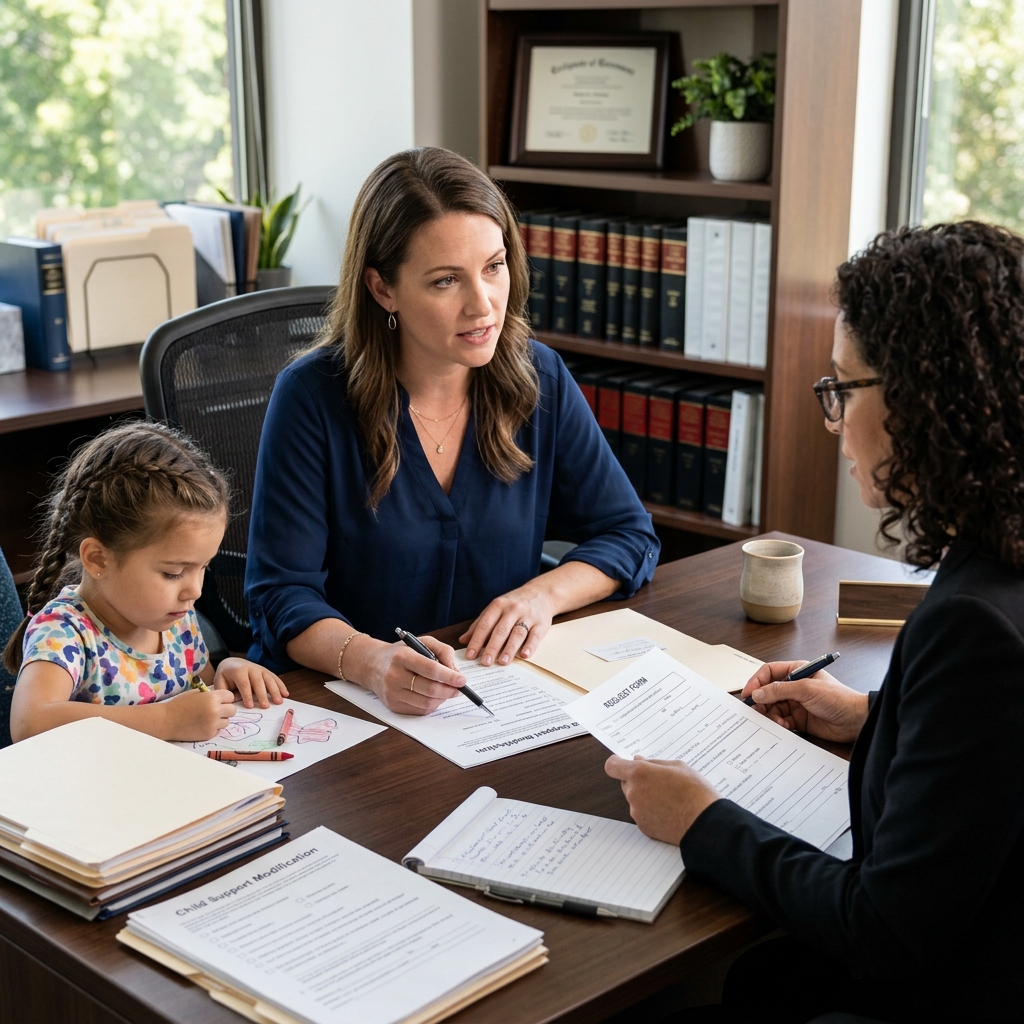
When a Child Support Order Can Be Revisited
Child support orders are designed to reflect a family’s financial reality at the time the order is entered, but that reality can change. A parent may lose a job, take on new expenses, become disabled, or experience a major change in custody or parenting time. When that happens, the support amount may no longer be fair or workable, and the law in many states allows a parent to ask for a new review of the order.
The key point is that support does not usually change on its own. A parent must take action by asking the court or the child support agency to modify the order. That request typically needs to show a meaningful change in circumstances, not just a temporary inconvenience or a short-term drop in income.
Although the exact rules differ by state, the overall process is similar nationwide: identify the legal basis for modification, collect proof, file the proper papers, notify the other parent, and attend a hearing or administrative review if required.
Common Reasons Support May Change
Courts generally look for a significant change that affects the financial balance of the original order. Examples often include:
- A parent’s income increases or decreases substantially
- A parent becomes unemployed or underemployed for reasons beyond normal job changes
- A child begins living primarily with the other parent
- Health-care, child-care, or education costs rise or fall sharply
- A parent develops a disability or experiences another major financial hardship
- The order is old enough that a periodic review is permitted under state rules
Some states also allow modification after a set number of years, even without proving a dramatic financial event. Others use a percentage-based test to see whether the current support amount would be materially different under today’s numbers. Because these standards vary, parents should check the law that applies to the original order before filing.
Choosing the Right Place to File
The correct filing location depends on how the original support order was created. In many situations, the case stays with the court that issued the original order. In other systems, the request may begin with a child support enforcement agency or a similar administrative office. Either route can lead to a court review if the law requires judicial approval.
If the order came from a divorce case, it may still be possible to ask the family court to modify child support even if the divorce was handled elsewhere. If the order came from a separate child support case, the request may need to go through the court or agency that maintains the file. Parents should not assume that the nearest courthouse is automatically the correct one.
Where the child lives, where the filing parent lives, and where the original order was entered can all matter. A local court clerk or state child support office can usually explain the proper venue, but the parent filing for modification remains responsible for making sure the request goes to the right place.
Court Review Versus Administrative Review
Some states offer two paths: a formal motion in court and an agency review. A court motion is a request for a judge to change the order after receiving evidence from both sides. An administrative review is handled by a child support agency and may be faster or simpler in some cases. The available path often depends on whether the support order is being enforced by the state, how the order was originally entered, and whether a waiting period has passed since the last review.
Even when an agency review is available, either parent may still need to go to court if the other side contests the change or if the court must sign the new order. The safest approach is to follow the procedure listed in the original support paperwork or the state’s official instructions.
What Evidence Helps Support a Modification Request
A request to change support should be backed by documents, not just a statement that things have become difficult. The goal is to show the court or agency exactly what changed and how that change affects the support calculation. Well-organized records can make the request easier to understand and more credible.
Useful documents often include:
- Recent pay stubs
- Tax returns and W-2 forms
- Termination letters or proof of layoff
- Statements showing unemployment benefits or disability benefits
- Rent receipts or mortgage statements
- Medical bills and insurance records
- Child-care invoices
- Proof of a change in parenting time or physical custody
- Bank statements or other records showing current income and expenses
Financial affidavits or income-and-expense statements are especially important. These forms usually ask the parent to list monthly income, household expenses, debt obligations, and benefits received. Accuracy matters because these forms often become the basis for the support calculation. If a parent omits information or estimates carelessly, the result may be an incorrect order or credibility problems later.
Why Temporary Hardship Is Not Always Enough
A short-term problem may not justify a permanent change. For example, a brief reduction in overtime, a few missed work shifts, or a temporary increase in expenses may not persuade a judge to alter an order. Courts usually want to know whether the change is continuing or likely to last long enough to make the current amount unrealistic.
That does not mean a parent must prove the change will last forever. It does mean the request should show a real shift in circumstances rather than a one-time setback. If the situation later improves, a new review may be appropriate.
How the Request Is Usually Started
Most modification cases begin with a formal written request. Depending on the state, that request may be called a motion, petition, application, or administrative review request. The forms generally ask for identifying information, the current support order number, the reason for the requested change, and the financial facts that support it.
In many courts, the process includes completing a financial disclosure form and signing it before a notary. Some jurisdictions provide standardized forms online or through a self-help center. Others require paper filing at the courthouse. If the state child support program is involved, there may be a separate review form and submission method for the agency.
After the paperwork is filed, the other parent must receive formal notice. This step is usually called service. Service rules are strict, and a mistake here can delay the case or require the request to be refiled. Once the other parent is notified, they may agree, oppose the request, or submit their own evidence.
What Happens After Filing
Once both sides have the chance to respond, the court or agency may schedule a hearing. At that hearing, each parent can explain the change in circumstances and present documents or testimony. In some cases, the judge reviews the written papers and makes a decision based on the records alone. In others, live testimony is necessary.
The court’s job is not simply to choose the more sympathetic parent. It is to decide whether the legal standard for modification has been met and, if so, what amount of support is appropriate under the current facts. That means both income and household circumstances matter.
How Judges Think About a New Support Amount
When a court decides whether to modify child support, it usually applies the state’s child support guidelines. These guidelines are formulas that consider income, custody time, health insurance costs, child-care expenses, and other relevant factors. The final amount may be different from the old order because the underlying numbers are different.
Some states require a showing that the new calculation would differ by a specific percentage before the court will reopen the order. Others require a substantial or material change, which is more flexible but still meaningful. In either system, the parent asking for the change should be ready to show not only that something has changed, but also that the changed facts affect support in a concrete way.
It is also important to remember that child support modification usually does not solve custody, visitation, or parenting-time disputes. Those issues may be related in practical life, but they are typically handled in separate parts of the case. A request to change support should focus on financial facts unless the state’s form specifically asks about parenting time because it affects the calculation.
When the Children’s Residence Changes
If a child starts living primarily with the paying parent, support may need to be reduced or even redirected. A change in residence affects who is paying the child’s direct daily expenses and may change the guideline calculation substantially. In those cases, the filing parent should provide documentation showing when the child moved and how long the new arrangement has lasted.
Courts are often more receptive to a modification request when the change is clear, documented, and ongoing. School records, lease agreements, custody orders, and correspondence between the parents may help establish the new living arrangement.
Special Situations That Often Matter
Some circumstances deserve special attention because they often trigger review more quickly or create unique legal issues. For example, incarceration may affect a parent’s ability to pay, though the exact impact depends on state law and the circumstances of the case. Disability can also change the calculation if income drops and benefits replace wages. A parent who receives public assistance or government benefits may need to disclose those amounts carefully because they can affect the final guideline number.
Parents should also be careful when a support order is tied to an older divorce decree or an out-of-state case. Interstate support rules can affect where the request must be filed and which state’s law applies. When jurisdiction is unclear, getting help early can save time and avoid filing in the wrong court.
Practical Tips for a Stronger Request
- File as soon as the change becomes clear instead of waiting months
- Keep copies of every form, pay stub, and notice you submit
- Use exact monthly figures when possible rather than rough guesses
- Bring organized records to the hearing in chronological order
- Be ready to explain why the change is ongoing and not temporary
- Do not ignore the existing order while waiting for a new one
One of the most common mistakes is assuming the court will make the change retroactively from the date the financial hardship began. In many states, modification applies only after the request is filed or after service is completed. That is another reason to act quickly once a real change in circumstances occurs.
Frequently Asked Questions
Can either parent ask for a change?
Yes. In most states, either parent may request a modification, whether they pay support or receive it. The parent making the request still has to show that the legal standard for changing the order has been met.
Do I need a lawyer to modify child support?
Not always. Many courts and child support agencies provide forms and self-help instructions. However, a lawyer can be helpful if the finances are complicated, the other parent disputes the facts, or the case involves multiple states or unusual custody arrangements.
Will support automatically stop when a child turns 18?
Not necessarily. The rules depend on state law and the wording of the support order. Some orders end at majority, while others continue for a longer period in limited situations. Parents should review the original order and local law before assuming the obligation has ended.
Can we agree to a new amount without going to court?
Parents can agree informally, but a private agreement does not usually replace the court order unless the agreement is approved by the court or agency with authority over the case. Until then, the old order may still control and remain enforceable.
What if the other parent refuses to cooperate?
A refusal does not stop the process. The court can still hear the request if the filing parent follows the correct procedures, serves the papers properly, and presents evidence showing why the order should change.
What to Expect After the Decision
If the judge or agency approves the modification, a new support amount will be set and the order will be updated. The new amount may increase, decrease, or stay the same if the evidence does not support a change. The parties should read the new order carefully, because it may also address payment dates, arrears, medical support, or other related obligations.
Once the order changes, the parent responsible for paying should follow the new amount exactly and keep records of each payment. If the new order still feels wrong later because circumstances change again, another modification request may be possible. Child support is meant to track real life, but it only does so when a parent formally asks for review and proves the need.
References
- How can I change my child support payment? — LawHelpNY. n.d. https://www.lawhelpny.org/resource/how-can-i-change-my-child-support-payment
- Modifying Child Support — The Maryland People’s Law Library. n.d. https://www.peoples-law.org/modifying-child-support
- Changing child support in Ohio — Ohio Legal Help. n.d. https://www.ohiolegalhelp.org/topic/child-support-mod
- Request a Modification — Illinois Department of Healthcare and Family Services. n.d. https://hfs.illinois.gov/childsupport/parents/modifications.html
- Modify Order — New York State Child Support Program. n.d. https://childsupport.ny.gov/order/modify
- Modify My Order — Los Angeles County Child Support Services. n.d. https://cssd.lacounty.gov/modify-my-order/
Similar Articles








Read full bio of Sneha Tete


