
Filing For Divorce In California: A Step-By-Step Guide For You
A clear, practical guide to starting a California divorce case, from forms to filing to service.
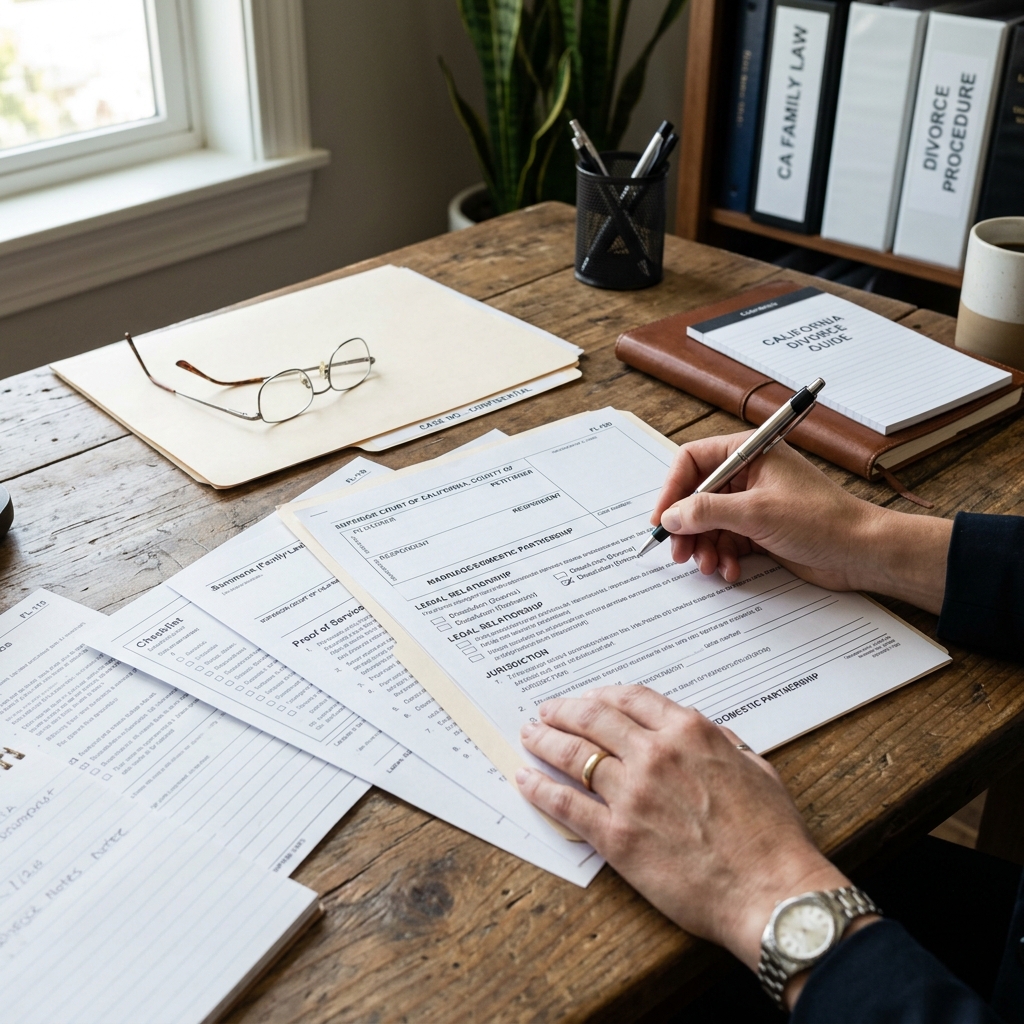
Starting a Divorce in California: What the Process Really Involves
Filing for divorce in California is less about one single form and more about completing a sequence of legal steps in the right order. The process begins with meeting the state’s residency rules, continues with preparing and filing the correct court papers, and then requires formally delivering those papers to your spouse. After that, both sides must exchange financial information and either work toward an agreement or move forward with court involvement if they disagree.
For many people, the easiest way to think about divorce filing is as a checklist. If one item is missing, the court may not move the case forward. California’s self-help resources and court forms are designed to guide people through this sequence, but the process still requires attention to detail and careful timing.
Confirm That You Can File in California
Before a divorce case can begin, at least one spouse must meet California’s residency requirements. In general, one spouse must have lived in California for the past six months and in the county where the case is filed for the past three months. If those requirements are not met, the court usually cannot accept a standard divorce filing yet.
This residency rule matters because divorce is filed in a specific county court, not simply anywhere in the state. If a couple recently moved, or if one spouse lives in another state, it is important to confirm the correct filing location before preparing the paperwork. Filing in the wrong county can delay the case and create avoidable problems.
Gather the Right Forms Before You File
California uses statewide family law forms, and most divorce cases begin with a core set of papers. The main starting forms usually include the Petition for Dissolution of Marriage or Domestic Partnership, the Summons, and, when children are involved, custody-related forms. Some cases also require local county forms, which vary by courthouse.
- Petition to begin the divorce case
- Summons to notify the other spouse that a case has been filed
- Child custody jurisdiction form if minor children are part of the case
- Local forms required by the county court
- Optional attachments if you need more space for property, debts, or parenting information
It is also wise to make copies of the completed documents before filing. Courts often require original paperwork plus several copies, and keeping your own full set helps you track what has been submitted and served.
Complete the Initial Court Papers Carefully
The initial paperwork does more than open a case. It tells the court and your spouse what you are asking for. In a divorce petition, this may include information about children, property, support, and whether you are asking for a dissolution of marriage or a legal separation instead. Accuracy matters because these first forms create the framework for the rest of the case.
If you have children, custody and parenting-related information becomes especially important. California courts use specific forms to address jurisdiction, custody, and visitation. If you need extra room to list assets and debts, the forms allow for additional declarations or attachments. The goal is to give a complete picture without leaving out essential information.
File the Papers With the Court
Once the forms are filled out, they must be filed with the family law clerk’s office in the proper county. This step officially starts the case. Depending on the court, filing may be done in person, by mail, or through electronic filing if the county allows it.
When you file, the court will assign a case number and stamp the documents as filed. Those stamped copies are important because they prove the case has been opened. You should keep several conformed copies for your records and for later service on your spouse.
| Filing option | What it means | Common use |
|---|---|---|
| In person | You bring the papers to the courthouse clerk | Helpful if you want immediate confirmation |
| By mail | You send the documents to the court | Used when the court accepts mailed filings |
| Electronic filing | You submit documents online through the court system | Available in some counties |
Pay the Filing Fee or Ask for a Waiver
Most divorce cases require a filing fee when the petition is submitted. The amount can change over time, and counties may update their schedules, so it is important to confirm the current fee with the court. For people who cannot afford the cost, California courts allow a request to waive court fees.
A fee waiver is not automatic. You typically must submit a separate application showing financial need. If the court approves the request, some or all of the fees may be waived. This option can be especially important for people with low income, temporary unemployment, or significant financial hardship.
Serve Your Spouse the Right Way
After filing, the next major step is service of process. This means delivering the filed papers to your spouse in a way that satisfies court rules. You usually cannot serve the papers yourself. Instead, a sheriff, professional process server, or another eligible adult who is not involved in the case completes service.
Service matters because the other spouse must receive notice and an opportunity to respond. The court needs proof that delivery happened correctly. In many cases, that proof is filed through a proof of service form signed by the person who delivered the documents.
- Filed petition
- Filed summons
- Any required child custody jurisdiction forms
- Additional documents the other spouse needs to respond
- Proof of service after delivery is completed
Exchange Financial Information Early in the Case
California divorce law requires spouses to exchange detailed financial disclosures. This part of the process helps both sides understand the marital estate and supports informed settlement discussions. Even if the case is unresolved, the financial disclosure duty still applies.
Common disclosure documents include a declaration of disclosure, an income and expense statement, and a schedule of assets and debts or a property declaration. These forms help identify salary, bank accounts, retirement funds, debts, real estate, and other assets that may need to be divided or addressed in the divorce.
Supporting documents often accompany the forms. These can include tax returns, pay stubs, mortgage statements, bank statements, loan records, and insurance documents. Keeping copies organized can make the process much smoother, especially if the case becomes contested.
Decide Whether Your Case Is Simple or Contested
Not every California divorce follows the same path after filing. In some cases, both spouses agree on property division, support, and parenting issues. In others, one spouse disputes some or all of the terms. The level of disagreement affects how long the divorce takes and how much court involvement is needed.
If both spouses agree, they may be able to submit agreements and finish the case without a trial. If they disagree, they may need court hearings, temporary orders, mediation, or a final trial before a judge decides the unresolved issues. The filing process is the same at the start, but what happens afterward can diverge significantly.
What Happens After the Initial Filing
After service and disclosure, the case moves into its next phase. The spouses may negotiate directly, use mediation, or exchange settlement proposals. If they are able to resolve everything, the divorce may end with a written agreement and final judgment. If not, the court may set hearings to address disputes over custody, support, property, or other issues.
It is important to remember that a divorce is not final just because the petition has been filed. A judge must sign the final judgment before the marriage is legally ended. That means the filing phase is only the beginning of the overall process, even though it is one of the most important stages.
Common Mistakes That Can Slow a Divorce Case
People often run into delay because of simple, avoidable errors. The most common problems include filing in the wrong county, forgetting a required local form, failing to serve papers correctly, or missing financial disclosure deadlines. Another frequent issue is submitting incomplete information about children, property, or income.
Careful document review can prevent many of these problems. Before you file, check that every required signature is present, that all names and dates are correct, and that you have enough copies for both the court and the other spouse. If children are involved, confirm that the child custody forms match your family situation.
Frequently Asked Questions
Do I need a lawyer to file for divorce in California?
No. Many people file on their own using the court’s self-help forms. That said, legal advice can be useful if your case involves children, large assets, domestic violence, or disagreement about support or custody.
Can I file if my spouse lives in another state?
Yes, in some cases. The key issue is whether California residency requirements are met. If one spouse qualifies under the residency rules, the case may still be filed in California even if the other spouse lives elsewhere.
What if I cannot afford the filing fee?
You can ask the court for a fee waiver. If the court approves it, you may not have to pay the filing fee and may also qualify for relief from other court costs.
How long does the filing step take?
The actual filing can happen in a single day once the forms are ready, but service, disclosures, and the rest of the process usually take much longer. The overall timeline depends on whether the case is contested and whether the spouses reach an agreement.
What if my spouse refuses to accept the papers?
Personal acceptance is not required. The law allows service through approved methods, and the case can continue if service is completed properly and proof is filed with the court.
Planning the Next Steps After Filing
Once the case has been filed, served, and disclosed, the focus shifts to resolution. Some couples settle all issues privately. Others need court intervention to determine parenting schedules, child support, spousal support, or property division. Because California is a community property state, financial documentation becomes especially important in deciding what each spouse may receive or owe.
For anyone starting the process, the best approach is to treat divorce as a document-driven procedure. The more organized the paperwork is at the start, the easier it is to keep the case moving. Careful preparation, correct service, and timely disclosures are the foundation of a smoother California divorce.
References
- Start a divorce case — California Courts Self Help Guide. 2026. https://selfhelp.courts.ca.gov/divorce/start-divorce
- Fill out your divorce forms — California Courts Self Help Guide. 2026. https://selfhelp.courts.ca.gov/divorce/start-divorce/forms
- Divorce in California — California Courts Self Help Guide. 2026. https://selfhelp.courts.ca.gov/divorce-california
- Divorce / Legal Separation / Annulment — Superior Court of California, Orange County. 2026. https://www.occourts.org/divisions/family-law/divorce-legal-separation-annulment
- The California Divorce Process in Ten Steps — Cristin Lowe Law. 2026. https://cristinlowelaw.com/california-divorce-process-ten-steps/
- How Do I File for Divorce in California? — DivorceNet. 2026. https://www.divorcenet.com/resources/filing-for-divorce/california.htm
Similar Articles








Read full bio of Sneha Tete


