
Driving With a Suspended or Revoked License in Michigan
Understand Michigan’s rules, penalties, and options if you are caught driving while your license is suspended or revoked.
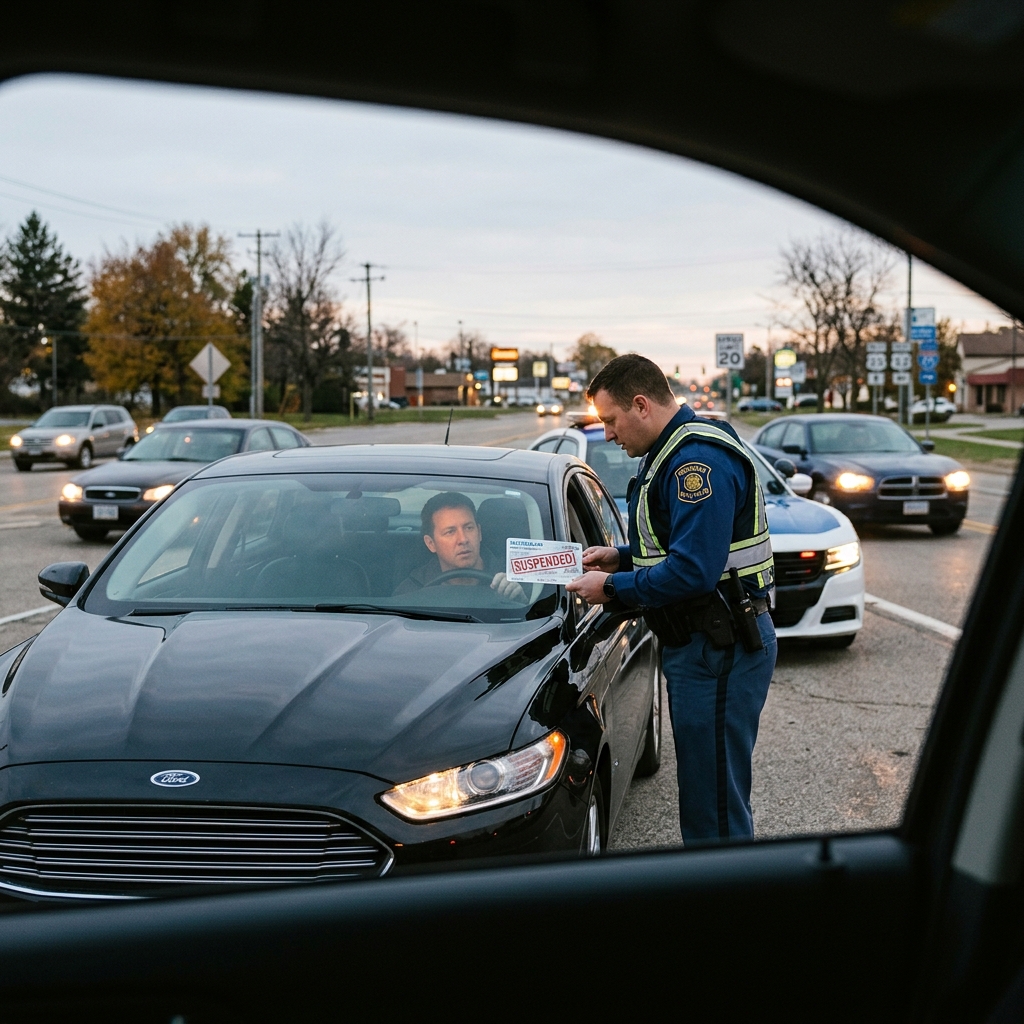
Driving is a daily necessity for many Michigan residents, but operating a vehicle while your license is suspended or revoked is a serious criminal offense under state law. Understanding the rules, penalties, and options for restoring your driving privileges can help you avoid long-term consequences and make informed decisions if you are already facing charges.
1. How Michigan Law Defines Suspended and Revoked Licenses
Michigan’s rules for driving without valid driving privileges are set out in Michigan Compiled Laws (MCL) 257.904. This statute makes it illegal to operate a vehicle when your driver’s license, registration certificate, or vehicle group designation is suspended, revoked, or denied, or if you never applied for a license at all.
1.1 Suspension vs. Revocation: Key Differences
Although both suspension and revocation mean you cannot legally drive, they are not the same:
- Suspended license – Your driving privilege is temporarily taken away for a defined period. After the suspension ends, you may regain your license by paying reinstatement fees and meeting all requirements, such as clearing tickets or completing court-ordered programs.
- Revoked license – Your driving privilege is terminated. You do not automatically get your license back when the revocation period ends; instead, you must apply for restoration and prove you are safe and suitable to drive again, typically through an administrative hearing with the Secretary of State.
In practice, revocation is more severe. For example, multiple drunk driving convictions can trigger a long-term revocation, and driving during that revocation can lead to additional mandatory revocation periods.
1.2 Common Reasons for Suspension or Revocation
Michigan drivers can lose their license for a variety of reasons, including:
- Operating while intoxicated (OWI) or other serious traffic crimes.
- Accumulating excessive points for repeated moving violations.
- Failing to pay traffic fines or court costs (though recent reforms limit suspensions for non-safety issues).
- Failing to appear in court for certain traffic-related matters.
- Driving without insurance or being involved in serious crashes.
- Child support–related suspensions when ordered by a court.
Michigan’s “Clean Slate” driver’s license suspension reforms significantly reduced suspensions for issues unrelated to driving safety, such as missed court dates for certain minor violations and unpaid fees, but safety-related offenses still carry harsh consequences.
2. Criminal Nature of Driving on a Suspended or Revoked License
Driving on a suspended (DWLS) or revoked (DWLR) license in Michigan is not a civil infraction. It is classified as a criminal misdemeanor, and in some circumstances can escalate to a felony.
| Type of Status | Abbreviation | Typical Classification |
|---|---|---|
| Suspended license | DWLS | Misdemeanor (can enhance if injury or death occurs) |
| Revoked license | DWLR | Misdemeanor (felony if serious harm results) |
2.1 Elements the Prosecutor Must Prove
To convict you of operating a vehicle while suspended or revoked under MCL 257.904, a prosecutor generally must show:
- Your driver’s license had been suspended, revoked, denied, or you never obtained one.
- You were operating a motor vehicle.
- You were driving on a public highway or other area open to the general public, including parking lots.
Because this is a criminal charge, it is typically heard in district court, and you face both fines and potential jail time if convicted.
3. Penalties for Driving With a Suspended or Revoked License
Penalties under Michigan law vary depending on whether this is your first offense, a repeat offense, or whether your driving caused injury or death. MCL 257.904 and related case law set out a tiered sentencing structure.
3.1 First Offense DWLS or DWLR
For a first conviction of driving while your license is suspended or revoked, you typically face:
- Up to 93 days in jail.
- Up to $500 in fines.
- Court costs and fees.
- Possible additional license sanctions from the Secretary of State.
3.2 Second or Subsequent Offense
Penalties increase if you have a prior conviction for DWLS or DWLR:
- Up to 1 year in jail for a second or later conviction.
- Fines up to $1,000 plus court costs.
- Mandatory additional suspension or revocation periods imposed by the Secretary of State.
In short, each new conviction not only increases your exposure to jail and fines but also pushes your eligibility for reinstatement further into the future.
3.3 Enhanced Penalties for Crashes, Injury, or Death
If you drive while suspended or revoked and cause a crash, Michigan law allows for enhanced penalties, including potential felony charges.
- Property damage or minor incident: May lead to heightened scrutiny and additional sanctions, even if injuries are minor.
- Injury to another person: Penalties can include up to 5 years in prison and fines ranging from $1,000 to $5,000.
- Death of another person: Driving under suspension or revocation that results in a death can trigger up to 15 years in prison and fines between $2,500 and $10,000.
These enhanced penalties reflect Michigan’s view that driving without valid privileges is not just a paperwork issue but a public safety risk, especially when combined with other dangerous behavior like impaired driving.
4. Consequences Beyond the Criminal Sentence
A conviction for DWLS or DWLR can lead to long-term consequences that stretch beyond fines and jail. Some of these collateral effects are imposed administratively by the Michigan Secretary of State.
4.1 Mandatory Extensions of Suspension or Revocation
For revoked drivers, being caught behind the wheel carries a mandatory additional revocation period. Once the Secretary of State learns you drove during revocation, an additional revocation is added to your record, even if you were technically eligible to request reinstatement.
This extended revocation is automatic and does not require a conviction for a separate moving violation. The mere fact of driving while revoked is sufficient for the additional sanction.
4.2 Impact on Future License Restoration Efforts
Every DWLS or DWLR conviction can make restoring your license more difficult. When you eventually apply for restoration or for restricted driving privileges, you may have to address questions such as:
- Why you chose to drive despite a suspension or revocation.
- Whether you have taken steps to address the underlying cause (for example, alcohol or substance use disorders).
- Whether you have a history of complying with court and Secretary of State orders.
Repeated violations suggest to hearing officers that you may not respect driving laws, which can undermine your credibility when seeking reinstatement.
5. Allowing Others to Drive Your Vehicle While Suspended
Michigan law does not only target drivers. It also penalizes vehicle owners who knowingly allow someone with a suspended, revoked, or denied license—or someone who has never been licensed—to operate their vehicle.
5.1 Owner Responsibility and Penalties
Under MCL 257.904(2), an owner who knowingly permits such a driver to use their car can be charged with a misdemeanor and faces penalties that may include:
- Up to 93 days in jail and up to $500 in fines for a first offense.
- Up to 1 year in jail and up to $1,000 in fines for subsequent offenses.
- Cancellation of license plates, unless the vehicle was stolen or loaned without knowledge of the driver’s status.
Vehicle owners are expected to verify that the person they allow to drive has valid driving privileges. Claiming ignorance may not be sufficient if the circumstances show that you should have known about the suspension or revocation.
6. Clean Slate Reforms and Modern Suspension Rules
Michigan enacted significant changes to its suspension laws as part of broader criminal justice reform. Effective October 1, 2021, the state stopped suspending licenses for many issues unrelated to driving safety, such as unpaid fees and certain missed court appearances.
6.1 What Has Changed
Under the updated rules:
- Licenses are no longer suspended purely for failing to pay certain non-safety-related fines.
- Some failures to appear in court associated with minor violations no longer lead to automatic suspension.
- Child support–related suspensions require a specific court order rather than occurring automatically.
These reforms aim to prevent people from losing their license for purely financial or administrative reasons, while still allowing suspensions and revocations for dangerous driving behavior.
6.2 How to Check If the New Law Helps You
If you believe your license was suspended for reasons covered by the Clean Slate reforms, you can:
- Review any notice you received from the Michigan Secretary of State regarding changes to your license status.
- Log into the state’s online MILogin account system to check for digital letters or status updates.
- Contact the Secretary of State by phone or email if your case seems eligible but your record has not been updated.
7. Pathways to License Restoration in Michigan
Regaining driving privileges after suspension or revocation typically involves clearing the underlying problems and, in the case of revocation or certain serious suspensions, going through a formal hearing process with the Office of Hearings and Administrative Oversight (OHAO) within the Michigan Department of State.
7.1 Preparing for a License Restoration Hearing
The Department of State outlines detailed requirements for drivers seeking restoration or restricted licenses, especially when alcohol or drug-related offenses are involved.
Typical preparation steps include:
- Obtaining your most current driving record to confirm eligibility and review prior incidents.
- Submitting a formal Hearing Request Application (Form SOS-257).
- Providing a Substance Use Evaluation (Form SOS-258) if you have alcohol or drug-related arrests.
- Completing a 12-panel laboratory drug screen when required.
- Supplying an ignition interlock report if you have been driving with a breath alcohol ignition interlock device (BAIID).
- Submitting a medical report (Form DA-4P) if medical conditions or medications may affect driving safety.
During the hearing, you must typically demonstrate that any substance use issues are under control and that you have both the ability and motivation to drive safely and obey traffic laws.
7.2 Ignition Interlock and Restricted Licenses
Some drivers may be granted restricted licenses conditioned on using a BAIID device, which prevents the vehicle from starting if alcohol is detected in the driver’s breath.
Key points regarding BAIID include:
- You must have the device installed by an approved service provider.
- Removing the device before your hearing or before the required period ends can return you to revocation status and jeopardize your restoration efforts.
- Violations such as missed tests, positive alcohol readings, or tampering can trigger additional sanctions or a new revocation.
8. Practical Steps If You Are Charged With DWLS or DWLR
If you are facing charges for driving on a suspended or revoked license, consider taking the following practical steps:
- Do not ignore the charge. DWLS and DWLR are criminal offenses; failing to appear in court can lead to warrants and further complications.
- Obtain your driving record. You need to understand why your license is suspended or revoked, how long the sanctions last, and whether you were eligible for reinstatement at the time of the offense.
- Address the underlying problem. Clear outstanding tickets, pay fines, and complete required programs or treatment that contributed to your suspension or revocation.
- Consult legal counsel. An attorney familiar with Michigan traffic and criminal law can help you evaluate defenses, explore plea options, and coordinate with the Secretary of State.
- Document positive changes. If substance use or repeated violations are issues, gather proof of treatment, counseling, and safe driving habits to support future restoration efforts.
9. Frequently Asked Questions (FAQ)
9.1 Is driving on a suspended license in Michigan always a crime?
Yes. Driving with a suspended or revoked license is a criminal misdemeanor under MCL 257.904, not a civil traffic ticket. In serious cases involving injury or death, the offense can be enhanced to a felony with much higher penalties.
9.2 Can I go to jail for a first DWLS or DWLR offense?
Yes. For a first conviction, you face up to 93 days in jail, along with fines of up to $500 and court costs. Whether jail is imposed depends on the facts of your case, your prior record, and the judge’s discretion.
9.3 What if I did not know my license was suspended?
Lack of knowledge can sometimes be raised as a defense or mitigating factor, especially if there is evidence you never received proper notice. However, the state may argue that you are responsible for knowing your license status. Obtaining your driving record and reviewing any notices from the Secretary of State is critical.
9.4 Does Michigan still suspend licenses for unpaid tickets or missed court dates?
Michigan’s Clean Slate reforms reduced suspensions for many non-safety-related issues, such as some unpaid fees and certain failures to appear. However, suspensions and revocations are still allowed for safety-related and serious offenses, and courts can order suspension for specific matters such as child support.
9.5 How do I start the process of restoring a revoked license?
You generally must request a hearing with the Office of Hearings and Administrative Oversight, submit required forms and evaluations (such as substance use assessments and drug screens), and present evidence that your alcohol or substance issues are under control and that you can drive safely and lawfully.
9.6 Can I let a friend drive my car if I know their license is suspended?
No. Michigan law makes it a crime to knowingly allow someone with a suspended, revoked, or denied license—or someone who has never been licensed—to drive your vehicle. You can face fines, jail time, and even cancellation of your license plates for doing so.
References
- MCL 257.904 – Operating vehicle if license suspended, revoked, or denied — Michigan Legislature. 2024-01-01. https://legislature.mi.gov/Laws/MCL?objectName=MCL-257-904
- Driving on a Suspended License in Michigan — Michigan Defense Law. 2023-06-15. https://www.michigandefenselaw.com/blog/driving-on-a-suspended-license-in-michigan/
- Driving on a Suspended License — My Michigan Defense Lawyer. 2022-09-10. https://mymichigandefenselawyer.com/driving-suspended-license/
- Driving on a Suspended License Lawyer in Michigan (DWLS/DWLR) — Michigan Drivers License Lawyer. 2022-05-20. https://www.michigandriverslicenselawyer.com/defense-to-driving-on-a-suspended-license.html
- Don’t Get Caught Driving with a Revoked License in Michigan — Randa Law Firm. 2023-02-01. https://www.randalawyers.com/blog/michigan-drivers-license-restoration-dont-get-caught-driving-with-a-revoked-license/
- New Clean Slate Driver’s License Suspension Laws — Michigan Legal Help. 2021-10-01. https://michiganlegalhelp.org/resources/crime-and-traffic/new-clean-slate-drivers-license-suspension-laws
- Office of Hearings and Administrative Oversight — License Restoration — Michigan Department of State. 2024-03-01. https://www.michigan.gov/sos/license-id/license-restoration
Similar Articles








Read full bio of Sneha Tete


