
How March Madness Can Put Your Job At Risk
Office brackets, streaming games and team spirit are fun, but March Madness can quietly create real workplace legal and job risks.
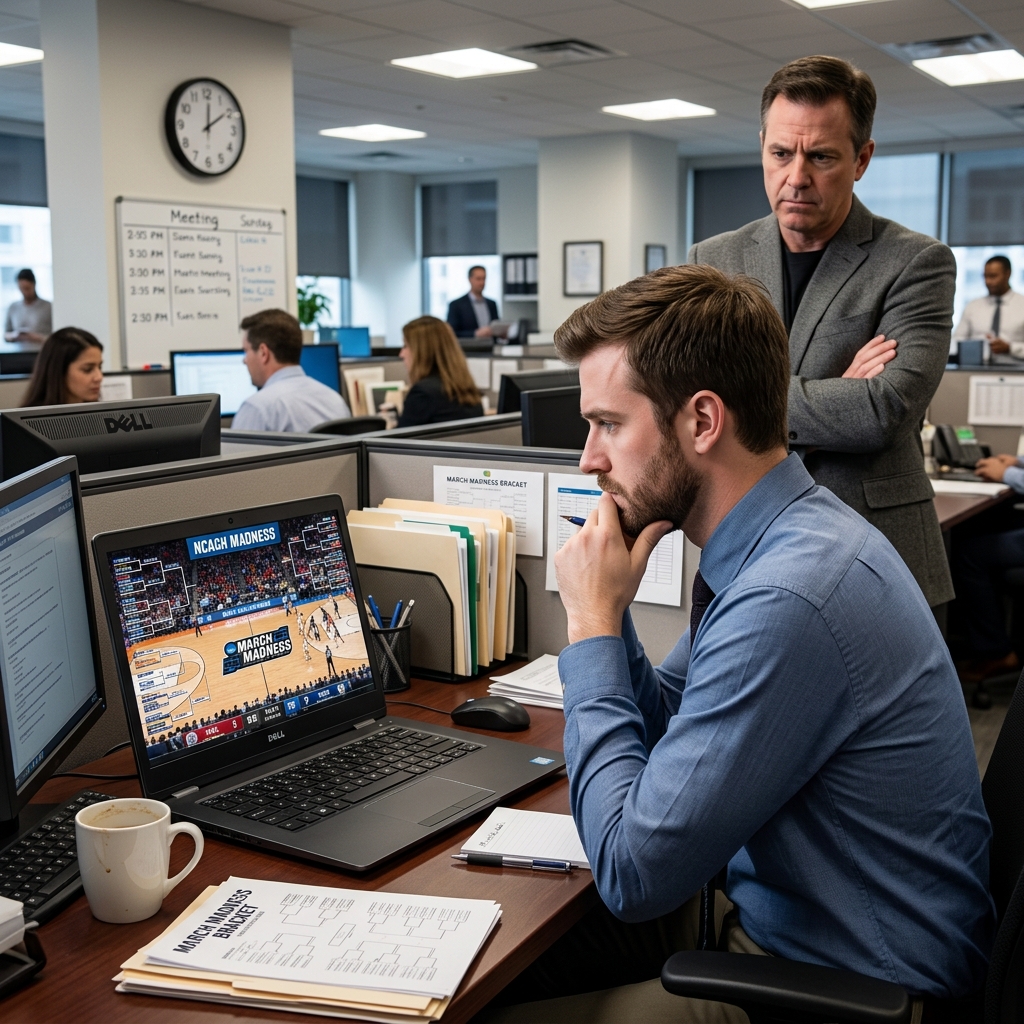
Every spring, college basketball fans gear up for the NCAA tournament and the burst of excitement known as March Madness. In many workplaces, that enthusiasm spills over into office bracket pools, live game streaming, team-themed dress days, and endless chatter about buzzer beaters. While this can be a powerful morale booster, it can also quietly create real legal risks and job consequences for employees and employers.
This article explains how March Madness can affect your employment, outlines the most common legal and policy pitfalls, and offers practical strategies to enjoy the tournament without endangering your job.
Why March Madness Becomes a Workplace Issue
On the surface, watching a game in the break room or comparing brackets with colleagues may seem harmless. However, when tournament activities intersect with company resources, working time, and formal policies, they become workplace issues that employers must manage carefully.
Key pressures that make March Madness legally sensitive include:
- Productivity loss from employees streaming games, checking scores, or debating matchups during work hours.
- Gambling concerns when paid bracket pools or informal betting involve money or prizes.[10]
- Policy conflicts with rules on internet use, dress codes, harassment, and solicitation.
- Fairness and discrimination risks if some employees are allowed to participate and others are not, or if accommodations are handled inconsistently.
Understanding these pressures is the first step toward protecting yourself and your organization.
The Hidden Legal Risks Behind Office Bracket Pools
One of the most popular workplace traditions during March Madness is the office bracket pool. Participants predict tournament winners, compare scores, and often pay a buy-in for the chance to win cash or prizes. The problem is that this activity can cross the line into illegal gambling under some state laws.[10]
When a Bracket Pool Becomes Gambling
Many states define gambling using three elements:
- Consideration – participants provide something of value (often a cash entry fee).
- Chance – the outcome depends partly or largely on chance or factors beyond skill.
- Prize – winners receive money or another thing of value.
If your office pool includes all three elements, it may fit the legal definition of gambling in some jurisdictions.[10] For public-sector employees, government ethics rules often expressly prohibit gambling-related activities while on duty or using government resources.[10] That can make a seemingly casual pool a serious rules violation.
Employer Policies on Gambling and Solicitation
Even if state law does not prohibit the pool, many employers have zero-tolerance policies for gambling on company premises or during work time. For example:
- No betting or wagering using company email, messaging platforms, or physical spaces.
- No soliciting colleagues for money during working time (which includes selling or collecting tournament pool entries).
- Restrictions on fundraising and contests that involve cash buy-ins.
A violation of these policies can lead to discipline, ranging from a warning to termination, depending on the severity and whether you have prior infractions. Employees sometimes underestimate how seriously organizations treat gambling policies, especially in regulated and public environments.
Productivity and Performance: The Business Cost of March Madness
Beyond legal concerns, March Madness can undermine productivity and performance. Studies have estimated that employers collectively lose billions of dollars in productivity during the tournament as workers stream games, check scores, and engage in non-work conversations.
| Behavior | Potential Impact |
|---|---|
| Streaming games at desks | Reduced focus, missed deadlines, bandwidth strain on corporate networks. |
| Constant score-checking and chatting | Frequent interruptions, lower quality work, longer task completion times. |
| Extended breaks to watch key matchups | Coverage gaps, customer service delays, overtime costs. |
| Late arrivals or early departures on game days | Scheduling conflicts, strained team collaboration, inequitable workloads. |
Employers are increasingly aware of these costs and may respond by tightening policies, monitoring internet usage, or restricting access to sports streaming sites during working hours. For employees, ignoring these measures and continuing to watch games can be perceived as a performance issue or insubordination, both of which can justify discipline.
Policy Conflicts: Internet Use, Time Off, and Dress Codes
March Madness activities can conflict with several existing workplace policies. Employees often focus on whether their supervisors seem relaxed about the tournament, but written policies are what matter if a dispute arises.
Internet and Technology Use Policies
Most organizations have rules governing the use of:
- Corporate internet access
- Company-issued devices and apps
- Email and collaboration tools
Streaming games or visiting sports betting sites on company systems may violate these rules, especially where they limit non-work browsing during business hours or prohibit gambling-related websites. Employers may use filtering or monitoring tools to restrict access to such sites or track misuse as part of performance management.
Time-Off and Scheduling Policies
March Madness also drives a surge of time-off requests, particularly during early-round games that occur during typical workdays. Legal and HR concerns include:
- Consistency – granting or denying time off according to established policies and without favoritism or discrimination.
- Coverage – ensuring customer needs and safety requirements are met even when multiple employees request the same time off.
- Documentation – properly recording approved or denied requests and any accommodations made.
Employees who skip shifts or leave early to watch games without proper approval can face serious consequences, including being treated as absent without leave or violating attendance policies.
Dress Codes and Team Apparel
Allowing team shirts, jerseys, or colors can be a simple way to participate in tournament excitement. However, if a company has a formal dress code, any temporary relaxation should be clearly communicated and applied consistently.
Potential issues include:
- Employees wearing apparel that violates safety rules (e.g., in manufacturing or lab environments).
- Clothing with offensive or controversial logos or slogans.
- Perceptions of favoritism if some departments are allowed to dress casually while others are not.
For employees, the safest approach is to confirm any special dress permissions in writing or through official channels, rather than assuming that casual tournament references mean rules are suspended.
Harassment, Rivalries, and Inclusion Concerns
Friendly rivalry is part of sports culture, but in the workplace it has to be managed carefully. March Madness celebrations can inadvertently foster exclusion or harassment if banter turns personal or if some employees feel pressured to join in.
Problem areas include:
- Insensitive jokes or comments about schools, regions, or demographics associated with teams.
- Social pressure to participate in brackets or team events when employees would prefer not to engage.
- Hostile interactions if debates become heated and cross into bullying or harassment.
Anti-harassment and respectful workplace policies apply just as strongly during March Madness as any other time. A complaint about behavior tied to tournament activities can lead to investigations and disciplinary action. Managers should be alert to signs of tension and address issues early.
Employer Strategies to Support Safe March Madness Fun
Many employers recognize the morale and engagement benefits of March Madness and choose to embrace the tournament while managing risks. When done thoughtfully, this can strengthen workplace culture without sacrificing compliance or productivity.
Creating Clear Guidelines
Organizations can reduce risk by issuing clear, timely guidance before the tournament begins. Effective March Madness workplace guidelines often include:
- Reminders of existing policies on gambling, internet use, time off, and respectful conduct.
- Specific rules for office pools (e.g., no entry fees, company-sponsored prizes only).
- Time and place limits for game viewing or team-themed activities.
- Procedures for requesting schedule changes or remote work during key games.
Making these guidelines visible to all employees and enforcing them consistently helps avoid claims of unfair treatment or discrimination.
Structuring Legally Safe Office Pools
To preserve the camaraderie of bracket competitions while minimizing gambling risk, employers can:
- Eliminate buy-ins – make entry free, with no cash contributions by employees.
- Offer non-monetary prizes – such as recognition, trophies, small gift baskets, or extra parking privileges.
- Clarify voluntary participation – no one should feel obliged to join the pool or share personal information connected to participation.
These measures reduce the risk that the pool will be viewed as illegal gambling or coercive workplace activity.[10]
Designating Viewing Areas and Times
Instead of letting employees stream games individually at their desks, some organizations choose structured viewing options.
- Provide a television in a break room so employees can watch games during scheduled breaks.
- Adjust schedules to allow short, shared viewing windows, while requiring that performance expectations still be met.
- Use technical controls to limit streaming to designated devices or locations to protect network performance.
This approach treats March Madness as a planned morale event instead of a spontaneous distraction that erodes productivity.
How Employees Can Protect Themselves During March Madness
Employees do not need to avoid March Madness entirely to stay safe. They do, however, need to be intentional. The following steps can help you enjoy the tournament without risking your job.
- Know your policies – review workplace rules on gambling, internet use, time off, dress codes, and solicitation before the tournament starts.
- Ask before acting – if you are unsure whether your employer permits pools, streaming, or casual dress, seek explicit clarification.
- Respect working time – keep sports discussions and score-checking minimal during core business hours; use breaks appropriately.
- Avoid money-based pools – if there is any question about legality or policy, decline to participate in paid pools, particularly in public or highly regulated workplaces.[10]
- Stick to company-sponsored events – official bracket challenges or viewing parties are more likely to be structured with compliance in mind.
- Maintain professionalism – keep rivalries light, avoid personal comments, and be mindful that not everyone shares the same enthusiasm for college basketball.
FAQs: March Madness and Your Job
Can I be fired for participating in an office March Madness pool?
It is possible, especially if the pool violates company policy or applicable gambling laws. Employers generally have broad discretion to discipline employees for policy violations, and gambling prohibitions or misuse of company resources can be treated seriously. Always check your organization’s rules before joining any pool.
Is streaming tournament games at my desk allowed?
That depends entirely on your employer’s technology and internet-use policies. Many organizations restrict streaming during work hours or limit access to sports sites to protect productivity and network performance. If your employer has not explicitly allowed streaming, assume it is limited and confirm with your manager before watching games.
Are free bracket contests without money safe from gambling laws?
Removing entry fees and using non-monetary prizes significantly lowers the risk that a contest will be treated as illegal gambling, as it removes the consideration element from the traditional gambling test. However, employers should still review state law and any applicable regulations, particularly in public or heavily regulated sectors.[10]
Can my employer ban all March Madness activities at work?
Yes. Employers generally may prohibit non-work-related activities, including sports pools, game viewing, and themed events, as long as they apply these rules consistently and without unlawful discrimination. Some organizations choose strict bans; others adopt more flexible approaches.
What should I do if I feel pressured to join a bracket pool?
If participation feels coercive or conflicts with your personal values, you can decline and, if necessary, speak with HR or a manager. Pools should be clearly voluntary, and pressure to join may raise concerns if it affects performance evaluations or workplace relationships.
References
- Quick Reminder on March Madness & Ethics Rules on Misuse of Position — U.S. Department of the Interior, Ethics Office. 2017-03-10. https://www.doi.gov/ethics/quick-reminder-march-madnessr-ethics-rules-misuse-position
- March Madness Bracket Pools in the Workplace: Legal Compliance Tips Before Tip-Off — Ogletree Deakins. 2023-03-13. https://ogletree.com/insights-resources/blog-posts/march-madness-bracket-pools-in-the-workplace-legal-compliance-tips-before-tip-off/
- March Madness Mayhem: Navigating Employment Law Issues in the Workplace — Southwest Florida Business & IP Blog (Henderson Franklin). 2023-03-15. https://www.swflbusinessandipblog.com/2023/03/march-madness-mayhem-navigating-employment-law-issues-in-the-workplace/
- Your Workplace Guide to Making March Madness a Morale Boost — Fisher Phillips. 2026-03-01. https://www.fisherphillips.com/print/v2/content/31517/workplace-guide-march-madness.pdf
- Managing Workplace Excitement During March Madness — MRA. 2023-03-01. https://www.mranet.org/resource/managing-workplace-excitement-during-march-madness
- March Madness At Work vs Employee Productivity — CurrentWare. 2023-03-09. https://www.currentware.com/blog/march-madness-at-work/
- Embrace the (March) Madness at Your Workplace — Jackson Lewis. 2018-03-15. https://www.jacksonlewis.com/insights/embrace-march-madness-your-workplace
Similar Articles








Read full bio of Sneha Tete




