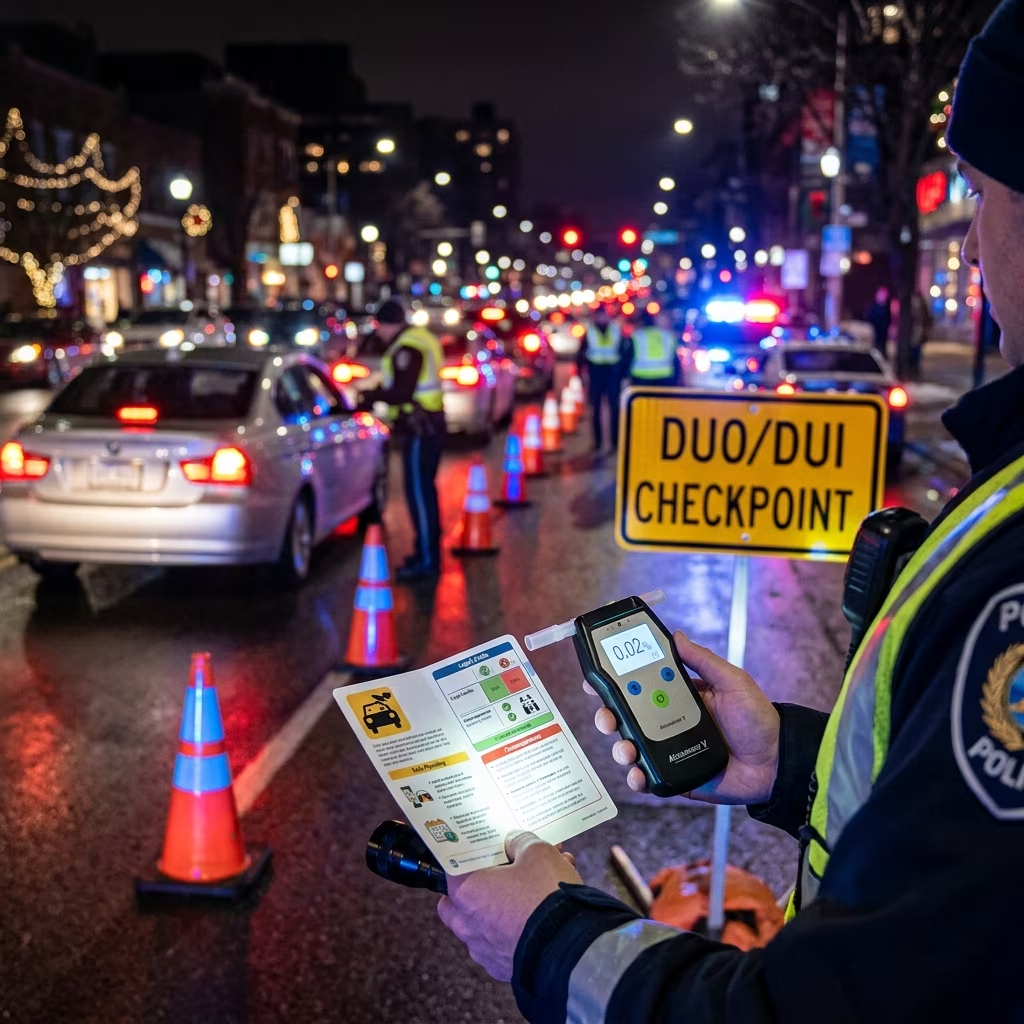
Holiday travel brings more traffic, more celebrations, and more law enforcement attention to impaired driving. National safety agencies use the winter season to remind drivers that alcohol- and drug-impaired driving remains a major cause of preventable crashes, and many states increase patrols, checkpoints, and public messaging during this period.
For drivers, the message is simple: if you plan to drink or use impairing substances, do not plan to drive. The safest approach is to make transportation decisions before the celebration begins, not after it ends.
Why holiday enforcement gets stronger
The weeks between mid-December and New Year’s are often treated as a high-risk period because traffic volumes rise and social drinking becomes more common. Federal transportation officials have long supported concentrated winter enforcement efforts that combine visible patrols with public awareness campaigns.
These campaigns are not limited to one state or city. They are designed as national efforts, with thousands of law enforcement agencies participating in coordinated messaging and enforcement activity. The goal is to deter impaired driving before it happens, not merely to arrest offenders after a crash.
- More night travel means more opportunities for impaired driving to be detected.
- Holiday parties and family gatherings increase the likelihood that people will drink before getting behind the wheel.
- Public campaigns make enforcement more visible, which can change behavior even among drivers who would otherwise take the risk.
What officers are looking for on the road
Impaired driving stops rarely begin with a single dramatic mistake. In many cases, officers notice a pattern of risky behavior, such as drifting between lanes, very slow movement, abrupt braking, or unusually high speeds. Those observations can justify a traffic stop and a further investigation.
During a stop, officers may look for physical signs of impairment, ask questions, and request field sobriety or chemical testing depending on the circumstances and state law. If a driver’s blood alcohol concentration reaches the legal limit in that jurisdiction, arrest is possible even if the person believes they are still functioning normally.
| Common roadway clues | Why they matter |
|---|---|
| Lane deviation | Suggests reduced coordination or attention |
| Unusually slow driving | Can indicate impairment or overcorrection |
| Erratic speed changes | May show delayed reactions or poor judgment |
| Driving without lights at night | Can reveal confusion or lack of awareness |
How “no refusal” efforts fit into enforcement
Some states use “no refusal” strategies during holiday crackdowns. Under these programs, officers may quickly seek a warrant from an on-call judge when a suspected impaired driver refuses a breath test, allowing blood evidence to be obtained under lawful process. The purpose is to reduce the effectiveness of test refusal as a way to avoid evidence collection.
This approach matters because many drivers mistakenly assume refusal will end the investigation. In reality, refusal can create its own legal consequences and may not prevent testing, depending on the state and the facts of the stop.
Why December and early January are especially risky
Crash data and highway-safety messaging consistently show that the winter holiday period is one of the most dangerous times of year for impaired driving. National campaigns typically run from mid-December through New Year’s Day, aligning enforcement with the period when celebratory drinking and late-night travel overlap.
Federal safety messaging also treats the holiday season as a public education window, reminding drivers, passengers, and hosts that a safe ride home should be arranged before anyone starts drinking. That advice is especially important because fatigue, long-distance travel, and winter weather can further reduce driving ability.
- Holiday schedules often extend late into the night.
- Drivers may be traveling unfamiliar routes after social events.
- Alcohol effects can be compounded by fatigue and poor weather conditions.
Practical ways to avoid an impaired-driving stop
The most effective prevention strategy is planning. If a celebration includes alcohol, choose a sober ride in advance or designate a non-drinking driver before the event begins. Once people are already celebrating, decision-making becomes less reliable.
There are many workable alternatives to driving after drinking. Public transit, rideshare services, taxis, sober friends, and overnight accommodations can all reduce risk. Hosts can also play a role by helping guests leave safely and by making sure someone impaired does not try to drive home.
- Use a rideshare app before leaving the event.
- Keep the name of a sober driver in the group chat.
- Book a hotel room if the event is far from home.
- Set a personal rule: no driving after any alcohol if a backup ride is not arranged.
What hosts can do differently
Holiday hosts can lower the chances of impaired driving by making safer options easy. Offering water, food, non-alcoholic drinks, and a comfortable place to wait can slow consumption and make it easier for guests to pause before leaving. Hosts can also take a more active role if someone seems unfit to drive.
If a guest is impaired, the safest step is to take away the car keys, help arrange a ride, and avoid arguments that could push the person to make a worse decision. Safety agencies explicitly encourage hosts and bystanders to intervene when needed.
Legal consequences can begin long before a conviction
A holiday DUI stop can create immediate consequences even before a case reaches court. A driver may face arrest, towing, temporary license consequences, and mandatory court appearances depending on local law. In some states, refusing a chemical test can also trigger an automatic administrative suspension under implied-consent rules.
That means the first roadside decision can affect more than one part of a case. A person may be dealing with both criminal exposure and separate licensing consequences, which is why the safest course is to avoid the stop in the first place.
| Stage | Possible consequence |
|---|---|
| Roadside stop | Investigation based on driving behavior and officer observations |
| Testing request | Breath, blood, or other chemical evidence may be sought |
| Refusal | Potential administrative penalties under state implied-consent laws |
| Arrest or charge | Court process, fines, suspension, and other sanctions may follow |
Why “buzzed” is not a safe standard
Drivers sometimes underestimate the effect of alcohol because they feel alert or believe they are only slightly impaired. Federal traffic safety campaigns reject that reasoning and treat even moderate impairment as dangerous, because alcohol affects judgment, reaction time, and coordination before a person may feel obviously drunk.
That is one reason public messaging often uses simple slogans rather than technical explanations. The point is not to determine whether someone feels okay; it is to prevent a dangerous decision before it turns into a crash, an arrest, or both.
How law enforcement messaging changes behavior
High-visibility enforcement has a deterrent effect because drivers know patrol levels are higher and the chance of detection is greater. Public awareness campaigns work best when they are repeated, easy to understand, and timed to real-world travel patterns.
In that sense, the crackdown is not only about enforcement. It is also about communication. Drivers are being reminded that a single poor decision during the holiday season can lead to injuries, fatalities, legal costs, and lasting consequences.
Frequently asked questions
When do holiday DUI crackdowns usually happen?
National campaigns often begin in mid-December and continue through New Year’s Day, with exact dates varying by year and jurisdiction.
Can police check for impairment during any traffic stop?
Police may investigate impairment when they observe driving behavior or other facts that justify a stop and further inquiry. The exact procedure depends on state law and the circumstances of the encounter.
Does refusing a test automatically solve the problem?
No. In some states, refusal can trigger its own penalties, and “no refusal” programs may allow law enforcement to obtain a warrant for blood testing.
What is the safest thing to do after drinking?
Do not drive. Arrange a sober ride, use rideshare or public transit, stay overnight, or have a sober friend take over transportation.
Why do hosts matter in drunk-driving prevention?
Hosts can stop a risky decision before it reaches the road by helping guests find safe transportation and by not allowing an impaired person to leave alone behind the wheel.
References
- U.S. Transportation Secretary Ray LaHood Announces Holiday Drunk Driving Crackdown — U.S. Department of Transportation. 2010-12-15. https://www.transportation.gov/briefing-room/us-transportation-secretary-ray-lahood-announces-holiday-drunk-driving-crackdown-1
- Drive Sober This December — and Every Month — National Highway Traffic Safety Administration. 2026-12-12. https://www.nhtsa.gov/drive-sober-december-and-every-month
- Winter Holidays | Drive Sober or Get Pulled Over — Traffic Safety Marketing. 2026-12-16. https://www.trafficsafetymarketing.gov/safety-topics/drunk-driving/drive-sober-or-get-pulled-over/winter-holidays
- December is Impaired Driving Prevention Month — National Sheriffs’ Association. 2019-12-01. https://www.sheriffs.org/december-impaired-driving-prevention-month/
- Holiday Drunk Driving Statistics 2025 | December DUI Facts & Data — DK Law. 2025-12-01. https://dklaw.com/the-fine-print/holiday-drunk-driving-statistics/
- Wisconsin drunk driving crackdown, holiday travel campaign — Fox 6 Now. 2024-12-19. https://www.fox6now.com/news/wisconsin-drunk-driving-holiday-travel