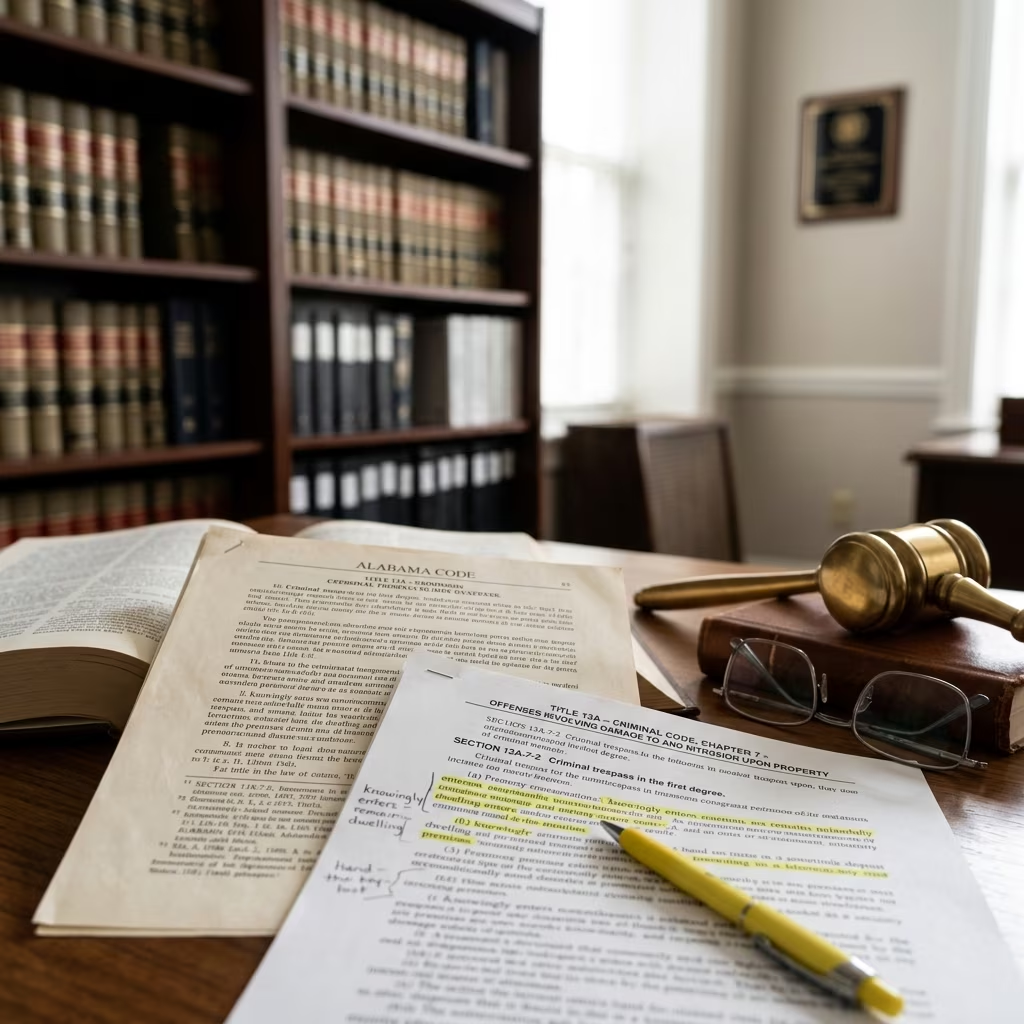
Alabama treats unauthorized entry onto someone else’s property as a criminal offense called criminal trespass. The law divides trespass into several degrees, each with different legal definitions and penalties depending on the type of property involved and the circumstances of the entry. Understanding these rules can help both property owners and accused individuals make informed decisions and protect their rights.
Overview of Criminal Trespass in Alabama
At its core, criminal trespass in Alabama occurs when a person knowingly enters or remains unlawfully on property they do not have the right to use. This means the person either never had permission to be there or lost that permission and refused to leave. The law focuses on two key ideas: the type of property and the person’s state of mind.
- Type of property: Alabama law distinguishes between dwellings, buildings, fenced or enclosed land, and open premises.
- Mental state: To be guilty, the person must act knowingly, meaning they are aware they do not have a license, invitation, or privilege to enter or remain.
Criminal trespass charges are generally misdemeanors or violations rather than felonies, but they can still carry jail time, fines, and a permanent record.
Key Legal Concepts: “Knowingly” and “Unlawfully”
Before looking at each degree of trespass, it is helpful to understand two critical terms that appear throughout Alabama’s trespass statutes.
What does “knowingly” mean?
Under Alabama law, a person acts knowingly when they are aware of the facts that make their conduct unlawful. In the trespass context, this means the person knows they do not have permission or legal authority to be on the property.
- If someone genuinely believes they have permission to be there, they may argue they did not act knowingly.
- Signs, verbal warnings, or obvious barriers (like fences) can make it easier for the prosecution to show the person knew entry was not allowed.
What does “enters or remains unlawfully” mean?
A person enters or remains unlawfully when they are not licensed, invited, or otherwise privileged to be on the property. Alabama’s pattern jury instructions explain that someone has a license or privilege if the property is open to the public and they are using it in a normal, lawful way.
However, even on property open to the public, a person becomes a trespasser if:
- They are personally told by the owner or an authorized person to leave; and
- They refuse to comply with that order.
In all trespass cases, prosecutors must prove beyond a reasonable doubt that the defendant entered or stayed without legal permission and did so knowingly.
Degrees of Criminal Trespass in Alabama
Alabama’s Criminal Code divides trespass into three main degrees, plus a specific offense involving motor vehicles. The degree depends primarily on the kind of property involved.
| Degree | Property Type | Classification | Typical Penalties |
|---|---|---|---|
| First Degree | Dwelling (used for living or sleeping) | Class A misdemeanor | Up to 1 year jail; fines up to about $6,000 |
| Second Degree | Building or fenced/enclosed real property | Class C misdemeanor | Up to about 3 months jail; fines up to about $500 |
| Third Degree | Any premises (including open land) | Violation | Fines up to about $200; up to 30 days jail |
First-Degree Criminal Trespass
First-degree criminal trespass is the most serious form of trespass under Alabama law because it involves a dwelling—a place used for living, lodging, or sleeping. The statute states that a person is guilty of criminal trespass in the first degree if they knowingly enter or remain unlawfully in a dwelling.
Important features of first-degree trespass include:
- Protected property: Houses, apartments, and other places where people sleep or live.
- Mental state: The person must know they have no right to be there.
- Classification: Class A misdemeanor.
- Possible consequences: Up to one year in jail and substantial fines, often up to several thousand dollars.
Because dwellings are closely associated with personal safety, privacy, and security, the law treats unlawful entry into these spaces more harshly than entry onto other property.
Second-Degree Criminal Trespass
Second-degree criminal trespass covers unauthorized entry into buildings or fenced or enclosed land that is clearly meant to keep intruders out. Under Alabama Code § 13A-7-3, a person is guilty if they knowingly enter or remain unlawfully in:
- a building; or
- real property that is fenced or enclosed in a manner designed to exclude intruders.
Examples might include entering a locked warehouse, crossing a fence posted with no-trespassing notices, or ignoring obvious barriers designed to prevent public access.
Key aspects of second-degree trespass:
- Protected property: Buildings of various types and land clearly marked or enclosed to keep people out.
- Classification: Class C misdemeanor.
- Possible consequences: Typically up to around three months in jail and fines that may reach several hundred dollars.
Third-Degree Criminal Trespass
Third-degree criminal trespass is the broadest and least serious category. Under Alabama Code § 13A-7-4, a person is guilty of criminal trespass in the third degree when they knowingly enter or remain unlawfully in or upon premises.
Alabama’s jury instructions explain that “premises” includes any building and any real property, which can cover open fields, parking lots, or other land that is not fenced or enclosed. This degree often applies to situations where someone is on property without permission, but the property is not a dwelling or specially protected area.
Notable points about third-degree trespass:
- Scope: Any premises where the person does not have lawful permission to be.
- Classification: A violation rather than a misdemeanor.
- Possible penalties: Fines up to about $200 and up to 30 days in jail, depending on the circumstances and prior record.
Trespass by Motor Vehicle
In addition to the three main degrees, Alabama law also recognizes a form of trespass involving motor vehicles. This offense usually involves using a vehicle to enter or remain unlawfully on another person’s property. Trespass by motor vehicle is generally treated as a misdemeanor, and fines may increase with repeated violations.
While it is less commonly discussed than the main trespass statutes, it can be important in cases involving off-road driving, unauthorized parking, or similar conduct.
How the State Proves Criminal Trespass
To obtain a conviction, prosecutors must prove each element of the offense beyond a reasonable doubt. Alabama’s jury instructions for third-degree trespass illustrate this structure, which applies similarly to other degrees.
For example, for third-degree trespass, the State must show:
- The defendant entered or remained in or upon premises belonging to another; and
- The defendant did so knowingly, without license or privilege.
Evidence that may be used includes:
- Testimony from property owners or witnesses about warnings, signs, or prior permission.
- Photographs of fences, gates, or posted notices indicating that entry is forbidden.
- Statements by the defendant or behavior showing awareness of restricted access.
Signs, Fences, and “No Trespassing” Notices
Physical and written warnings play a significant role in trespass cases. For second-degree trespass, the presence of a fence or enclosure designed to exclude intruders is a key part of the legal definition. More generally, posted notices and markings can help show that a person should have known they were not allowed to enter.
Alabama’s jury instructions recognize that entry may be unlawful when property is posted “in a conspicuous manner” reasonably likely to be noticed by potential intruders. This can include traditional signs or particular paint markings that clearly indicate that entry is forbidden.
Penalties and Consequences
While criminal trespass offenses in Alabama are not felonies, the consequences can still be significant. Penalties are tied to the classification of the offense and can include both incarceration and fines.
- First-degree (Class A misdemeanor): Up to one year in county jail or hard labor, and fines up to approximately $6,000.
- Second-degree (Class C misdemeanor): Up to about three months in jail and fines that may reach about $500.
- Third-degree (violation): Fines up to around $200 and up to 30 days in jail.
Convictions can also lead to a criminal record, which may affect employment opportunities, professional licensing, and housing. Repeat offenses or associated charges (like criminal mischief or burglary) can increase overall exposure.
Common Defenses and Legal Issues
Every case is different, but several recurring defenses and legal issues often arise in Alabama trespass prosecutions. These defenses focus on challenging the State’s proof of unlawful entry, knowledge, or lack of permission.
- Consent or permission: If the defendant had permission from the owner or an authorized agent, entry is typically not unlawful.
- Public access: Property open to the public may give visitors a license to enter unless they are individually told not to enter or to leave and refuse.
- Lack of knowledge: A defendant may argue they did not know the property was off limits, particularly if there were no signs, fences, or prior warnings.
- Misidentification: In some cases, the defense may question whether the defendant was the person who entered or remained on the property.
- Insufficient evidence: If the State cannot prove each element beyond a reasonable doubt, the jury must acquit.
Because trespass charges can depend heavily on specific facts, such as where the defendant was, what they were told, and how the property was marked, legal advice is important for anyone facing these allegations.
Practical Tips for Property Owners
Property owners who want to prevent trespass or support enforcement efforts can take several practical steps consistent with Alabama law.
- Use clear signs: Post conspicuous “No Trespassing” or similar notices at obvious entry points and boundaries.
- Maintain fences or barriers: Where appropriate, fences or other physical barriers can help establish that land is enclosed to keep intruders out.
- Document incidents: Keep records of repeated trespass incidents, including photos or videos when safe and lawful to do so.
- Communicate warnings: If someone is on your property without permission, a clear, lawful order to leave can be important if the situation later leads to charges.
- Contact law enforcement when necessary: For ongoing or serious trespass problems, notify local authorities rather than attempting to handle the matter through force.
Practical Tips for Individuals Accused of Trespass
Anyone charged with criminal trespass in Alabama should recognize that even lower-level offenses can have lasting effects. Taking prompt, informed steps can help protect legal rights.
- Avoid discussing details with others: Statements made to property owners, officers, or third parties can be used as evidence.
- Gather information: Note where signs were posted, how the property was marked, and what instructions you received.
- Consider legal counsel: A lawyer can assess whether the State can prove the required elements and help explore defenses.
- Attend all court appearances: Failing to appear can lead to additional consequences beyond the trespass charge.
FAQs About Alabama Criminal Trespass
Is walking across someone’s yard always criminal trespass?
Not necessarily. For a trespass charge, the State must show you knowingly entered or remained unlawfully on the property. If the area is not fenced, not posted, and there is no clear indication that entry is forbidden, proving knowledge can be more difficult. However, if the owner tells you to leave and you refuse, you could face charges.
What is the difference between burglary and criminal trespass?
Criminal trespass focuses on unauthorized entry or remaining on property. Burglary, by contrast, typically involves entering a building or dwelling with the intent to commit a crime inside, such as theft. Burglary is a more serious felony offense, while trespass is generally a misdemeanor or violation.
Can I be charged with trespass on public property?
Yes, in some circumstances. Even property open to the public may impose conditions on entry and allow authorized personnel to ask individuals to leave. If you are personally ordered not to enter or to depart and you refuse, you can be treated as a trespasser despite the property’s public character.
Do “No Trespassing” signs matter under Alabama law?
They can be very important. For second-degree trespass, the law refers to fenced or enclosed property designed to exclude intruders. Signs and markings help show that entry is forbidden, and Alabama’s instructions note that conspicuous posting reasonably likely to come to the attention of intruders can establish that entry is unlawful.
What should I do if I receive a criminal trespass citation?
Take the charge seriously. Even a violation-level offense can result in fines, short jail terms, and a record. Review the allegations, consider consulting a lawyer, and make sure to appear at all scheduled hearings. Gathering information about the property’s status, signage, and any permission you had may be important for your defense.
References
- Alabama Code § 13A-7-3: Criminal Trespass in the Second Degree — Alabama Legislature / Justia (codified law text). 2024-01-01. https://law.justia.com/codes/alabama/title-13a/chapter-7/article-1/section-13a-7-3/
- Alabama Code § 13A-7-4: Criminal Trespass in the Third Degree — Alabama Legislature / Justia (codified law text). 2024-01-01. https://law.justia.com/codes/alabama/title-13a/chapter-7/article-1/section-13a-7-4/
- Alabama Judicial System: Pattern Jury Instructions – Criminal Trespass in the Third Degree — Alabama Judicial System. 2020-01-01. https://judicial.alabama.gov/docs/library/docs/13A-7-4.pdf
- Section 13A-7-2. Criminal trespass in the first degree — WomensLaw / Alabama statutes. 2023-01-01. https://www.womenslaw.org/laws/al/statutes/section-13a-7-2-criminal-trespass-first-degree
- Criminal Trespass Crimes in Alabama — Bradford Ladner, LLP. 2022-06-01. http://www.bradfordladner.net/criminal-trespass/
- Understanding Alabama Criminal Trespass Laws and Penalties — Hazzard Law Firm. 2021-05-01. https://www.hazzardfirm.com/blog/how-does-alabama-define-and-penalize-criminal-trespass-charges/
- Criminal Trespass | Alabama Crime Lawyers — Polson & Polson, P.C. 2020-09-01. https://www.polsonlawfirm.com/practice-areas/alabama-criminal-trespass-lawyer/