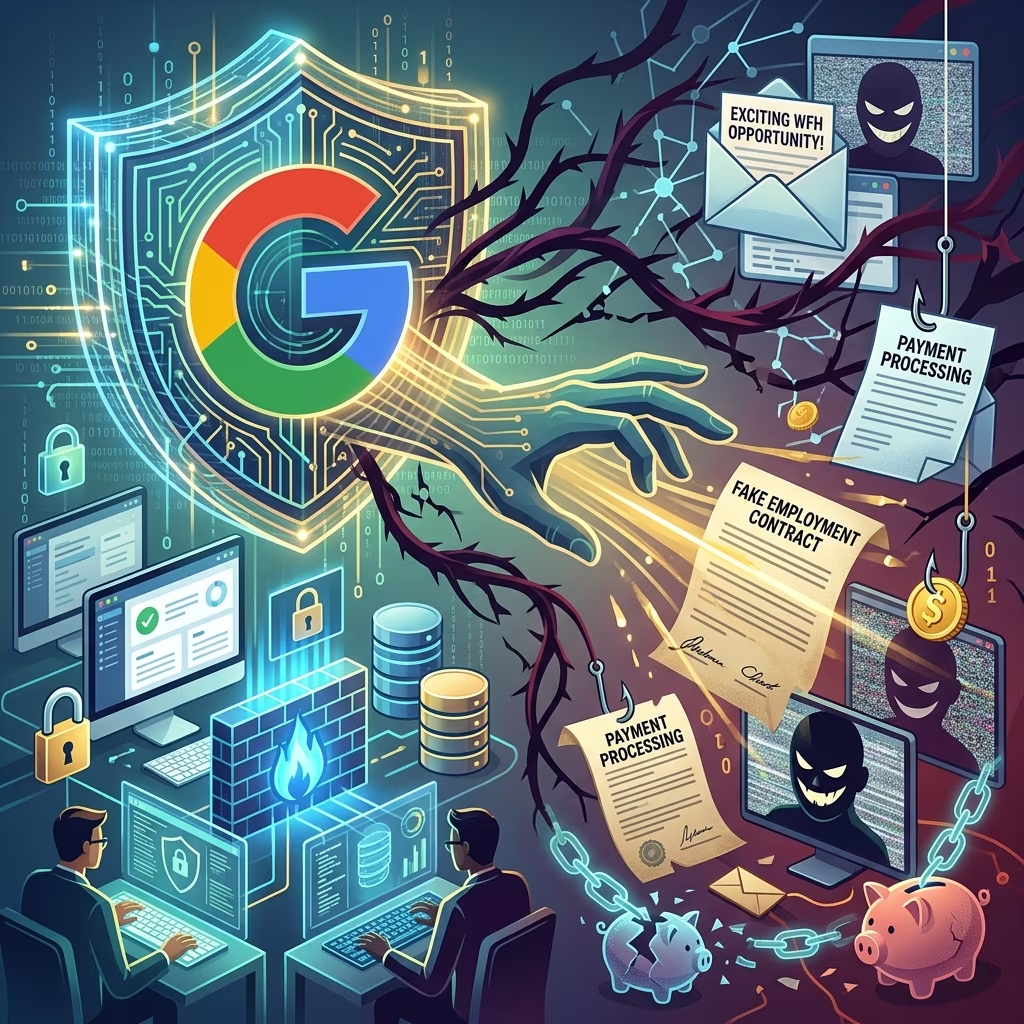
Promises of easy money from home have flooded the internet for years, but many of these so‑called opportunities are carefully crafted scams. In response, major technology companies like Google have begun using the courts to push back against fraudsters who trade on trusted brands to lure victims, including vulnerable job seekers.
This article uses Google’s legal actions as a starting point to explain how work‑from‑home scams operate, why brand misuse is central to these schemes, and what practical steps individuals can take to stay safe. It also explores how lawsuits and cooperation with regulators and law enforcement are reshaping the fight against online job fraud.
Why Work‑From‑Home Scams Are So Effective
Remote work has grown rapidly, and many legitimate employers now recruit and manage staff entirely online. Scammers exploit this trend by blurring the line between genuine flexible work and fraudulent offers designed to steal money or personal data.
Several factors make these scams particularly persuasive:
- Economic pressure: People experiencing unemployment, underemployment, or caregiving responsibilities often seek flexible income sources, making them more receptive to remote job pitches.
- Professional‑looking materials: Fraudsters copy logos, color schemes, and wording from well‑known firms, including Google and other tech companies, to create a false sense of legitimacy.
- Digital communication channels: Email, messaging apps, social media, and text messages allow scammers to reach thousands of potential victims at very low cost.
- Information overload: Job seekers might not have the time or expertise to verify each opportunity, especially when a listing appears to be backed by a familiar brand.
When a fraudulent job appears to be endorsed or operated by a household‑name company, people are more likely to trust the offer and overlook warning signs. That brand halo is exactly what many scammers are targeting.
How Scammers Misuse Big Tech Brands
Scams that appear connected to Google or similar firms rarely involve those companies directly. Instead, fraudsters deliberately misappropriate brand elements to make their offers appear official.
Common Techniques of Brand Abuse
While each operation is unique, several recurring tactics appear in job and work‑from‑home scams:
- Fake websites: Scammers build websites that mimic official corporate pages, add logos and fonts, and use domain names with minor spelling changes (for example, swapping a letter or adding extra words).
- Misleading email addresses: Instead of a verified corporate domain, they may use free email services or domains that look similar to legitimate ones but are controlled by the fraudsters.
- Impersionation in messages: Text messages and emails may claim to be from “Google HR” or “support teams” and direct recipients to bogus sign‑up pages or application forms.
- False endorsements: Scam advertisements sometimes include fabricated quotes or logos suggesting partnership with Google or other trusted institutions, even when no such relationship exists.
Google itself warns that unscrupulous actors try to leverage its brand to defraud users and provides guidance on recognizing common patterns of misuse. Legal action adds another layer of protection by seeking court orders that hinder scammers’ ability to operate.
Inside Job Scams Disguised as Work‑From‑Home Opportunities
Work‑from‑home job scams come in many forms, but they share a core structure: an enticing offer, a sense of urgency, and a request that ultimately benefits the scammer at the victim’s expense.
Typical Scam Patterns
| Scam Type | How It Works | Main Risk |
|---|---|---|
| Fake check payment | Victim is sent a check, told to deposit it, keep a portion, and send the rest elsewhere. The check later bounces. | Victim must repay the bank, losing the money they sent to scammers. |
| Upfront fee for training or access | Scammers charge for certification, directories, or job guarantees that never produce real work. | Loss of fees with no legitimate employment at the end. |
| Data‑harvesting job offers | Fraudsters pose as recruiters to collect Social Security numbers, bank details, and other sensitive data. | Identity theft and unauthorized financial transactions. |
| Tech‑brand “remote assistant” roles | Scams claim to offer work supporting brands like Google, directing victims to fake portals. | Loss of money via fees or compromised accounts; brand reputational damage. |
These schemes can be highly adaptive. Some scammers now use AI and automation to generate large volumes of persuasive messages and fake sites more quickly, making it even harder for users and platforms to keep up.
Google’s Legal Strategy Against Scammers
In addition to updating security tools and awareness campaigns, Google has begun filing lawsuits against entities that misuse its technologies and brand for fraudulent purposes. These actions aim to deprive scammers of the infrastructure they depend on and to signal that brand abuse carries consequences.
Key Elements of Google’s Lawsuit‑Based Approach
- Civil complaints in federal court: By suing alleged cybercrime groups and scam networks, Google seeks injunctions that restrict the defendants’ ability to use domain names, hosting services, or communication channels for fraud.
- Focus on brand misuse: Allegations often center on unauthorized use of Google’s trademarks, logos, and services, as well as deceptive tactics that suggest a non‑existent relationship between the scammers and Google.
- Collaboration with law enforcement: Google works with agencies such as the FBI and telecommunications providers to share intelligence about scam operations and support coordinated disruption efforts.
- Deterrence and public messaging: High‑profile lawsuits send a message to other fraudsters that large platforms are willing to invest legal resources to identify and shut down abusive schemes.
While legal proceedings can take time, they complement technical measures like spam filters, phishing detection, and user education resources, forming a more comprehensive defense ecosystem.
Regulatory and Consumer Protection Context
Google’s legal actions sit within a broader regulatory landscape where government agencies and consumer protection bodies work to prevent job scams and assist victims. In the United States, the Federal Trade Commission (FTC) plays a central role in issuing guidance and taking enforcement actions against deceptive job‑related schemes.
FTC Guidance on Job Scams
The FTC highlights several clear indicators that a job offer may be fraudulent:
- Unrealistic earnings: Claims that you can earn large sums quickly with little effort, especially from home, are a major red flag.
- Requests for payment to get hired: Legitimate employers generally do not require upfront fees for training, directories, or certification tied directly to a job offer.
- “Deposit this check” instructions: Any offer that involves depositing a check and then sending part of the money to someone else is extremely likely to be a fake check scam.
- Pressure to act immediately: Scammers emphasize urgency and discourage independent research or verification.
The FTC encourages anyone who encounters or falls victim to a job scam to report the incident through its online portal, as well as to state attorneys general, to help track patterns and support enforcement.
Practical Ways to Protect Yourself from Work‑From‑Home Scams
Legal and regulatory measures are important, but individual vigilance remains crucial. Consumers who understand common scam tactics are far less likely to become victims. Drawing on guidance from Google and the FTC, several protective steps stand out.
Golden Rules for Avoiding Job‑Related Scams
- Slow down: Scammers use urgency to override your critical thinking. Take time to read all materials carefully, ask questions, and consider whether the offer makes sense.
- Spot‑check details: Search online for the company name, alleged recruiter, email address, and job title paired with words like “scam,” “complaint,” or “review.” Multiple reports of fraud are a strong warning.
- Stop and refuse on‑the‑spot payments: Don’t send money or share sensitive personal information immediately. No reputable employer will require instant payment or banking credentials before legitimate hiring steps.
- Verify via official channels: If an offer appears to come from a major brand like Google, visit the company’s official website directly (without using links in the message) and check its careers section or support pages.
Additional Protective Measures
- Use strong authentication: Enable multi‑factor authentication on email and important accounts to reduce the impact of any credentials that might be exposed.
- Be careful with documents: Only upload resumes or identification documents through verified platforms and never to sites that appear unprofessional or inconsistently branded.
- Monitor financial accounts: Regularly check bank and card statements for unusual activity and set alerts for large or foreign transactions.
- Educate family members: Share scam prevention advice with relatives, especially younger job seekers and older adults who may be targeted by convincing work‑from‑home pitches.
If You’ve Been Targeted or Scammed: Immediate Steps
Discovering that an apparent job opportunity was fraudulent can be alarming, but prompt action often reduces the damage.
- Contact payment providers: Whether you used a credit or debit card, bank transfer, mobile app, gift card, or cryptocurrency, notify the provider as soon as possible and ask if the transaction can be reversed.
- Alert your bank: Inform your financial institution about the scam, especially if you shared account or routing numbers; they may suggest additional security steps.
- Change passwords and enable security features: If you clicked suspicious links or entered login credentials on questionable sites, immediately change those passwords and activate extra protections like multi‑factor authentication.
- Report to official channels: File a report with the FTC’s fraud reporting portal and your state attorney general. For scams that impersonate Google or misuse its brand, you can also report them directly through Google’s help resources.
- Document everything: Save emails, message screenshots, website addresses, and any receipts. These records may be useful for investigations or legal claims.
How Google’s Actions Affect Everyday Internet Users
Google’s lawsuits and brand‑protection efforts do more than safeguard corporate intellectual property; they also aim to make online spaces less hospitable to scammers who target individual users.
For everyday people seeking remote work, these efforts can have several benefits:
- Removal of fraudulent sites: Court orders and coordinated action with domain registrars can take down websites used to host fake job applications and payment portals, reducing exposure to harm.
- Improved filtering and security tools: Intelligence gathered from scam investigations feeds into spam filters, phishing detection systems, and automated warnings within Google’s products.
- Clearer public guidance: When Google openly addresses the misuse of its brand, users gain more concrete examples of what illegitimate communications look like.
However, no technological or legal measure can catch every scam. Users must continue applying critical thinking and protective habits whenever they receive unsolicited offers or communication that appears to be from Google or other recognizably large companies.
FAQs About Google, Lawsuits, and Work‑From‑Home Scams
1. Does Google ever send unsolicited job offers by email or text?
Legitimate hiring processes at major companies usually involve formal applications, interviews, and communication through verified corporate channels. Unsolicited job offers that request money or sensitive data should be treated with extreme skepticism, even if they claim to involve Google.
2. How can I confirm whether a Google‑related job posting is genuine?
Go directly to Google’s official careers pages using your browser’s address bar, rather than clicking links from emails or social media. Check whether the role appears there and whether the recruiting contact uses an official company domain. If you cannot verify the connection, assume the posting may be fraudulent.
3. Are lawsuits enough to stop work‑from‑home scams?
Lawsuits are one important tool, but they are not a complete solution. Scammers often operate across borders and can quickly shift infrastructure. Legal actions work best when combined with robust technical defenses, user education, and coordinated enforcement by government agencies.
4. What should I do if I receive a suspicious job offer using Google’s logo?
Do not click any links or provide personal information. Instead, search independently for the company’s official site and contact its support or careers team using verified contact details. You can also report the message to Google and the FTC to help them track potential scam campaigns.
5. Can scammers use legitimate Google tools to make their schemes more convincing?
Yes. Fraudsters sometimes leverage widely available tools to make emails appear professional, host polished websites, or automate the sending of messages. This is why relying solely on appearance is risky—verification through official channels and trusted guidance remains essential.
References
- Job Scams — Federal Trade Commission. 2024-03-07. https://consumer.ftc.gov/articles/job-scams
- Avoid and report scams — Google Help. 2023-09-12. https://support.google.com/faqs/answer/2952493
- Google launches a lawsuit targeting text message scammers — Benton Institute for Broadband & Society. 2024-06-13. https://www.benton.org/headlines/google-launches-lawsuit-targeting-text-message-scammers
- Google Sues to Stop Chinese Cybercrime Group from Using Its A.I. — The New York Times. 2026-06-12. https://www.nytimes.com/2026/06/12/technology/google-lawsuit-china-ai-scams.html
- Google Sues to Stop Work-From-Home Scams — ABC News. 2010-02-10. https://abcnews.com/Business/google-sues-stop-work-home-scams/story?id=9279817