
Georgia Juvenile Justice: What Families Need To Know In 2025
A clear guide to juvenile offenses, court process, and adult transfer rules in Georgia.
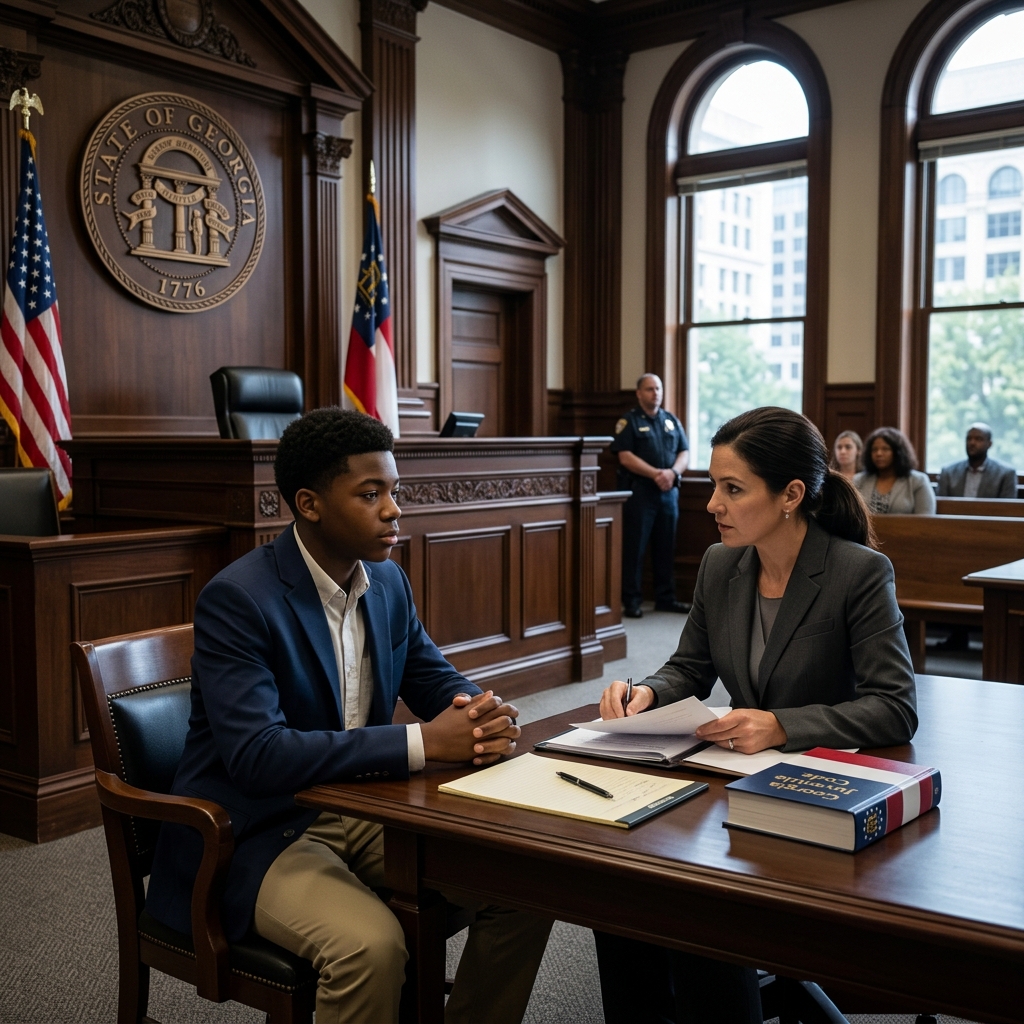
Georgia treats juvenile offenses differently from adult crimes. The state’s juvenile justice system focuses on accountability, supervision, and rehabilitation, while still allowing serious cases to move into adult court when the law permits. Understanding the age limits, the types of conduct covered, and the court process can help families respond more effectively when a child is accused of an offense.
Under Georgia law, a child under 13 cannot be prosecuted for a crime in the criminal courts, and juvenile courts generally handle cases involving minors under 18. For the most serious allegations, however, Georgia law allows some youths to face adult prosecution depending on their age and the charge involved.
How Georgia separates juvenile cases from adult crimes
Georgia’s juvenile system is built around the idea that young people are still developing and may benefit more from intervention than punishment. That does not mean consequences are minor. Instead, the system uses court oversight, placements, treatment programs, probation, and other conditions designed to address both the offense and the youth’s needs.
Most juvenile matters are handled in juvenile court, which is a separate court system with procedures that differ from adult criminal court. These proceedings are often less formal, but the stakes can still be significant because a delinquency finding may affect the child’s record, supervision status, and future opportunities.
Who is covered by Georgia’s juvenile justice laws?
Georgia law generally treats individuals under 17 as juveniles for court purposes, although the state’s juvenile courts hear matters involving minors under 18 in many contexts. In practice, the relevant age depends on the issue being addressed, the offense alleged, and whether the case is in juvenile court or superior court.
- Under 13: The state cannot file criminal charges against the child in the same way it would against an older youth.
- Ages 13 to 16: Many offenses are handled in juvenile court, but some serious crimes can be moved to adult court.
- 17 and older: A person is usually treated as an adult for criminal prosecution purposes.
Common types of juvenile matters in Georgia
Not every juvenile case starts with a violent or serious felony allegation. Georgia juvenile courts hear a wide range of matters, including delinquency cases, status offenses, traffic-related issues, and dependency matters. Some examples are minor theft, simple assault, truancy, running away, curfew problems, and certain drug-related conduct.
| Type of matter | What it means | Example |
|---|---|---|
| Delinquent act | Conduct that would be a crime if committed by an adult | Theft, assault, drug possession |
| Status offense | Behavior that is only unlawful because the person is a minor | Running away, truancy |
| Traffic matter | Certain driving-related issues involving minors | Licensed minor accused of a traffic violation |
| Dependency case | Proceeding about abuse, neglect, or lack of parental care | Child removed from unsafe home |
What happens when a juvenile is accused of an offense?
Most juvenile cases begin when the state files a complaint or petition in juvenile court. The process usually moves faster than adult criminal litigation and places greater emphasis on early assessment of the child’s needs and the circumstances of the alleged conduct. The court can decide whether the child should remain in custody, return home under supervision, or receive another form of placement while the case is pending.
Juveniles also have important rights in these proceedings. Georgia Legal Aid notes that a juvenile charged with a crime has the right to enter a not-guilty plea and to participate in a formal hearing process. While the setting differs from an adult jury trial, the court still evaluates evidence before making a finding.
How the juvenile court hearing works
Juvenile proceedings are often described as more protective than punitive. The court first considers whether the facts support the allegation and then decides what outcome best serves the child and the community. If the youth is detained, the court must move quickly through the early stages of the case.
- The court can hold a detention hearing soon after the child is taken into custody.
- If the youth remains detained, the adjudicatory hearing must be held within a short timeframe.
- If the youth is not detained, the case still proceeds on a scheduled timeline set by the court.
- After the evidence is heard, the judge decides whether the child committed the alleged offense.
If the judge finds the allegation unproven, the child is released from the delinquency charge. If the judge finds the child committed the act, the case moves to disposition, where the court chooses a remedy or supervisory plan.
Possible outcomes after a delinquency finding
Georgia gives juvenile judges broad discretion when deciding consequences. The goal is not only to punish but also to reduce the chance of future misconduct. Depending on the case, the court may order probation, confinement, counseling, curfews, drug testing, or other conditions tied to the child’s rehabilitation.
- Probation with supervision and reporting requirements
- Detention in a juvenile facility for more serious cases
- Home confinement or strict behavioral restrictions
- Treatment such as counseling or substance-use services
- Special conditions like curfews, school attendance rules, or testing
Some consequences can continue to affect a young person long after the case ends. Public discussions of juvenile justice in Georgia note that a delinquency finding can influence access to scholarships, military eligibility, and some educational or employment opportunities. The practical impact depends on the offense, the court’s orders, and later record-sealing or expungement rules.
When a juvenile can be tried as an adult
Georgia law allows certain serious charges to move out of juvenile court. The state’s transfer rules are among the most important features of the system because they can expose a youth to adult penalties and adult procedures. In some situations, the juvenile and superior courts have concurrent jurisdiction, and in others superior court has exclusive authority over the prosecution.
According to the Office of Juvenile Justice and Delinquency Prevention, Georgia gives superior court exclusive jurisdiction over some offenses involving juveniles age 13 or older, including rape, aggravated sodomy, aggravated child molestation, aggravated sexual battery, and armed robbery committed with a firearm. Cases punishable by death or life imprisonment can also fall within overlapping or exclusive jurisdiction depending on the offense and the youth’s age.
Georgia Legal Aid similarly explains that some serious felonies, including murder and rape, may be charged in adult court for youth over 12. In practical terms, the exact result depends on the charge, the child’s age, and whether the prosecutor pursues adult treatment.
How transfer between juvenile and adult court works
Georgia law also allows movement in the opposite direction in limited circumstances. If a juvenile court has authority over the case, it may transfer the matter to adult court if a hearing shows reasonable grounds to believe the child committed the act, is not subject to mental-institution commitment, and that the interests of the child and the community support transfer. This means the court must make specific findings before sending the case to superior court.
On the other hand, when superior court has exclusive jurisdiction, the prosecutor may sometimes decline to proceed there before indictment and instead lodge the case in juvenile court for extraordinary cause. After indictment, superior court may transfer a qualifying case to juvenile court for extraordinary cause, except in matters punishable by life imprisonment or death.
Why the transfer decision matters so much
Adult prosecution changes nearly every part of the case. It can affect bail, detention, plea options, sentencing exposure, and the long-term effect of the charge. A youth tried as an adult may face harsher penalties and a criminal record that is treated differently from a juvenile adjudication. Because of that, age and charge classification are often the first issues a defense lawyer evaluates.
For families, the most important practical question is usually not only whether the child is eligible for juvenile court, but whether the state can lawfully keep the case there. That answer can depend on the offense listed in the petition or indictment, the child’s exact age, and whether the prosecutor or court invokes a transfer rule.
How Georgia’s juvenile system differs from adult criminal court
Although juvenile court can still be serious, the process is designed differently from adult prosecution. Juvenile proceedings are generally more focused on individualized treatment, family involvement, and the child’s future. Juvenile courts also handle additional categories of cases, including dependency matters that do not exist in the adult criminal system.
Another major difference is the emphasis on supervision and services. The Georgia Department of Juvenile Justice describes itself as an agency serving justice-involved youth up to age 21, which reflects the state’s broader focus on continuing intervention beyond the initial court event. That structure shows that juvenile law is not limited to punishment; it also includes custody, placement, and support services.
Practical steps after a juvenile arrest or charge
When a child is accused of an offense, the family should move quickly to understand the charge and the court schedule. Because juvenile matters can progress rapidly, missing a hearing or misunderstanding detention rules can have immediate consequences. It is also important to determine whether the case could be transferred to superior court, especially if the allegation is one of Georgia’s more serious offenses.
- Confirm the child’s exact age on the date of the alleged offense.
- Identify the specific charge or petition count.
- Ask whether the case will stay in juvenile court or may be transferred.
- Review custody, release, and hearing dates promptly.
- Consider legal guidance early because adult-transfer rules can be outcome-changing.
Frequently asked questions
Can a child under 13 be charged with a crime in Georgia?
Georgia law does not allow criminal charges against a child under 13 in the same way it would for an older juvenile or adult. Very young children are therefore treated differently from teens in the justice system.
Does Georgia juvenile court use juries?
Georgia juvenile proceedings are typically decided by a judge in a formal hearing rather than by a jury trial. The judge hears the evidence and determines the outcome.
Are all juvenile records permanent?
Juvenile records are generally treated more leniently than adult convictions, and some descriptions of Georgia law note that juvenile offenses may be expunged or otherwise limited later in life. The actual record effect depends on the offense and the applicable record rules.
What kinds of offenses are most likely to move to adult court?
Georgia’s transfer rules focus on serious violent and sexual offenses, as well as armed robbery involving a firearm and other offenses tied to the superior court’s exclusive jurisdiction. Age is a critical part of the analysis.
Is juvenile court always more lenient than adult court?
Juvenile court is usually more focused on rehabilitation, but the consequences can still be substantial. Detention, probation, treatment conditions, and long-term record effects can all follow a delinquency case.
References
- Georgia’s Transfer Laws — Office of Juvenile Justice and Delinquency Prevention. 2024-01-01. https://ojjdp.ojp.gov/sites/g/files/xyckuh176/files/pubs/tryingjuvasadult/states/ga.html
- Federal Juvenile Crimes — Federal Criminal Law Center. 2024-01-01. https://federalcriminallawcenter.com/crimes/juvenile-crimes/
- What should I know about the juvenile justice system? — Georgia Legal Aid. 2024-01-01. https://www.georgialegalaid.org/resource/what-should-i-know-about-the-juvenile-justice-system
- What is Juvenile Law? — Atlanta Criminal Lawyer Blog. 2024-01-01. https://www.atlantacriminallawyerblog.com/what-is-juvenile-law/
- The Juvenile Justice System — Georgia Public Broadcasting. 2024-01-01. https://georgiastudies.gpb.org/c28-s6
- Department of Juvenile Justice — Georgia.gov. 2024-01-01. https://djj.georgia.gov
Similar Articles








Read full bio of medha deb




