
Fourth of July DUIs: What Every Driver Must Know
Learn why Independence Day is so deadly on the road, how DUI laws work, and the smart steps that keep you and others safe.
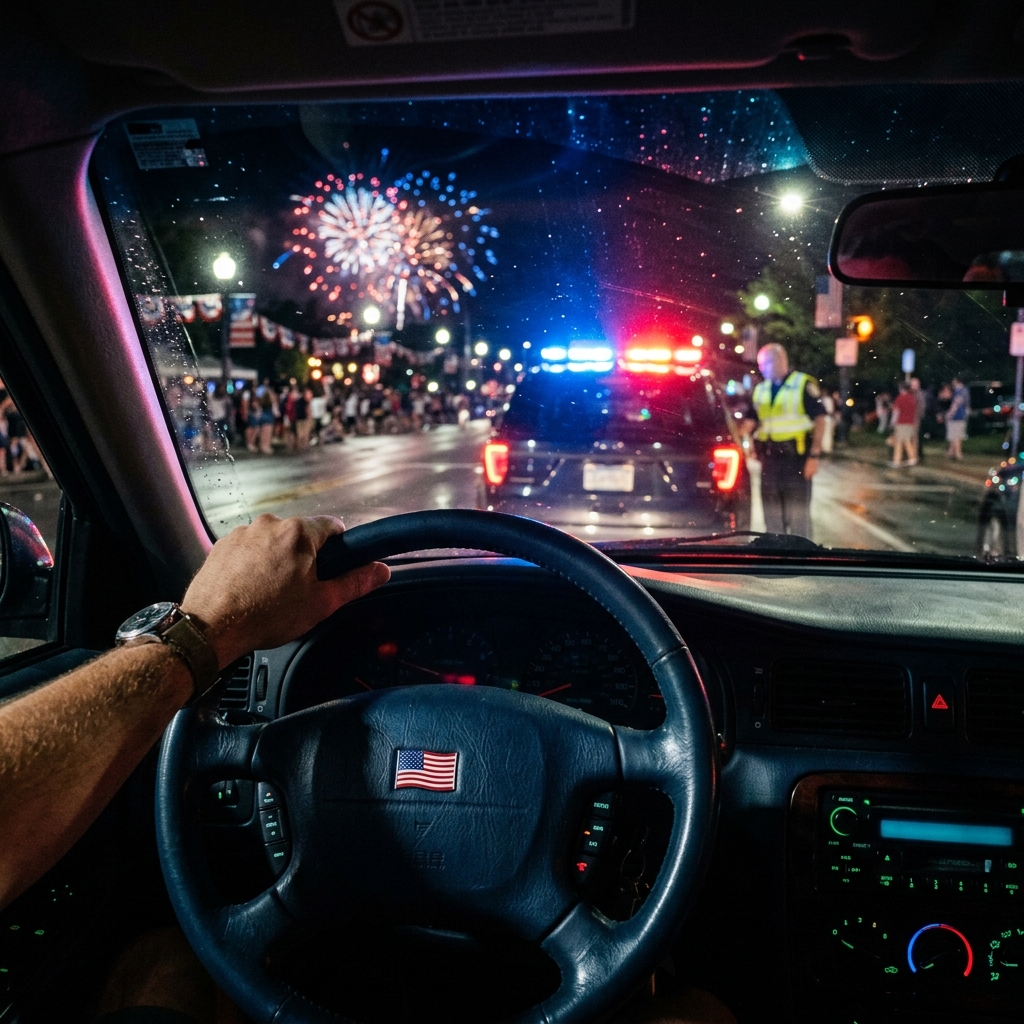
The Fourth of July is a time for cookouts, fireworks, and family traditions, but it is also one of the most dangerous holidays on American roads because of drunk and drug-impaired driving. Understanding how DUI laws apply, what enforcement looks like during this holiday, and what practical steps you can take to stay safe can make the difference between a fun celebration and a life-changing tragedy.
Why Independence Day Is So Risky for Drivers
Year after year, national traffic-safety agencies highlight Independence Day as a high-risk period for alcohol-related crashes and fatalities. From 2020 to 2024, there were 2,719 people killed in motor vehicle traffic crashes over the Fourth of July holiday period, and 38% of the drivers killed were drunk. These figures show how closely holiday celebrations are tied to impaired driving.
Several factors combine to make July 4 especially dangerous:
- Alcohol is common at parties, barbecues, and fireworks events.
- Many people travel late at night, when crash risk is higher and impairment is more common.
- Drivers may mistakenly believe they are safe to drive after “just a few” drinks.
- Holiday traffic can be heavier, increasing the chance of collisions.
According to national data, in 2019 alone, 515 people died in motor vehicle crashes over the July 4th holiday period, and 38% of those fatalities occurred in alcohol-impaired driving crashes. These numbers translate into thousands of families whose celebrations ended in emergency rooms or funeral homes.
Impairment Starts Earlier Than Most People Think
Many drivers assume that a blood alcohol concentration (BAC) of .08, the legal limit in most states, is the threshold at which they become unsafe. In reality, measurable impairment occurs much sooner. The National Highway Traffic Safety Administration (NHTSA) notes that even a BAC of .02 can affect a driver’s ability to perform two tasks at one time, an essential skill for safe driving.
That means a small amount of alcohol can lead to:
- Reduced ability to track moving objects, such as other cars or pedestrians
- Slower response to unexpected hazards
- Difficulty dividing attention between speed, lane position, and surrounding traffic
As BAC rises, these effects compound and driver performance deteriorates. By the time a driver reaches .08 or above, crash risk is significantly higher, and decision-making is badly compromised. The takeaway is simple: you do not need to feel “drunk” to be dangerously impaired behind the wheel.
Key Legal Concepts: DUI, DWI, and Impaired Driving
Every state prohibits driving under the influence of alcohol or other drugs, but terminology and legal details vary. Common legal concepts include:
- DUI (Driving Under the Influence) – Often refers to impairment by alcohol, drugs, or a combination.
- DWI (Driving While Intoxicated/Impaired) – In some states, this term focuses on alcohol; in others, it includes drugs.
- Per se laws – In all states, driving with a BAC of .08 or higher is a separate offense regardless of visible impairment.
- Drug-impaired driving – Driving while affected by illegal drugs, prescription medications, or other substances that alter perception or reaction time is illegal in every state.
On the Fourth of July, law enforcement typically applies these laws more aggressively through concentrated patrols and checkpoints because of the known increase in impaired driving.
Holiday Enforcement: Why “Drive Sober or Get Pulled Over” Is Real
Federal and state agencies frequently coordinate special enforcement campaigns around Independence Day, using slogans such as “Drive Sober or Get Pulled Over” and “Buzzed Driving Is Drunk Driving” to emphasize the risks. These campaigns are backed by increased police presence and targeted operations designed to catch impaired drivers before they cause harm.
Typical Fourth of July enforcement tactics include:
- High-visibility patrols on highways and around popular event venues
- Sobriety checkpoints in jurisdictions that allow them
- Public awareness messages warning of zero-tolerance for impaired driving
- Data-driven deployment of officers in areas with a history of holiday crashes
These efforts are based on evidence that targeted enforcement and publicity together can reduce alcohol-related crashes and deter risky behavior. For drivers, this means the chance of encountering law enforcement during the holiday is much higher than on a typical weekday.
What Happens If You Are Stopped for Suspected DUI
Being pulled over on suspicion of DUI can be stressful and may carry serious legal consequences. While procedures differ by state, a typical encounter may involve:
- Initial observation – An officer notices signs such as weaving, speeding, failing to signal, or driving unusually slowly.
- Traffic stop – The officer asks for license, registration, and insurance and observes your speech, odor, and coordination.
- Field sobriety tests – You may be asked to perform tasks such as walking in a straight line or standing on one leg.
- Preliminary breath test – A roadside breath device may be used to estimate your BAC.
- Arrest decision – If the officer believes there is probable cause, you may be arrested for DUI or a related offense.
After an arrest, drivers may be taken for a more accurate chemical test (such as breath, blood, or urine) that is used as evidence in court. Refusing testing or violating license-implied consent rules can lead to automatic administrative penalties in many states, including license suspension.
Consequences of a Holiday DUI
The immediate concern in any impaired-driving crash is the potential for injury or death. According to NHTSA, approximately one-third of all traffic crash fatalities in the United States involve drunk drivers with a BAC of .08 or higher, leading to more than 10,000 deaths in 2019. On the Fourth of July, when alcohol involvement spikes, the risk that a DUI will result in a fatal crash is high.
Beyond the danger to life and health, a DUI arrest can result in significant legal and financial consequences, which may include:
- Criminal charges and possible jail time
- Fines, court costs, and legal fees
- License suspension or revocation
- Mandatory education, treatment, or ignition interlock devices
- Higher insurance premiums or loss of coverage
- Employment consequences, especially for professional drivers or workers who need a clean record
For repeat offenses or crashes involving serious injury or death, the penalties can be much more severe, potentially including long-term imprisonment and civil liability.
Data Snapshot: Independence Day Traffic Risks
| Measure | Statistic | Source |
|---|---|---|
| Total traffic deaths (Fourth of July, 2020–2024) | 2,719 fatalities | NHTSA traffic-safety materials |
| Percent of drivers killed who were drunk (2020–2024) | 38% of drivers | NHTSA traffic-safety materials |
| July 4th 2019 holiday fatalities | 515 people killed | NHTSA data via MADD |
| Alcohol-impaired crash share (July 4th 2019) | 38% of holiday fatalities | NHTSA data via MADD |
| Estimated deaths for upcoming Independence Day holiday | About 400+ predicted deaths | National Safety Council injury estimates |
While year-to-year numbers vary, these statistics consistently show that impairment plays a major role in Independence Day crashes and remains a preventable cause of death.
Practical Strategies to Avoid a Holiday DUI
The legal and safety risks of impaired driving are clear, but they are also largely avoidable. Effective planning before the party starts is the most reliable defense against a DUI arrest or crash.
Plan Your Transportation Before You Drink
- Choose a sober driver in advance – The safest driver is one who does not drink at all, not the person who “had the least.”
- Use taxis or rideshare services – Budget the cost of a ride into your holiday plans; it is far cheaper than a DUI.
- Stay the night – If you are traveling to a party, consider staying overnight instead of driving home.
Host Responsibly
If you are organizing a Fourth of July gathering, you can help reduce DUI risk for your guests.
- Offer plenty of non-alcoholic beverages such as water, soda, and mocktails.
- Stop serving alcohol well before guests leave to allow time for people to sober up.
- Encourage guests to use designated drivers or ride services.
- Be prepared to help someone find a safe way home rather than letting them drive impaired.
Look Out for Friends and Family
Impaired drivers threaten not only themselves but also everyone else on the road. Intervening can be uncomfortable, but it is often necessary.
- If a friend appears impaired and intends to drive, take the keys and assist them in arranging a safe ride.
- If you see a driver who appears intoxicated or is driving dangerously, safely pull over and call 911 with a description and location.
- Always wear your seat belt; it remains one of the most effective ways to reduce injury risk if a crash occurs.
Drug-Impaired Driving: Not Just an Alcohol Problem
While alcohol is a major factor in Independence Day crashes, drugs also play a significant role. NHTSA emphasizes that whether the drug is obtained legally or illegally, driving while impaired by drugs is dangerous and unlawful in all states. This includes:
- Illegal substances such as cannabis (where driving high is explicitly treated like DUI in many states), cocaine, or methamphetamine
- Misused prescription medications that affect reaction time, alertness, or judgment
- Over-the-counter drugs that cause drowsiness or slow thinking
Many people assume that taking medicine according to a prescription automatically means it is safe to drive. In reality, some medications carry warnings about operating vehicles or machinery. On a holidaymarked by long road trips and late nights, these side effects can be particularly dangerous.
Frequently Asked Questions About DUIs on the Fourth of July
Is the Fourth of July really more dangerous than other holidays?
Evidence from national traffic data shows that Independence Day is consistently among the deadliest holidays for impaired driving. From 2015 to 2019, hundreds of drivers killed during the July 4th period had BAC levels of .08 or above. Special enforcement campaigns target this period precisely because risk is so high.
Can I be arrested for DUI if my BAC is below .08?
Yes. Per se limits at .08 create a separate offense, but most states also allow arrest and prosecution when a driver is impaired at any level. Officers may rely on behavior, field tests, and other evidence to show that alcohol or drugs affected your ability to drive safely.
Do DUI laws apply to marijuana or other drugs?
They do. All states prohibit driving while impaired by drugs, whether the substance is legal or illegal. Police may use specific observations, blood tests, and drug-recognition experts to determine impairment.
What should I do if I am too impaired to drive but already away from home?
The safest option is to avoid driving entirely. Call a taxi or rideshare, ask a sober friend for a ride, or stay somewhere safe overnight. Walking long distances along dark or busy roads can also be dangerous, so plan ahead before you start drinking.
How can I talk to friends or family about not driving drunk?
Focus on safety and consequences. Share statistics about holiday crashes and remind them that even a small amount of alcohol can affect driving skills. Offer concrete alternatives, like acting as a designated driver or helping arrange a ride, rather than simply telling them “don’t.”
Making Independence Day Safer for Everyone
Independence Day symbolizes freedom and celebration, but the spike in impaired-driving deaths each year is a stark reminder that choices made in a matter of minutes can have permanent consequences for many people. National data show that hundreds of lives may be lost on U.S. roads over the holiday period. By understanding how alcohol and drugs affect driving, recognizing the legal risks of DUIs, and taking simple steps like planning a sober ride, you can dramatically reduce the chances that you or someone you love will become part of these statistics.
Safe roads are a shared responsibility. Whether you are attending a fireworks show, hosting a barbecue, or traveling to visit family, choosing not to drive impaired—and helping others make the same decision—honors the holiday far more than any reckless risk behind the wheel.
References
- Celebrate America Safely This July 4th — National Highway Traffic Safety Administration (NHTSA). 2024-06-20. https://www.nhtsa.gov/celebrate-america-safely-july-4th
- Fourth of July: Buzzed Driving Is Drunk Driving — NHTSA Traffic Safety Marketing. 2024-06-20. https://www.trafficsafetymarketing.gov/safety-topics/drunk-driving/buzzed-driving-drunk-driving/fourth-july
- Fourth of July: Drive Sober or Get Pulled Over — NHTSA Traffic Safety Marketing. 2024-06-20. https://www.trafficsafetymarketing.gov/safety-topics/drunk-driving/drive-sober-or-get-pulled-over/fourth-july
- Keep July 4th Celebrations Safe, Never Drive Impaired by Alcohol or Other Drug — Mothers Against Drunk Driving (MADD) summarizing NHTSA data. 2021-07-01. https://madd.org/press-release/keep-july-4th-celebrations-safe-never-drive-impaired-by-alcohol-or-other-drug/
- Independence Day Motor Vehicle Fatality Estimates — National Safety Council Injury Facts. 2026-05-30. https://injuryfacts.nsc.org/motor-vehicle/holidays/independence-day/
Similar Articles








Read full bio of medha deb




