
Florida Marriage Laws: A Practical Guide
Understand Florida’s rules for marriage licenses, age limits, ceremonies, and legal recognition before you say “I do.”
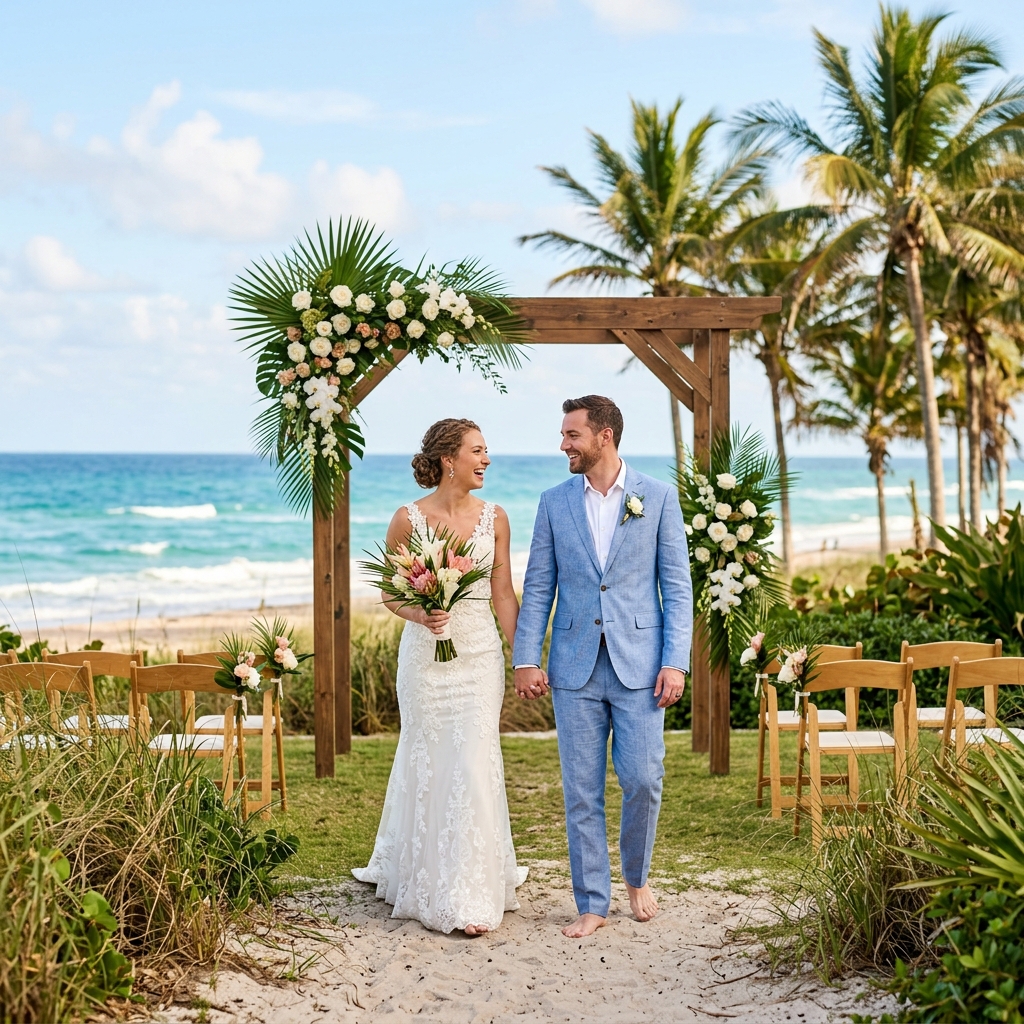
Planning a wedding in Florida involves more than choosing a venue and a date. To be legally married in the state, couples must follow specific requirements for age, marriage licenses, ceremony rules, and documentation set out in Florida law and implemented by county clerks of court.
This guide explains the main legal rules that apply to getting married in Florida, including who can marry, how to obtain and use a marriage license, who may officiate the ceremony, and how Florida treats common-law marriages from other states. It is informational only and not a substitute for individualized legal advice.
Who Can Legally Marry in Florida?
Florida law defines who is eligible to enter into a civil marriage. The rules address age, consent, and certain legal impediments such as existing marriages.
Basic Eligibility Requirements
- Unmarried status: Neither person can already be married to someone else. A prior marriage must be legally ended through divorce, annulment, or death before a new license is issued.
- Capacity to consent: Both individuals must understand the nature of marriage and agree voluntarily. Coercion or lack of mental capacity can undermine the validity of a marriage.
- No close prohibited relationships: As in other states, certain close blood relationships are not eligible for marriage under Florida law (for example, siblings). These prohibitions are part of broader family-law statutes.
County clerks of court may ask for additional documentation, especially if either party has been married before, including certified divorce decrees or death certificates to verify eligibility.
Age Requirements and Minors
Age is one of the most important factors in determining whether someone can marry in Florida. The rules distinguish between adults and minors, and they set absolute limits in some cases.
| Age of Parties | Can They Marry? | Special Conditions |
|---|---|---|
| 18 or older | Yes | No parental consent is required; adults may apply directly for a marriage license. |
| 17-year-olds | Yes, under conditions | Florida statute requires written consent from parents or a legal guardian and limits the age difference with the other party. |
| Under 17 | Generally no | County clerks are prohibited from issuing licenses to persons under 17, with narrow statutory exceptions that involve judicial discretion and pregnancy or existing parenthood in older law. |
At the clerk’s office, minors and adults alike must present valid government-issued photo identification that shows their legal name, date of birth, and signature. U.S. citizens and residents also provide a Social Security number when applying.
Understanding the Florida Marriage License
In Florida, a marriage license is the official authorization to marry and must be obtained before the ceremony takes place. The license is issued by a county court judge or clerk of the circuit court and is valid across the entire state.
Where and How to Apply
Couples must appear in person at a clerk of court’s office to apply for a marriage license. Many counties allow or encourage an online pre-application to speed up the process, but the license itself is based on an in-person appearance and verification of identity.
- Location: You may apply in any Florida county; you do not have to be a resident of that county or of Florida.
- Identification: Acceptable ID typically includes a driver’s license, state ID card, or passport, along with a Social Security number for U.S. citizens and residents.
- Prior marital status: If you were previously married, the clerk will ask for the date your last marriage ended, and some counties may require certified copies of divorce or death records.
Fees, Validity Period, and Waiting Time
Florida law and county practices establish uniform rules regarding license fees, expiration, and waiting periods.
- Standard license fee: Counties charge a set fee for issuing a marriage license. For example, many counties list a fee of approximately $93.50.
- Fee reduction: Completing a state-recognized premarital preparation course can reduce the license fee by up to a specified amount (often around $32.50).
- Validity period: A Florida marriage license is typically valid for 60 days from the date it becomes effective. The ceremony must be performed before this period expires.
- Waiting period: Florida imposes a three-day waiting period for many residents between issuance of the license and the marriage ceremony, although non-residents and couples who complete a premarital course may have this waiting period waived.
Before leaving the clerk’s office, couples must also receive and review the state’s Family Law Handbook, which explains the legal rights and responsibilities associated with marriage.
Conducting a Valid Marriage Ceremony
Obtaining a marriage license is only part of the process. For the marriage to be legally recognized, the ceremony must comply with Florida’s requirements regarding officiants, consent, and the execution of the license.
Authorized Officiants
Florida law allows a variety of individuals to solemnize a marriage, including certain public officials and religious leaders. Examples include:
- Judges and some judicial officers
- Clerks of court or their authorized deputies
- Ordained or licensed members of the clergy from recognized religious organizations
The officiant must sign the marriage license after the ceremony and return it to the appropriate county clerk’s office. Even if more than one officiant participates, only one signature is required on the license.
Consent During the Ceremony
Both parties must publicly express their agreement to marry during the ceremony, commonly by stating “I do” or similar words in response to questions from the officiant. This mutual consent, given freely and without coercion, is a key element in the formation of a valid marriage.
Returning the Executed License
After the ceremony:
- The officiant completes and signs the marriage license.
- The signed license is returned to the county clerk, usually by mail or in person, so that the marriage is recorded in official records.
- The clerk then issues a certified copy of the marriage certificate, often within about 30 days, which couples can use for name changes, insurance, and other legal purposes.
If the license is not properly executed and returned before the license expires, the marriage may not be registered and could raise legal questions about its validity.
Premarital Education and Its Benefits
Florida encourages couples to participate in premarital preparation courses designed to improve communication and knowledge of marital responsibilities. This encouragement appears both in the fee structure and in certain waiting-period rules.
Course Features
A premarital course generally covers topics such as conflict resolution, financial management, parenting expectations, and legal aspects of marriage. To receive the benefits under Florida law:
- The course must be taught by a qualified instructor, such as a licensed mental health professional or a recognized clergy member.
- The couple must obtain a certificate or letter documenting completion.
- The documentation is presented to the clerk when applying for the license.
Completion can reduce the license fee and may allow couples to avoid the standard three-day waiting period before marrying.
Does Florida Recognize Common-Law Marriage?
Florida does not recognize common-law marriages that originate within the state after January 1, 1968. Simply living together for a long time, sharing finances, or referring to each other as spouses does not create a legal marriage in Florida.
Common-Law Marriages From Other States
Although Florida does not create new common-law marriages, it generally respects marriages that are valid where they were formed. That means couples whose common-law marriage is legally recognized in another state, such as Colorado or Texas, are treated as legally married in Florida.
As a result, people who move to Florida with a valid common-law marriage could potentially claim spousal rights such as inheritance or health insurance coverage, even though Florida itself no longer allows common-law marriages to begin here.
Cohabitation Without Marriage
Couples who live together in Florida without a legal marriage—whether ceremonial or common-law from another state—do not automatically receive marital rights or obligations. For example, courts do not treat the end of such a relationship as a divorce, and alimony obligations generally do not arise simply from cohabitation.
Practical Tips for Getting Married in Florida
To help couples avoid delays and complications, consider the following practical steps when planning a Florida wedding:
- Start with the clerk’s office: Contact the clerk of court in the county where you plan to apply for guidance on required documentation and current fees.
- Check your dates carefully: Remember the waiting period and the 60-day license validity when choosing your wedding date.
- Prepare documents in advance: Gather IDs, Social Security numbers, and any divorce or death certificates needed.
- Confirm officiant eligibility: Make sure your chosen officiant is authorized under Florida law to perform marriages.
- Discuss premarital education: Consider taking a premarital course for both relationship benefits and potential fee and waiting-period advantages.
Frequently Asked Questions About Florida Marriage Law
Do we have to be Florida residents to get a marriage license?
No. Florida does not require residency or U.S. citizenship to apply for a marriage license. Couples from other states or countries may marry in Florida as long as they meet the legal requirements.
Can we use our Florida license in a different county?
Yes. A marriage license issued by any Florida county is valid throughout the state. You may obtain the license in one county and have the ceremony in another.
Is a blood test required to marry in Florida?
No. Blood tests are not required for a Florida marriage license.
What happens if my previous marriage ended recently?
You must disclose the date your last marriage ended when applying for a license, and some counties may ask for certified documents to verify the dissolution or death. This helps ensure you are legally free to marry.
Can we be married by a friend who is ordained online?
Florida law allows marriages to be performed by certain religious officials, including ordained ministers, but the exact requirements can depend on how the ordination is recognized. Couples should confirm with the clerk and, if needed, seek legal guidance to ensure the officiant qualifies.
Does living together for many years make us married in Florida?
No. Florida does not recognize new common-law marriages formed in the state after January 1, 1968, regardless of how long a couple cohabits or presents themselves as married.
How do we prove our marriage later?
Once the officiant returns the signed license to the clerk, the marriage is recorded, and you can request certified copies of the marriage certificate. These documents serve as official proof of the marriage for name changes, benefits, and legal processes.
References
- Chapter 741, Florida Statutes: Marriage — Florida Legislature / Online Sunshine. 2016-01-01. https://www.flsenate.gov/Laws/Statutes/2016/741.0405
- Florida Statute 741.04 — Issuance of Marriage License — Florida Legislature / Online Sunshine. 2016-01-01. https://www.leg.state.fl.us/statutes/index.cfm?App_mode=Display_Statute&URL=0700-0799/0741/Sections/0741.04.html
- Florida Marriage License — StateofFlorida.com. 2023-06-01. https://www.stateofflorida.com/getting-married-in-florida/
- Marriage Licenses — Miami-Dade Clerk of Courts. 2024-03-01. https://www.miamidadeclerk.gov/clerk/marriage-licenses.page
- So You Are Getting Married in Florida! — University of Florida IFAS Extension (SMART Couples). 2017-01-01. https://smartcouples.ifas.ufl.edu/media/smartcouplesifasufledu/docs/pdfs/So-You-Are-Getting-Married-In-Florida!.pdf
- Does Florida Recognize Common Law Marriages? — O’Mara Law Group. 2022-05-15. https://www.omaralawgroup.com/blog/does-florida-recognize-common-law-marriages/
- What is Required for a Valid Marriage in Florida? — Sinatra Legal. 2024-11-22. https://www.sinatralegal.com/blog/2024/11/22/what-is-required-for-a-valid-marriage-in-florida/
Similar Articles








Read full bio of medha deb


