
Flood Insurance: Protect Your Home Before the Waters Rise
Understand why homeowners and renters need flood insurance, what it covers, what it costs, and how to buy it before a storm is on the radar.
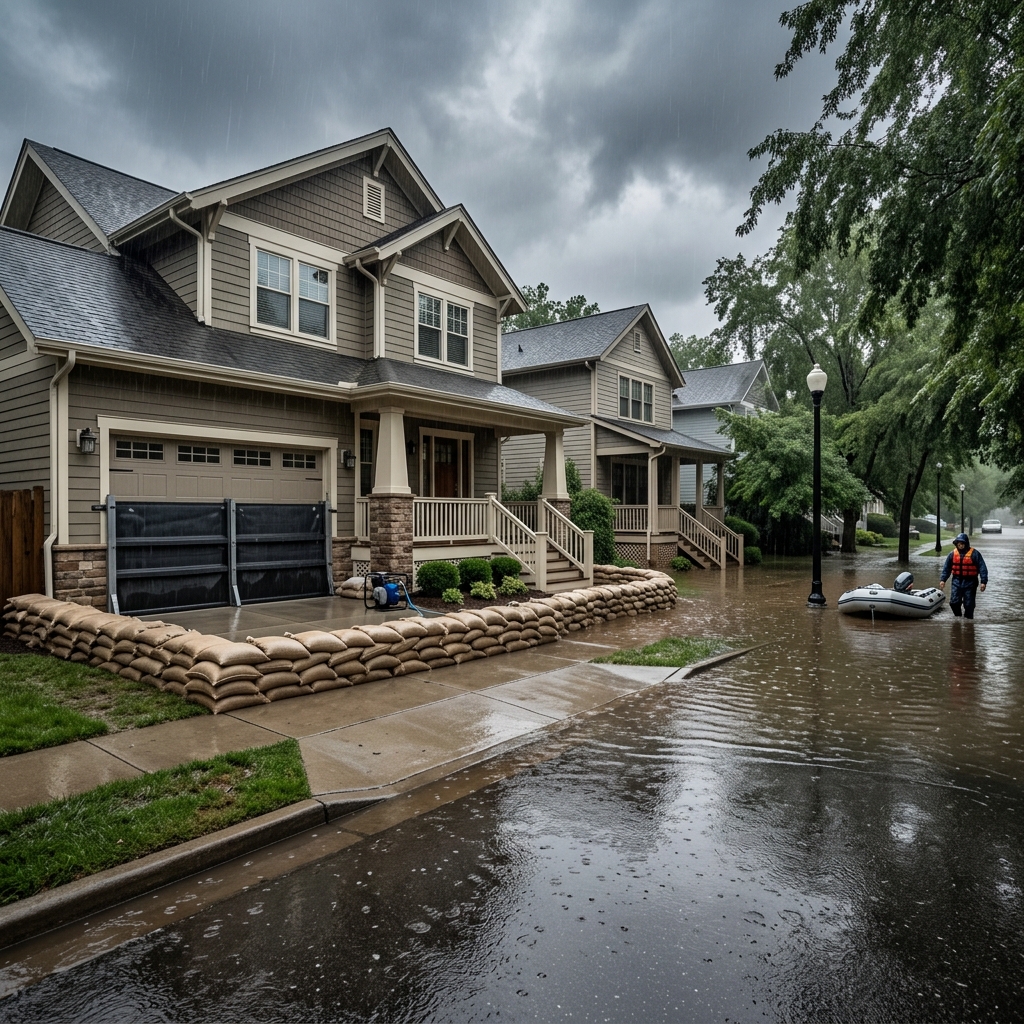
Floods are among the most common and costly disasters, yet many property owners discover too late that their standard homeowner’s or renter’s insurance does not cover flood damage. This guide explains why flood insurance matters, what it typically covers, how much it may cost, and how to get a policy in place well before the water starts rising.
Why Flood Insurance Is Different From Homeowners Insurance
Many people assume that if they have a homeowner’s or renter’s policy, they are covered for almost any disaster. In reality, flood damage is usually excluded from standard property insurance and must be purchased as a separate policy.
- Homeowners insurance generally covers fire, wind (with exceptions), theft, and some types of water damage like burst pipes.
- Flood insurance covers direct physical loss caused by flooding, such as rising water from heavy rain, storm surge, overflowing rivers, or rapid snowmelt.
According to the National Flood Insurance Program (NFIP) and state regulators, relying solely on federal disaster aid is risky because such assistance is only available when a major disaster is formally declared, and even then it is often limited and may come in the form of a loan you must repay.
Who Really Needs Flood Insurance?
Flood insurance is not just for homes on the coast or next to rivers. Insurance and government data show that flooding can occur in moderate- and low-risk areas as well, often from intense localized storms or drainage issues.
High-Risk Areas
High-risk flood zones, often called Special Flood Hazard Areas (SFHAs), are locations that have at least a 1% chance of flooding in any given year.
- These areas are sometimes labeled as Zone A or Zone V on flood maps.
- Homeowners with mortgages from federally regulated or insured lenders in SFHAs are generally required by law to carry flood insurance.
Moderate- and Low-Risk Areas
Living outside a mapped high-risk zone does not mean your risk is zero; it is only lower on average.
- These areas have less than a 1% annual chance of flooding, but damaging floods still occur.
- Some lenders may still require flood coverage depending on local conditions or their internal risk policies.
- Federal agencies emphasize that people outside high-risk zones file a significant share of flood insurance claims each year.
Owners, Renters, and Businesses
- Homeowners can insure both their building and their belongings through NFIP-backed or private flood policies.
- Renters can purchase coverage for personal possessions even if the building owner has their own flood coverage.
- Business owners can obtain coverage for commercial buildings and contents, often up to higher limits than those applicable to residences.
What Flood Insurance Typically Covers
Flood insurance has two main components: one for the building itself and another for contents. Coverage is subject to policy limits, exclusions, and deductibles.
| Type of Coverage | What It Usually Protects | Common Maximum Limits (NFIP – Residential) |
|---|---|---|
| Building property | Structure of the home, foundation, walls and floors, electrical and plumbing systems, built-in appliances, central air and heating systems, and some attached fixtures like cabinets and bookcases. | Up to about $250,000 for most residential buildings. |
| Personal contents | Clothing, furniture, electronics, certain appliances, curtains, and some valuables up to specified sub-limits; typically paid at actual cash value (depreciated amount). | Up to about $100,000 for residential contents. |
For businesses or non-residential properties, NFIP policies can allow coverage up to roughly $500,000 for the building and $500,000 for contents, but exact options vary.
Common Limitations and Exclusions
- Limited coverage for basements and below-ground rooms, and the items stored there.
- No coverage for moisture or mold damage that could have been prevented by the property owner.
- No coverage for additional living expenses (like hotel stays) under standard NFIP policies, unless provided by a separate endorsement or private policy.
Because the details matter, it is important to review your individual policy carefully with your agent or insurer to understand the scope of protection.
How Much Does Flood Insurance Cost?
Costs vary widely based on location, flood zone, building characteristics, and chosen coverage limits. Data from the NFIP and independent analyses show that policies in high-risk areas generally cost more than those in lower-risk zones.
- For single-family homes inside the 1% annual chance floodplain (SFHA), NFIP policies average about $1,000–$1,100 per year, with median costs somewhat lower.
- Outside high-risk flood zones, average NFIP premiums for single-family homes are often in the range of a few hundred dollars per year, for example around $400–$500 in some datasets.
- Some state insurance regulators report typical NFIP premiums in high-risk areas of roughly $700 or more per year, though actual rates can be higher or lower depending on property-specific factors.
Private flood insurers may offer different pricing, discounts, or coverage features, particularly for properties that do not fit NFIP’s standard rating assumptions. However, availability of private coverage varies by market.
Why You Must Buy Flood Insurance Before You Need It
One of the most important characteristics of flood insurance is the waiting period. In most cases, flood policies do not become effective immediately after purchase.
- NFIP policies typically have a 30-day waiting period from the date of purchase before coverage begins.
- This rule is designed to prevent people from buying coverage only when a storm is imminent or a river is already rising.
- There are limited exceptions (for example, when insurance is required for a new mortgage), but you cannot count on last-minute purchases to protect you.
Because of this delay, experts recommend buying flood insurance well in advance of hurricane season or rainy periods so that your protection is in place when you actually need it.
Federal Disaster Aid vs. Flood Insurance
Many property owners expect that if a serious flood occurs, the federal government will make them whole. In reality, federal disaster aid and flood insurance work very differently.
- Federal disaster assistance is only available when a flood event is formally declared a major disaster by federal authorities.
- Even when aid is available, much of it is provided as low-interest loans that must be repaid, not as full grants.
- Flood insurance benefits are paid according to the terms of the policy regardless of whether a federal disaster is declared.
Regulators and consumer advocates emphasize that a single inch of water in a home can cause more than $25,000 in damage, far exceeding what many households could pay out of pocket. Flood insurance can therefore be the difference between manageable repairs and long-term financial hardship.
How to Evaluate Your Flood Risk
Before buying a policy, it is useful to understand your property’s exposure to flooding. A combination of official flood maps, online tools, and local knowledge provides the best picture.
Key Steps to Assess Risk
- Check FEMA flood maps to identify whether your property lies in a high-risk, moderate-risk, or low-risk flood zone.
- Use reputable online risk tools that analyze historical flooding, rainfall patterns, and topography for your specific address.
- Consult local emergency management offices or floodplain managers, who can provide community-level insight and clarify whether your community participates in NFIP.
- Review your lender’s requirements, especially if you are buying or refinancing a home in a mapped flood zone.
Remember that risk categories are based on statistical probabilities, not guarantees. Being outside a high-risk zone does not ensure safety; it only indicates lower average annual risk.
Buying Flood Insurance: NFIP vs. Private Insurers
Flood coverage in the United States is available from two main sources: the federally backed NFIP and private insurance companies.
National Flood Insurance Program (NFIP)
- NFIP provides standardized flood policies in communities that adopt and enforce floodplain management rules.
- Policies are sold through licensed insurance agents and companies, but the federal program sets the rules, coverage limits, and pricing structure.
- Residential building coverage is typically available up to $250,000, with contents coverage up to $100,000; higher limits apply for certain non-residential properties.
- To be eligible, your community must participate in NFIP, which many local governments do.
Private Flood Insurance
- Some insurers offer private flood policies that may provide higher coverage limits, additional benefits, or different underwriting criteria.
- Private coverage can be useful for high-value homes that exceed NFIP’s limits, or for owners seeking tailored coverage.
- However, availability and pricing vary by state and region, and not all lenders accept private policies in place of NFIP coverage for certain loans.
Steps to Purchase a Policy
- Contact your current insurance agent or company and ask whether they offer flood insurance through NFIP or private carriers.
- Confirm that your community participates in NFIP, if you are considering a federal policy.
- Decide how much building and contents coverage you need, based on the value of your home and belongings and any requirements from your lender.
- Compare NFIP and private options, where available, in terms of coverage, exclusions, price, and claims handling.
- Finalize the policy and mark your calendar for the effective date, keeping the typical 30-day waiting period in mind.
Practical Tips to Strengthen Your Flood Protection Plan
Flood insurance is a crucial financial safety net, but you can also reduce your exposure and improve your ability to recover.
- Document your property with photos or videos of each room, including major systems and valuable items, and store backups in the cloud.
- Raise utilities such as electrical panels, furnaces, and water heaters above potential flood levels when possible, in line with local building codes.
- Use flood-resistant materials in basements and ground floors, such as tile instead of carpet and water-resistant insulation.
- Keep important documents (insurance policies, mortgage papers, IDs) in a waterproof container or digital vault.
- Know your evacuation routes and have an emergency kit ready for quick departures during a flood warning.
Frequently Asked Questions About Flood Insurance
1. Does my homeowners policy cover flood damage?
In most cases, no. Standard homeowners policies exclude damage from flooding caused by rising water from outside the home. You generally need a separate flood insurance policy for that type of loss.
2. How long does it take for flood insurance to go into effect?
Most NFIP policies have a 30-day waiting period from the date of purchase before coverage begins, with limited exceptions such as when coverage is required in connection with a new or modified mortgage.
3. If I am not in a high-risk zone, is flood insurance worth it?
Yes, many experts recommend coverage even in moderate- or low-risk zones. Flooding can occur almost anywhere, and claims from outside high-risk areas are common. Premiums in lower-risk zones are often significantly cheaper than in SFHAs.
4. Do renters need flood insurance?
Renters can benefit from flood insurance because their landlord’s policy typically covers only the building, not tenants’ personal belongings. A renter-specific flood policy can insure your furniture, clothing, electronics, and other possessions.
5. Where do I buy flood insurance?
You can purchase flood insurance through most property insurance agents and companies that participate in the NFIP or offer private flood coverage. If you are unsure where to start, contact your existing insurer and ask whether they handle flood policies.
6. How much coverage should I buy?
The right amount depends on your home’s replacement cost, the value of your personal property, and any requirements from your mortgage lender. Many homeowners aim to cover at least the outstanding mortgage balance or full rebuild cost, plus sufficient contents coverage to replace major belongings.
References
- Things You Should Know About Flood Insurance — Calcasieu Parish Police Jury / Floodplain & Coastal Zone Management. 2023-06-01. https://www.calcasieu.gov/services/planning-development/floodplain-and-coastal-zone-management/things-you-should-know-about-flood-insurance
- Flood Insurance — Florida Office of Insurance Regulation. 2023-05-10. https://floir.gov/property-casualty/flood-insurance
- Flood Insurance At A Glance: What Does it Cover? — Allstate Insurance. 2022-09-20. https://www.allstate.com/resources/flood-insurance/what-does-flood-insurance-cover
- Do I Need Flood Insurance? Why You Should Consider a Flood Policy to Protect Your Home — National Association of Insurance Commissioners (NAIC). 2022-08-15. https://content.naic.org/article/do-i-need-flood-insurance-why-you-should-consider-flood-policy-protect-your-home
- The Who/What/When/Why/Where of Flood Insurance — FloodSmart.gov (National Flood Insurance Program). 2021-11-05. https://agents.floodsmart.gov/articles/whowhatwhenwhywhere-flood-insurance
- Learn About the Benefits of Having Flood Insurance — First Street Foundation / Risk Factor. 2023-01-18. https://help.firststreet.org/hc/en-us/articles/360048256113-Learn-about-the-benefits-of-having-flood-insurance
- The Importance of Flood Insurance For Homeowners — Risk Strategies / BBrown. 2023-04-12. https://us.bbrown.com/blog/the-importance-of-flood-insurance-for-homeowners
Similar Articles








Read full bio of medha deb




