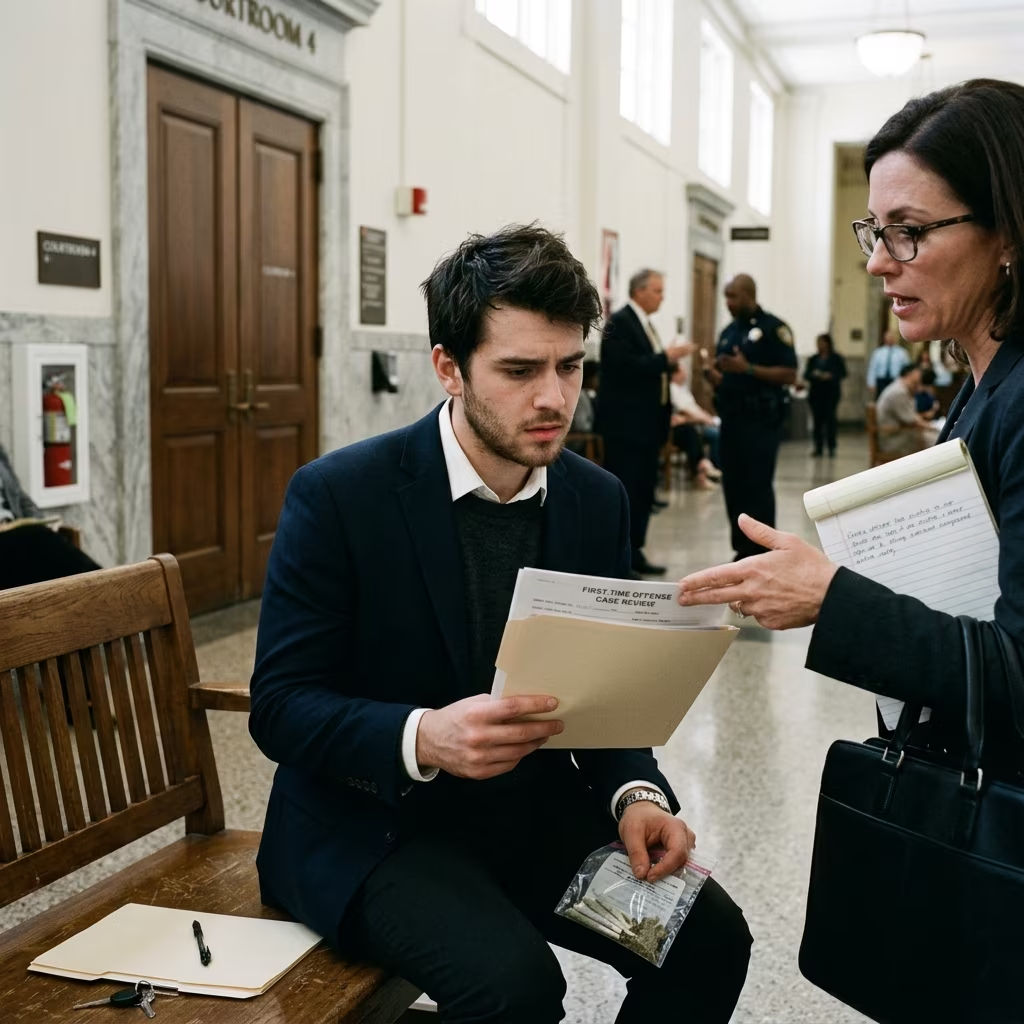
In many parts of the United States, cannabis has become more socially acceptable and, in some states, fully legal for medical or recreational use. Yet a first-time marijuana possession charge can still carry serious criminal, financial, and personal consequences—especially in states that continue to treat possession as a crime or under federal law, where marijuana remains illegal.
This article explains how first-time possession is commonly treated, the range of penalties you might face, and the longer-term impact of even a single conviction. While the details differ widely by jurisdiction, understanding the underlying patterns can help you take informed steps if you or someone you know is charged.
Why First-Time Marijuana Possession Still Matters Legally
As cannabis laws have evolved, many people assume that possessing a small amount is no big deal. In reality, being caught with marijuana can still mean:
- A criminal record that appears in background checks
- Possible jail or probation, even for a first offense
- Fines and court costs that add up quickly
- Collateral consequences like driver’s license suspension or loss of student aid
At the federal level, marijuana is classified as a Schedule I controlled substance. Simple possession of any amount remains a criminal offense punishable by up to one year in jail and a minimum fine of $1,000 for a first conviction. State laws may be more lenient—or even decriminalize small amounts—but in many places, first-time possession is still treated as a misdemeanor or violation with meaningful penalties.
Key Factors That Shape First-Offense Penalties
There is no single nationwide rule for a first-time marijuana possession case. Instead, penalties depend on multiple factors that courts and prosecutors weigh:
1. Amount of Marijuana Involved
The quantity of cannabis found is one of the most important elements in determining the severity of the charge.
- Very small amounts (often under 0.5 or 1 ounce) may be treated as an infraction or minor offense in some states, punishable mainly by fines.
- Larger personal-use amounts can lead to misdemeanor charges, with possible jail and higher fines.
- Substantial quantities may trigger felony charges, particularly when the amount suggests intent to sell or distribute.
| Jurisdiction (Illustrative) | Small Amount (First Offense) | Larger Amount (First Offense) |
|---|---|---|
| Connecticut | Under 1/2 ounce: non-criminal, fine-only, starting at $150. | 1/2 ounce or more: class A misdemeanor, up to 1 year in jail and $2,000 fine. |
| Pennsylvania | Under 30 grams: misdemeanor; up to 30 days in jail and $500 fine. | Over 30 grams: up to 1 year in prison and $5,000 fine. |
| Federal law | Any amount: misdemeanor; up to 1 year in jail and $1,000 minimum fine. | Distribution or intent to distribute can lead to felony charges with much higher penalties. |
2. Criminal History
By definition, a “first offense” means you have no prior convictions for the same crime. However, in many jurisdictions:
- Prior drug-related convictions for other substances can lead to enhanced charges and higher penalties, even if this is your first marijuana case.
- Second and subsequent marijuana possession convictions often escalate from misdemeanor to felony, with longer possible incarceration and larger fines.
3. Intent: Personal Use vs. Distribution
Law enforcement and prosecutors also consider whether the possession appears to be for personal use or sale. Evidence such as packaging, scales, large amounts of cash, or text messages can influence this assessment.
- Simple possession generally carries lower penalties and is more likely to qualify for diversion or treatment programs.
- Possession with intent to distribute is often charged as a felony with substantial prison exposure and much higher fines.
4. Age of the Offender
Many states impose stricter collateral penalties for younger defendants. For example:
- Drivers under 21 convicted of marijuana possession may face automatic driver’s license suspensions, even for small amounts.
- College students can lose eligibility for certain federal financial aid after a drug conviction in some jurisdictions.
Common Penalties for First-Time Marijuana Possession
Even when a judge chooses leniency or a state has partially decriminalized cannabis, penalties for a first offense can extend far beyond a simple fine.
Jail or Incarceration
The threat of jail time varies considerably:
- Federal law: up to one year in jail for any amount, first offense.
- Some states: short jail terms such as up to 30 days, 3 months, or 6 months for first-time simple possession, depending on the amount and classification of the offense.
- Others: treat small amounts as non-criminal violations, focusing on fines instead of incarceration.
Importantly, even where jail is authorized, judges may suspend incarceration in favor of probation, treatment, or community service, particularly for first-time offenders.
Fines and Court Costs
Financial penalties can be significant, especially once court fees and surcharges are added:
- Federal first-offense possession: minimum $1,000 fine.
- State fines commonly range from around $100 for minor violations to $2,000 or more for misdemeanor possession.
- Felony-level possession or distribution can result in fines up to tens of thousands of dollars.
Probation and Supervision
Probation is a frequent outcome for first-time marijuana possession convictions. Conditions may include:
- Regular check-ins with a probation officer
- Random drug testing and abstaining from controlled substances
- Mandatory participation in drug education or treatment programs
- Community service or restitution
Violating probation conditions can result in additional penalties, including activation of suspended jail sentences.
Driver’s License Consequences
Many jurisdictions link drug convictions to the ability to drive:
- States may suspend a driver’s license for months for a first marijuana possession conviction, even if the offense did not involve driving.
- Young drivers can face extended ineligibility for obtaining a license after a conviction.
Collateral Consequences Beyond Criminal Sentencing
A first possession conviction can have ripple effects that continue long after fines are paid and probation ends:
- Employment: Background checks may reveal the conviction, affecting hiring decisions and professional licensing.
- Education: Students may lose access to certain forms of financial aid or scholarship opportunities.
- Housing: Landlords, especially those in federally subsidized housing programs, may deny applications based on drug convictions.
- Immigration: Non-citizens can face severe immigration consequences, including denial of visas or removal proceedings, for controlled substance offenses.
Variation Among States: Decriminalization vs. Criminalization
While federal law remains strict, states differ dramatically in their treatment of marijuana. Some have:
- Legalized recreational use for adults under state law
- Authorized medical marijuana programs
- Decriminalized small amounts, treating them as civil infractions
- Maintained criminal penalties for possession in most circumstances
Even in decriminalized jurisdictions, penalties still exist. For example, possessing less than half an ounce of marijuana in Connecticut is a non-criminal violation punishable by fines and license consequences for younger offenders. In contrast, states like Pennsylvania and Iowa can impose jail time and a criminal record for possession of relatively small quantities.
Diversion, Treatment, and Alternatives to Conviction
Recognizing the long-term impact of drug convictions, many jurisdictions offer alternatives to traditional prosecution for first-time offenders. These programs seek to reduce recidivism and avoid saddling individuals with permanent records for minor conduct.
Pretrial Diversion Programs
Diversion typically allows a defendant to complete specified conditions—such as treatment, education, and community service—in exchange for dismissal of the charge if successfully completed. Common features include:
- Eligibility limited to first-time or low-level offenders
- Required participation in drug education or counseling
- Random drug testing and compliance monitoring
- Payment of fees and completion of community service
Successfully completing diversion can mean avoiding a conviction and, in some jurisdictions, being able to deny having a criminal record for that incident.
Conditional Discharge or Deferred Adjudication
Some courts use conditional discharge mechanisms, where the defendant pleads guilty but the court withholds entering a judgment of conviction while the person completes conditions set by the judge. Completion may result in dismissal; failure may lead to formal conviction and sentencing.
Treatment-Oriented Sentencing
For individuals whose possession reflects broader substance use issues, courts may prioritize treatment over punishment. This can include:
- Inpatient or outpatient drug rehabilitation programs
- Counseling and therapy
- Support group participation, such as 12-step programs
Some statutes explicitly require the court to consider whether a defendant is drug-dependent and allow suspension of prosecution in favor of treatment for second or subsequent possession offenses.
Long-Term Impact of a First Possession Conviction
Perhaps the most underestimated consequence of a first-time marijuana possession conviction is the way it can follow a person for years. Even if no jail time is served and fines are modest, the record itself can be a barrier.
Criminal Records and Expungement
In many jurisdictions, a possession conviction remains on your record indefinitely unless you qualify for and successfully obtain expungement or sealing.
- Some states allow expungement of certain low-level drug offenses after a waiting period and proof of rehabilitation.
- Others restrict expungement or sealing for drug crimes, making relief harder to obtain.
Where expungement is available, individuals typically must file formal petitions, sometimes attend hearings, and demonstrate that they have complied with all prior court orders and remained conviction-free.
Practical Life Consequences
Beyond formal legal barriers, there are practical effects:
- Job applications may ask about criminal history, and employers increasingly use background checks.
- Professional licensing bodies can scrutinize past drug convictions, especially in fields like law, medicine, and education.
- International travel may be complicated if foreign governments view drug convictions as grounds for denying entry.
How to Respond if You Face a First-Time Marijuana Possession Charge
If you are charged with marijuana possession for the first time, you still have options. Acting promptly and strategically can make a significant difference in the outcome.
Immediate Steps
- Exercise your right to remain silent and avoid discussing details of the case with police beyond providing basic identifying information.
- Consult with a qualified criminal defense attorney who is familiar with drug laws in your jurisdiction.
- Gather documents and information that may be relevant to your case, such as prescriptions (for medical cannabis in states where it is legal) or evidence supporting potential defenses.
Possible Defense Strategies
While every case is unique, common defense approaches include:
- Challenging the legality of the stop or search, particularly if law enforcement lacked reasonable suspicion or probable cause.
- Questioning possession (for example, arguing that the marijuana did not belong to you or you were unaware of its presence).
- Contest the amount or classification of the substance, especially if laboratory testing is insufficient.
- Negotiating for diversion or reduced charges based on your lack of prior record.
An attorney can help you evaluate the strength of the case against you, identify procedural or constitutional issues, and determine whether resolving the case through negotiation, diversion, or trial is in your best interest.
Frequently Asked Questions (FAQs)
Does a first-time marijuana possession arrest always lead to a conviction?
No. A first-time arrest can result in dismissal, diversion, or acquittal, depending on the facts, the strength of the evidence, and the availability of alternative programs. Legal representation and prompt action can improve the chances of a favorable outcome.
How much marijuana can I have before it becomes a felony?
The threshold between misdemeanor and felony varies by jurisdiction. Some states treat possession of relatively small amounts as misdemeanors, reserving felony charges for larger quantities or evidence of intent to distribute. You should consult state-specific statutes or a local attorney for precise thresholds.
Is marijuana legal in my state, and does that protect me from all charges?
Even in states that have legalized recreational or medical marijuana, there are limits relating to age, quantity, licensing, and where consumption is allowed. Violating those limits can still lead to charges. Additionally, marijuana remains illegal under federal law, which can matter in certain contexts such as federal property or immigration.
Can I lose my driver’s license after a first possession conviction?
Yes, in some states, drug possession convictions—including marijuana—automatically trigger license suspensions, particularly for younger drivers. This can occur even if you were not driving at the time of the offense.
Will my first marijuana possession conviction ever disappear from my record?
In some jurisdictions, you may be able to seek expungement or sealing after a waiting period and fulfillment of all court obligations. In others, the conviction can remain accessible indefinitely unless specific relief is granted. Local law and the nature of the offense determine your options.
References
- First Offense Marijuana Charges in PA — Ketchel Law. 2023-08-01. https://ketchellaw.com/first-offense-marijuana-charges-in-pa/
- Federal Laws and Penalties for Marijuana — NORML. 2023-05-10. https://norml.org/laws/federal-penalties-2/
- Marijuana Penalties — Connecticut General Assembly, Office of Legislative Research. 2016-11-30. https://www.cga.ct.gov/2016/rpt/2016-R-0273.htm
- Penalties for Possessing Marijuana First Offense in Iowa — Clark & Sears Law. 2022-09-15. https://www.clarkandsears.com/criminal-defense/drug-crimes/marijuana-first-offense/
- Marijuana/THC Possession Charges in Wisconsin — Grieve Law. 2023-02-20. https://www.grievelaw.com/wisconsindrug/marijuanathc/