
Estate Planning Essentials for Military Families
A practical guide to organizing wills, powers of attorney, and military benefits so your family is protected in every stage of service.
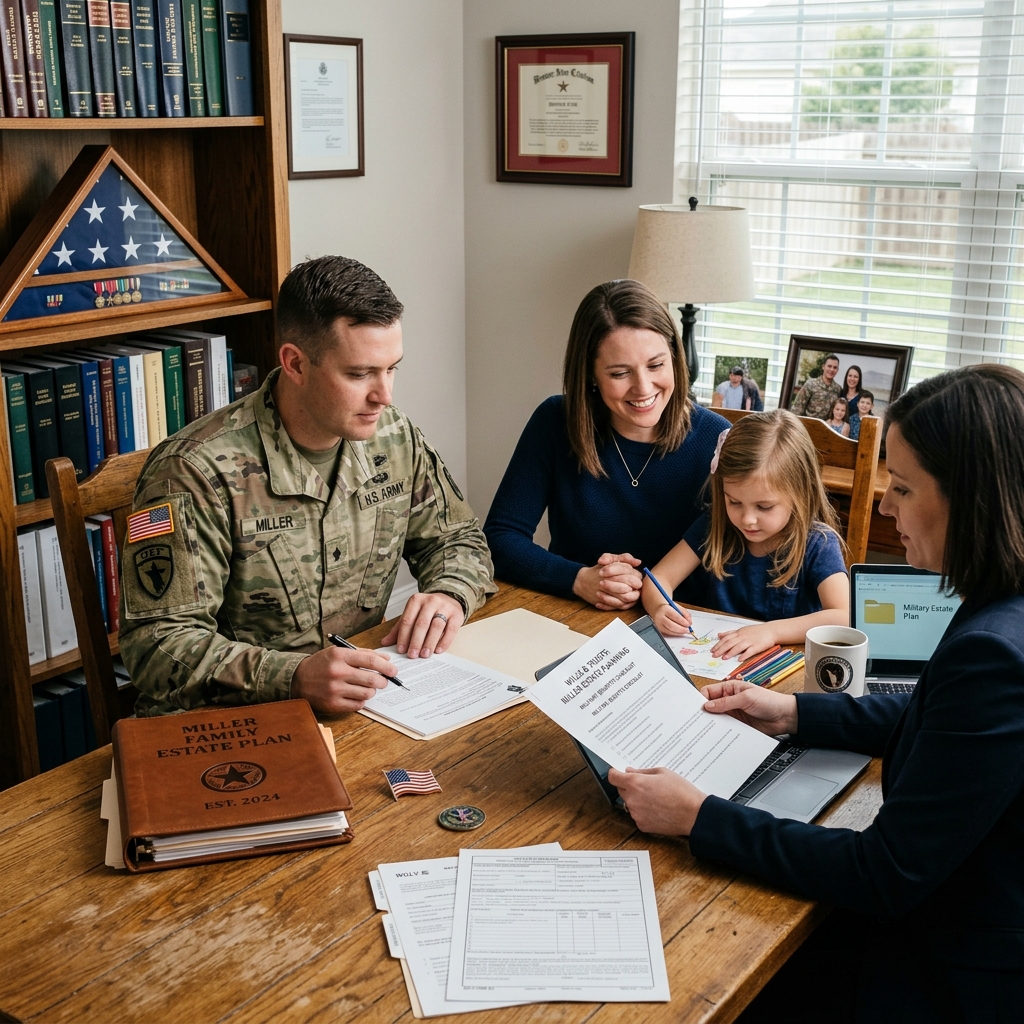
Military life often includes uncertainty—deployments, relocations, and the unique risks that come with service. A thoughtful estate plan helps ensure your family is protected, your wishes are honored, and your hard-earned benefits reach the people you intend, no matter what happens.
This guide explains the core pieces of an estate plan for active-duty service members, Guard and Reserve members, and veterans, and shows how to integrate military-specific benefits with your broader financial and legal planning.
Why Estate Planning Matters So Much for Service Members
Estate planning is the process of deciding how your property, benefits, and responsibilities will be managed if you become incapacitated or after your death, and documenting those decisions in legally enforceable ways.
For military families, estate planning is especially important because:
- Higher risk and rapid changes: Deployments, combat zones, and frequent moves increase the chance that decisions may need to be made quickly, possibly in your absence.
- Complex benefits: Programs like SGLI, SBP, pensions, and disability benefits can be powerful tools—but only if your elections and beneficiaries are coordinated with your overall plan.
- Family protection: Many service members have young children, aging parents, or dependents with special needs who rely on them financially and emotionally.
Without clear planning, state laws and default benefit rules will determine what happens to your property and who handles your affairs, which may not match your intentions.
Core Documents Every Military Family Should Consider
A strong estate plan usually starts with a set of foundational documents. These tools work together to give you control over financial, medical, and family decisions.
Last Will and Testament
A will is a legal document that explains how your assets will be distributed, who will manage the process (your executor), and who will care for minor children after your death.
Key roles of a will include:
- Specifying who should receive your property and personal items.
- Appointing a guardian for minor children or dependents.
- Choosing an executor to handle paperwork, debts, and distributions.
Without a valid will, state intestacy laws decide who inherits your property and a court may appoint a guardian for your children, which can create delays, confusion, and extra costs.
Durable Power of Attorney
A power of attorney (POA) authorizes someone you trust to manage your legal or financial affairs if you are unavailable or incapacitated.
For service members, a POA can be critical during deployments or training periods when you cannot easily sign documents or attend to everyday tasks. Common responsibilities include:
- Paying bills and managing bank accounts.
- Handling housing, leases, and property transactions.
- Filing taxes or addressing insurance matters.
POAs can be tailored to be broad or limited in scope and may be set to take effect immediately or only upon incapacity.
Healthcare Directive and Medical POA
A healthcare directive
A separate medical power of attorney
Together, these documents:
- Provide clarity about life-sustaining treatment, pain management, and other care choices.
- Reduce stress and disagreement among family members during crises.
- Ensure that a trusted person can communicate with doctors and hospitals on your behalf.
Trusts for Added Control and Protection
A trust is a legal arrangement that holds and manages assets for the benefit of your chosen beneficiaries, under rules you set.
Common reasons military families use trusts include:
- Providing structured support for minor children or dependents with special needs.
- Keeping certain assets out of probate, which can reduce delays and costs.
- Enhancing privacy, since trust terms are usually not filed in public court records.
Some veterans also use irrevocable trusts to protect assets while preserving eligibility for certain long-term care or needs-based benefits.
Making the Most of Military-Specific Benefits
Military and veterans’ benefits can form a large part of your family’s financial security. Integrating them properly into your estate plan helps avoid conflicts and missed opportunities.
Servicemembers’ Group Life Insurance (SGLI) and Veterans’ Group Life Insurance (VGLI)
SGLI for active-duty members and VGLI for veterans are key life insurance programs designed to support families after a service member’s death.
Important considerations include:
- Beneficiary designations: The person or trust you name on your SGLI or VGLI form generally controls who receives the money, even if your will says something different.
- Regular updates: Review and update beneficiaries after marriage, divorce, birth or adoption of children, or major life changes.
- Coordination with trusts: Naming a trust as beneficiary can help manage funds for minors or dependents with complex needs.
Thrift Savings Plan (TSP) and Other Retirement Accounts
The Thrift Savings Plan and similar retirement accounts are valuable parts of your long-term estate plan. As with insurance, beneficiary forms determine who receives these funds.
Best practices:
- Ensure TSP and IRA beneficiary designations match your current wishes.
- Confirm they do not conflict with your will or trust instructions, because beneficiary forms generally override the will.
- Consider tax implications for heirs when planning distributions.
Survivor Benefit Plan (SBP) and Military Pensions
The Survivor Benefit Plan allows retiring service members to provide a continuing monthly income to a designated beneficiary after their death.
When integrating SBP and pensions into your estate plan:
- Review SBP elections during major life events to keep them aligned with your overall plan.
- Consider using a trust to manage SBP payments for minors or dependents with special needs.
- Understand state tax rules affecting pensions so your family knows what to expect.
| Benefit | Main Purpose | Estate Planning Action |
|---|---|---|
| SGLI/VGLI | Lump-sum death benefit | Keep beneficiaries current; consider trusts for minors |
| TSP/Retirement Accounts | Long-term savings and investment | Align beneficiary forms with will/trust and tax strategy |
| Survivor Benefit Plan | Ongoing income for survivors | Coordinate elections with broader estate plan and special needs planning |
Special Estate Planning Issues During Deployment
Deployment often triggers mandatory or recommended legal readiness checks, but it is also a natural time to review your entire estate plan.
Before deployment, service members should:
- Confirm their will, POA, and healthcare directives reflect current wishes and family circumstances.
- Verify SGLI, TSP, and SBP beneficiaries are accurate and coordinated.
- Organize key documents in a secure, accessible place and tell a trusted person how to find them.
Because deployment increases the likelihood that decisions must be made without you present, it is essential that your appointed agents understand your preferences and have the documents they need to act.
Using Free Military Legal and Counseling Resources
One major advantage of military service is access to no-cost legal and financial resources that can help you build and maintain your estate plan.
Installation Legal Assistance Offices
Most military installations have a Legal Assistance Office that offers free services such as drafting basic wills, powers of attorney, and advice on estate planning issues for service members and eligible family members.
They can:
- Explain state-specific rules for wills and other documents.
- Help you understand how a permanent change of station (PCS) affects your legal documents’ validity.
- Review existing documents for conflicts or gaps.
Military OneSource and Related Programs
Military OneSource provides information, legal consultations, and financial counseling to support estate planning and broader financial readiness.
Additional support networks include:
- Service-specific legal assistance sites (such as Army, Air Force, Navy/Marine Corps, and Coast Guard legal services).
- VA-sponsored legal clinics and pro bono programs that help veterans with wills and trusts.
These resources can significantly reduce or eliminate the cost of basic planning documents while ensuring they meet legal standards.
Avoiding Common Estate Planning Pitfalls
Even well-intentioned plans can fail if key details are overlooked. Military families should pay close attention to the following risk areas.
Conflicts Between Wills and Beneficiary Forms
Titles to property and beneficiary designations on contracts like life insurance, retirement accounts, and SBP typically take precedence over your will.
That means:
- If your will leaves everything to your current spouse, but your SGLI still names an ex-spouse, the ex-spouse may receive the insurance proceeds.
- If a TSP or SBP form lists outdated beneficiaries, your intended heirs may be left out entirely.
Regularly reviewing and updating all beneficiary forms ensures consistency and prevents painful surprises.
Document Reciprocity When You Move
Military families often relocate to new states or countries. Many states will honor a will that was valid where it was originally signed, but differences in local law—such as witnessing requirements or community property rules—can create pitfalls.
Legal assistance attorneys can review your documents after a PCS to confirm they still meet local requirements and recommend any updates.
Outdated or Missing Documents
Life changes quickly: marriage, divorce, birth of children, disability, and retirement can all alter your priorities. An estate plan that is never updated can be nearly as risky as having no plan at all.
To keep your plan current:
- Schedule reviews at least every few years, or after any major life event.
- Update contact information and roles for executors, guardians, and agents.
- Ensure your family knows how to access your documents when needed.
Practical Step-by-Step Checklist for Military Families
The following checklist can help you build or refine your estate plan in an organized way:
- Step 1: Make an appointment with your installation’s Legal Assistance Office or a qualified estate planning attorney familiar with military benefits.
- Step 2: Draft or update your will, including guardianship provisions for minor children or dependents.
- Step 3: Establish durable financial and medical powers of attorney.
- Step 4: Create or review your healthcare directive to ensure your medical wishes are clear.
- Step 5: Review and update all beneficiary designations (SGLI/VGLI, TSP, IRAs, SBP, pensions) and align them with your will or trusts.
- Step 6: Consider whether a trust is appropriate for your children, special needs dependents, or complex family situations.
- Step 7: Collect key documents—military orders, benefit information, insurance policies, and legal forms—in one secure but accessible location.
- Step 8: Communicate your plan to trusted family members or executors so they understand roles and where to find information.
Frequently Asked Questions (FAQs)
Do I really need a will if I do not own much property?
Yes. Even if you have modest assets, a will ensures that what you do own goes to the people you choose and can formally designate guardians for minor children. Without a will, state law controls these decisions and may not match your preferences.
Is a power of attorney safe to give to someone else?
A power of attorney is powerful, so it should only be granted to someone you trust completely. You can limit what the agent may do and when the authority begins, and you can revoke a POA if circumstances change.
What happens if my will and my SGLI beneficiary form disagree?
In most cases, the SGLI beneficiary form governs the payout, not the will. That is why it is critical to keep beneficiary designations updated and coordinated with your estate planning documents.
Are military legal assistance services enough, or do I need a private attorney?
For many service members, legal assistance offices provide sufficient help for basic wills, POAs, and planning questions. However, if you have complex needs—such as significant assets, business interests, blended families, or special tax concerns—you may benefit from consulting a civilian attorney who focuses on estate planning.
How often should I review my estate plan?
At minimum, review your plan every few years. You should also revisit it after major events such as deployment, marriage, divorce, birth or adoption of a child, serious illness, or retirement.
References
- Estate Planning Information for the Military — Military OneSource. 2024-03-01. https://www.militaryonesource.mil/resources/millife-guides/estate-planning/
- Estate Planning “Need to Knows” for Military Families — University of Florida IFAS Extension. 2022-10-01. https://ask.ifas.ufl.edu/publication/FY1531
- Estate Planning for Veterans & Active Military | A Complete Guide — Evans & Davis. 2023-06-15. https://www.evansdavis.com/estate-planning/military-estate-planning/
- National Estate Planning Awareness Month: Why Military Need an Estate Plan — National Military Family Association. 2023-10-01. https://www.militaryfamily.org/national-estate-planning-awareness-month-why-military-need-an-estate-plan/
- The Complete Guide to Estate Planning for Veterans — Burris Law. 2023-05-10. https://burris-law.net/the-complete-guide-to-estate-planning-for-veterans/
- ESTATE PLANNING (Army FRP Handout) — U.S. Department of Defense, Military Compensation. 2023-01-01. https://militarypay.defense.gov/Portals/3/Documents/Army%20CMT/Divorce/Army%20FRP%20Handout-Estate%20Planning_Final%202023.pdf
- 12 places that offer free wills or trusts for Veterans — U.S. Department of Veterans Affairs (VA News). 2023-02-24. https://news.va.gov/111089/13-places-free-wills-trusts-veterans/
Similar Articles








Read full bio of medha deb


