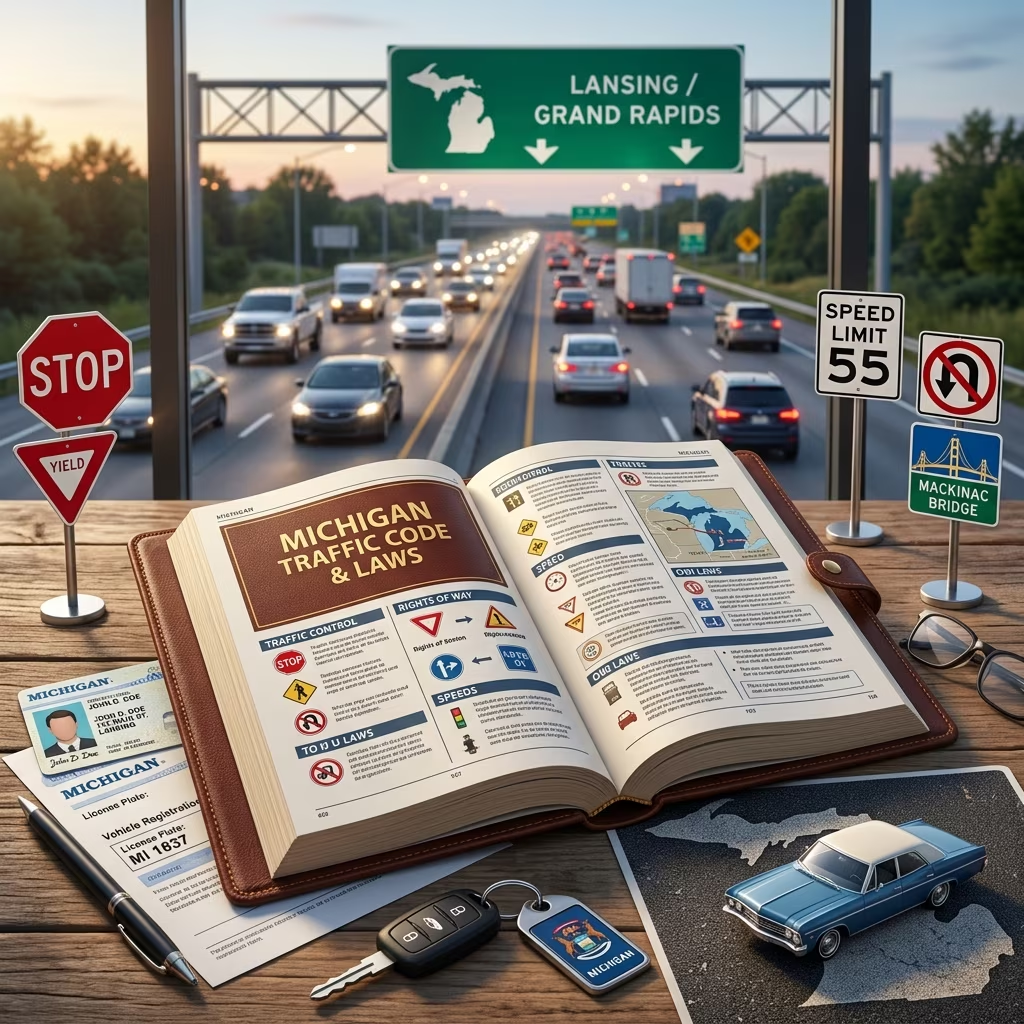
Michigan drivers are subject to a detailed set of traffic rules contained in the state’s vehicle code and related regulations. These laws govern everything from how fast you can drive to when you must yield, what happens after a crash, and the penalties for impaired or distracted driving. Understanding these rules is critical not only to avoid tickets, but also to protect yourself, your passengers, and other people on the road.
Michigan’s Vehicle Code and Legal Framework
Michigan traffic rules are primarily found in the Michigan Vehicle Code, located in Chapter 257 of the Michigan Compiled Laws. This code addresses driver licensing, vehicle registration, speed limits, right-of-way rules, impaired driving, and enforcement powers for police and courts. Each specific behavior—such as speeding, failing to signal, or operating while intoxicated—has a corresponding statute that sets the elements of the offense and the possible penalties.
In addition to statewide statutes, local governments may adopt ordinances and the Uniform Traffic Code to regulate matters such as parking, local speed zones, and turning restrictions, provided those rules do not conflict with state law. Drivers are expected to obey both state-level laws and valid local ordinances whenever they travel through Michigan.
Core Rules of the Road
Michigan has a number of foundational rules that govern how vehicles should move on public roads. These include lane usage, basic speed regulations, and right-of-way obligations. Violations of these core rules are among the most common traffic citations and can significantly affect your driving record.
Lane Use and “Keep Right” Requirements
On most Michigan roads with more than one lane in the same direction, drivers are generally required to use the right-hand lane for regular travel and reserve the left lane primarily for passing or preparing for a left turn. This policy aims to maintain smooth traffic flow and reduce weaving and sudden lane changes.
- On multi-lane roads, the default rule is to drive in the right lane unless you are overtaking another vehicle, avoiding an obstruction, or preparing for a left turn.
- Certain large vehicles, such as heavy trucks with a gross weight over 10,000 pounds, may be restricted to the two lanes farthest to the right except when a left turn or special hazard requires another lane.
- Drivers traveling on freeways with three or more lanes may generally use any lane, but still must follow posted lane-use signs and move right when driving slower than the flow of traffic.
Speed Limits Across Michigan Roadways
Speed limits in Michigan depend on the type of road and local conditions. While signs always control when posted, the vehicle code also sets default speed limits for certain categories of roads when no sign is present.
- 15 mph is typical in mobile home parks and some municipal parks.
- 25 mph often applies in platted subdivisions and condominium complexes.
- 55 mph is the general limit on most highways and streets that are not designated freeways, unless otherwise posted.
- Freeways commonly have a maximum of 70 mph and a minimum of 55 mph, though specific segments may differ based on engineering studies and signage.
Drivers who exceed posted limits can receive citations with points added to their license. For example, traveling more than 10 mph over the limit can result in four points, and more than 15 mph over the limit can lead to five points on your record. Excessive speed in construction or school zones can carry enhanced penalties.
Right-of-Way and Merging Rules
Right-of-way rules determine which road user must yield in particular situations. Michigan law emphasizes safe merging, respectful treatment of emergency vehicles, and careful interaction with pedestrians and school buses.
- Merging onto freeways: Drivers entering a freeway from an on-ramp or merge lane must yield to traffic already traveling on the freeway and adjust speed to enter safely.
- Emergency vehicles: When an emergency vehicle with flashing red and blue lights approaches, drivers must move to the edge of the road, clear intersections, and stop until the vehicle passes.
- School buses: When a school bus is stopped with activated red flashing lights, traffic in both directions generally must stop at least 20 feet away and remain stopped until the bus moves or the lights are turned off.
Impaired and Reckless Driving Offenses
Michigan takes impaired and dangerous driving seriously. Operating While Intoxicated (OWI) and similar offenses carry criminal penalties, potential jail time, and significant license consequences. Reckless driving and vehicular offenses causing injury or death can result in felony charges.
Operating While Intoxicated (OWI)
OWI in Michigan generally involves driving with a blood alcohol concentration at or above the legal limit or operating a vehicle while substantially affected by alcohol or drugs. The law differentiates among first, second, and subsequent offenses, as well as higher alcohol concentrations and injuries.
For a first-time OWI conviction, penalties can include:
- Fines up to approximately $500.
- Possible jail time up to around 93 days.
- License sanctions, which can include suspension or restrictions, depending on the specific circumstances and blood alcohol level.
- Mandatory costs and assessments ordered by the court, along with possible probation conditions such as treatment, testing, and education programs.
Repeat offenses and incidents involving high blood alcohol concentration, transporting minors, or causing injury or death result in harsher penalties, including longer jail or prison terms, higher fines, and longer license suspensions.
Crashes Involving Injury or Death
When dangerous driving leads to serious bodily injury or death, Michigan law allows prosecution under elevated charges. If a crash caused by reckless or impaired driving results in a serious impairment of a body function or fatality, the driver may face felony penalties.
These felony penalties can include:
- Potential prison sentences of up to several years, depending on the specific statute applied and the severity of harm.
- Substantial fines, which can reach into the thousands of dollars.
- Long-term license revocations and limitations on restoration.
- Civil liability for damages in addition to criminal consequences.
Distracted Driving and Cell Phone Restrictions
To reduce distracted driving, Michigan has implemented cell phone and electronic device restrictions, particularly for younger drivers. The rules distinguish between general prohibition on hand-held device use and special limitations for drivers under graduated licensing programs.
Under Michigan’s general cell phone law, most drivers are prohibited from holding or using a mobile device for activities like manual texting while driving. Exceptions may apply for emergency calls or use of integrated hands-free systems where allowed.
For teen drivers with graduated licenses:
- Level 1 and Level 2 license holders are generally barred from initiating or answering calls and engaging in verbal communication through a handheld mobile phone while driving.
- Limited exceptions may exist for reporting emergencies or when the teen is calling law enforcement or medical services.
Violations of distracted driving rules can result in fines and, when crashes occur, potentially more serious charges if the distraction contributed to a collision.
Special Rules for Vulnerable Road Users and Children
Michigan law provides extra protections for vulnerable road users such as children, pedestrians, and people in or near emergency scenes. Drivers must exercise heightened caution when these individuals are present.
- It is illegal to leave young children unattended in vehicles when doing so poses an unreasonable risk of harm or injury, particularly for children younger than six years old.
- Drivers must slow down and, when possible, move over a lane when approaching stopped emergency vehicles, reducing speed to 10 mph below the posted limit if a lane change is feasible and safe.
- At intersections and crosswalks, drivers must yield to pedestrians and bicyclists who are lawfully within the crosswalk or crossing with a walk signal.
Common Civil Infractions and Point Consequences
Many Michigan traffic violations are classified as civil infractions, meaning they are not crimes but can still result in fines and license points. Accumulating too many points can lead to license suspensions or requirements to attend re-examination or driver improvement programs.
| Type of Violation | Typical Consequence |
|---|---|
| Speeding 1–10 mph over limit | Fine and license points (often 2–3, depending on circumstances) |
| Speeding >10 mph over limit | Higher fine, 4 points on license. |
| Speeding >15 mph over limit | Substantial fine, 5 points on license. |
| Improper lane use or failure to keep right | Civil infraction with fine and potential points, especially for blocking traffic. |
| Failure to yield when merging | Civil infraction; may be enhanced if it causes a crash. |
Practical Tips to Stay Compliant
Following Michigan traffic laws requires continuous attention and good driving habits. The following practical tips can help drivers remain compliant and reduce the risk of citations or collisions:
- Watch for signs: Always follow posted speed limits, lane-use signs, and local restrictions, even if they differ from the general rules in the vehicle code.
- Keep right except to pass: Use the left lane primarily for passing and avoid cruising in it when the right lane is available and safe.
- Plan merges early: When entering freeways, signal early, match speed with traffic, and yield to vehicles already on the freeway.
- Avoid distractions: Put mobile devices away or use approved hands-free features, and never text while driving.
- Respect emergency scenes: Slow down and move over for stopped emergency vehicles, and always yield to moving emergency vehicles displaying lights and sirens.
- Know your license restrictions: Teen drivers should understand the limits of their graduated license, including time-of-day and cell phone restrictions.
Frequently Asked Questions About Michigan Traffic Laws
Do I always have to drive in the right lane in Michigan?
On roads with two or more lanes in the same direction, you are generally expected to use the right-hand lane for regular travel. You may use other lanes to pass, avoid hazards, or prepare for left turns. On freeways with three or more lanes in the same direction, you are permitted to use any lane, but should still follow posted signs and avoid obstructing faster traffic.
What happens if I merge onto a Michigan freeway and force another driver to brake?
Michigan law requires drivers entering a freeway from a merging roadway to yield to traffic already on the freeway and adjust speed to merge safely. If your merge causes another driver to brake abruptly or swerve, you may be cited for failing to yield or for careless driving, especially if a crash occurs.
Are all speeding violations in Michigan criminal offenses?
Most speeding violations are treated as civil infractions, not crimes, and result in fines and license points rather than jail time. However, extremely excessive speed coupled with dangerous behavior could be charged as reckless driving, which is a criminal offense and carries harsher penalties.
Can I use my phone to make a call while driving in Michigan?
Michigan’s general cell phone rules limit handheld use for most drivers and specifically restrict teen drivers with Level 1 or 2 graduated licenses from initiating or answering calls on handheld devices. Adults may use some hands-free systems where permitted, but all drivers should avoid manual texting or other activities that take their eyes off the road.
What should I do when I see an emergency vehicle stopped on the shoulder?
When you approach a stopped emergency vehicle, Michigan law requires that you slow down and, when traffic and conditions allow, move over a lane away from the vehicle. If you cannot safely change lanes, you must reduce speed to about 10 mph below the posted limit and pass with as much space and caution as possible.
References
- Michigan Vehicle Code: Lane Use, MCL 257.634 — Michigan Legislature. 2024-01-01. https://www.legislature.mi.gov/Laws/MCL?objectName=mcl-257-634
- Traffic Laws FAQs — Michigan State Police. 2023-05-10. https://www.michigan.gov/msp/services/safetytips/traffic-laws-faqs
- Chapter 4: Traffic Laws (Driver’s Manual) — Michigan Department of State / MDOT. 2023-04-01. https://www.michigan.gov/mdot/-/media/Project/Websites/sos/01piercej/WEDMK_Chapter_Four_Traffic_Laws.pdf
- Michigan Rules of the Road — Sinas Dramis Law Firm. 2022-09-15. https://sinasdramis.com/michigan-rules-of-the-road/
- Michigan Traffic Laws — FindLaw. 2024-02-20. https://www.findlaw.com/state/michigan-law/michigan-traffic-laws.html
- Obedience to and Effect of Traffic Laws, MCL Chapter 257 — Michigan Legislature. 2023-01-01. https://www.legislature.mi.gov/Laws/MCL?objectName=mcl-300-1949-VI