
Maine Traffic Laws: Complete Guide To Driving Rules & Penalties
Understand Maine’s key traffic rules, speed limits, licensing, and penalties before you drive its scenic roads.
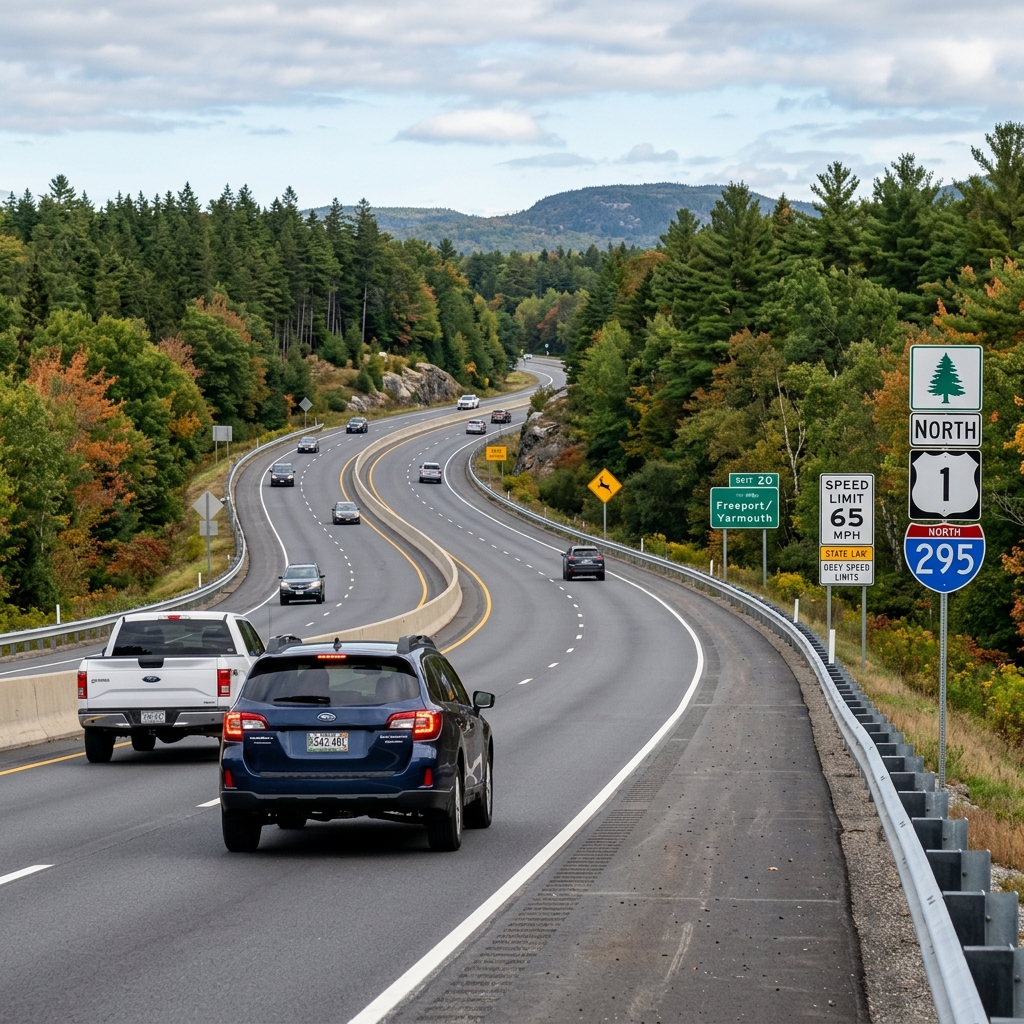
Maine offers thousands of miles of scenic roads, from coastal highways to rural routes. To enjoy them safely, drivers need a solid understanding of the state’s traffic laws, how speed limits work, what happens after a violation, and the special rules that apply to young and out-of-state drivers.
This guide provides an original, practical overview of key traffic laws in Maine, including speed rules, right-of-way, vehicle requirements, impaired driving penalties, and the demerit point system. It is informational and not a substitute for legal advice, but it can help you recognize when you may need to speak with a qualified attorney or consult the official statutes.
Core Principles of Driving in Maine
Most Maine traffic rules are built around a few core principles that appear throughout Title 29-A of the Maine Revised Statutes, which governs motor vehicles and traffic.
- Safety first: Laws prioritize the protection of people on and near the road, including drivers, passengers, cyclists, and pedestrians.
- Reasonable and prudent behavior: Many rules use the standard of a “reasonable and prudent” driver, especially for speed and following distance, rather than a single fixed number.
- Uniform rules statewide: While local governments can set certain limits, statewide statutes provide the baseline rules that apply everywhere.
- Graduated penalties: Minor infractions usually result in fines and points, while serious offenses can mean criminal charges and license suspension.
Default Speed Limits and Special Speed Rules
Maine law sets default speed limits for common road types, and also requires drivers to adjust speed for conditions. Municipalities can change limits within state-defined ranges after a traffic investigation.
Typical Posted Speed Limits
Unless otherwise posted, Maine law uses standard limits that apply to many roads.
| Road Type | Typical Default Speed Limit |
|---|---|
| School zones (when children are present) | 15 mph |
| Business and residential areas | 25 mph |
| Other general roadways | 45 mph |
| Rural highways | Approximately 55–60 mph (as posted) |
| Interstate highways | Higher speeds, commonly 65–75 mph (as posted) |
Local governments may set different limits within specified ranges, typically 20–25 mph in business or residential districts, and 30–50 mph elsewhere, with some limited exceptions.
Driving Too Fast or Too Slow
Drivers in Maine must avoid both excessive speed and unreasonably slow driving that interferes with normal traffic flow.
- Excessive speed: Operating above the posted limit or at a speed unsafe for road, traffic, or weather conditions can result in a citation and, at high speeds, criminal charges and mandatory suspension.
- Impeding traffic: State law specifically prohibits driving at such a slow speed that you impede the normal and reasonable movement of traffic, unless lower speed is necessary for safety or is required by law.
- Minimum speed limits: The Department of Transportation can conduct engineering and traffic studies and set minimum speeds on roads where consistently slow driving is a problem, posting standard black-and-white signs to give notice.
Right-of-Way, Passing, and Lane Use
Knowing who has the right-of-way and when you can pass other vehicles is essential to safe driving. Maine’s laws on these topics appear in multiple sections of Title 29-A and are echoed in driver training materials.
Intersection and Right-of-Way Basics
- Uncontrolled intersections: When no sign or signal governs an intersection, the vehicle on the right generally has the right-of-way, and drivers entering from the left must yield.
- Left turns: Before turning left across oncoming traffic, you must yield to any vehicle approaching closely enough to pose a hazard, allowing them to pass through the intersection first.
- Roundabouts and traffic circles: Specific rules apply at circular intersections; often, vehicles entering must yield to traffic already in the circle, unless otherwise directed by signs or police.
Passing and Lane Use Rules
State law and safety guidance outline how and where drivers may pass other vehicles, especially on multi-lane roads.
- Passing on the left: Drivers must pass on the left, staying within the lane, maintaining a safe distance, and completing the pass before returning to the right.
- Safe clearance: You must have enough room to pass and return to your lane before coming within 100 feet of oncoming traffic, where applicable.
- Limited-access highways: On high-speed, limited-access roads with speed limits of at least 65 mph, Maine expects drivers to keep to the right-hand lane except when passing. The left lane is generally for overtaking, not cruising.
- Following distance: The law prohibits following another vehicle more closely than is reasonable and prudent, considering speed, traffic, and road conditions. Driver education often suggests a “two-second rule” as a practical minimum following distance.
Vehicle Equipment and Safety Requirements
Beyond how you drive, Maine traffic laws regulate the condition and equipment of vehicles, and require certain safety measures for occupants.
Seat Belts and Child Safety
- Seat belt use: Seat belts must be worn at all times by drivers and passengers, subject to limited exceptions.
- Child passengers: Children under 12 generally must ride in the rear seat when possible, and younger children must be in age-appropriate safety seats.
- Child restraint rules: Children under 8 and under a specified weight threshold (commonly 80 pounds in guidance) must be secured in an approved child safety seat, rather than using only the vehicle’s seat belt.
Lighting, Visibility, and Noise
- Headlights: Drivers must use headlights when visibility is reduced, often defined by the ability to see less than about 1,000 feet, and typically when windshield wipers are in use.
- Sound and noise: Some guidance notes that sound should not be audible from your vehicle beyond a short distance (for example, 25 feet), reflecting noise control rules in various localities.
Licensing Rules and Young Drivers
Maine uses a graduated licensing system, placing extra restrictions on new drivers, particularly those under 18. These rules are outlined in state materials and official guidance for parents and teens.
Intermediate Licensing for Minors
New drivers under 18 operate under intermediate or provisional license restrictions for a set period after they are first licensed.
- Restriction period: Current guidance indicates that minors hold an intermediate license for 270 days (nine months) during which they face additional limits.
- Passenger restrictions: During the permit and early license stage, a minor generally may not carry non-family passengers unless accompanied by a qualified adult driver who meets age and experience requirements.
- Night driving restrictions: Young drivers are often prohibited from operating a vehicle between midnight and 5:00 a.m., except in specific circumstances.
- Cell phone use: Drivers under 18 are not permitted to use mobile phones while driving, even with hands-free devices.
Out-of-State and Visiting Drivers
Visitors driving in Maine typically may use their valid licenses from other states or countries, but they must follow Maine’s traffic laws while in the state.
- Recognition of foreign licenses: As in most states, Maine generally recognizes valid out-of-state licenses, subject to certain duration and residency limits.
- Obligation to comply: Even short-term visitors are subject to Maine’s speed limits, OUI rules, seat belt laws, and demerit point consequences that may affect their privilege to drive in Maine.
Operating Under the Influence (OUI)
Impaired driving is treated seriously in Maine. The state uses the term Operating Under the Influence (OUI) rather than DUI, and imposes criminal penalties, license suspensions, and other consequences for violations.
Consequences for a First OUI Offense
A first OUI offense can have significant impact even for drivers with no prior record.
- Jail time: A first OUI conviction can result in a mandatory minimum jail sentence, often at least two days.
- License suspension: The driver may lose driving privileges for a substantial period, commonly cited as around 150 days for a first offense.
- Criminal record: OUI is treated as a crime (frequently a Class D offense in basic cases), which can affect future employment, insurance, and professional licensing.
- Additional sanctions: Courts or the Bureau of Motor Vehicles may require participation in treatment or education programs, payment of fines, and installation of ignition interlock devices for certain offenders.
Zero Tolerance for Youth and Severe Violations
Young drivers face stricter standards for alcohol and drug use, and penalties escalate for high blood alcohol levels, repeat offenses, or crashes causing injury.
- Lower BAC thresholds: Drivers under 21 may face consequences at lower blood alcohol concentrations than older drivers.
- Aggravating factors: Excessive speed, refusal to submit to testing, or causing injury can substantially increase penalties.
Demerit Point System and License Suspension
Maine uses a demerit point system to track traffic violations. Each qualifying infraction adds points to your driving record, and accumulation of too many points in a year can lead to suspension of your license.
How Demerit Points Work
- Point values: Most violations carry a specific point value. For instance, an illegal left turn may be worth two points, while running a red light can add four points.
- Suspension threshold: Accumulating 12 points within a one-year period can trigger suspension of your driver’s license.
- Record impact: Points affect insurance premiums, eligibility for certain licenses, and may be considered in future enforcement actions.
Common Infractions That Add Points
Although the full schedule of violations appears in state rules, typical examples include:
- Speeding above the posted limit
- Ignoring stop signs or traffic lights
- Illegal passing or turning maneuvers
- Failure to yield right-of-way
- Driving without required safety equipment or proper license
Fines, Criminal Charges, and Civil Infractions
Not all violations are treated alike. Maine distinguishes between civil traffic infractions, which usually involve fines and points, and more serious criminal offenses such as OUI or extreme speeding.
Typical Civil Infractions
- Speeding within moderate ranges: Driving a small amount over the limit usually leads to a fine and points. Educational materials mention fines for 1–9 mph over the limit and increasing penalties at higher increments.
- Equipment violations: Failing to use seat belts, lacking required lighting, or other minor equipment issues typically result in non-criminal citations.
- Procedural violations: Infractions such as failure to properly signal or complete required lane changes are often civil offenses.
Criminal Traffic Offenses
- OUI: Operating under the influence of alcohol or drugs is a criminal offense, usually classified as a crime and carrying jail and suspension.
- Extreme speeding: Educational resources note that driving 30 mph or more above the limit can be treated as a criminal offense with mandatory suspension.
- Driving to endanger or leaving the scene: Dangerous driving that creates substantial risk, or failing to stop after a crash, can result in criminal charges.
Practical Tips to Avoid Violations in Maine
Understanding the law is only the first step. The following practical habits can help drivers avoid common violations and maintain a clean record in Maine.
- Plan for slower speeds: Expect lower limits near schools, residential neighborhoods, and small towns, and adjust early to avoid last-minute braking.
- Use the right lane: On high-speed roads, drive in the right lane and use the left lane only to pass, returning once you have cleared the vehicle you passed.
- Maintain safe following distance: Apply at least the two-second rule, increasing the gap in bad weather or heavy traffic.
- Watch for pedestrians and cyclists: Maine places strong emphasis on protecting vulnerable road users; always yield when required and give cyclists ample space.
- Resist distractions: Avoid texting or handling your phone while driving. Young drivers must not use mobile phones at all.
- Know your status: If you are a new driver under 18, be aware of passenger, nighttime, and cell phone restrictions that apply to you.
Frequently Asked Questions About Maine Traffic Laws
1. Can I turn right on red in Maine?
In many intersections, you may turn right on a red light after coming to a complete stop and ensuring the way is clear, unless a sign or red arrow prohibits the maneuver. Always treat right-on-red turns with the same caution as a stop sign and yield to pedestrians and cross traffic.
2. What happens if I get 12 demerit points in a year?
Accumulating 12 points within a 12-month period can result in suspension of your driver’s license. The Bureau of Motor Vehicles may notify you, and you may need to meet certain conditions before reinstatement, such as waiting out the suspension and paying applicable fees.
3. Are Maine’s traffic rules different for visitors?
Visitors must obey the same traffic laws as residents. While you can typically drive with a valid out-of-state license, violating Maine’s traffic statutes can affect your ability to drive within Maine and may have consequences in your home state depending on information sharing.
4. How do I know if a speed limit is local or statewide?
Posted limits may be set by the state or a municipality. Municipalities can change limits within certain ranges after conducting traffic investigations and posting standard signs. If you see an official black-and-white speed limit sign, the number on the sign controls regardless of whether it’s a state or local decision.
5. Where can I find the official text of Maine traffic laws?
Official statutory language is published by the Maine Legislature. Title 29-A of the Maine Revised Statutes contains the primary rules on motor vehicles and traffic, and is available through the Legislature’s official website.
References
- Maine Traffic Laws — FindLaw. 2023-05-01. https://www.findlaw.com/state/maine-law/maine-traffic-laws.html
- Title 29-A: Motor Vehicles and Traffic — Maine Legislature. 2024-01-01. https://legislature.maine.gov/statutes/29-a/title29-Ach0sec0.html
- Title 29-A, §2075: Other speed regulations — Maine Legislature. 2023-03-15. https://www.mainelegislature.org/legis/statutes/29-a/title29-asec2075.html
- Driving in Maine: Road Rules & Driving Tips — SIXT. 2022-08-10. https://www.sixt.com/magazine/tips/driving-tips-maine/
- Maine Traffic Laws for New Drivers — Maine Bureau of Highway Safety / YouTube. 2021-06-01. https://www.youtube.com/watch?v=mMT9FsY3WWI
- Driving Contract for New Drivers and their Parents — Maine Bureau of Motor Vehicles / Digital Maine. 2018-01-01. https://digitalmaine.com/cgi/viewcontent.cgi?article=1004&context=bmv_docs
- Motor Vehicle Laws and Rules — Maine Secretary of State, Bureau of Motor Vehicles. 2023-09-01. https://www.maine.gov/sos/bmv/more-bmv/motor-vehicle-laws-and-rules
Similar Articles








Read full bio of Sneha Tete


